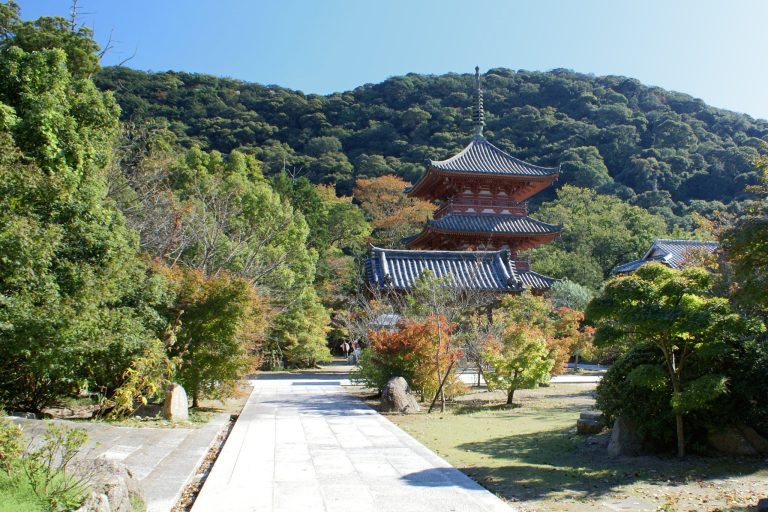
Gesshō-ji Temple: A Sōtō Zen Buddhist Temple in Akashi, Japan


Site at a Glance
- Rating
- 4
- Popularity
- Very Low
- Country
- Japan
- Primary era
- Modern
- External website
- Open
- Eras represented
- Modern
- Civilizations
- Japanese
- Site type
- Religious
- Remains
- Temple
On this page8 sections
History
Gesshō-ji Temple is a Sōtō Zen Buddhist temple in Japan, located in Akashi, and its history reaches back to 811, when Kūkai, the monk who founded the Shingon school of esoteric Buddhism, established a Buddhist temple on the site of the present Akashi Castle. The institution later became known as Gesshō-ji.
From Shingon foundation to Sōtō temple
Around 887, the temple’s abbot established the tutelary Hitomaru Shrine to enshrine Kakinomoto no Hitomaro, a major poet of Japan’s Nara period who was later revered in some traditions as a deity of poetry. The shrine is now called Kakinomoto Shrine, and the temple was consequently renamed Gesshō-ji. The institution originally belonged to the Shingon tradition, whose practice is associated with ritual, mantra, and mandala. In 1575, a Sōtō monk entered the temple, and it was converted to Sōtō, a Zen school that emphasizes seated meditation.
Relocation during the early Edo period
The temple’s present location resulted from the reorganization of Akashi under the Tokugawa shogunate. After Tokugawa Ieyasu’s victory at the Battle of Sekigahara in 1600, regional lords were reassigned. Following the destruction of the Toyotomi family during the Summer Campaign of Osaka, Tokugawa Hidetada transferred Lord Ogasawara Tadazane from Matsumoto in Shinano to Akashi in 1617.
The shogunate ordered a new castle on Hitomaru-yama, intended as a major fortification for checking the western daimyō and overseeing the Saigoku Kaidō and Akashi Strait. Tadazane initially used Funage Castle as his residence. Gesshō-ji and Hitomaru Shrine stood near the planned castle’s main enclosure, so both were moved in 1619 to their present site in Hitomaru-chō, beside the shrine now known as Kakinomoto Shrine.
During the move, an official directive conveyed the lord’s instructions to Gesshō-ji, which then served as the associated temple of Hitomaru Shrine. The temple preserved the document, which is now lent to and displayed in the permanent exhibition area of the Akashi City Museum of Culture. In 1744, the temple’s mountain name was changed to Hitomaru-yama.
Religious and cultural inheritance
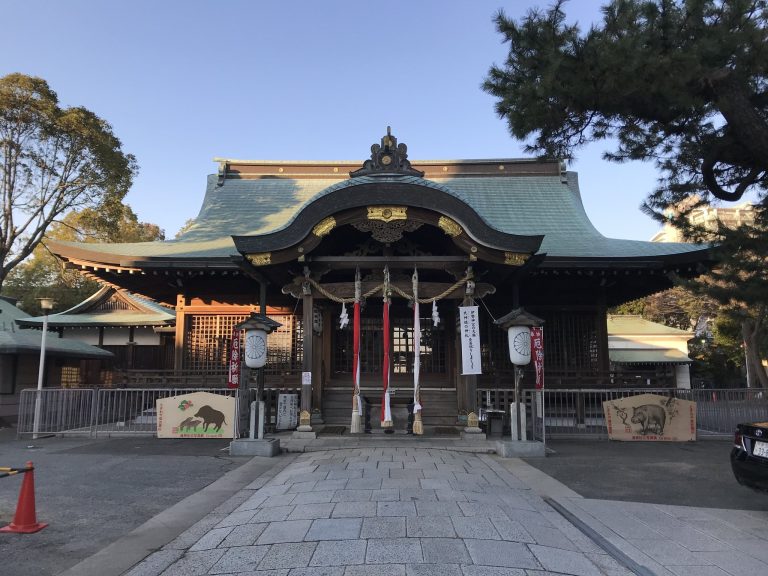
Gesshō-ji and Kakinomoto Shrine historically formed a unified shrine-temple complex. Under this system, Buddhist monks and Shinto priests jointly administered a shrine. The Meiji government later separated Shinto and Buddhism, and the two institutions became separate religious corporations.
Gesshō-ji is the 33rd station of the Akashi Saigoku Thirty-Three-Temple Pilgrimage. Its principal object of worship is the Eleven-Headed Kannon, a form of the Buddhist bodhisattva associated with compassion and represented with multiple heads symbolizing expanded powers of perception and response.
The temple’s cultural-property holdings include Emperor Sakuramachi’s calligraphy and an album of fifty poem slips, designated an Important Cultural Property in 1901. The temple gate and the portraits of the Thirty-Six Immortal Poets with their poem sheets received Akashi’s designation in 1970. Materials concerning Kakinomoto no Hitomaro’s divine rank and title, together with documents related to the Akashi domain, were designated by the city in 2010.
Remains
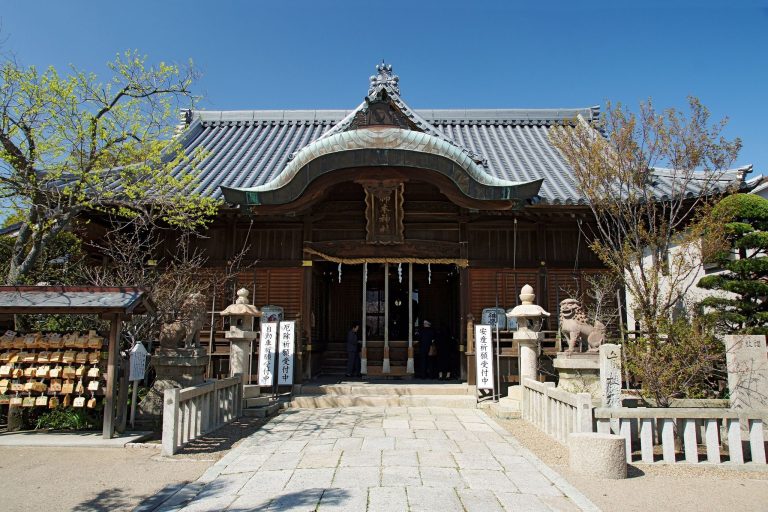
Gesshō-ji stands in Hitomaru-chō under the mountain name Hitomaru-yama, at the location to which it was moved in 1619. Its physical and documentary heritage is closely associated with Kakinomoto Shrine, reflecting the former unity of the two institutions while preserving their present arrangement as separate religious corporations.
Temple gate and associated heritage
Former Fushimi Castle gate
The temple gate is a former Yakui-mon, a roofed Japanese gate supported by main and subsidiary posts, from Fushimi Castle. It was transferred to Akashi Castle in 1610, where it served as a secondary gate, and was re-erected at Gesshō-ji in 1873. The gate therefore embodies the successive relocations that connected the temple with Fushimi Castle and the construction of Akashi Castle.
Poetry and domain documents
The temple’s associated heritage includes portraits of the Thirty-Six Immortal Poets accompanied by their poem sheets, as well as materials concerning Kakinomoto no Hitomaro and documents related to the Akashi domain. These holdings complement the temple’s connection with Kakinomoto Shrine and preserve aspects of the religious, poetic, and administrative history attached to the site.