Elstermühle Plessa: A Historic Watermill Estate in Germany
Site at a Glance
- Popularity
- Very Low
- Country
- Germany
- Primary era
- Early Modern
- Eras represented
- Early Modern, Modern
- Civilizations
- Electorate of Saxony, German, Holy Roman Empire, Kingdom of Bohemia, Kingdom of Prussia
- Site type
- Economic
- Remains
- Watermill
On this page9 sections
History
Early mills and river access
The estate first appears in records in 1420. A sawmill is noted from 1580, followed by a grain mill operating from 1630. After the grain mill burned in 1710, it was rebuilt the next year.
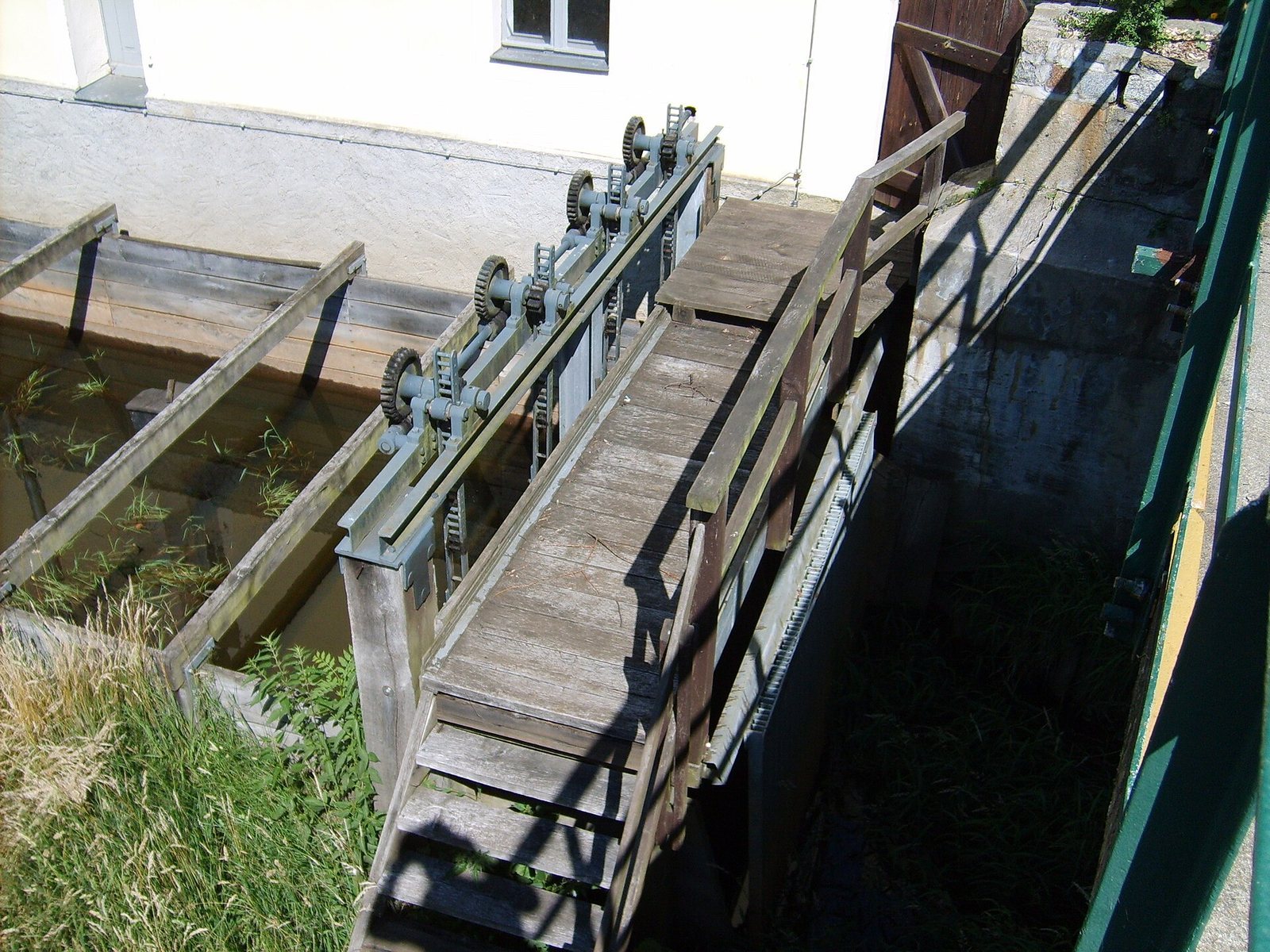
Before the Schwarze Elster was regulated, the mill could be reached only by boat through the river’s 27 channels and ditches. River regulation began in 1852 and changed the riverbed, prompting construction of a weir at the mill.
The Kühne family and the river
The Kühne family owned the mill from 1825. Clemens Kühne, its last miller, took it over in August 1909 and continued working there until his death at age 87. The miller held royal water rights and also served as lock keeper at Plessa.
The miller also held fishing rights, valued at 1,000 thalers, a historical currency, in the land register. In 1920, Saturday catches from the Schwarze Elster amounted to 4–8 German Zentner, roughly 200–400 kilograms.
The swamp around the mill was drained around 1900. A well and pump were installed on the estate in 1903; before then, the river supplied water for drinking and other uses.
New uses and restoration
When electricity from the local briquette factory became available in 1925, a new sawmill was established in the mill yard, and the earlier sawmill was demolished. A bakery was also added and continued operating until 1966.
The mill’s heirs sold the estate to an agricultural production cooperative, or LPG, in 1961. LPGs were collective farming organizations in former East Germany. The grain mill was converted to electric power and served mainly the cooperative’s own needs, while former living rooms became offices.
A bypass road crossed the estate in the 1970s. Piers from the weir made it easier to build a bridge, but the weir was dismantled and the mill lost its water supply. The cooperative dissolved in 1990, and the grain mill and sawmill ceased operating in 1991.
In December 1991, the Support Association for the Lower Lusatian Heathland Nature Park acquired the estate and undertook extensive reconstruction. Offices and seminar rooms were added, with the association’s staff and the Biological Station among the first occupants. The grain mill was later restored and opened to the public at a mill festival on 17 June 1995. The association sold the estate in 2017; until then, the mill building had housed its office, a nature-conservation ranger base, and the Mühlenschänke restaurant. The site is protected as a technical monument, a heritage designation for technological or industrial significance.
Remains
Mill buildings and estate features
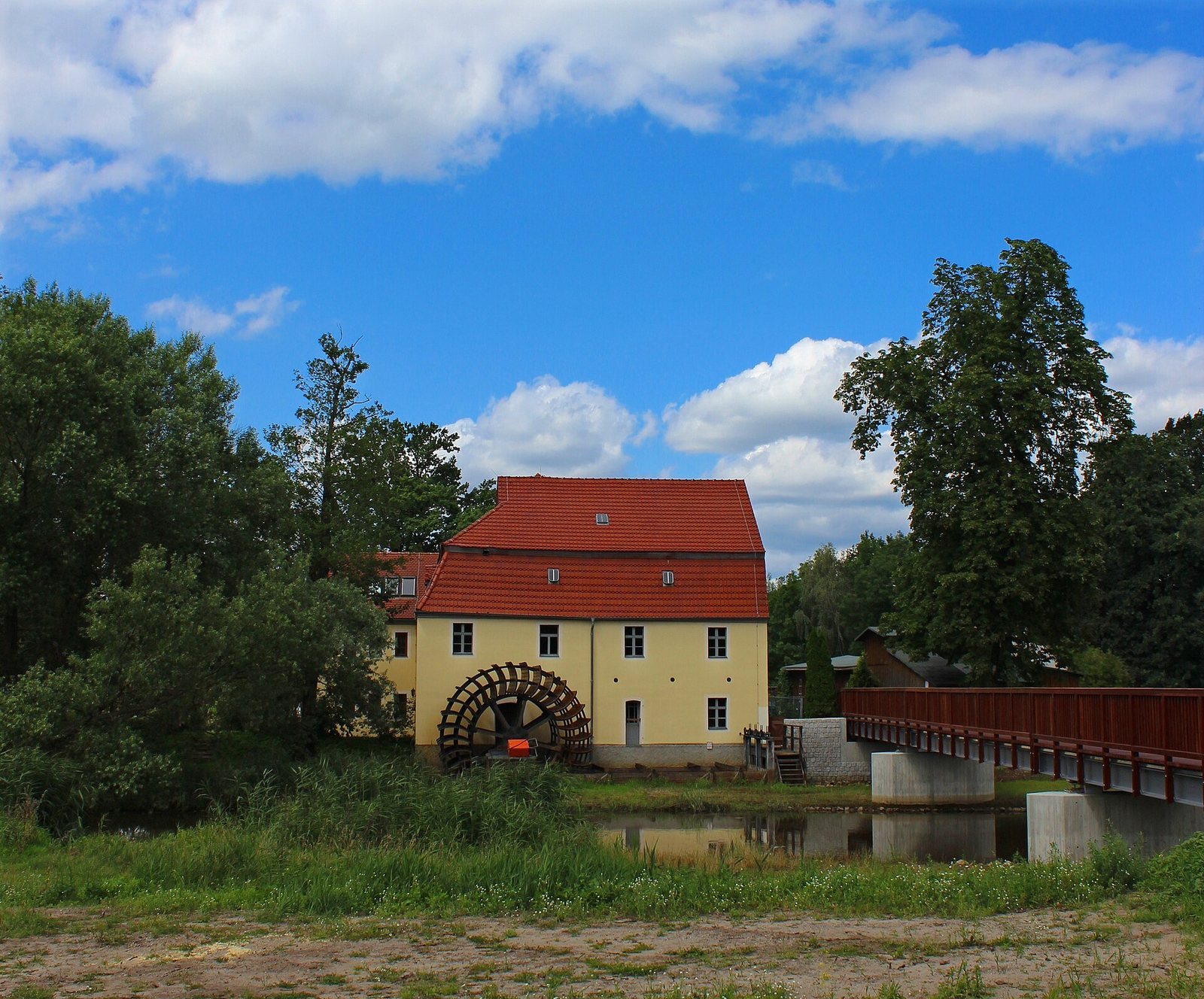
The complex includes the grain-mill building, sawmill structures, and ancillary estate buildings. Timber framing is a defining feature of the original mill buildings.
Grain mill
The grain-mill walls were built from squared-hewn timbers joined crosswise, with the spaces between them filled with a mixture of clay, chaff, and chopped straw. Drainage caused the piles beneath the southern wall to sink, so masonry underpinning was added there. The machinery, renewed around the same period, remains preserved and functional.
Sawmills
The earlier water-powered sawmill was a timber-framed structure raised on piles and clad in wood. The sawmill built in the yard in 1925 was driven by the grain mill’s main shaft, which passed beneath the road. This arrangement allowed the miller to use both water and electricity. A generator on the estate may indicate that electricity was also produced for mill operations, though this is uncertain. A small sawmill is also housed in an ancillary building.
Water and other estate additions
The estate’s well and pump provided a supply apart from the river. The bakery differed in construction from the earlier mill buildings, a choice made for economic reasons. The complex also contains a small museum and a demonstration installation that can be run without milling.