The Charterhouse: A Carthusian Priory, Tudor Mansion and Almshouse in Clerkenwell
Site at a Glance
- Popularity
- Very High
- Country
- United Kingdom
- Primary era
- Early Modern
- Eras represented
- Medieval, Early Modern
- Civilizations
- English
- Site type
- Domestic
- Remains
- Elite Residence
On this page11 sections
History
The Charterhouse is a former Carthusian monastery and charitable complex in Clerkenwell, London, in the United Kingdom. Its origins lie in a burial ground established in 1348, and a Carthusian priory was founded here in 1371. Most of the standing buildings date from the Tudor period, when the monastic site was transformed into a mansion.
From plague burial ground to priory
In 1348, the knight Walter Manny rented 13 acres (5.3 hectares) at Spital Croft, north of Long Lane, from the Master and Brethren of St Bartholomew’s Hospital. He intended the land to serve as a burial ground and plague pit for victims of the Black Death, the devastating pandemic that swept across Europe in the mid-14th century. A chapel and hermitage were built there, and the place became known as New Church Haw.
In 1371, the land was granted for a Carthusian priory, formally named the House of the Salutation of the Mother of God. The Carthusian Order is a Catholic monastic order whose members traditionally live in separate cells, emphasizing solitude. The statesman and humanist Thomas More visited the priory for spiritual recuperation.
Dissolution and Tudor residence
The community was dissolved in 1537 during the English Reformation, the 16th-century separation of the English church from papal authority. Its members had refused to recognize Henry VIII as head of the Church. Prior John Houghton was executed at Tyburn. Ten monks were imprisoned at Newgate, where nine died of starvation; the tenth was executed at Tower Hill three years later. The men are remembered as the Carthusian Martyrs of London.
After the dissolution, members of the Bassano family, who made musical instruments, occupied former monks’ cells, while Henry VIII used the church to store hunting equipment. In 1545, Sir Edward North bought the property and converted it into a mansion. Elizabeth I stayed there in 1558 while preparing for her coronation.
After North’s death, Thomas Howard, 4th Duke of Norfolk, acquired the estate and renamed it Howard House. In 1570, after imprisonment in the Tower of London over his plans to marry Mary, Queen of Scots, he was placed under house arrest there. Howard embellished the house and grounds. The next year, a coded letter from Mary found beneath a doormat revealed his involvement in the Ridolfi plot, a conspiracy to replace Elizabeth I with Mary. Howard was executed in 1572.
The property passed to Howard’s son, Thomas Howard, 1st Earl of Suffolk. In 1603, James I held court there for three days during his first entry into London.
Sutton’s charitable foundation
Thomas Sutton acquired the property in May 1611 and established a charitable institution called the Hospital of King James, providing an almshouse, a charitable residence for people in need, and a school. Sutton had made his fortune through coal discovered on two estates he leased near Newcastle upon Tyne. His will provided for 80 male residents, including gentlemen fallen into poverty, former soldiers, merchants impoverished by piracy or shipwreck, and royal servants. It also provided for the education of 40 boys. Sutton died on 12 December 1611. Although his will was contested, it was upheld.
The Charterhouse developed a reputation for medical care. In 1712, the Oxford-educated physician Henry Levett joined the school as its physician. He wrote medical works, including an early tract on smallpox treatment, and was buried in Charterhouse Chapel.
School, medical use and restoration
Charterhouse School grew beyond Sutton’s original provision. Under headmaster William Haig Brown, it moved to Godalming, Surrey, and opened there on 18 June 1872, retaining its name. Buildings on the site of the former great cloister, the covered walkway surrounding a courtyard, were then used by Merchant Taylors’ School until its move near Northwood, Hertfordshire, in 1933. St Bartholomew’s Hospital Medical School subsequently occupied the buildings. They remain one of the sites used by its successor, Barts and The London School of Medicine and Dentistry.
On the night of 10–11 May 1941, enemy action during the Blitz severely damaged the historic buildings. Seely & Paget carried out restoration and rebuilding from 1950 to 1959. Archaeological investigations led by W. F. Grimes during this work improved understanding of the monastic layout and uncovered Walter Manny’s remains. The Charterhouse received Grade I listed-building status on 29 December 1950, the highest listed-building category in England.
The almshouse continues to house more than 40 older residents, known as Brothers, and provides them with financial and companionship support. Women have been admitted as Brothers since 2017. That year, a site museum interpreting the Charterhouse’s history from the Black Death onward was established in partnership with the Museum of London.
For administrative purposes, the Charterhouse lay outside the ancient parish system and was excluded from the districts created under the Metropolis Management Act of 1855. Following the Extra-Parochial Places Act of 1857, it became effectively a civil parish in 1858. It joined the Holborn Poor Law Union, a local grouping responsible for poor relief, in 1877 and remained part of it until 1900. The area became part of the Metropolitan Borough of Finsbury that year, ceased to be a separate civil parish in 1915, and has been within the London Borough of Islington since 1965.
Remains
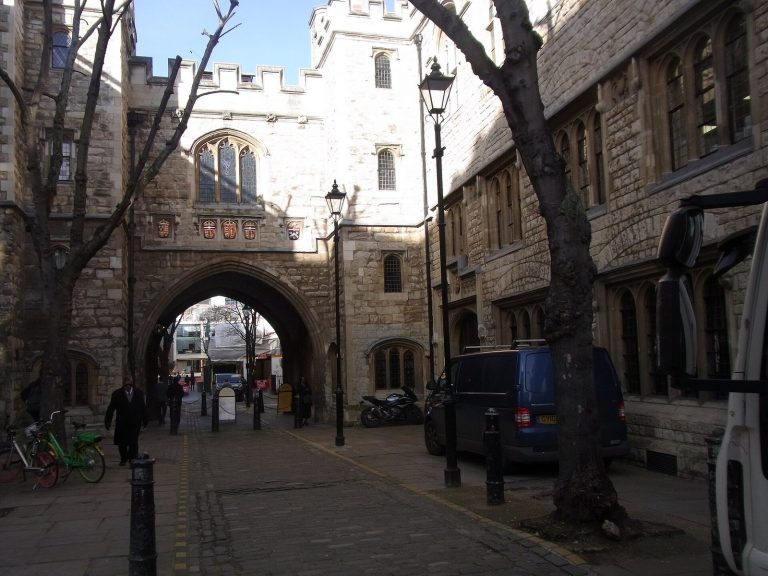
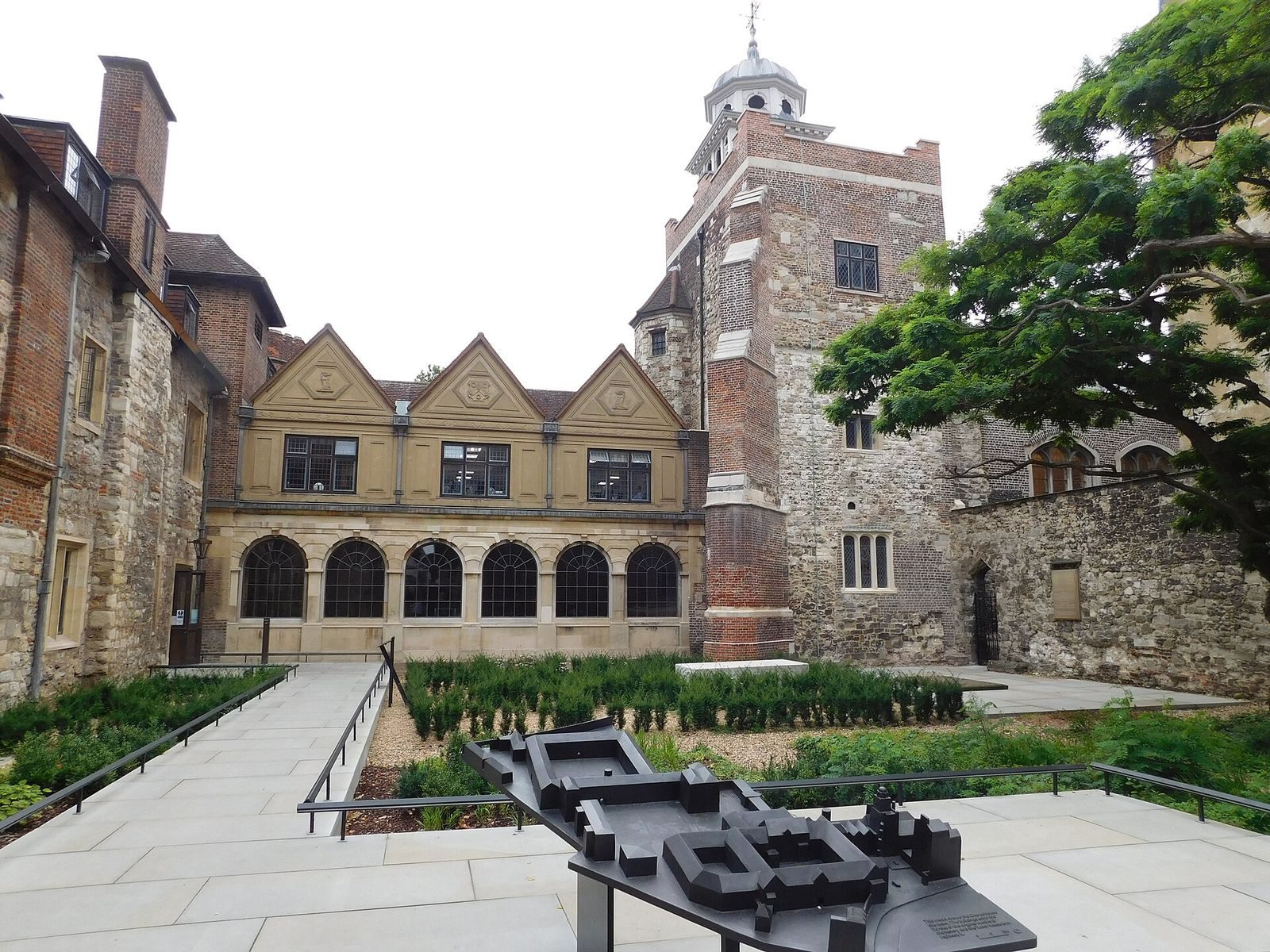
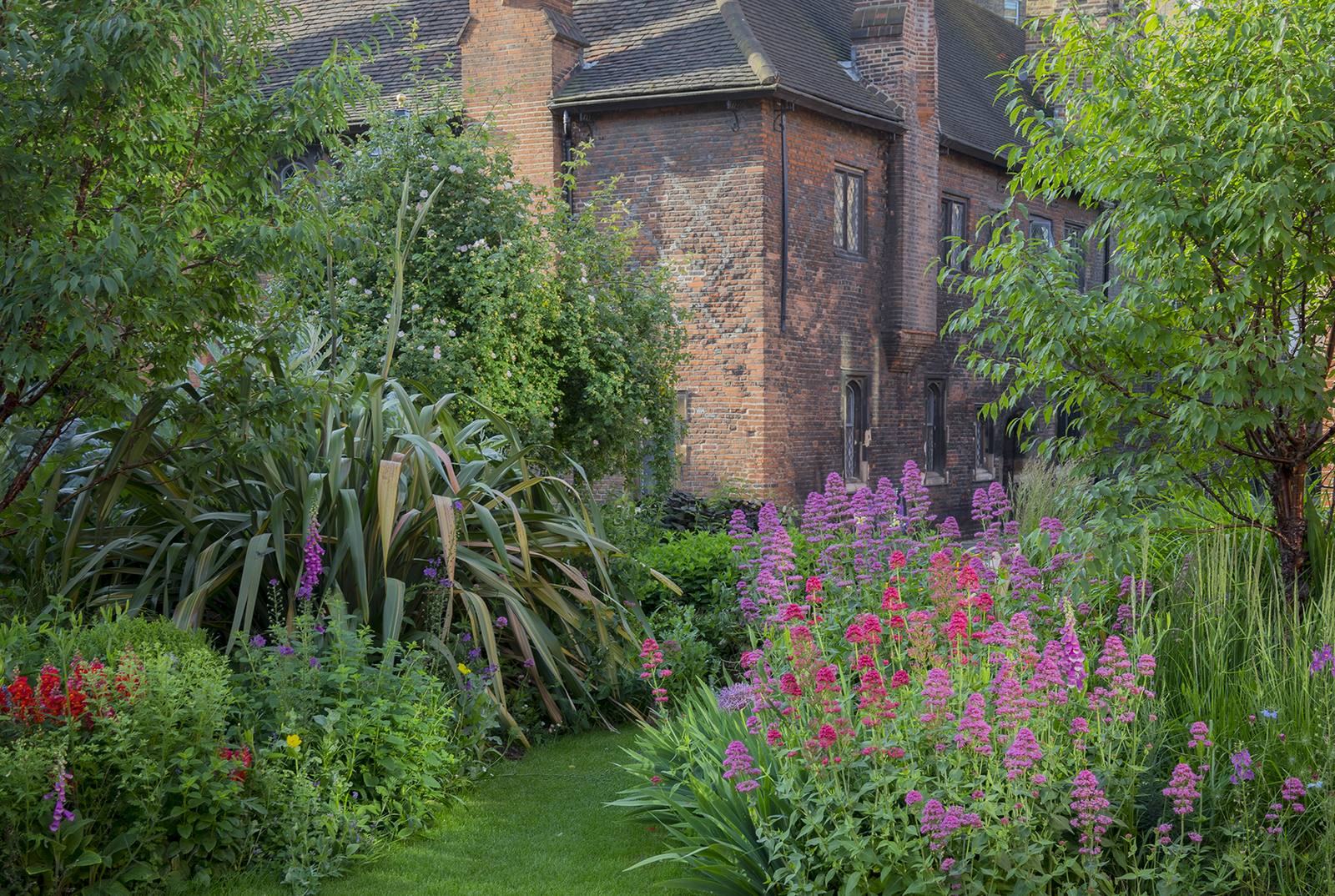
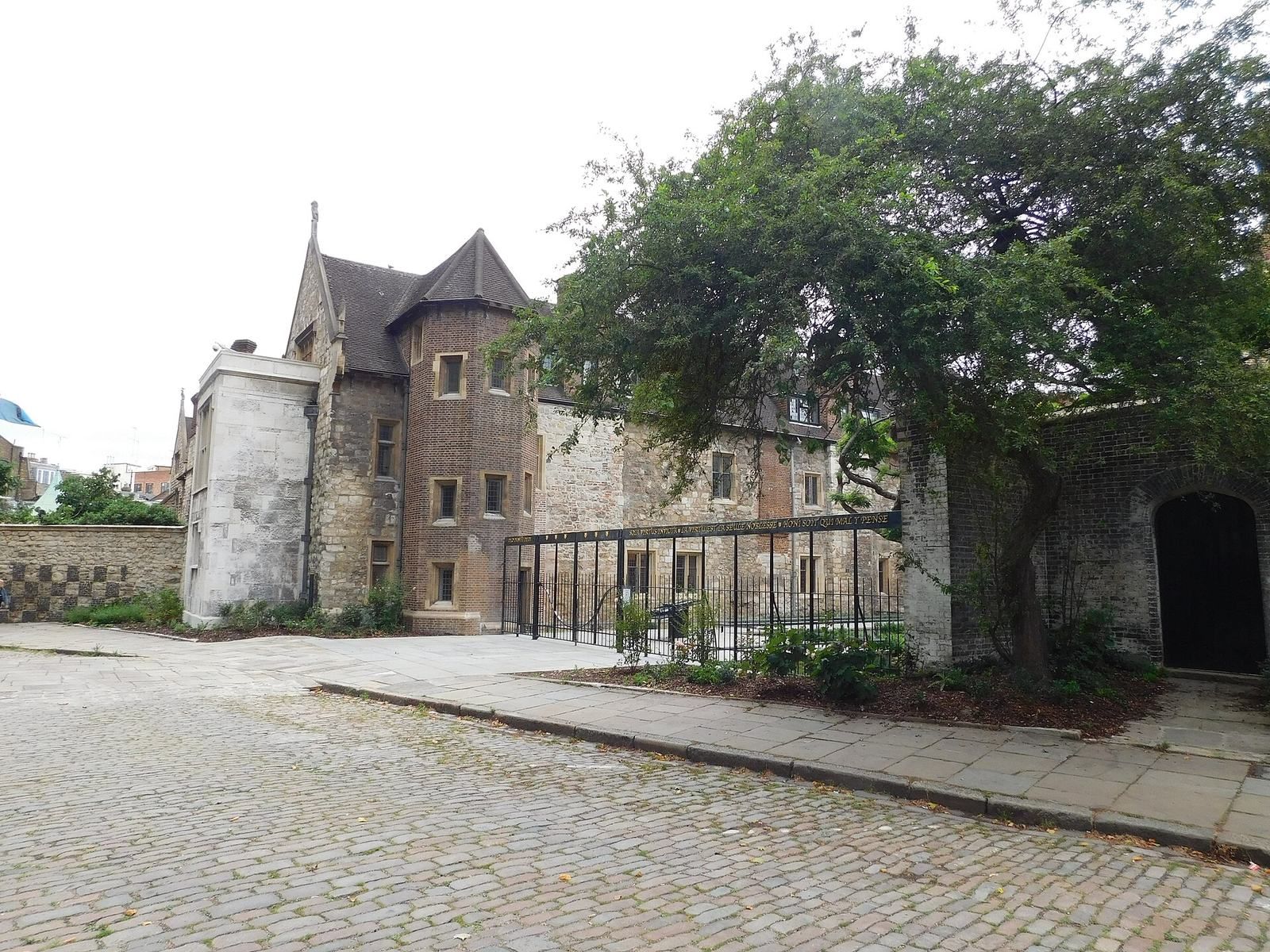
The complex occupies land north of Charterhouse Square. Substantial remains survive from the monastic period, while most standing buildings date from the Tudor era. Together, the buildings retain the character of a large, rambling 16th-century London mansion.
Monastic precinct
The early precinct included the burial ground and plague pit, a chapel and a hermitage. Each of the 25 monks had a small individual building and garden. The monastic church was later demolished as the site was converted into a mansion. School buildings subsequently occupied the former great cloister. Its main courtyard, known as the cloister garth, is now laid out as lawn in the university-site quadrangle. Charterhouse Square was landscaped as part of a project in 2017.
Tudor mansion and courts
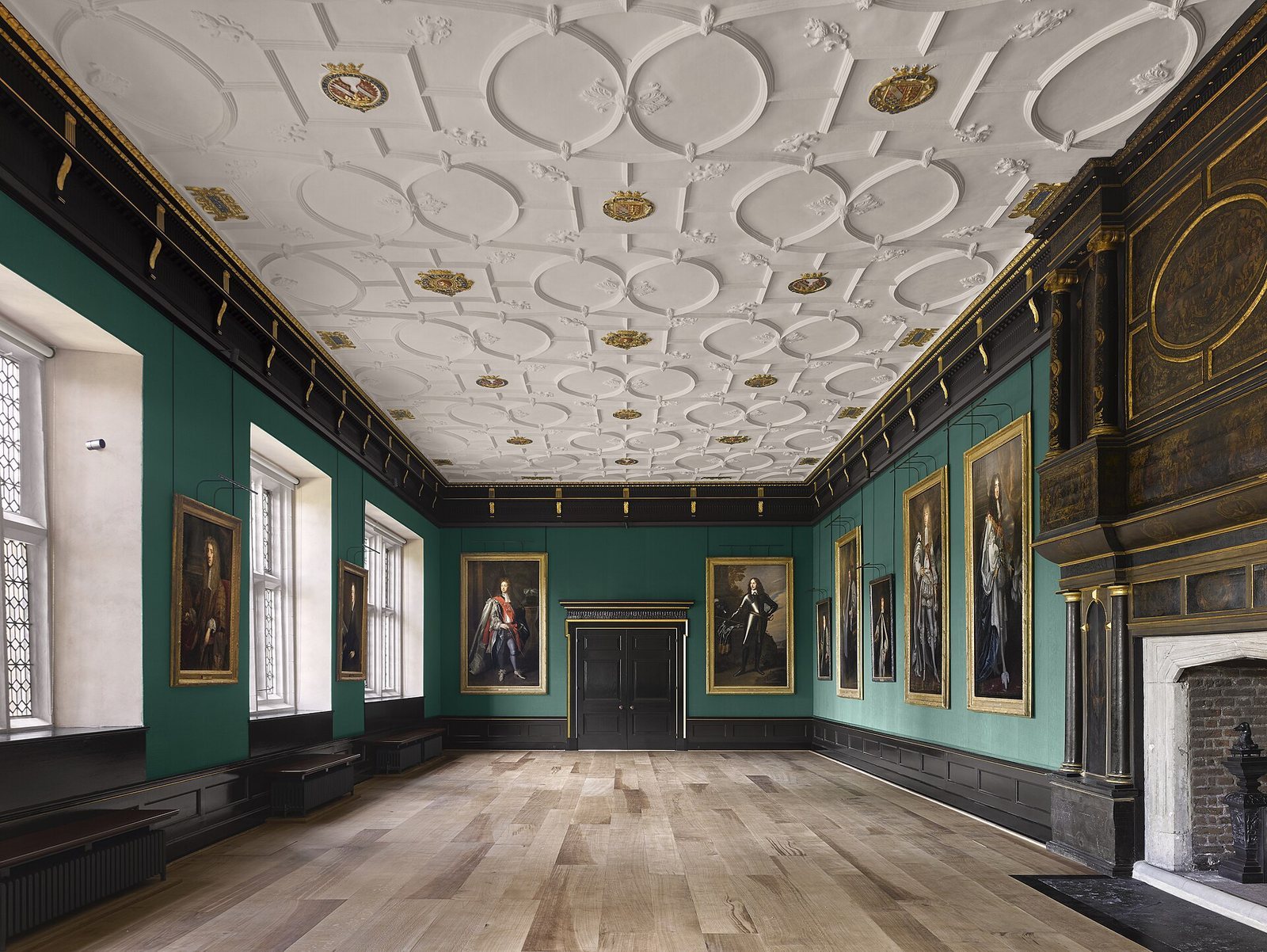
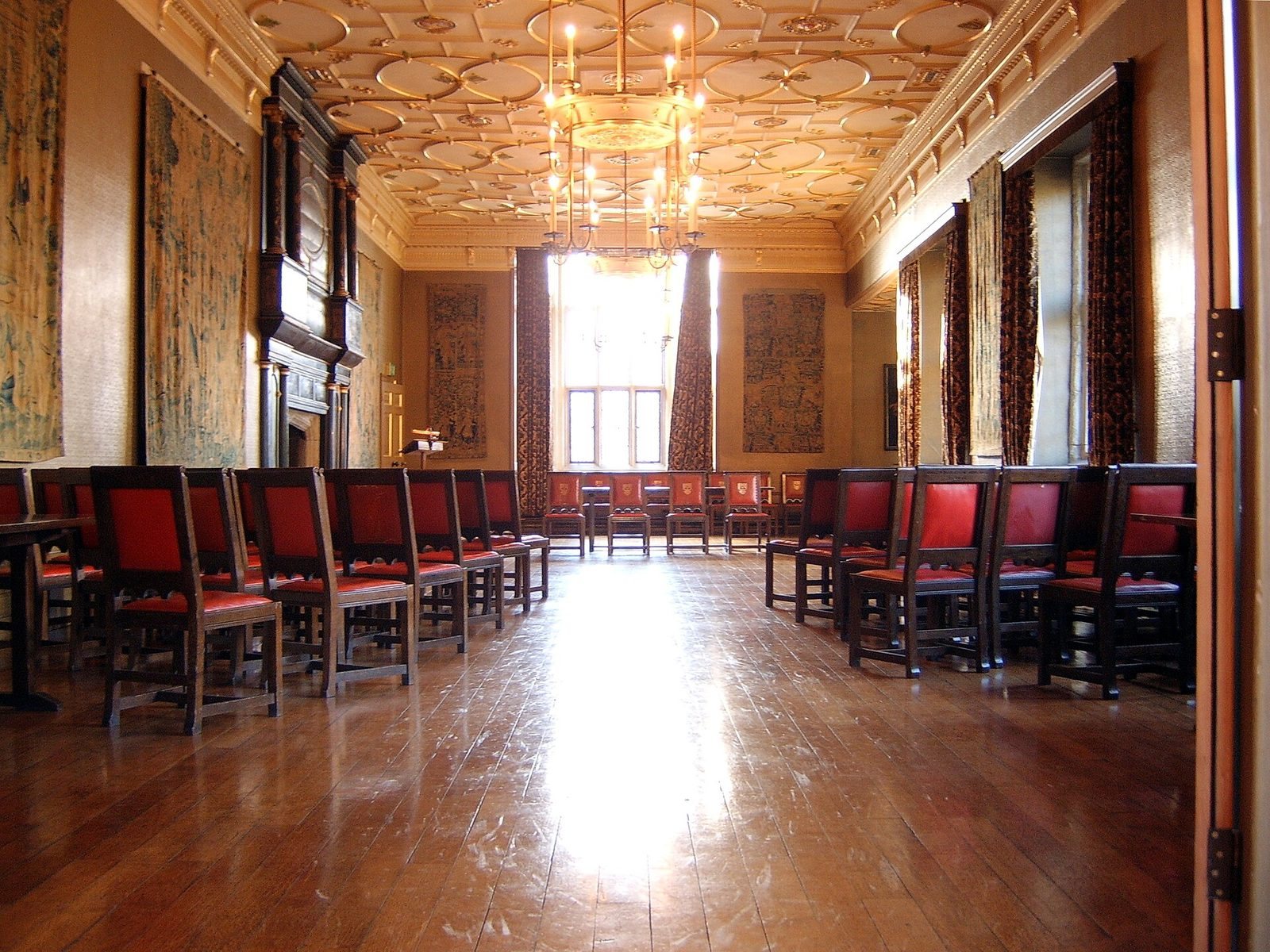
Sir Edward North built the Great Hall and adjoining Great Chamber after demolishing the monastic church. A long garden terrace extending towards a tennis court survives as the Norfolk Cloister. Bombing in 1941 severely damaged the Great Hall and Great Chamber, destroyed the Great Staircase, and burned out all four sides of the Master’s Court. During the restoration and rebuilding of 1950–1959, work exposed and enhanced some medieval fabric and much of the 16th- and 17th-century fabric that had been concealed or obscured.
Burials and chapel
Walter Manny’s burial
Walter Manny’s remains were found in a lead coffin before the high altar of the monastic chapel. A lead papal seal in the coffin, known as a bulla, or a seal attached to an official document, enabled his identification beyond reasonable doubt.
Charterhouse Chapel and Sutton’s tomb
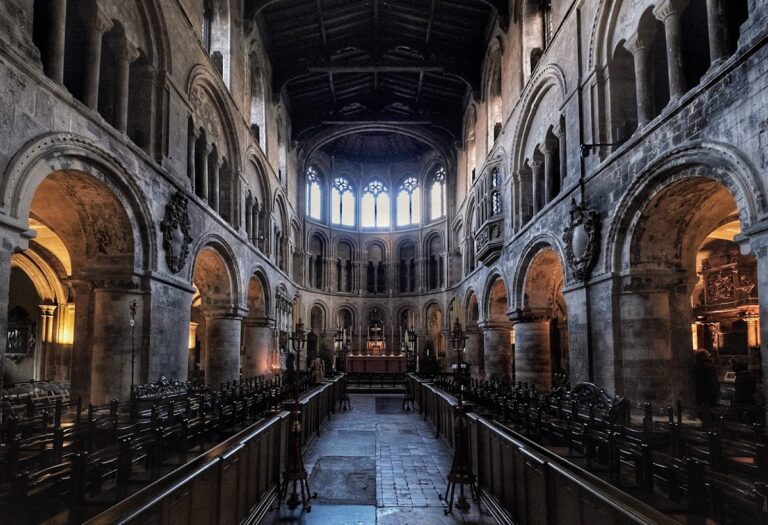
The complex includes a tomb identified as that of Thomas Sutton. Charterhouse Chapel has an altar in its south wing and an organ in its north wing.