Elbschloss Bleckede: A Medieval Castle and Later Palace Complex in Germany


Site at a Glance
- Rating
- 4.4
- Popularity
- Low
- Country
- Germany
- Primary era
- Early Modern
- External website
- Open
- Eras represented
- Medieval, Early Modern
- Civilizations
- Holy Roman Empire
- Site type
- Civic
- Remains
- Palace
On this page10 sections
History
Elbschloss Bleckede is a former medieval lowland castle in Germany that later became a two-winged palace complex. It originated in the 13th century as a ducal territorial castle at Bleckede, a settlement founded in 1209 by William of Lüneburg, a Welf duke. The town was established under the name Löwenstadt as a successor to Bardowick, destroyed in 1189.
Medieval castle and changing rule
An Elbe customs station existed at Bleckede by 1248 and passed to the Ascanian dynasty, a separate medieval ruling house, in 1258. A castle belonging to the Dukes of Saxe-Lauenburg was first expressly mentioned in 1270. In a charter dated between 1271 and 1274, the dukes promised the Duchy of Lüneburg that they would destroy the castle and would not rebuild it.
The castle and town returned to the Welfs in 1308. During the Lüneburg War of Succession, a conflict over the inheritance of the Duchy of Lüneburg, ownership changed several times in the Bleckede Feud, which lasted until 1383. Afterward, the castle was pledged almost continuously to the city of Lüneburg, which transferred the pledge to other holders. When the arrangement ended, Lüneburg left the castle in 1600.
Administrative use and later renewal
By 1600, the principal castle building had decayed and was replaced by a timber-framed administrative building. The fortifications continued to be maintained, however, and resisted a Danish siege in 1620. From the 16th century, the complex served as the seat of the Amtmann, the official who administered Bleckede’s territorial office for the ruling authority.
From 1885 to 1932, the complex was the administrative seat of the District of Bleckede. After the district was dissolved, the local court moved into the buildings. The writer Auguste von der Decken, who lived from 1827 to 1908, was born at the castle. Comprehensive renovation in 2000 established the Biosphaerium Elbtalaue information centre and the local tourist information office in the palace. The complex also accommodates cultural events, including a castle festival and markets, while the Elbschloss Festival began there in 2008. The former courtroom is used for weddings.
Remains
Enclosure and medieval tower
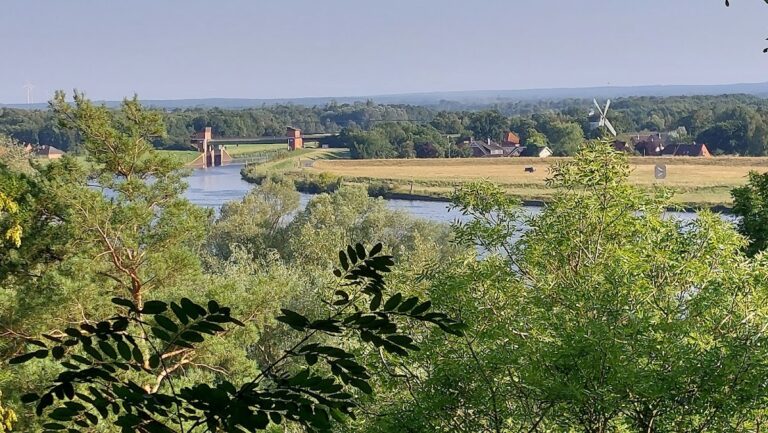
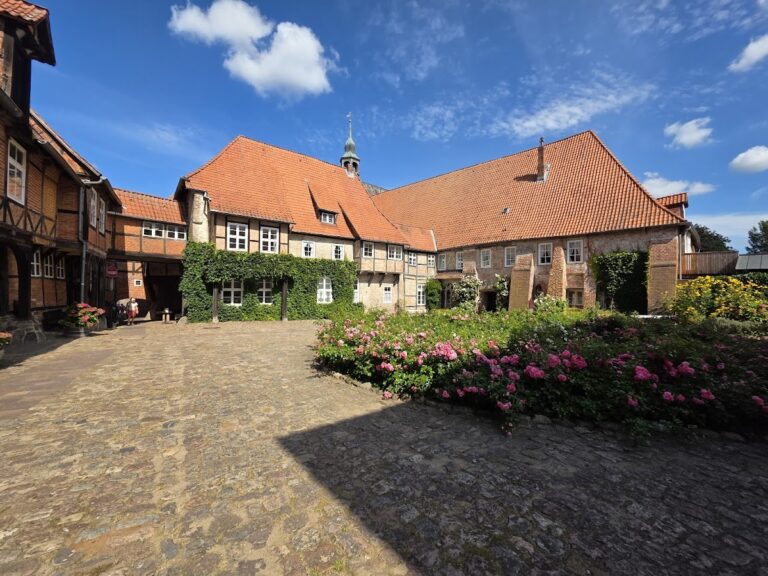
The complex stands on a raised geest ridge, a sandy elevation in the North German lowlands, with an Elbe branch formerly flowing around its rear side. Its nearly square enclosure measures about 100 by 90 metres. A moat still surrounds the site except on the western side, preserving part of the defensive setting of the earlier castle.
Bergfried
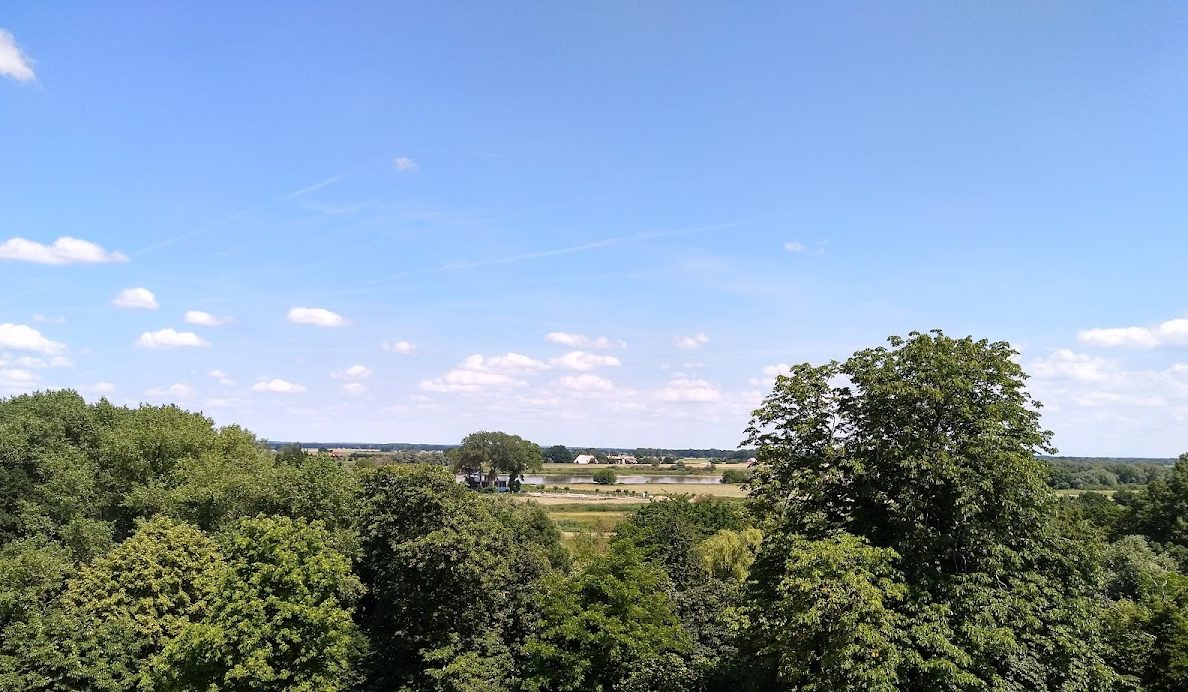
The oldest surviving element is the medieval bergfried, the principal defensive tower of a German castle. Only a tower stump 9 metres high remains. In 2002, a metal structure was inserted into the surviving masonry and transformed the stump into an observation tower overlooking the Elbe floodplain.
Palace wings and present exhibitions
North wing
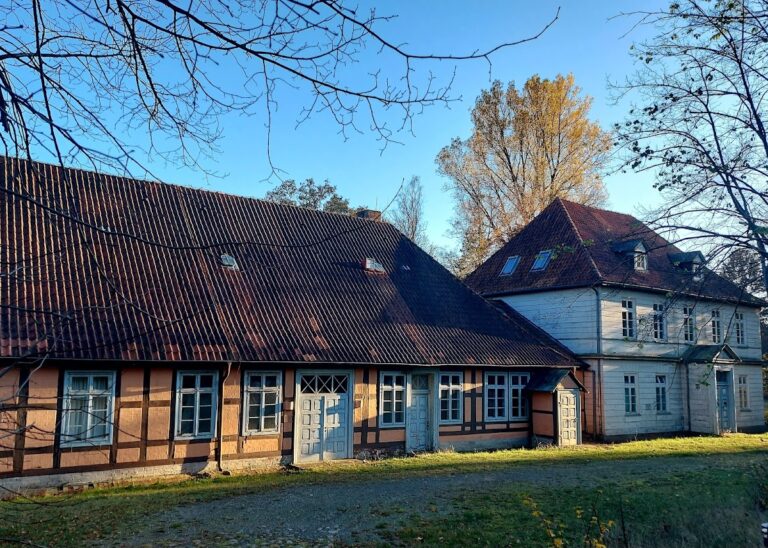
The north wing replaced the decayed principal castle building in 1600. Duke Ernest II of Brunswick-Lüneburg commissioned the timber-framed structure, which forms one of the two palace wings incorporating parts of the earlier castle complex.
West wing
The west wing was built in the Baroque period around 1743. It now contains exhibition rooms. A 1654 engraving by Merian shows the castle with a round tower, rampart, and moat, while a town plan from 1777 records the palace complex.
Biosphaerium Elbtalaue
The three-storey Biosphaerium exhibition occupies about 1,000 square metres. It presents the Elbe floodplain and the landscape of the Lower Saxon Elbe Valley Biosphere Reserve, a protected area centred on the river’s floodplain and ecological habitats. Its displays include an aquarium with around 20 fish species and a beaver enclosure, alongside environmental-education programmes for kindergartens, schools, and people with disabilities.
The castle courtyard was used for exterior filming of Grün ist die Heide in September 1951.
Nearby sites