El Tepozteco: An Aztec Mountain Sanctuary in Mexico
Site at a Glance
- Rating
- 4.7
- Popularity
- Very High
- Country
- Mexico
- Primary era
- Medieval
- Eras represented
- Medieval
- Civilizations
- Aztec
- Site type
- Religious
- Remains
- Sanctuary
On this page12 sections
History
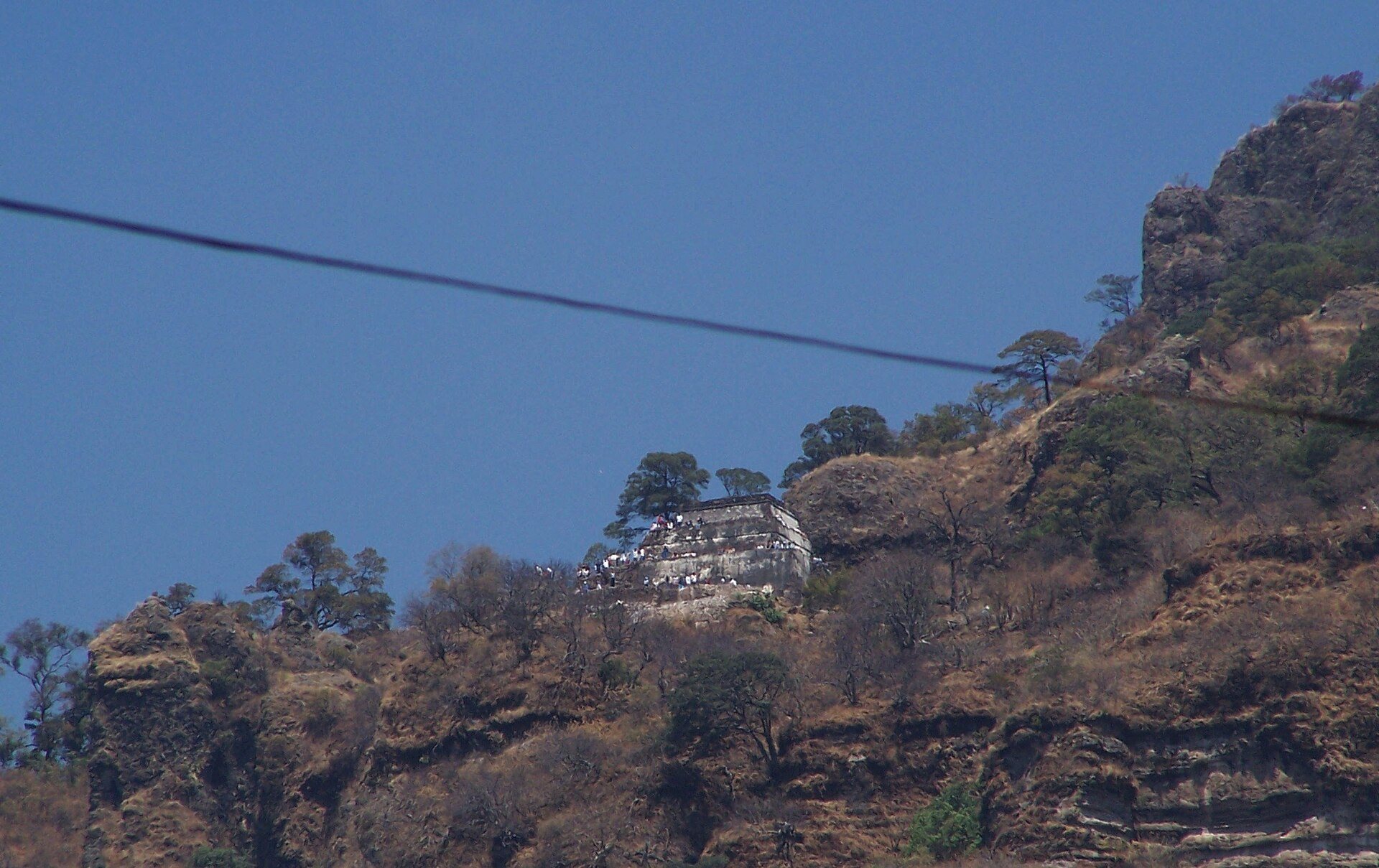
El Tepozteco is an archaeological site above Tepoztlán in Morelos, Mexico, whose temple and associated remains were built between AD 1151 and 1351 during the Middle Postclassic period. Constructed on a peak of the Sierra de Tepoztlán overlooking the pre-Columbian town, the sanctuary was dedicated to Tepoztēcatl, an Aztec deity associated with pulque, fertility, and harvests. Although the cult was local to Tepoztlán, pilgrims came from places as distant as Guatemala.
Development of the sanctuary
The site was altered repeatedly. An early change narrowed the entrance to the inner sanctuary by adding walls beside pillars that had previously stood free. A later and more substantial modification introduced stone benches and a projecting cornice decorated with reliefs representing the 20 days of the Tonalpohualli, the 260-day ritual calendar of central Mexican civilizations.
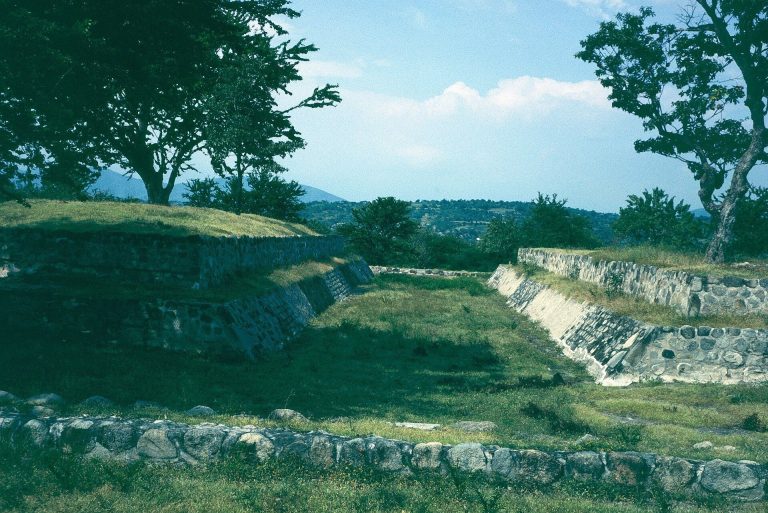
Terraces on the eastern side supported dwellings for resident priests and their assistants, while the temple occupied the western side of the complex. The sanctuary therefore combined a ceremonial center with residential spaces for the people who maintained its rites.
Political and religious associations
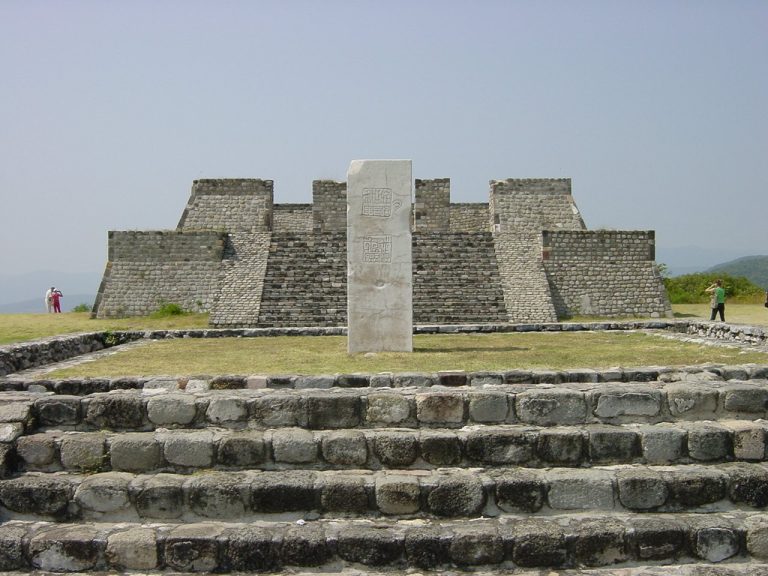
Two fallen stones found among the temple ruins bear glyphs. One names Ahuizotl, the eighth Aztec emperor, and the other gives the date “10 Rabbit,” corresponding to AD 1502, the year of Ahuizotl’s death. The meaning of the date remains uncertain. It has been interpreted either as the temple’s construction date or as a later addition commemorating the emperor’s death.
Glyphs showing turquoise crowns and shields with arrows have led to the interpretation that the stone benches were built after AD 1452, when the Triple Alliance, the imperial alliance of Tenochtitlan, Texcoco, and Tlacopan, conquered Tepoztlán. The sanctuary was associated with the image of “Two Rabbit,” a representation of Ometochtli, another name used for Tepoztēcatl in this religious context. Friars destroyed the image during evangelization.
El Tepozteco continues to have a religious role. An offering to Ometochtli and a theatrical presentation in Nahuatl take place on September 7 and 8. A separate modern observance brings people to the pyramid on March 21 in an event associated with receiving positive energy.
Protected landscape and later events
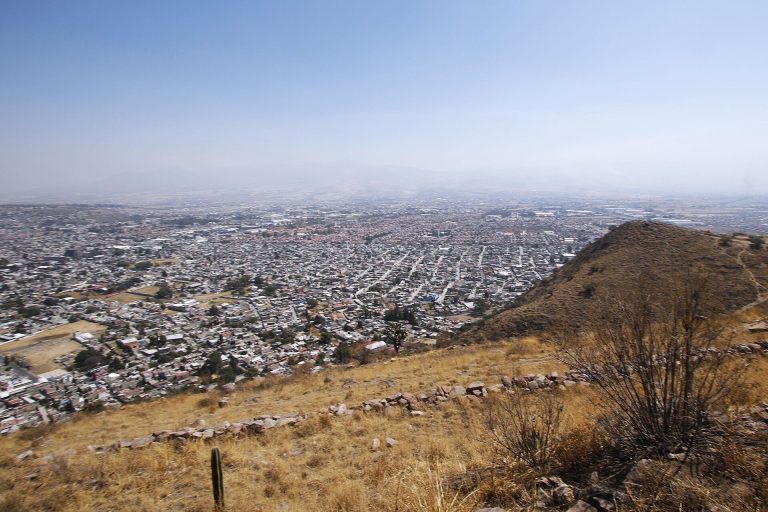
The surrounding area became a protected natural area in 1937. It includes El Tepozteco mountain and land around Tepoztlán, extending mainly through the municipalities of Tepoztlán and Yautepec, with a small portion in Mexico City. The protected area covers approximately 24,000 hectares, including about 23,800 hectares in Morelos. It contains pine forest, cloud forest, and tropical deciduous forest, with more than 2,620 recorded plant and animal species. Ninety-seven species are classified as at risk under Mexico’s official standard, and 85 are exotic.
The landscape includes 12 local reptile species, among them the endangered beaded lizard, as well as 42 bird species, including the owl, and three mammal species. Plants associated with the area include dahlias, wild sweet-potato flowers, May flowers, flowering cherry, and several kinds of fungi.
On April 5, 2016, an agricultural burn that escaped control at Santo Domingo Ocotitlán on the mountain slopes started a forest fire. By April 7, about 244 hectares had burned. Strong winds, temperatures above 30 degrees Celsius, and the rugged terrain complicated suppression. Forest and rural brigades, Morelos and municipal authorities, the National Commission for Protected Natural Areas, volunteers, and the army helped extinguish the fire, which mainly affected oak forest, grassland, pine-oak forest, and low tropical deciduous forest. Mexico’s National Institute of Anthropology and History administers the archaeological site.
Remains
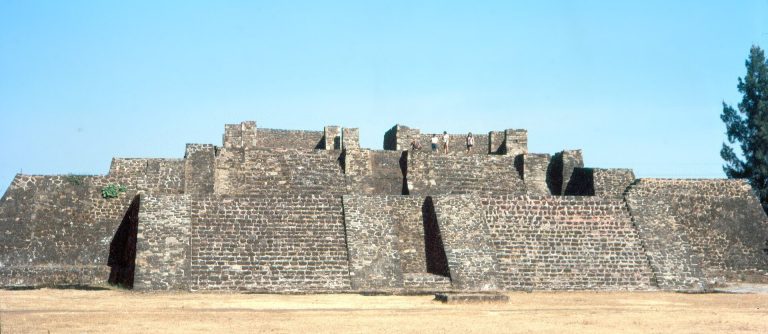
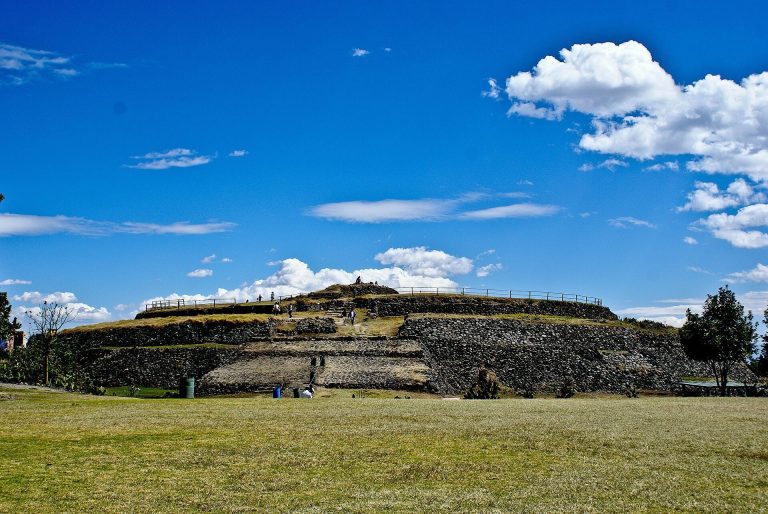
The complex occupies a natural elevation enlarged by human construction. Terraces and small pyramids rise on a mountain peak above the Tepoztlán valley, and much of the building material had to be brought from elsewhere and carried uphill by porters. The temple stands on the western side, with the residential terraces to the east, and its façade faces west-northwest.
Temple and access
Pyramid and stairway
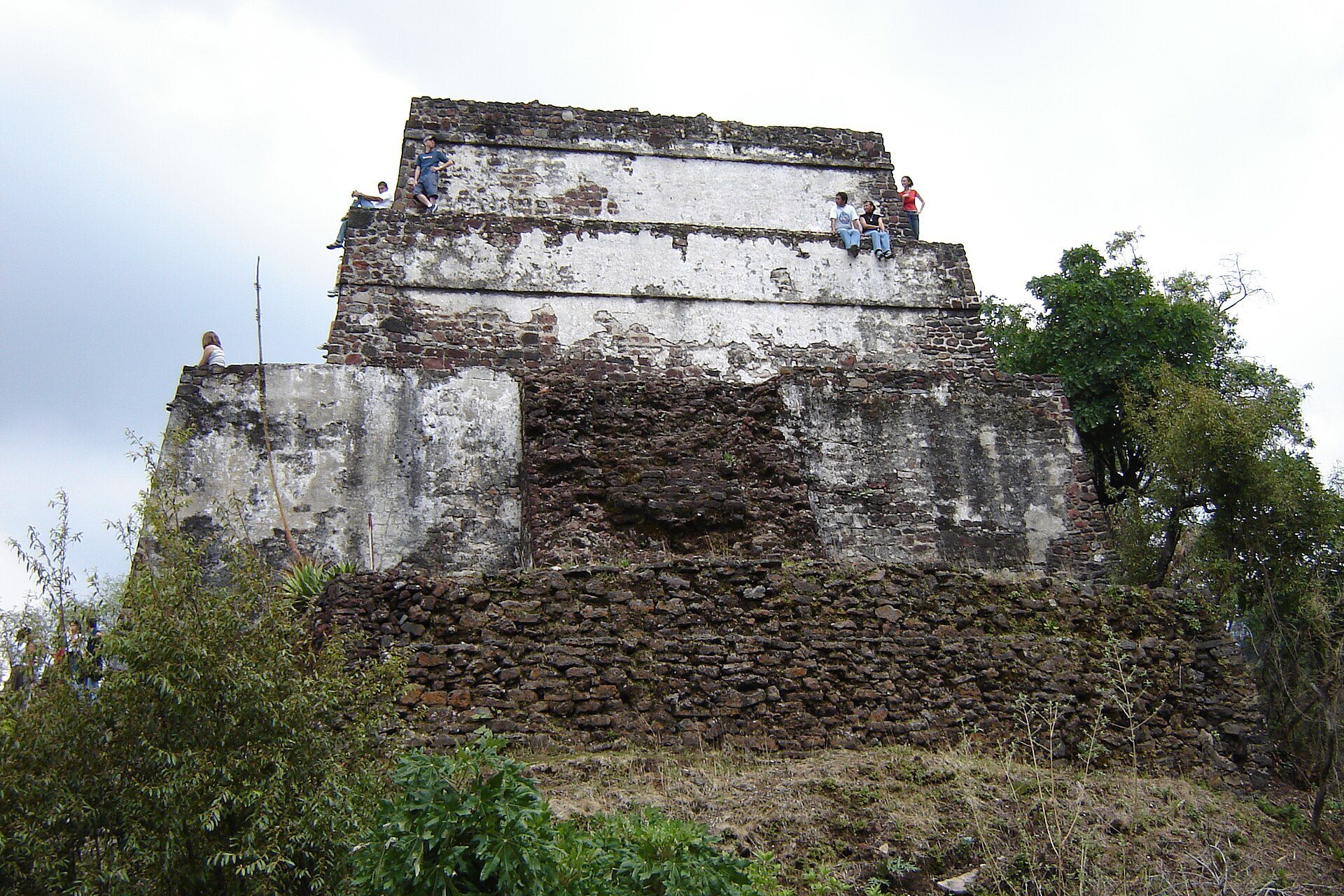
The principal structure, also called the House of Tepozteco, consists of a two-level pyramidal base supporting a temple. The lower level is simple, while the upper body combines a sloping wall with a projecting vertical panel, an arrangement known as talud-tablero. The temple platform is approximately 6.4 metres high and supports a temple base about 3.3 metres high. Surviving temple remains reach roughly 2.7 metres.
Stairs on the western side have broad side walls and thirteen steps. Their narrow dimensions required climbers to ascend with the body slightly inclined and to descend sideways rather than turn their backs on the deity. The thirteen steps related to the thirteen heavens of Mesoamerican cosmology and to the thirteen-day divisions of the ritual calendar. The ascent represented a priest’s movement through the heavens toward Omeyocan, the place from which everything originates, while also following the ritual sequence governed by the deities of each thirteen-day cycle.
Temple rooms
The temple contained two rooms. Two pillars flank the entrance to the first room, where a small central hollow held traces of charcoal and copal, an aromatic tree resin burned as incense in Mesoamerican ritual practice. Two further pillars framed the entrance to the inner sanctuary, which probably contained a small sculpture of Tepoztēcatl.
Sanctuary bench and reliefs
Bench and visual program
A rectangular stone bench is attached to the north, east, and south interior walls of the sanctuary. Its reliefs may indicate that it served as an altar or as a seat for the deity’s effigy or sacred bundle. Together, the bench and pillars formed a visual system referring to Tepoztēcatl, sacrifice, and the duties and authority of rulers.
Several reliefs show streams of water and blood, the atl-tlachinolli, a symbol joining opposing forces that produce life and movement. Signs associated with Tepoztēcatl include axes, a pulque vessel, a shield, and a headdress. Sacrificial imagery includes a tzompantli, a rack or display associated with human skulls, along with a sacrificial rope, paper ornaments, a copal bag, a shield, white banners, and a decapitated head. Ruler-associated imagery includes a feathered jaguar, the claw of Tepeyollotl, a jaguar-linked deity connected with mountains and terrestrial powers, royal diadems marked with turquoise signs and banners, penitence, and maguey spines.
Religious and sacrificial signs
Sign 2 represents a wounded claw or foot marked with five jaguar-like spots. Blood emerges from the ankle, while four feather tufts rise from the stump. Three water streams appear to push or drag the sign, and a human-jaguar deity behind it represents the mountain’s terrestrial forces associated with Tepoztēcatl.
Sign 3 consists of concentric circles resembling shell or jade beads, with a curved hanging festoon, smaller beads, a larger bead, and possibly two deteriorated feather tufts. Eight liquid streams decorated with shell beads appear behind it. Their form indicates blood, while the central jade-bead element gives the sign the interpretation “precious blood.” Sign 11 is a simpler related design, with a shell or jade bead emitting nine water streams and lacking the hanging festoon. Water and blood draw both signs toward the center of the bench.
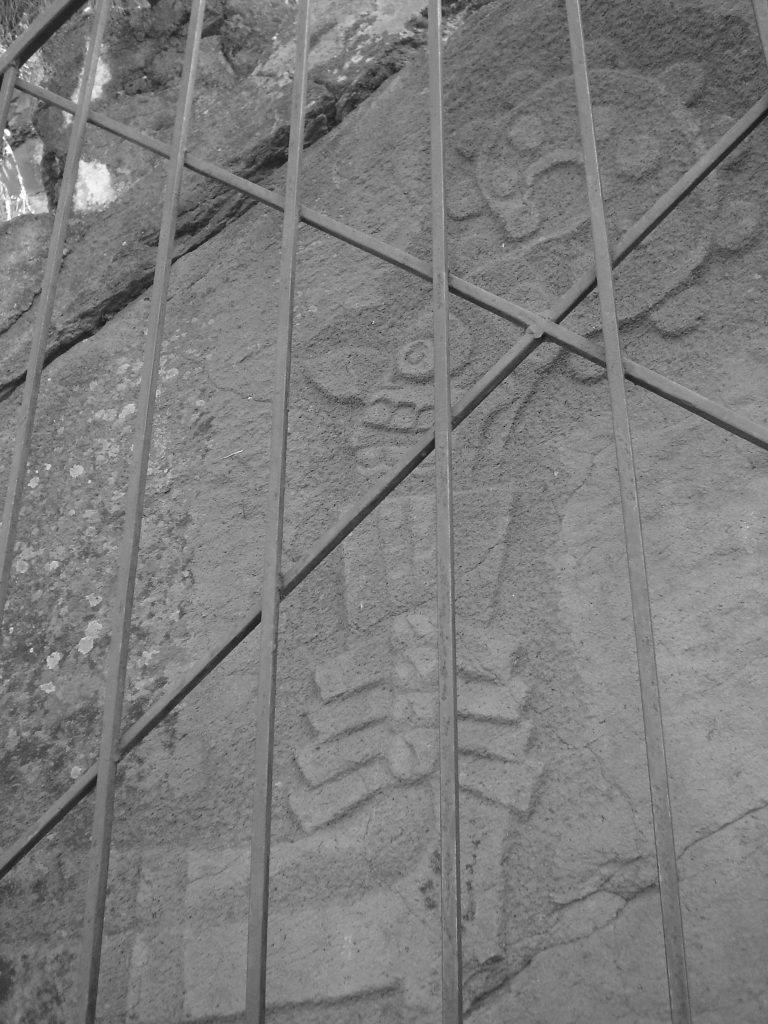
Sign 4 shows part of a skull with an eye and eyebrow. Three blood streams decorated with shell beads issue from a perforation, referring to the hole made when skulls were mounted on a tzompantli. One stream also carries four hanging feather tufts. Sign 13 preserves part of a white round shield, accompanied by a small white banner and four downward-pointing arrows. The shield belongs to the group of sacrificial imagery.
Sign 9 is a paper ornament shaped like tassels, with a loop at the top. It represents the decoration worn by people destined for sacrifice. Sign 14 depicts a probably decapitated head with partly open eyes, a prominent nose, a half-open mouth, and a possible lip ornament. Two vertical lines may represent facial paint or a rough stone surface, while two blood streams emerge behind it.
Axes, shields, and ritual objects
Sign 7 is a stone axe whose blade passes through the upper part of its handle. Four paper bows decorate the handle, while surrounding volutes and blood streams draw the image toward the center of the bench. The axe was an attribute of the pulque gods and part of Tepoztēcatl’s costume.
Sign 8 is a rectangular shield bearing a U-shaped element that represents a vessel, a bone, and the moon at the same time. The moon was understood as a water-filled vessel and a hip bone inhabited by a rabbit, and both the moon and rabbit were associated with pulque. Two rows of feathers, four arrows, and a feathered banner identify the shield with the deity’s warrior status.
Sign 10 is a copal bag tied at its drawstring, an object used in priestly activities. Water ending in shell beads and blood emerging from the bag express the atl-tlachinolli, the union of opposing forces. Sign 15 is a flint axe with a starry eye at the end of its handle, a fourfold paper bow, two hanging tassels, and at least four blood streams. It is identified with the axe carried by Tepoztēcatl. Sign 19 is another broad-headed axe, with a starry eye, a paper ornament with four bows, a final festoon, and three streams of blood and smoke.
The archaeological remains are ruined, and the sanctuary’s former cult image was destroyed during evangelization. The surviving temple, terraces, pillars, bench, reliefs, and glyph-bearing stones preserve evidence of the sanctuary’s religious practices and its relationship to political authority in the Tepoztlán region.