Cerro de la Estrella: A Pre-Hispanic Ceremonial Hill and Archaeological Site
Site at a Glance
- Popularity
- High
- Country
- Mexico
- Primary era
- Medieval
- Eras represented
- Classical, Medieval, Early Modern
- Civilizations
- Aztec
- Site type
- Religious
- Remains
- Sanctuary
On this page10 sections
History
Cerro de la Estrella is a volcanic hill in Iztapalapa, Mexico, known for its pre-Hispanic ceremonial use, including the Mexica New Fire rite. Before Spanish rule it was called Huizachtépetl, meaning “Hill of the Acacias.” Its colonial-era name came from an estate on its lower slopes.
Early settlement and Culhuacán
People occupied the hill’s slopes from at least the Middle Preclassic, around 1000 BC. The Preclassic and Classic were successive periods in Mesoamerican history. An early village was probably linked to Cuicuilco, an early settlement in the Valley of Mexico. Cuicuilco declined around the second century AD, possibly in connection with an eruption of Xitle volcano.
Occupation at Culhuacán appears to have begun near the end of the Preclassic. During the Classic period, the settlement took part in regional trade centered on Teotihuacan, a major ancient city in the Valley of Mexico. After Teotihuacan’s decline around the eighth century AD, some of its inhabitants sought refuge in lakeside communities such as Culhuacán. There, Teotihuacan traditions blended with those of warrior peoples migrating into central Mexico.
From about 900 to 1300, Chichimec groups lived on the hill’s western side and founded Culhuacán. “Chichimec” was a broad label for peoples associated with migrations into central Mexico, rather than the name of a single dynasty. These groups are thought to have been governed first by religious authorities and later by a line of kings.
Mexica rule and the New Fire ceremony
Between 1300 and 1521, the Mexica, often called the Aztecs, subdued the local population and established Iztapalapa as an altepetl, a political territory centered on a town. Iztapalapa and Culhuacán helped protect the southern approach to Tenochtitlan and supplied the city with food.
Cerro de la Estrella was a setting for the New Fire ceremony, a rite held every 52 years when the Mexica religious and civil calendars came together again. The Colhuas first held the ceremony on the summit, and the Mexica continued it, linking the practice to inherited Toltec traditions of Sun worship. The ceremony took place in 1351, 1403, 1455, and 1507. An invasion of Tenochtitlan prevented a fifth observance.
The rite reflected the fear that the Sun might not rise at the end of a cycle, leaving the world in darkness and allowing the tzitzimime, supernatural beings believed to devour people, to descend. The cycle was associated with four signs, Rabbit, Reed, Flint, and House, and with the binding together of the years. At the Templo Mayor, Tenochtitlan’s principal temple precinct, four priests representing deities climbed 13 steps and made 13 symbolic circuits, turning toward the cardinal directions.
At dusk, priests dressed as deities traveled to the hill for a rite around midnight. A captive was placed at the altar, and a fire drill was used on his chest to kindle the New Fire. His heart was then cast into the flames and his body burned. Across the cycle’s final observances, households extinguished their fires, cleaned their homes, discarded household objects and images, and fasted. Some people pierced their ears and offered blood. When the new flame appeared on the summit, people also cut their ears and directed blood toward it. Runners carried the fire to settlements; in Tenochtitlan, it went first to Huitzilopochtli’s temple, then to other temples and homes.
Colonial and modern history
In Iztapalapa’s annual Passion of Christ reenactment, the hill represents Golgotha, the biblical site associated with Jesus’s crucifixion. More than a million people attend the event.
On 14 August 1938, President Lázaro Cárdenas declared most of the hill a national park, covering 1,100 hectares. Urban expansion reduced the protected land and ended its national-park status. The area later became a protected natural area administered by the Government of Mexico City, covering 143 hectares.
Archaeological mapping began in 2004 under archaeologist Miriam Advincula, following the discovery of ceramic fragments and ceremonial structures. The site was first described in 1972 and rediscovered on 5 April 2006. Archaeologist Jesús Sánchez argued that the pre-Hispanic remains and Holy Week rituals alike represented cultural inheritances that merited protection.
Remains
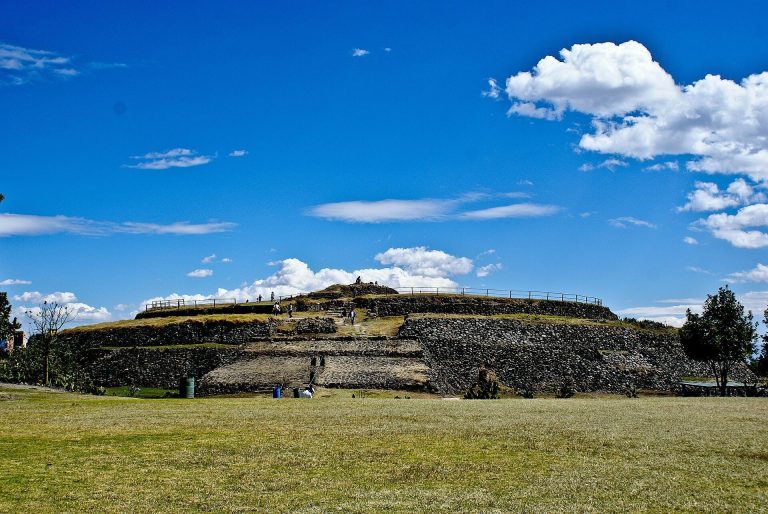
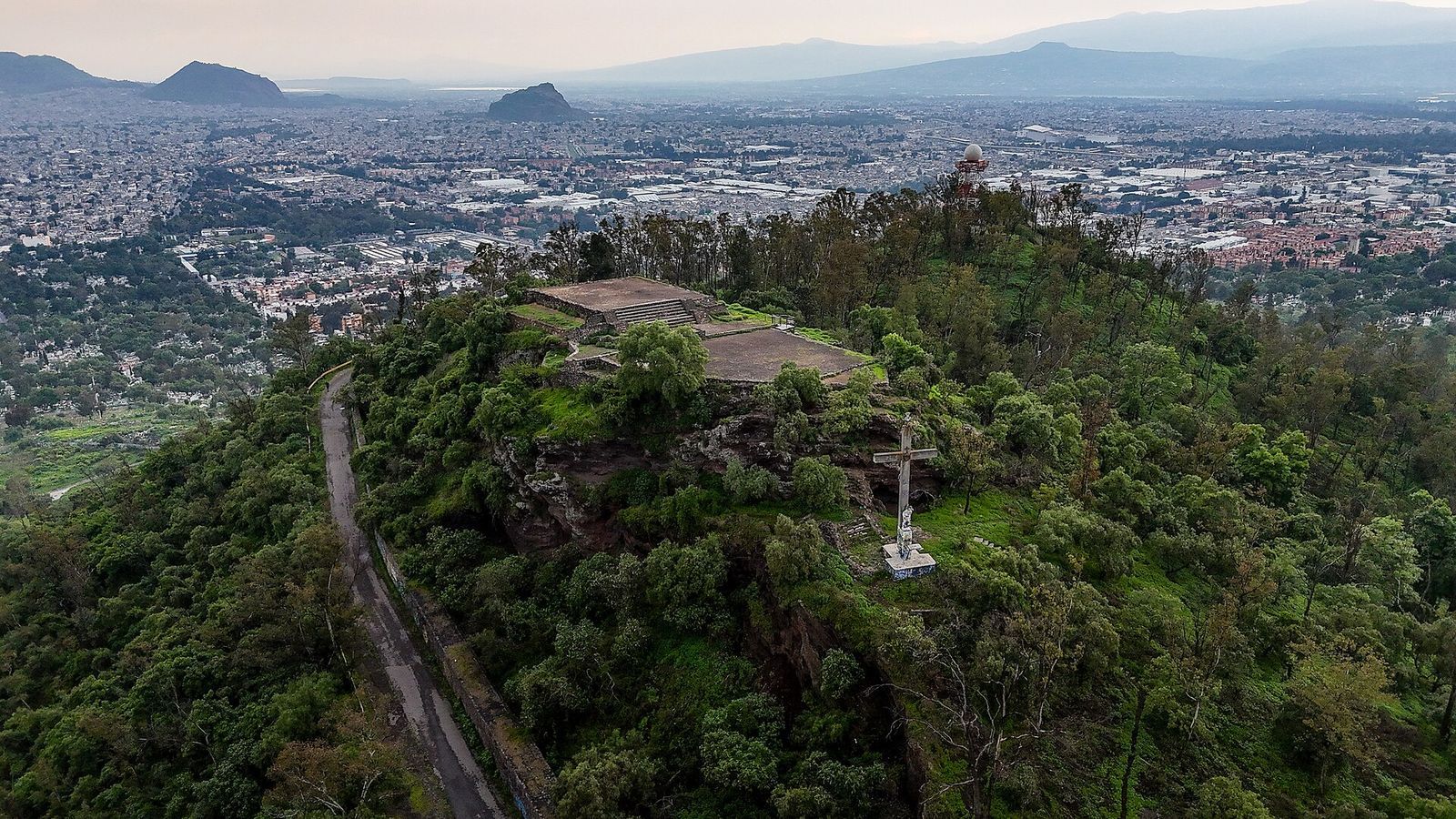
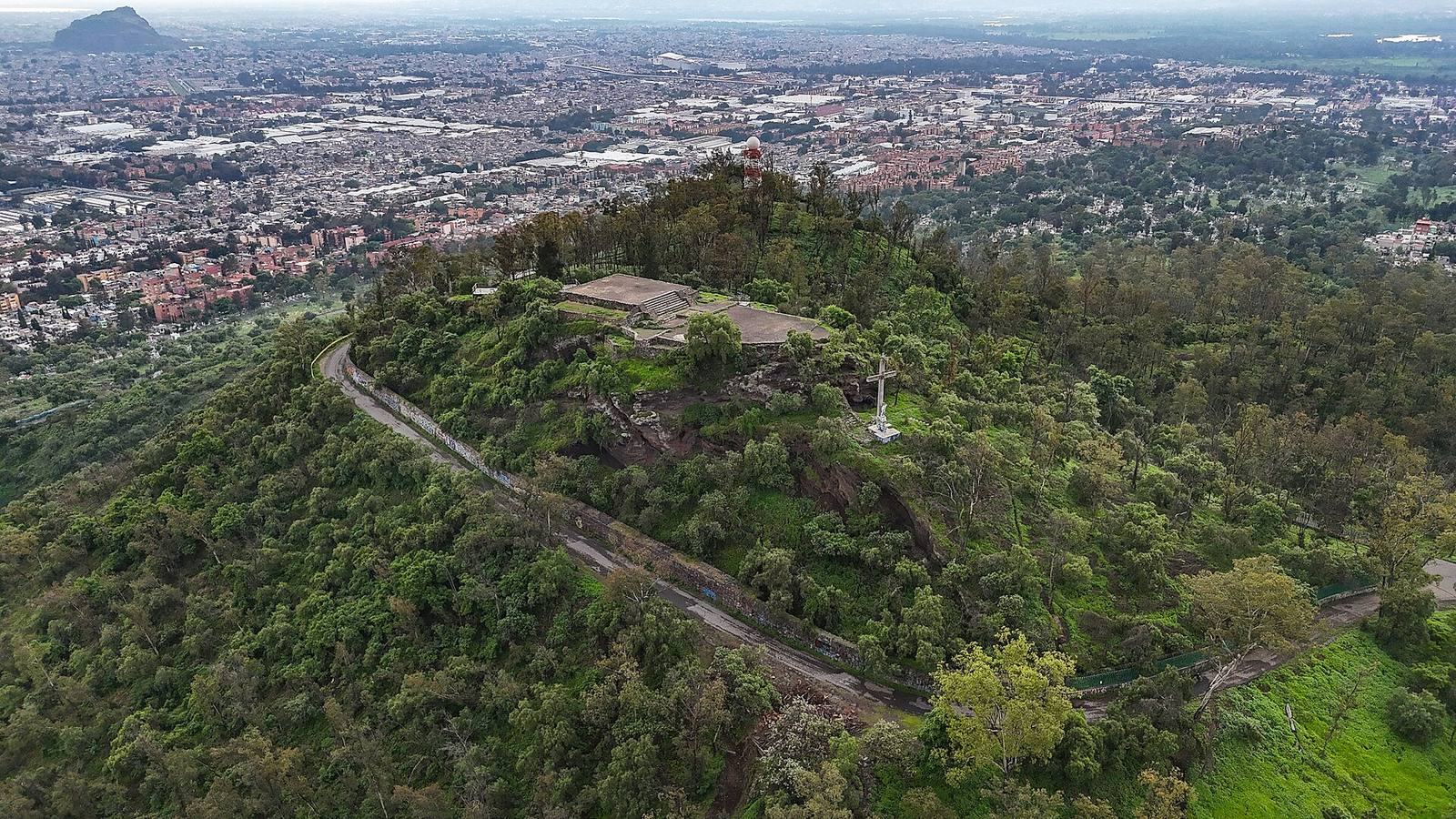
The hill forms part of the Chimalhuacán–Santa Catarina–Estrella volcanic chain. Its summit reaches 2,460 metres above sea level and stands about 220 metres above the surrounding terrain; the base is about 3.8 kilometres wide. Before the Valley of Mexico’s lakes were drained, the hill formed the western end of the Iztapalapa peninsula, between Lake Texcoco and the Xochimilco and Chalco lake basins. The surrounding land is mostly flat, with higher terrain to the east, and includes farmland and natural vegetation within a densely populated urban area. Archaeological remains extend from building foundations in the north to a residential zone partway up the hill and structures on the summit.
Archaeological zones and structures
Northern buildings
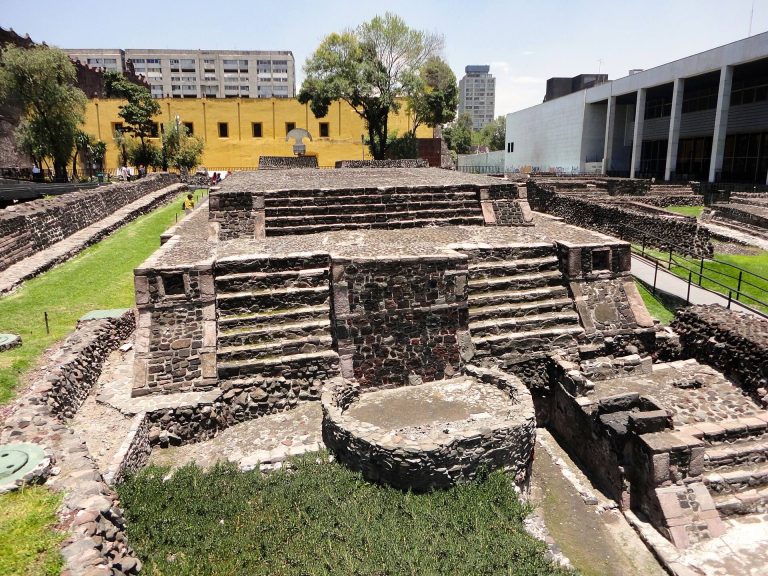
Foundations and building walls in the northern area show Teotihuacan influence. The remains were abandoned around AD 800.
Residential and civic areas
A residential zone occupied the hill’s middle area. Numerous civic structures are thought to have served a growing population.
Summit platforms and pyramid
Platforms on the summit were built between 1300 and 1521. Elsewhere on the hill, a pyramid measuring 160 metres on each side and 20 metres high lies beneath a colonial-era Catholic religious site. Its construction date is uncertain, and the archaeological area covers 25,600 square metres.
Finds and museum
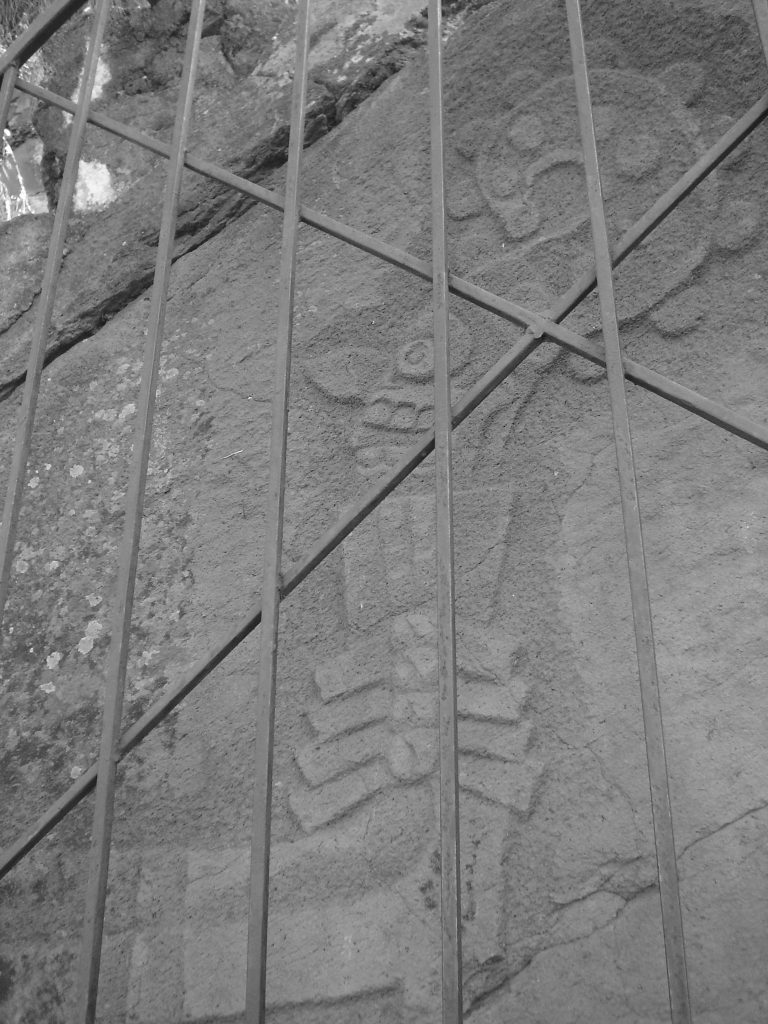
Ceramic and stone objects found west of the hill date to about 500–100 BC and resemble finds from Zacatenco. Human remains more than 2,000 years old have also been found on the hill. At Cerro Chiquito, rock carvings known as petroglyphs are thought to have been made by early groups who settled the slopes. A museum at the site exhibits objects from ancient Mexica culture.