Eifukuji Kita Kofun: The Mausoleum Traditionally Associated with Prince Shotoku

Site at a Glance
- Rating
- 4.3
- Popularity
- Very Low
- Country
- Japan
- Primary era
- Medieval
- External website
- Open
- Eras represented
- Medieval, Early Modern, Modern
- Civilizations
- Yamato
- Site type
- Religious
- Remains
- Tomb
On this page11 sections
History
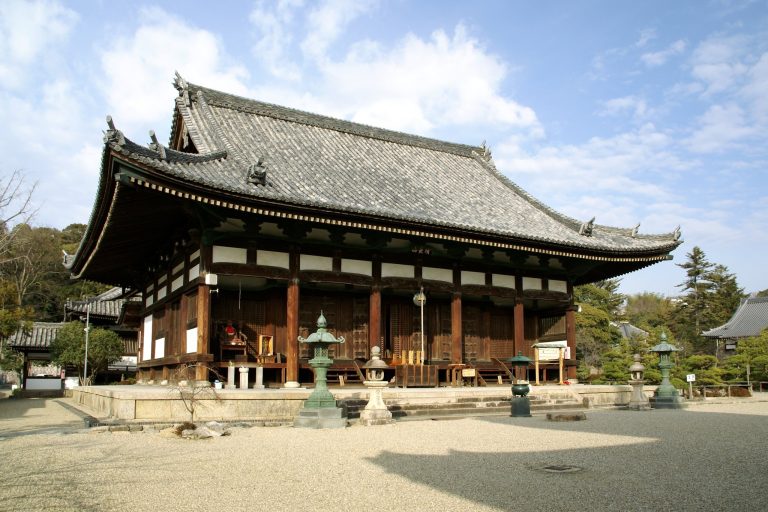
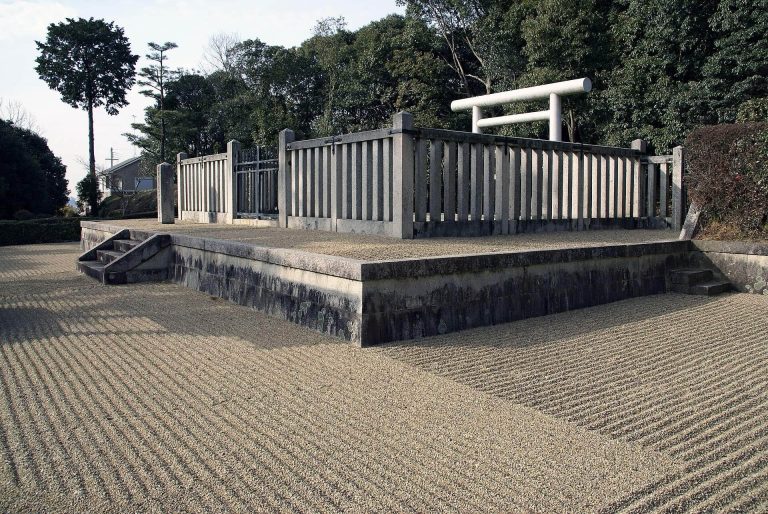
Eifukuji Kita Kofun is a late Kofun-period burial mound in Japan, located at Taishi in Osaka Prefecture and constructed around the latter half of the seventh century during the terminal Kofun and Asuka periods. Also called the Tomb of Prince Shotoku or Kamijo Kofun, it stands on the northern side of the Eifukuji temple compound in the Isonaga Valley burial-mound group. The Imperial Household Agency identifies it as the Isonaga Tomb, the mausoleum of Prince Shotoku, also known as Prince Umayado, while archaeology regards that identification as highly likely rather than completely certain.
Prince Umayado and the Tomb’s Identification
Prince Shotoku was a member of the early Japanese imperial family, the son of Emperor Yomei and crown prince under Empress Suiko. He is traditionally remembered as an important promoter of Buddhism and of a more centralized government. The presumed connection between him and Eifukuji Kita Kofun gives the mound unusual chronological value, because its proposed occupant can be related to a historically identifiable individual.
The stone chamber appears chronologically later than Prince Umayado’s death. This has led to the possibility that the tomb was repaired or that the prince’s remains were reinterred during the reign of Emperor Tenmu, a seventh-century ruler associated with the consolidation of the early imperial state. A biographical tradition states that Prince Umayado had already prepared his burial place at this location by 619. The difference between that tradition and the later appearance of the chamber remains an important qualification in identifying the tomb.
Three coffins point toward a joint burial traditionally described as “three bodies in one mausoleum.” The people associated with the burial are Prince Umayado; Anahobe no Hashihito, the mother of the prince and empress of Emperor Yomei; and Kashiwade no Hokikimi no Iratsume, the prince’s consort. Anahobe no Hashihito is said to have died on December 21, 621, Kashiwade no Hokikimi no Iratsume on February 21, 622, and Prince Umayado on February 22, 622. The Chronicles of Japan instead gives February 5, 621, for the prince’s death and states that he was buried at Isonaga Mausoleum, without describing a joint burial.
The Engishiki, a tenth-century compilation of court regulations and records, lists Isonaga Tomb as a distant imperial tomb in Ishikawa District of Kawachi Province. It gives the protected area as three cho from east to west and two cho from north to south, with three guard households assigned to it. The same work places the tomb associated with Prince Umayado’s mother under a different designation in Heguri District, Yamato Province. The identification of that second tomb remains disputed.
Veneration and the Eifukuji Compound
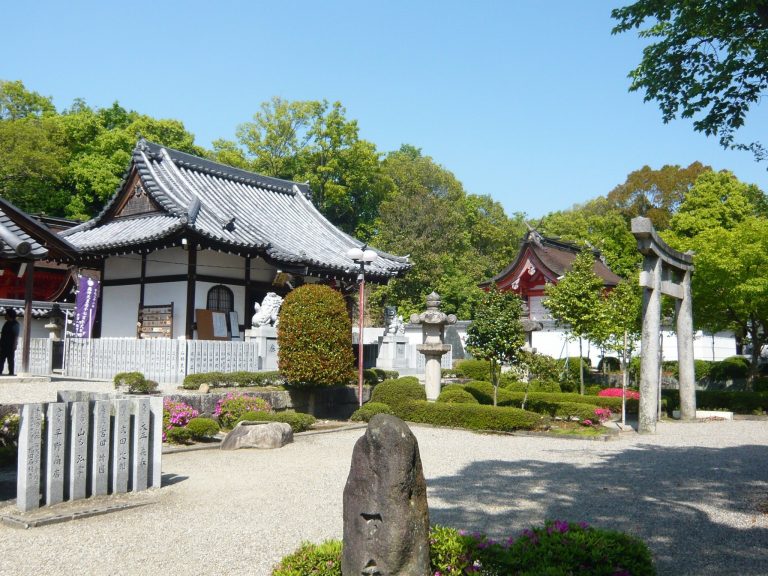
Continuous protection of the mound is connected with the early veneration of Prince Umayado. Eifukuji is traditionally said to have been founded during the reign of Empress Suiko to protect his tomb. The temple compound was later enlarged through the imperial prayer of Emperor Shomu in 724. Emperor Shomu was an eighth-century ruler known for his patronage of Buddhism and major temple institutions.
The historical basis of this foundation tradition remains uncertain because no temple remains or artifacts from the Asuka or Nara periods have been found. The physical arrangement of the compound nevertheless supports its long association with the tomb: the mound lies directly in front of the temple. Eifukuji Kita Kofun belongs to the Isonaga Valley group, which includes four other tombs traditionally connected with Emperors Bidatsu, Yomei, Suiko, and Kotoku. These tombs are collectively known as the Umebachi Imperial Mausoleums.
Medieval and Early-Modern Changes
A fence-like enclosure probably surrounded the mound before the later circuits of boundary stones were installed. A medieval illustrated scroll depicts such a fence, and postholes around the mound support the possibility of an earlier enclosure. From approximately the Kamakura period onward, the mound appears to have been reused for ordinary burials. In 1348, a military force led by Ko no Moroyasu, a fourteenth-century commander, entered and committed acts of violence at the place known as the “Prince’s Mausoleum.”
The middle circuit of boundary stones was erected from 1225 or later, while the lower circuit dates from approximately 1734 or later. In 1790, Jonyo of Higashi Honganji, a Buddhist cleric associated with the Jodo Shinshu tradition, recorded the stone chamber. A roofed structure was built over the entrance in 1844. Jonyo’s account and other historical drawings are especially valuable because the chamber was accessible during the medieval and early-modern periods but is now closed.
Imperial Management and Investigation
The tomb was officially designated as Prince Shotoku’s tomb in 1875. In 1879, the Ministry of the Imperial Household investigated the interior of the stone chamber and produced the Examination Record of Prince Shotoku’s Isonaga Tomb. The Imperial Household Agency now manages the tomb. Its Archives and Mausolea Department investigated and monitored the middle boundary stones from 1999 to 2002, surveyed inscriptions on the lower stones and the condition of the lanterns inside the entrance structure in 2004, and examined a ridge plaque during roof-replacement work in 2005.
Further work surveyed the mound’s topography and monitored the resetting of boundary stones in 2007. Monitoring of the lower stones continued in 2020, followed by preliminary and conservation-related investigations connected with the restoration of stonework in 2021 and 2023. The 2023 investigations were reported in 2025. Earlier drawings and other records made when access was still possible before the Meiji period also remain part of the evidence for interpreting the tomb.
Remains
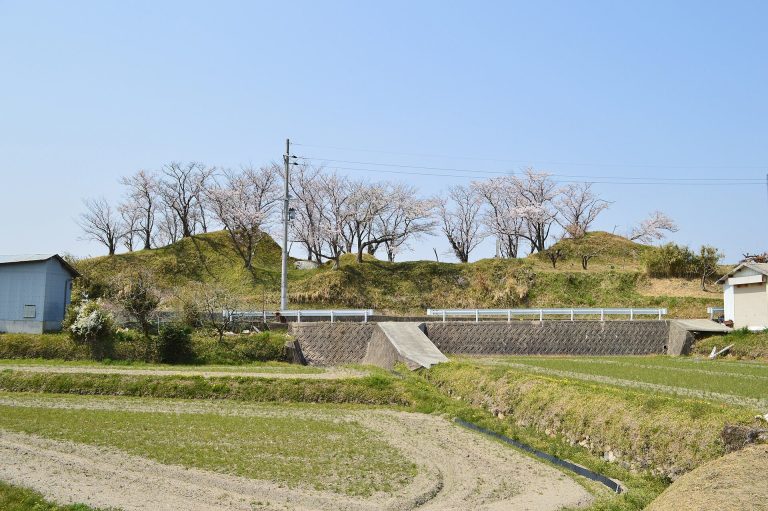
Eifukuji Kita Kofun is classified as a circular mound, although detailed surveys describe its plan as oval. It faces south and occupies the southern slope at the end of a ridge extending southward from the north, in the Isonaga Valley at the foot of Mount Nijo. The mound measures about 43 meters from north to south, 53 meters from east to west, and approximately 11 meters high. Its three stepped tiers are adapted to the hillside, producing an asymmetrical plan. The southern half is understood to have formed a well-shaped circle with an east-west symmetrical front. No stone revetment or applied stone facing has been identified on the mound’s outer surface.
Mound and Boundary Stones
The first and second tiers do not form complete circuits. The first tier is confined to the southern half, while the second breaks off on the northern side where the mound meets the slope. Two later circuits of standing stones surround the foot of the mound. The inner ring is known as the middle boundary stones and the outer ring as the lower boundary stones. Their dates and successive repairs provide a physical record of the long protection and maintenance of the funerary enclosure.
Stone Chamber and Entrance
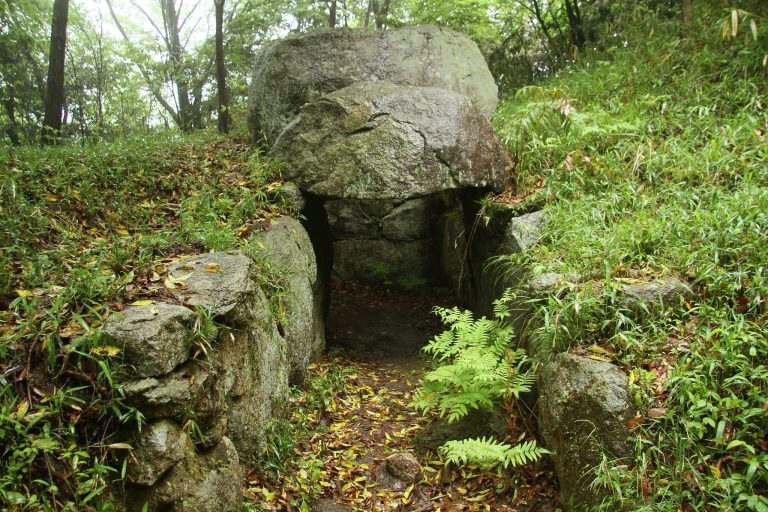
The burial chamber is entered horizontally from the south through a passage rather than from above. It was built from large cut stones and consists of a burial room with a connecting passage. The chamber is now closed, although historical records indicate that its interior could be entered in earlier periods. Its total length is estimated at more than 14.65 meters along the east wall and more than 15.15 meters along the west wall. The burial chamber itself is approximately 5.45 meters long, 3.03 meters wide, and 3.03 meters high.
The passage has no definite total length because it is uncertain whether the stone at the present entrance is the original southern terminal stone. Its east wall is at least 9.2 meters long and its west wall at least 9.7 meters long, while its height is approximately 1.94 meters. The chamber’s side walls consist of two courses of exceptionally large stones, with three cut stones in the lower course and two in the upper course. The rear wall also has two courses and supports two ceiling stones, with the wall positioned immediately below the mound’s summit. The passage walls use four cut stones and support three ceiling stones.
This construction belongs to the Iwayayama type of stone chamber, named for the closely comparable chamber at Iwayayama Kofun in Asuka, Nara Prefecture. A similar chamber is securely associated with Tsukaana Kofun, regarded as the tomb of Prince Kume, Prince Umayado’s brother. These architectural relationships help place Eifukuji Kita Kofun within the later development of elite burial chambers.
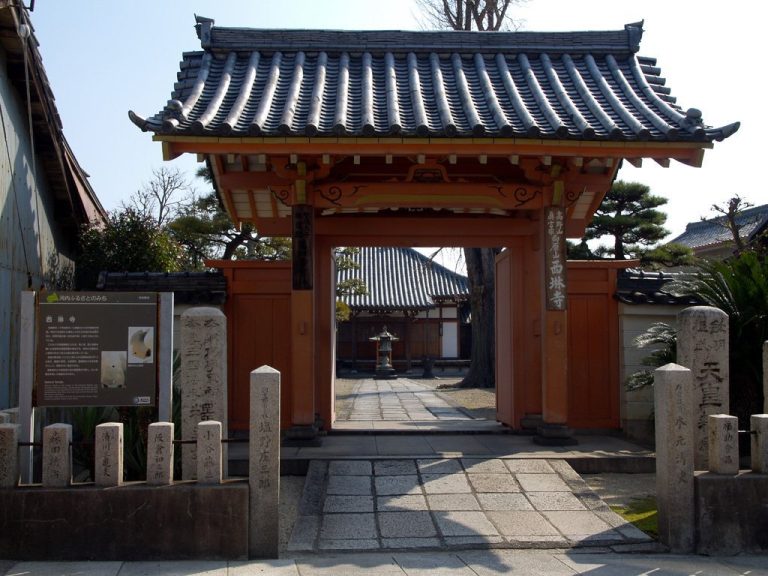
A roofed structure protects the southern entrance. It has a Karahafu, a curved traditional gable, and contains a pair of stone lanterns. The structure was built in 1844. The chamber’s interior is now known through earlier records as well as through the surviving stone construction, rather than through present-day access.
Coffin Platforms and Burial Objects
Three coffin platforms survive inside the burial chamber. They are arranged in a triangular configuration resembling the character for “person,” and fragments of coffins lie around them. Fragments of dry-lacquer coffins, also called kyocho coffins, have been found around the three platforms. These coffins were made by applying layers of cloth and lacquer repeatedly over a wooden or earthen form until a hard, board-like shell was created. Their labor-intensive manufacture was associated with exceptionally high-status burials during the Asuka period, and examples are securely known from seven kofun across Japan.
Coffin fragments held by Anpukuji in Kashiwara have been associated with Eifukuji Kita Kofun, although their original tomb is not certain. They contain 45 layers of silk, including a surviving piece approximately 94 centimeters long and 47.5 centimeters wide. Its thickness is given as about 3 centimeters, with an alternative measurement of 2 centimeters. The surviving edge is interpreted as part of a coffin’s short end. The proposed coffin would fit the eastern platform, which is 1.11 meters wide. Its high-quality silk differs from the hemp cloth used in the coffins of Kengoshizuka and Abuyama. Exchanges between Anpukuji and Eifukuji during the Edo period have also contributed to the proposed association.
Historical Record of the Chamber
An Edo-period drawing by Jonyo depicts a pair of golden lions beside the rear coffin. It also shows a well, a stand for a mirror, and a “diary stone” in the northwestern part of the burial chamber. These details are known from the historical drawing because the chamber is closed today. The drawing preserves evidence of how the interior was understood and represented before modern restrictions on access.
Later Burials and Archaeological Evidence
The mound’s later use for burials is reflected in finds from its exterior, including five-ring pagodas, treasure-casket pagodas, funerary urns, and fragments of human bone. A five-ring pagoda is a Buddhist funerary monument formed from five symbolic elements representing earth, water, fire, wind, and space. A treasure-casket pagoda is another Buddhist memorial monument associated with commemoration of the dead.
Large quantities of Haji ware dishes were recovered from the western edge of the mound. These objects suggest that gatherings resembling a lantern festival took place around it. A full-scale reconstructed model of the burial chamber is exhibited at the Chikatsu Asuka Museum in Osaka Prefecture, while a reconstructed model of the stone chamber is exhibited at the Takeuchi Highway Historical Museum in Taishi.