Ebara Shrine: A Shinto Shrine in Tokyo


Site at a Glance
- Rating
- 4.1
- Popularity
- Low
- Country
- Japan
- Primary era
- Unclassified
- External website
- Open
- Eras represented
- Unclassified
- Civilizations
- Unclassified
- Site type
- Religious
- Remains
- Sanctuary
On this page9 sections
History
Ebara Shrine is a Shinto shrine in Japan, located in Kita-Shinagawa, Tokyo, and was founded in 709. Also known as Tenno Shrine and Kifune Daimyojin, it is traditionally called the “Southern Tenno.” Its early identity was shaped by the worship of water deities, while later enshrinements and warrior patronage connected it with major religious and political traditions in Japan.
Foundation and Early Enshrinements
The shrine was established in southern Shinagawa on September 9, 709, when Takaokami, a Shinto water deity associated with rain and water sources, was transferred from Niu Kawakami Shrine in Yamato Province. In 1029, Toyouke Okami and Amaterasu Okami were brought from Ise Shrine and enshrined at Ebara. Amaterasu Okami is the central sun deity of Shinto and the traditional divine ancestor of Japan’s imperial line, while Toyouke Okami is associated especially with food and sustenance.
In 1062, Minamoto no Yoriyoshi and Minamoto no Yoshiie stayed at Ebara Shrine and Okunitama Shrine to pray during their campaign against the Abe clan in northern Japan. The two warriors purified themselves in the sea off Shinagawa. This event remains linked to ritual practice, as priests from Okunitama Shrine continue to visit Ebara Shrine for purification before the annual Kurayami Festival.
Gozu Tenno and Warrior Patronage
In 1274, Gozu Tenno was transferred from Kyoto’s Gion Shrine, now Yasaka Shrine, to Ebara Shrine. Gozu Tenno was a Buddhist-Shinto guardian deity traditionally associated with protection against epidemics. At Ebara, the deity is identified with Susanoo no Mikoto, a Shinto god associated with storms, the sea, and protection from calamity.
The shrine later received the devotion of the Minamoto, Uesugi, and Tokugawa warrior houses. It served as the tutelary shrine of southern Shinagawa and was eventually moved to its present site. The former sanctuary is associated with Kifune Shrine, which continues the water-deity tradition. The earlier institution was originally known as Shinagawa Kifune Shrine.
Modern Shrine Status and Festivals
In 1868, Ebara Shrine was accorded the status of a quasi-imperial shrine, a special designation connected with imperial rites during the early Meiji period. The shrine maintains that this status belonged to Shinagawa Kifune Shrine, its predecessor. When the Tokyo Ten Shrines designation was created in 1975, however, the document used was associated with Shinagawa Shrine, which was included instead. Both Ebara Shrine and Shinagawa Shrine now describe themselves as former quasi-imperial shrines.
The quasi-imperial shrine system was abolished in 1870, and Ebara Shrine was then classified as a village shrine, a lower-ranking category in Japan’s prewar system of officially ranked Shinto shrines. In 1875, Shinagawa Kifune Shrine was renamed Ebara Shrine after Ebara County. The straightening of the lowest course of the Meguro River to a new mouth later placed the shrine on the river’s northern bank in Kita-Shinagawa.
Ebara Shrine’s principal annual observances are the Kifune Festival in September, the Tenno Festival in early June, and the Otori Festival, also known as the Tori no Ichi market, in November. During the Tenno Festival, a mikoshi, or portable sacred shrine carrying a deity symbolically, enters the sea off Tennoz with a sacred mask. The rite recalls the discovery of a Gozu Tenno mask in the waters off Shinagawa during the first year of the Hōreki era, a mid-eighteenth-century Japanese era. The name Tennoz derives from this event. Because Gozu Tenno is identified with Susanoo and regarded at Ebara as a water deity, the festival is popularly called the “Kappa Festival,” with participants likened to the water creatures of Japanese folklore.
Ebara Shrine was also associated with the Tokaido Seven Lucky Gods pilgrimage, a regional pilgrimage to seven shrines and temples connected with the Seven Lucky Gods. In that tradition, the shrine enshrined Ebisu. It historically held the status of a village shrine and continues to serve as a religious focus for southern Shinagawa.
Remains
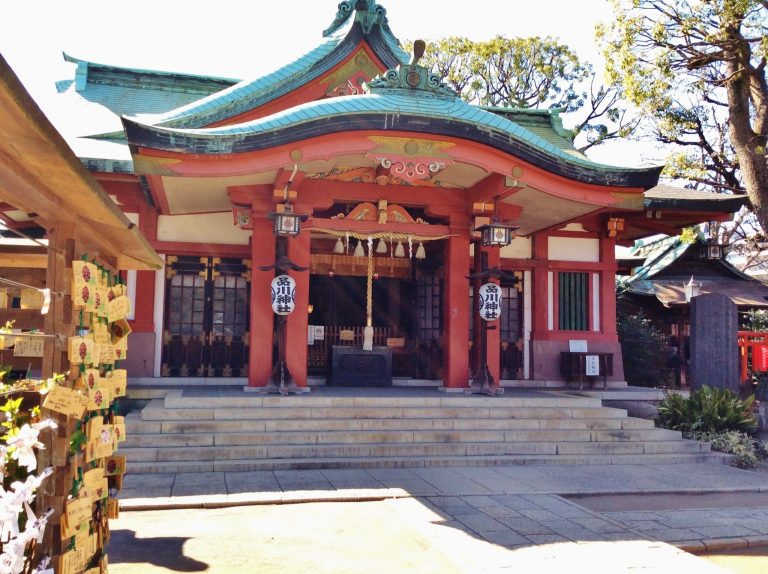
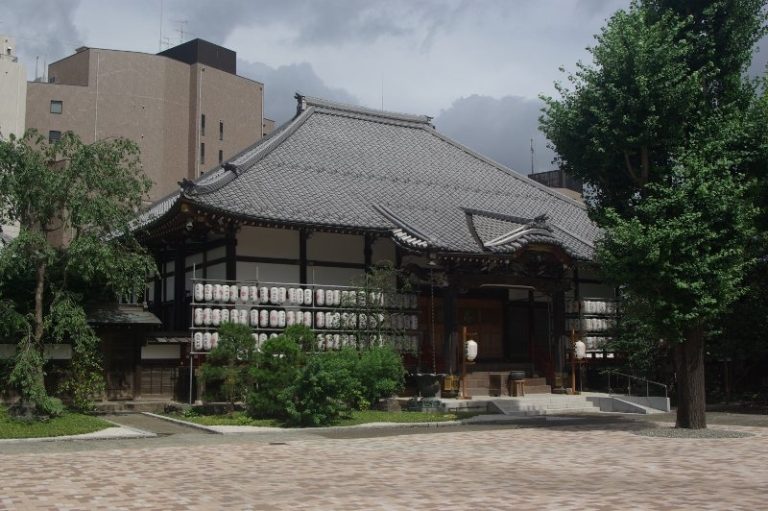
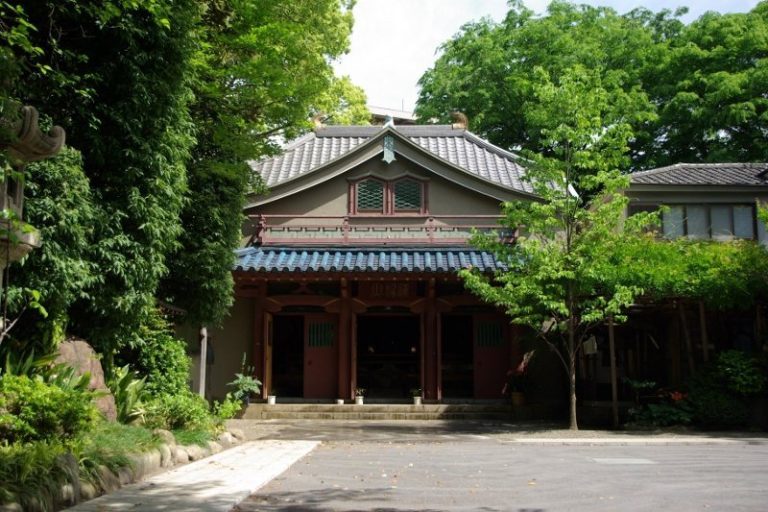
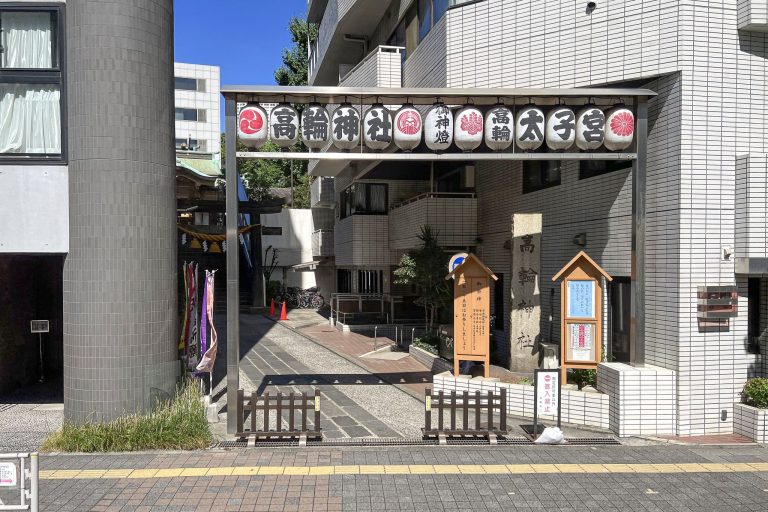
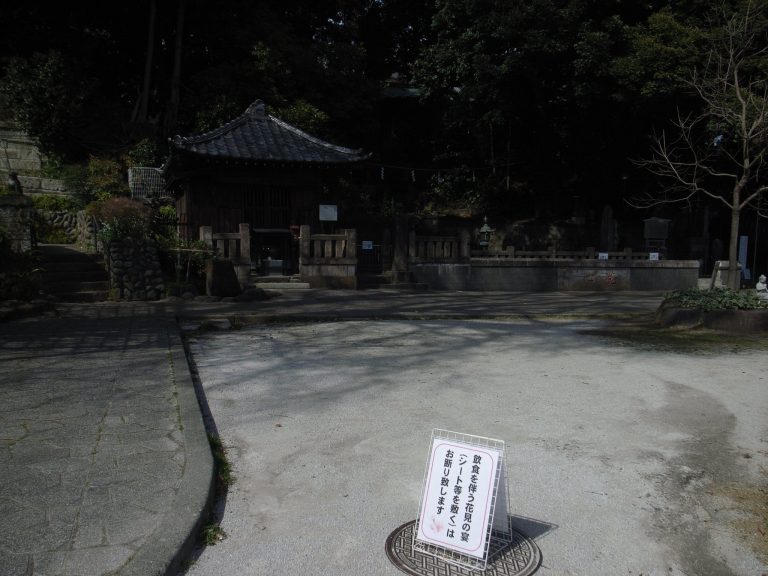
Ebara Shrine stands on the northern bank of the lower Meguro River in Kita-Shinagawa. Its surviving precinct includes a torii, the gate marking the approach to a Shinto sacred area, and a worship hall, where prayers and offerings are made. The former sanctuary location is associated with Kifune Shrine, a separate shrine dedicated to a water deity.
Shrine Precinct
Torii and Worship Hall
The torii marks the entrance to the Ebara Shrine precinct, while the worship hall forms the principal building for prayer and offerings. Together, these features define the present sacred complex on the northern side of the lower Meguro River.
Former Sanctuary
Kifune Shrine
The former sanctuary site is associated with Kifune Shrine, which remains dedicated to a water deity. Its presence preserves the connection between the earlier Shinagawa Kifune Shrine and the present Ebara Shrine, whose history began with the transfer of Takaokami in 709.