Shinagawa Shrine: A Shinto Shrine and Guardian of Tokaiji


Site at a Glance
- Rating
- 4.2
- Popularity
- Medium
- Country
- Japan
- Primary era
- Early Modern
- External website
- Open
- Eras represented
- Early Modern
- Civilizations
- Tokugawa
- Site type
- Religious
- Remains
- Sanctuary
On this page11 sections
History
Shinagawa Shrine is a Shinto shrine in Tokyo, Japan, founded in 1187 under Minamoto no Yoritomo, with a main building in the Nagare-zukuri, or flowing-style, tradition. Shinto is Japan’s indigenous religious tradition, centered on reverence for kami, including deities, sacred forces, and revered natural or ancestral beings. The shrine began when Yoritomo, the founder of Japan’s Kamakura shogunate, invited a maritime-protection deity from Susaki Shrine in Awa Province and enshrined it under the name Shinagawa Daimyojin.
Medieval foundations and additions
The shrine’s religious community expanded during the medieval period. In 1319, Nikaido Doun, a retainer of Hojo Takatoki, added an Inari deity. Inari was widely associated with rice, food, agriculture, and prosperity. In 1478, Ota Dokan enshrined Susanoo as a Tenno deity. Susanoo was a major Shinto kami associated with storms, the sea, and the defeat of harmful forces.
These additions gave Shinagawa Shrine several enduring religious associations. Its principal deities came to include the maritime-safety deity connected with the foundation, Inari, and Susanoo. The shrine was also associated with Inari during the Edo period and later became connected with Daikoku through the Tokaido Seven Lucky Gods pilgrimage, a devotional route linking seven shrines with the Seven Lucky Gods. Daikoku is a popular deity of prosperity and one of those seven figures.
Tokugawa patronage
Shinagawa Shrine acquired a close relationship with the Tokugawa shogunate, the military government that ruled Japan during the Edo period. In 1591, Tokugawa Ieyasu granted the shrine five koku of shrine land under a vermilion seal. A koku was a historical measure of agricultural yield and land income, commonly associated with the amount of rice produced.
In 1600, before leaving for the Battle of Sekigahara, Ieyasu visited the shrine and prayed for victory. The Battle of Sekigahara established his position as Japan’s dominant military ruler and preceded the founding of the Tokugawa shogunate. After his prayer was fulfilled, he donated a mask and the Aoi Mikoshi, a portable shrine. Under Tokugawa patronage, Shinagawa Shrine adopted the Tokugawa crest of three hollyhock leaves within a circle. The Edo shogunate also designated the shrine for repairs and rebuilding financed by the government.
Tokugawa Iemitsu, the third Tokugawa shogun, established the Buddhist temple Tokaiji in 1637. Part of Shinagawa Shrine’s precinct was taken for the temple grounds, and the shrine received substitute land. Because the shrine stood to the northeast, a direction traditionally regarded as vulnerable to harmful demonic influences, it became Tokaiji’s guardian shrine.
Meiji classification and later traditions
On November 8, 1868, Emperor Meiji designated Shinagawa Shrine as one of the quasi-imperial shrines intended to protect Tokyo and pray for the security of its population. In the early Meiji period, a quasi-imperial shrine was a shrine assigned imperial rites connected with the protection of Tokyo and the welfare of its people. Shinagawa Shrine was classified as a village shrine in 1872, within the historical prewar system that ranked Shinto shrines. In 1975, it was included among the Tokyo Ten Shrines.
The shrine’s ritual traditions also continued into the modern period. Its Daidai Kagura, a sacred dance performed by Shinto priests, is said in shrine records to have originated in the 1570s. Transmitted through the Koizumi priestly family, it has been performed four times a year since 1972, at the New Year, spring, annual grand, and Niiname festivals. The Niiname festival is a Shinto harvest thanksgiving rite. Daidai Kagura was designated a Tokyo artistic cultural property in 1963 and a Tokyo intangible folk cultural property in 1976. The shrine itself was renovated in 1964.
Local festival practice preserves another distinctive tradition. During the Shinagawa Tenno Festival, the mikoshi is carried through designated parts of Kita-Shinagawa, Minami-Shinagawa, and Higashi-Shinagawa. A mikoshi is a portable shrine used in processions. The procession follows the Shinagawa rhythm, with a shime-daiko drum attached to the mikoshi and flute and drum accompaniment. Its present form is said to have developed during the Meiji period, when Shimada Chotaro of the Koseki district combined the drum rhythm of the shrine’s kagura with the flute rhythm of Edo musical ensembles.
Remains
Entrance and shrine buildings
Twin-Dragon Torii
At the foot of the entrance stairs stands the stone Twin-Dragon Torii. A torii is the gateway that marks entry into a Shinto sacred precinct. The left pillar bears a carving of an ascending dragon, while the right pillar shows a descending dragon. Together with similar torii at Koenji and Mabashi Inari Shrine, it is known as one of Tokyo’s “three torii.”
Main shrine and precinct features
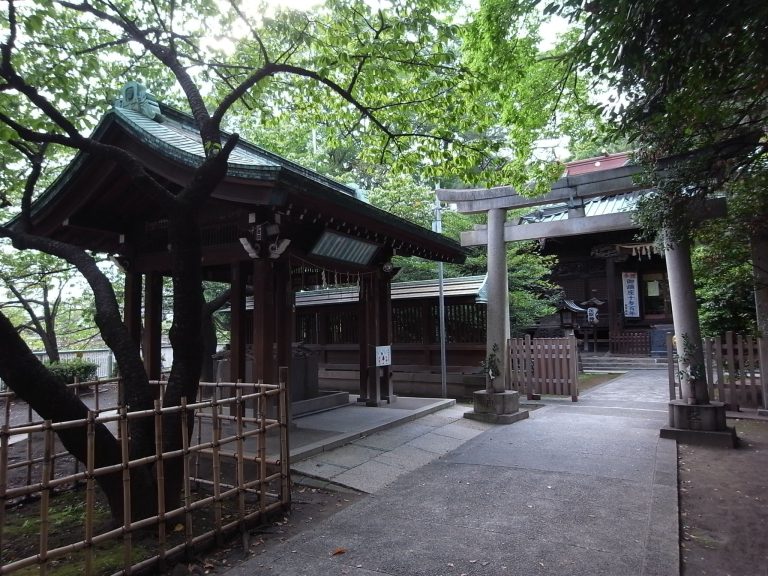
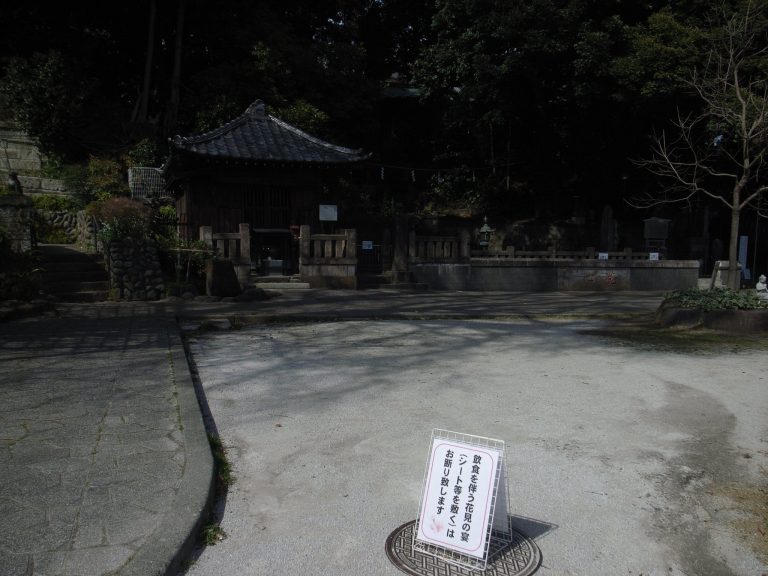
The main shrine building follows the Nagare-zukuri form, in which the roof extends forward to create a prominent canopy over the worship area. The precinct also contains a stone water basin dating from the Keian period and stone lanterns. These elements remain alongside the shrine’s religious buildings and provide physical evidence of the precinct’s continuing architectural and ceremonial character.
Fuji mound and sacred objects
Shinagawa Fuji
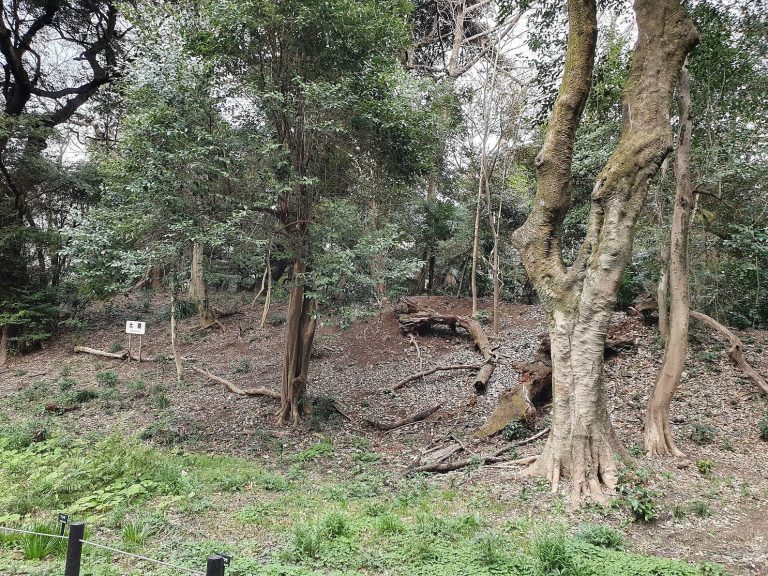
Shinagawa Fuji is a fujizuka, an artificial mound representing Mount Fuji. It rises approximately 15 meters and is described as the tallest fujizuka in Tokyo. Such a mound provided a substitute for the pilgrimage to the actual mountain, allowing people who could not undertake that journey because of age, illness, or poverty to make a comparable religious climb.
Mikoshi and ritual traditions
The precinct preserves the Aoi Mikoshi associated with Tokugawa Ieyasu’s donation. During the Shinagawa Tenno Festival, the shrine’s mikoshi is carried through the parish districts with a shime-daiko attached to it. The shrine’s Daidai Kagura uses the ryuteki flute together with the distinctive Shinagawa rhythm, linking its sacred dance tradition with the musical practice of the local procession.
Shinagawa Shrine also preserves the Shinagawa Shrine Documents. Behind the shrine is the grave of Itagaki Taisuke, a nineteenth-century Japanese politician and former samurai who became a leading advocate of the Freedom and People’s Rights Movement. The grave originated on the former site of Kogen-in, a subtemple cemetery associated with Tokaiji’s Oyama Cemetery. After the Great Kanto Earthquake, the temple moved to Karasuyama in Setagaya Ward, while the grave remained. It is not part of the shrine precinct, although reaching it requires passing through the shrine grounds. The tombs of Itagaki’s eldest son and grandson, who inherited his grandfather’s title, are elsewhere at Fuji Cemetery in Shizuoka.