Dürnstein Castle Ruins: Medieval Fortress Above the Wachau
Site at a Glance
- Rating
- 4.7
- Popularity
- Medium
- Country
- Austria
- Primary era
- Medieval
- External website
- Open
- Eras represented
- Medieval, Early Modern, Modern
- Civilizations
- Habsburg, Holy Roman Empire
- Site type
- Military
- Remains
- Castle
On this page8 sections
History
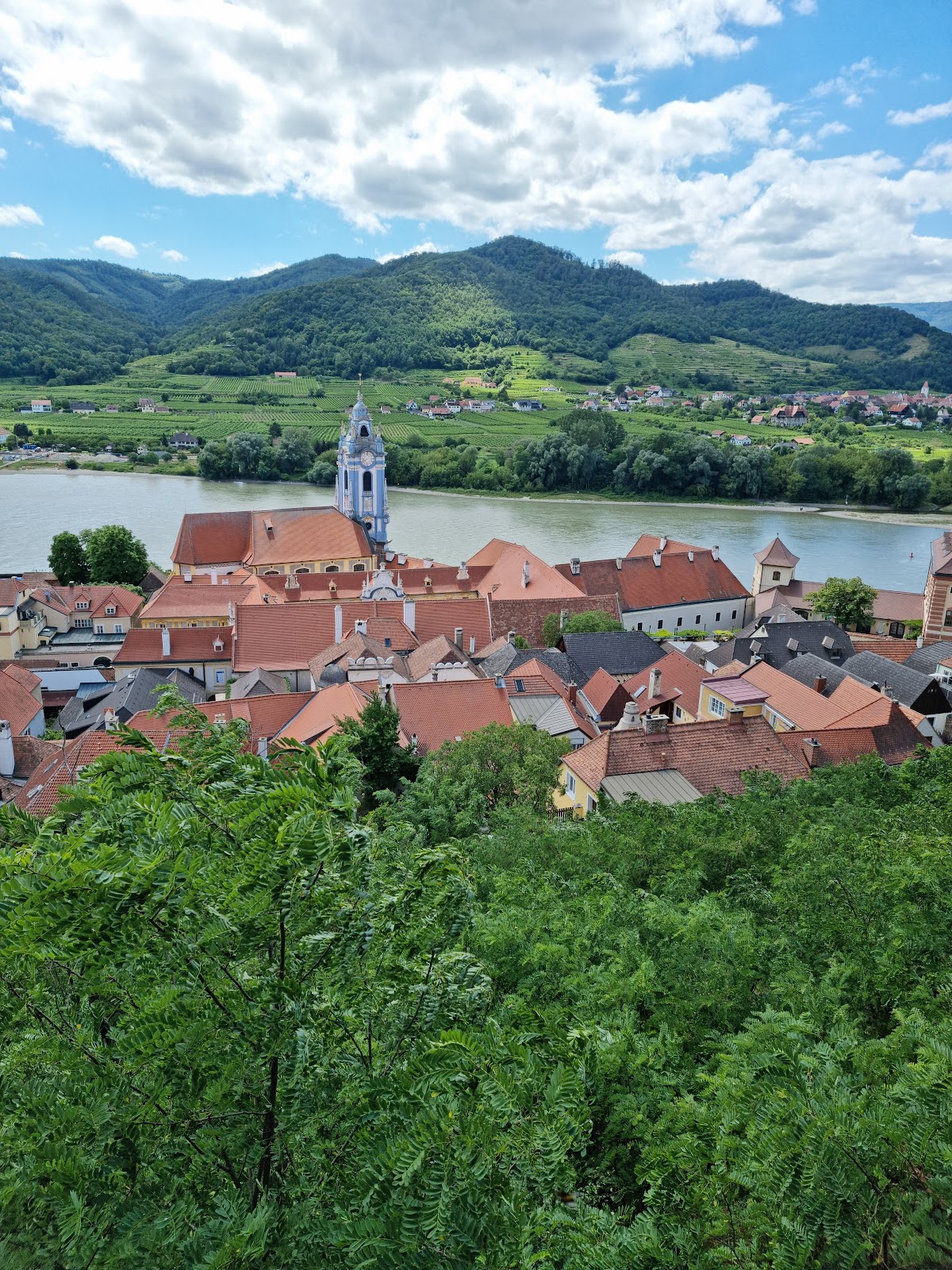
Dürnstein castle ruins in Austria are the remains of a medieval stone hill castle established by the Kuenringer dynasty above the town of Dürnstein in the Wachau. The stone fortress is generally dated to the mid-12th century, around 1150, and formed the citadel of a connected defensive complex with the town.
Kuenringer foundation
Azzo of Gobatsburg, regarded as the founder of the Kuenringer family, acquired the surrounding territory from Tegernsee Abbey, a Benedictine monastery in Bavaria. His grandson, Hadmar I, built the stone castle. In 1158, a knightly family using the name Dürnstein was recorded as holding the territory as a fief from the Kuenringers. This period marked the establishment of Kuenringer power in the Wachau and the fortress’s role within it.
The castle and town operated as a single defensive complex, with the hilltop stronghold serving as its citadel. Its social status was that of a ministerial establishment. A ministerial was a member of the class of service nobles who held administrative and military positions for higher-ranking lords.
Richard I’s captivity
From December 1192 to March 1193, King Richard I of England was held at Dürnstein, or at a secondary castle under the control of Hadmar II. Richard was returning from the Third Crusade, the late-12th-century campaign by European rulers and armies to recover Jerusalem and other territories after Saladin’s victories.
His capture had been initiated by Leopold V, Duke of Austria, whom Richard had humiliated during the capture of Acre in 1191. Acre was a major fortified port in the eastern Mediterranean taken by the crusading army. Richard was later transferred to territories controlled by Emperor Henry VI, who obtained a large ransom from England.
Territorial administration and rebuilding
A chapel dedicated to John the Evangelist was mentioned in 1306. In 1355, the Dürnstein line died out, bringing Kuenringer rule in the Wachau to an end. Duke Albert II acquired Dürnstein from the heirs, and the estate was generally administered thereafter by officials of the territorial prince.
In 1476, Emperor Frederick III granted Dürnstein an armorial charter showing the town surmounted by the castle. In 1573, Emperor Maximilian II enfeoffed Reichard Streun von Schwarzenau, president of the Court Chamber, a central financial and treasury office of the ruler’s government, with Dürnstein. The estate later passed to the Lords of Zelking in 1622, the Zinzendorf family in 1634, and the Starhemberg counts, later princes, in 1663.
Reichard Streun von Schwarzenau reconstructed the castle as a fortress in 1588. During the final phase of the Thirty Years’ War, a European conflict fought from 1618 to 1648, Swedish forces under Field Marshal Lennart Torstensson captured Dürnstein in 1645. When the Swedish troops withdrew after the peace settlement, they blew up the castle’s gate complex and the fortifications more generally.
Abandonment and later intervention
By 1662, the castle was no longer inhabited and had no garrison, although it was still regarded as capable of restoration. In 1663, Dürnstein Castle was listed among the places of refuge during the threat of a new Ottoman invasion. By 1679, the castle house was no longer habitable, and the abandoned complex had begun its transition into a ruin.
In 1882, the Starhembergwarte was erected above the ruins. Prince Camillo Starhemberg paid for an access path on the mountain, and the path survives as part of the Wachau World Heritage Trail. The ruins are municipally owned and listed as a cultural heritage monument.
Remains
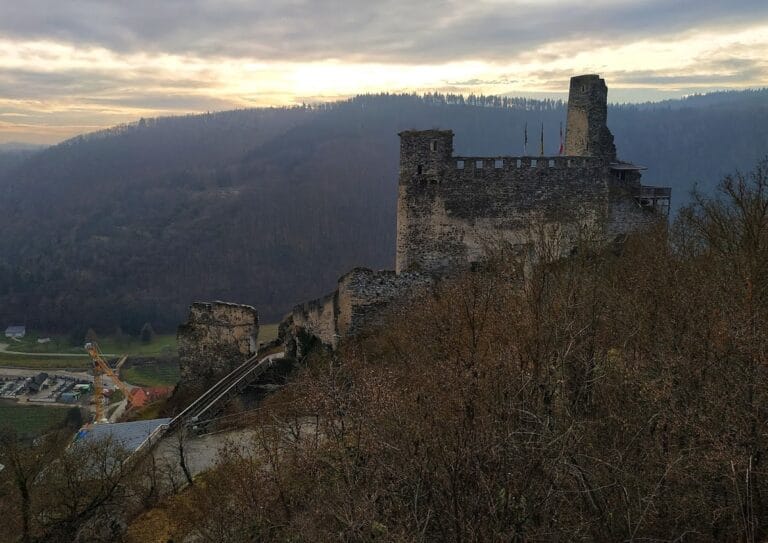
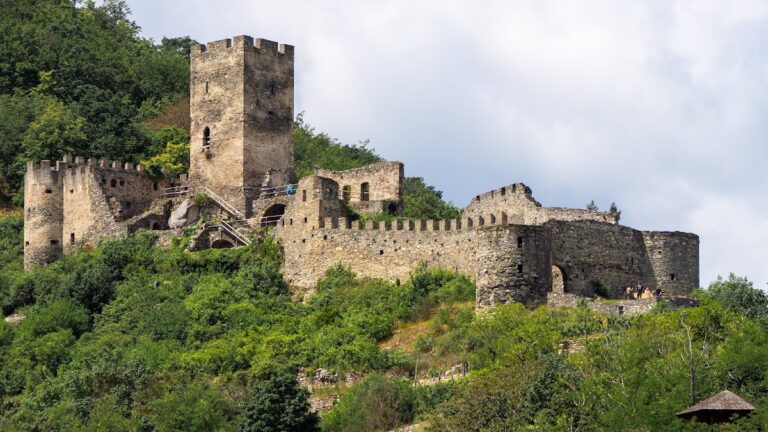
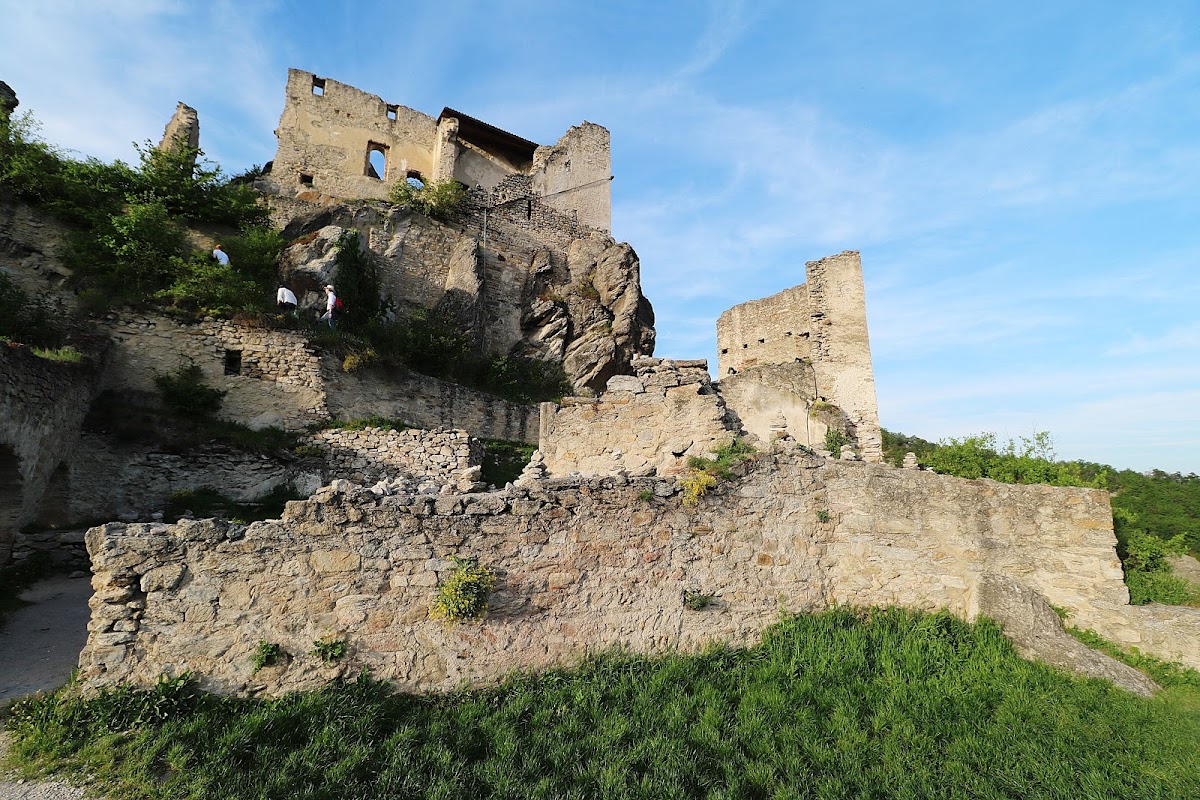
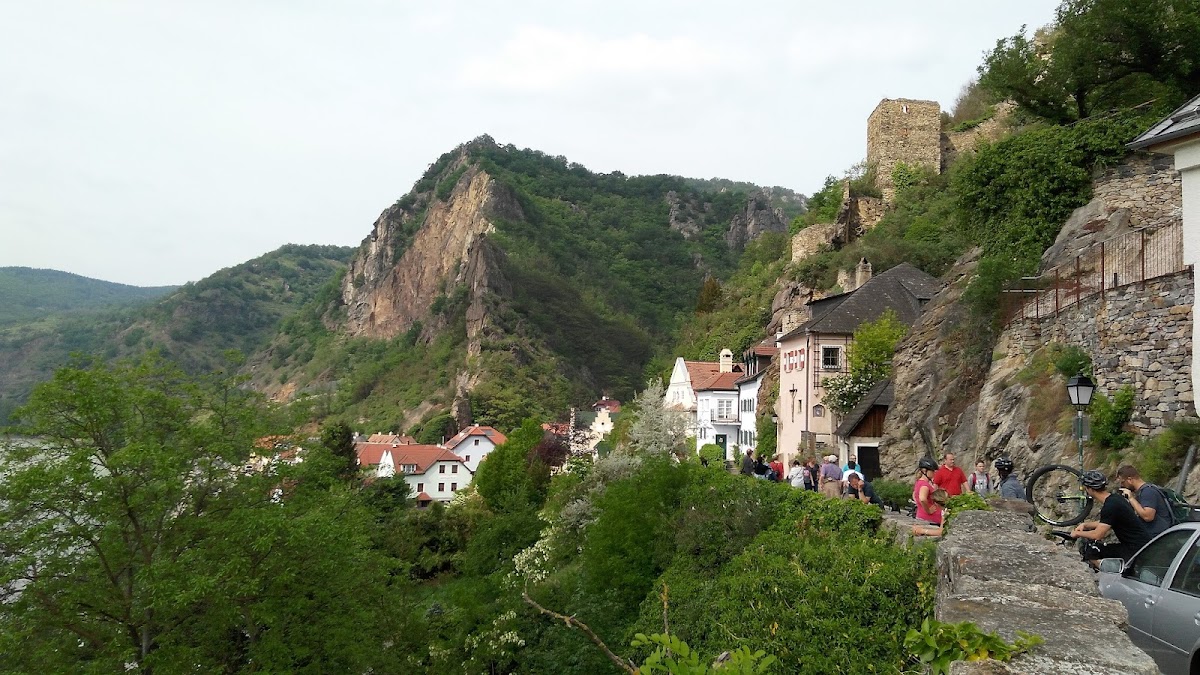
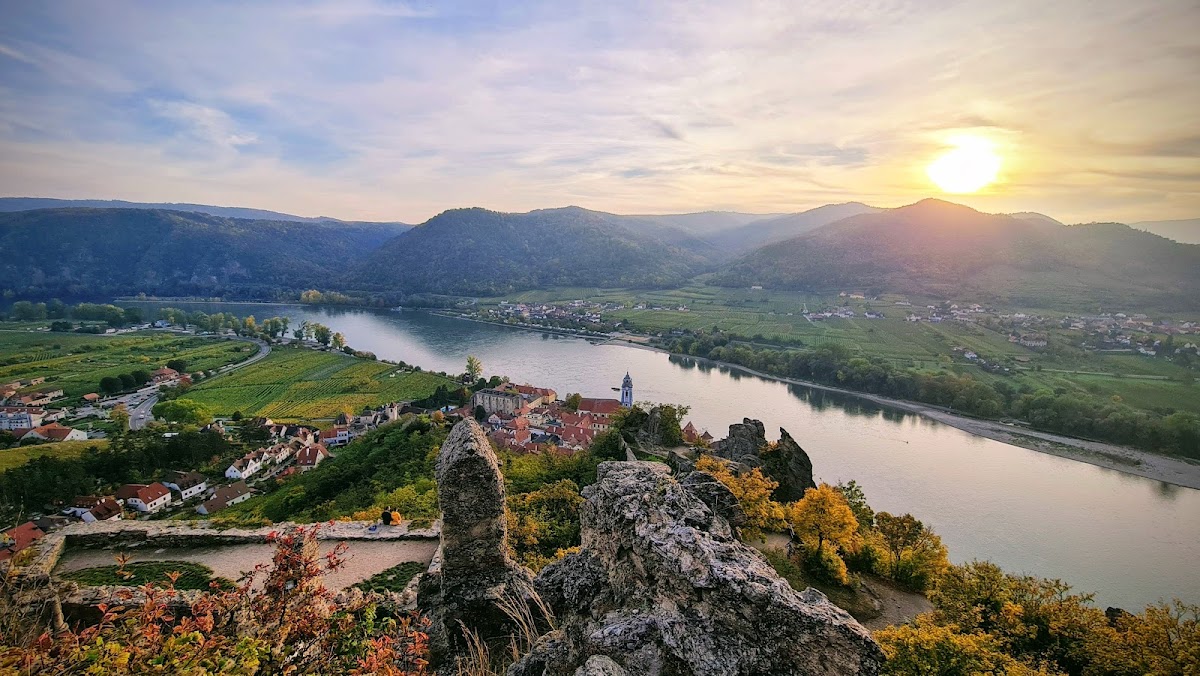
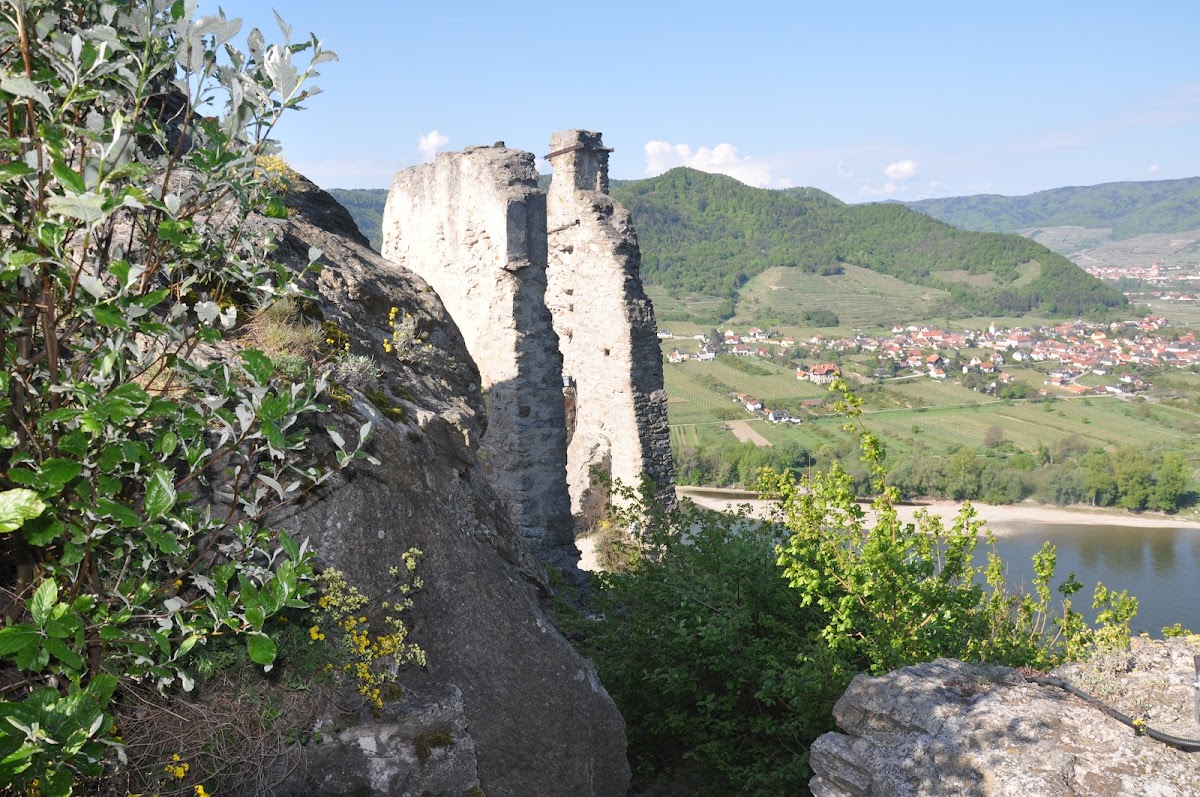
The ruins occupy a rocky hilltop above Dürnstein in the Wachau valley on the Danube, at approximately 360 metres above sea level. They preserve the remains of a medieval stone hill castle set directly within the rock. A shared defensive wall joined the castle to the town and also functioned as an extension of the town wall.
Medieval castle remains
Above the chapel lay the former inner castle courtyard. A large natural rock stood within this space, with a cellar cut into the rock. The surviving medieval fabric includes the ruins of the castle gate complex and the main tower, together with interior areas of the former castle. The remains are in a ruined condition, while the relationship between the hilltop fortress, its courtyard, and the defensive wall preserves the basic organization of the medieval complex.
Starhembergwarte
The Starhembergwarte is a lookout tower built above the castle ruins in 1882. Its name refers to the Starhemberg family, while the German word for lookout tower describes its function. The structure belongs to the later history of the hilltop and is distinct from the medieval castle fabric.