Burg Falkenberg: A Historic Hilltop Castle in Bavaria
Site at a Glance
- Rating
- 4.6
- Popularity
- Low
- Country
- Germany
- Primary era
- Early Modern
- External website
- Open
- Eras represented
- Medieval, Early Modern
- Civilizations
- Holy Roman Empire
- Site type
- Military
- Remains
- Castle
On this page12 sections
History
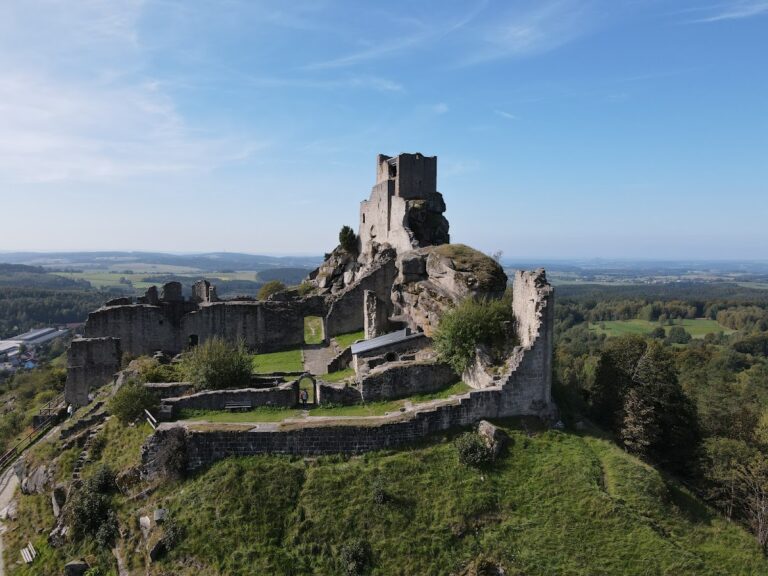
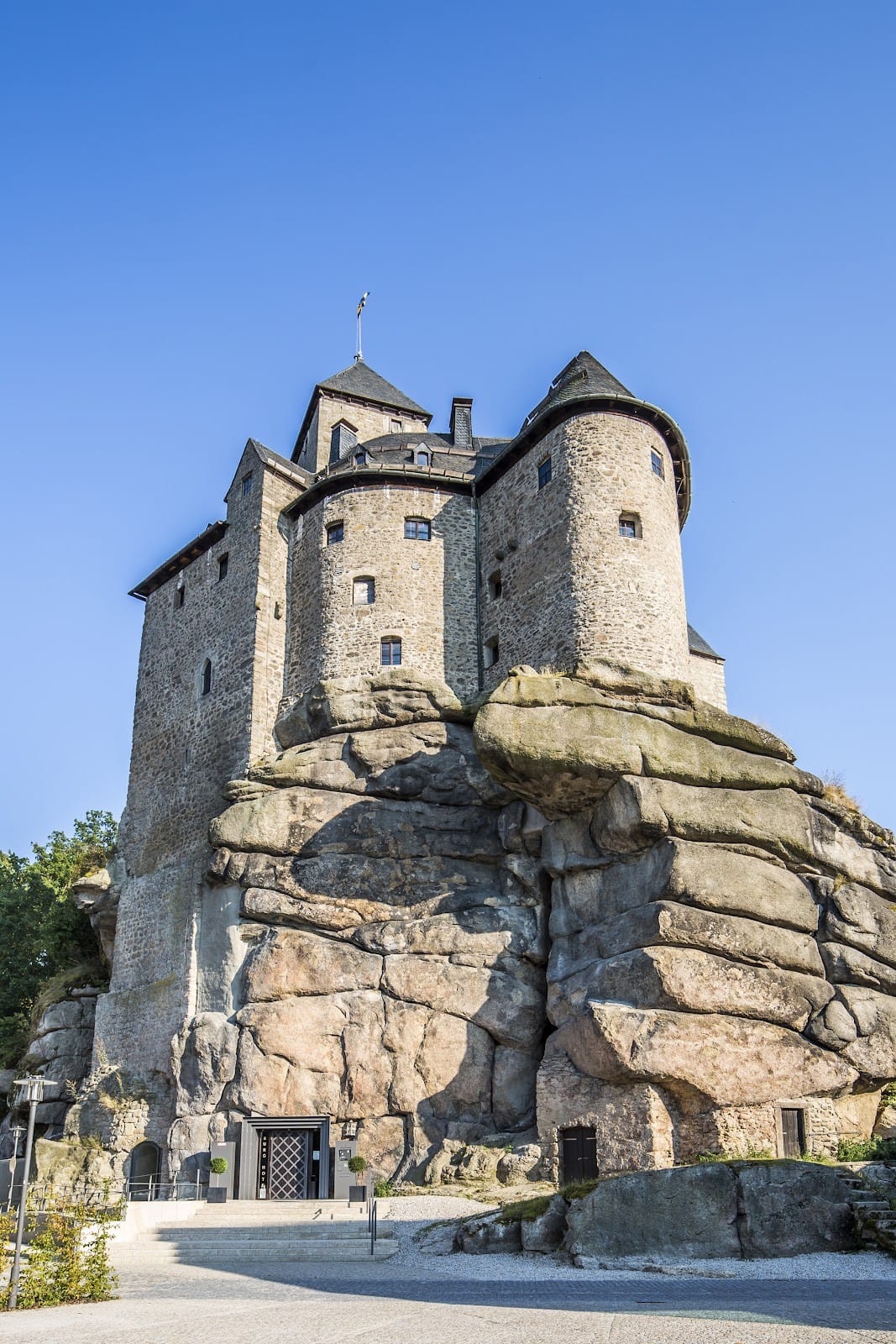
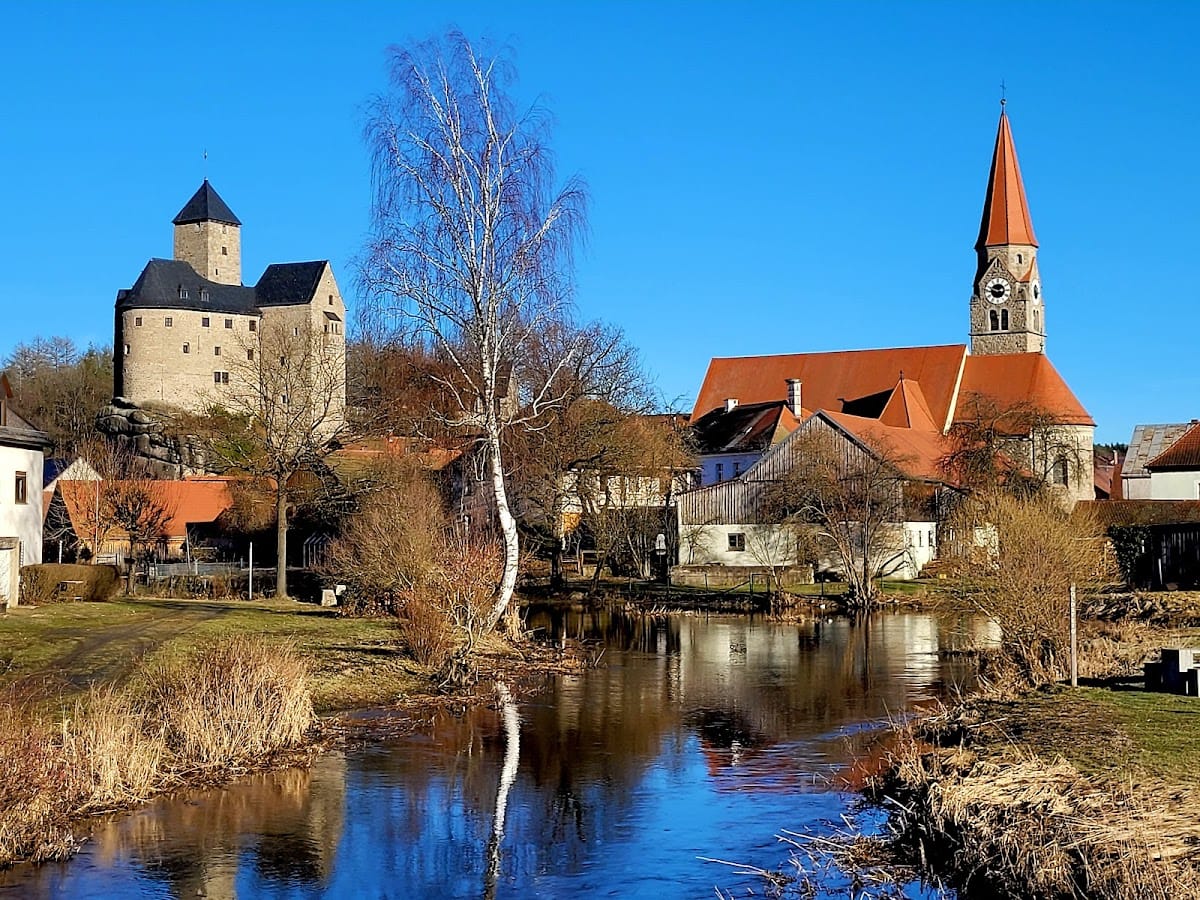
Burg Falkenberg is a historic hilltop castle in Falkenberg, Germany, whose oldest remains date to the eleventh century and whose surviving form has been described as Renaissance in style. The castle occupies a rocky outcrop above the village near the Waldnaab and was first documented indirectly in 1154 through the name “Pilegrin de Valkenberch.”
Medieval Ownership
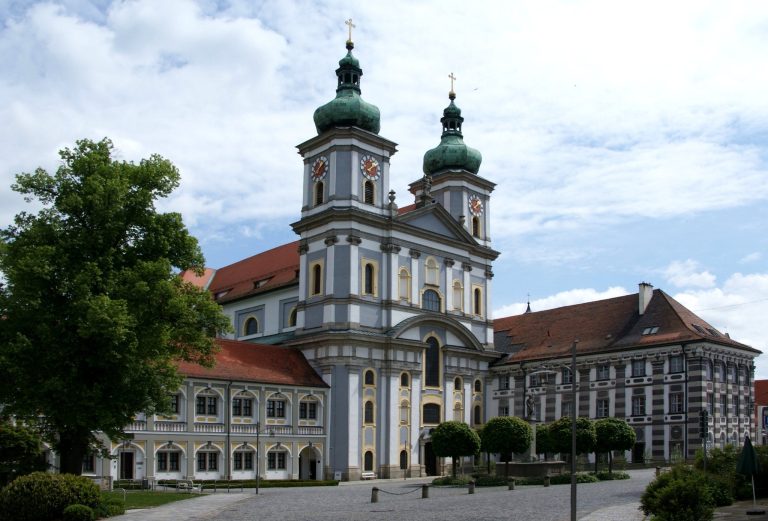
The castle initially belonged to the Falkenberg family. By 1280 it had passed to the Leuchtenberg family, and around 1300 it came into the possession of Waldsassen Abbey, a Cistercian monastery in Bavaria. After 1486, Abbot Udalrich II Birker used Burg Falkenberg as his retirement residence. By about 1571, the castle was held by the Electorate of the Palatinate, a territory of the Holy Roman Empire whose ruler held an electoral vote in the choice of the emperor.
War, Secularization, and Alteration
Shortly before the end of the Thirty Years’ War, the major European conflict fought from 1618 to 1648, Swedish troops under General Königsmarck shelled and captured the castle.
In 1803, secularization transferred the former Waldsassen property to the Kingdom of Bavaria. This process moved church property into secular ownership and ended the institutional ownership of many monasteries. In 1809, one-third of the keep was dismantled, and the removed stones were reused to build the parish house.
Schulenburg and the Modern Castle
Friedrich-Werner Graf von der Schulenburg, a German diplomat and former ambassador to Moscow, owned the castle in the twentieth century. He rebuilt and restored it between 1936 and 1939, intending to spend his retirement there. His involvement in the 20 July 1944 attempt against Adolf Hitler led to his execution at Berlin-Plötzensee on 10 November 1944.
The castle was placed under heritage protection several decades after the nineteenth-century alterations. Its medieval and early-modern archaeological remains, including traces of predecessor buildings, earlier construction phases, and the former outer bailey, are protected as an archaeological monument. The municipality of Falkenberg purchased the complex from the Schulenburg heirs in December 2008. After modernization, the castle became a cultural center and event venue, with its official inauguration in November 2015 and public visits and events beginning in early 2016. The nonprofit Forum Falkenberg, Friends of the Castle, operates the site.
Burg Falkenberg belongs to the “das zwoelfer” museum network of the Tirschenreuth district. Its museum presents the history of Friedrich-Werner Graf von der Schulenburg and his reconstruction of the castle during the 1930s. The complex is also protected as an architectural monument and recognized as a geologically significant geotope and natural monument. It has received Bavaria’s official “Most Beautiful Geotopes” designation.
Remains
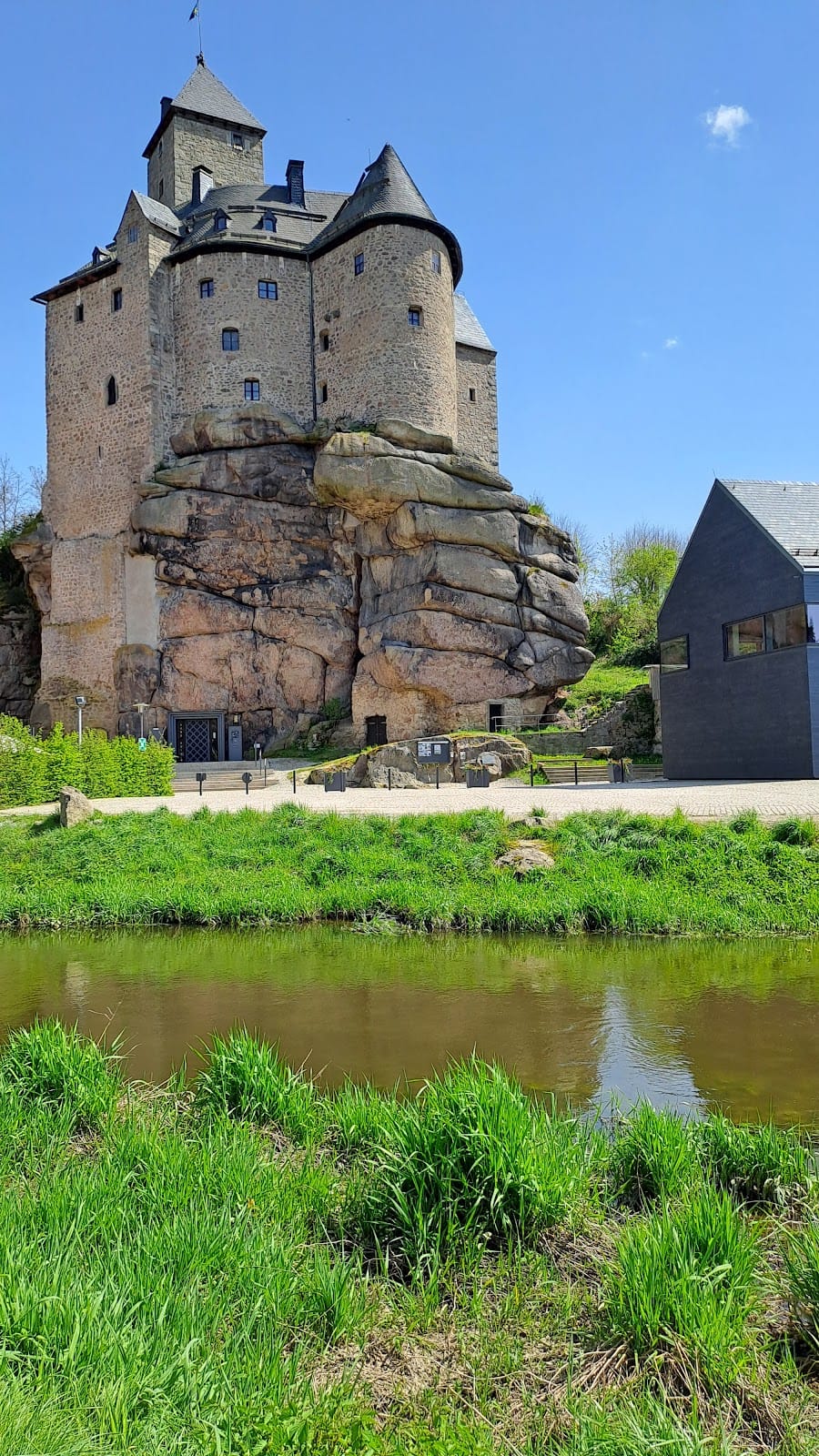
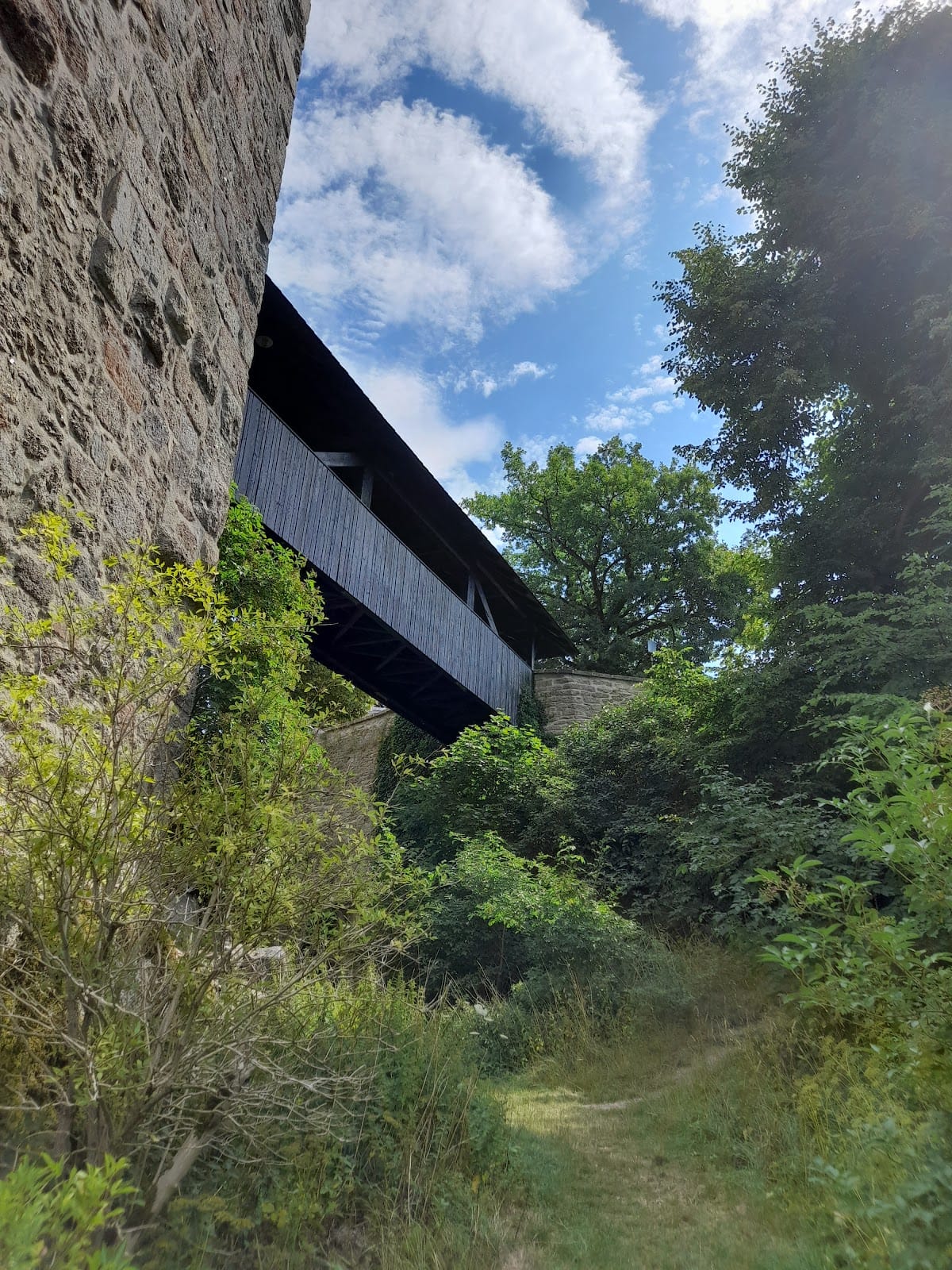
Burg Falkenberg is a preserved hilltop complex in the built-up village of Falkenberg. Covering approximately 10,000 square metres at about 500 metres above sea level, it stands on a rocky outcrop formed from Falkenberg granite. The castle hill preserves eleventh-century fortified ramparts or walls, archaeological traces of predecessor buildings and earlier construction phases, and remains associated with the former outer bailey.
Fortifications and Castle Hill
Ramparts and Earlier Buildings
The oldest surviving defensive remains on the hill are eleventh-century ramparts or walls. Archaeological evidence within the complex also preserves traces of buildings that preceded the later castle, together with indications of successive construction phases. The former outer bailey forms part of the archaeological remains protected with the castle.
Keep
The keep survives in altered form after one-third of its masonry was dismantled in 1809. The removed stone was reused in the parish house, linking the keep’s physical alteration to the post-secularization rebuilding of the village.
Present Castle Facilities
Museum and Rooms
The castle contains a museum devoted to Friedrich-Werner Graf von der Schulenburg and his 1930s reconstruction. It also contains eight hotel rooms, described as individual and double rooms, with views over Falkenberg.
Event and Conference Center
A separate Event and Conference Center Burg stands beside the castle. The building provides space for meetings and other events connected with the modern cultural use of the complex.
Granite Outcrop
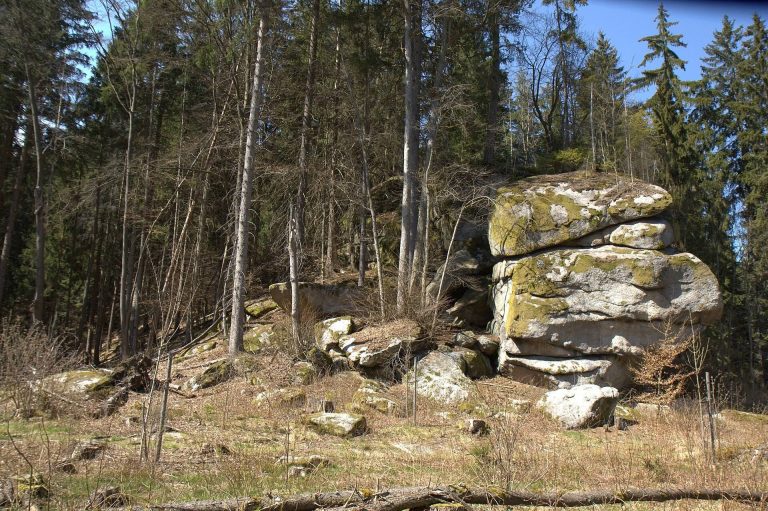
The rocky castle hill is the type locality of Falkenberg granite. Its exposed rock displays woolsack weathering, a geological process in which granite breaks down along natural fractures into rounded blocks resembling stacked sacks. This feature contributes to the site’s recognition as a geotope and natural monument.