Dunvegan Castle: Historic Seat of the MacLeod Clan on the Isle of Skye
Visitor Information
Google Rating: 4.4
Popularity: Medium
Official Website: www.dunvegancastle.com
Country: United Kingdom
Civilization: Early Modern, Medieval European, Modern
Site type: Military
Remains: Castle
History
Dunvegan Castle stands on the Isle of Skye in Scotland and has been a stronghold of the MacLeod clan since the 13th century. The castle’s foundations are tied to medieval Scottish society, shaped by clan structures and regional political struggles.
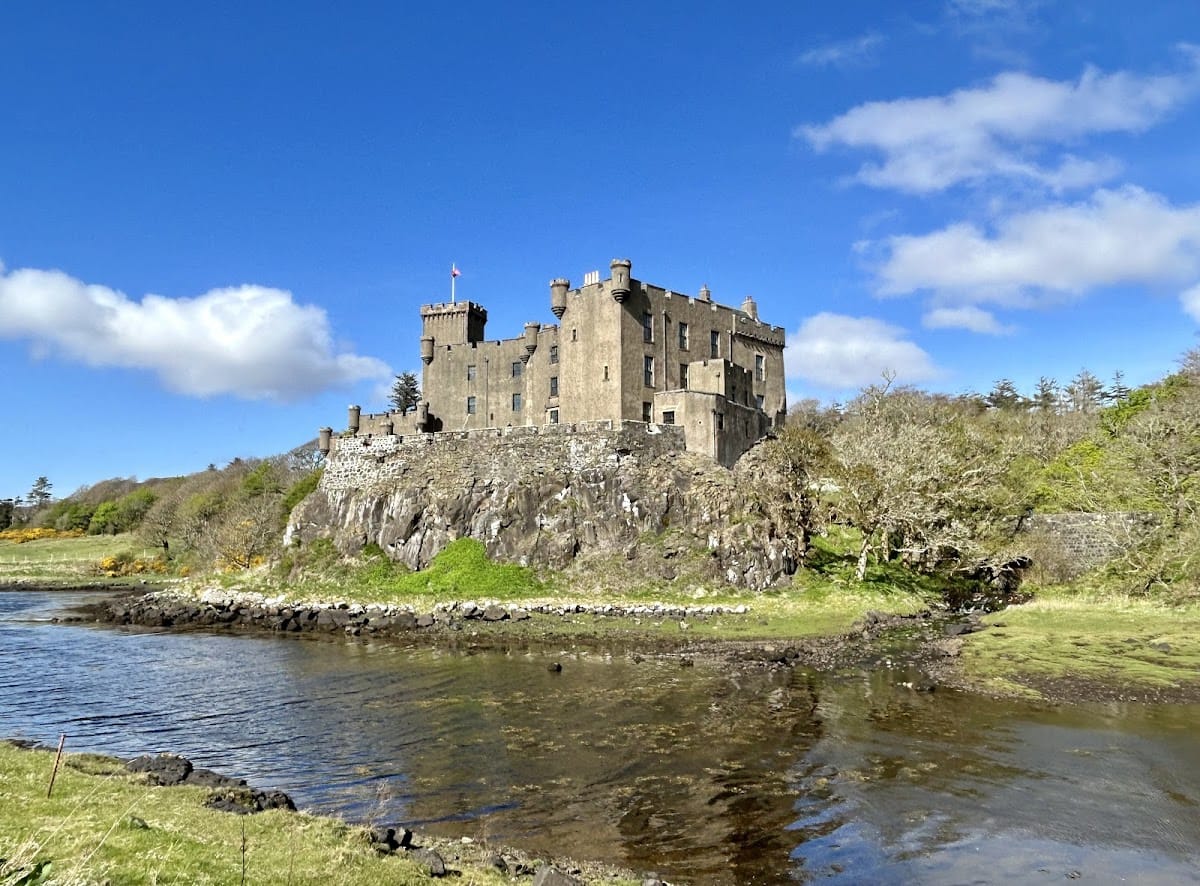
The earliest fortifications at Dunvegan date back to the 13th century, when the MacLeods first established their presence atop the basalt rock overlooking Loch Dunvegan. By the late 14th century, Malcolm MacLeod, the clan’s third chief, constructed a substantial four-story tower house that became the core of the castle. This medieval stronghold anchored the clan’s control over their territories on Skye and parts of the Outer Hebrides, including the islands of Harris and Lewis.
Around the year 1500, Alasdair Crotach MacLeod, a notable clan chief, added the Fairy Tower, a separate four-story structure featuring narrow spiral staircases, extending the defensive and residential capabilities of the castle. In 1623, Roderick MacLeod, sometimes known by the Gaelic name Rory Mor, expanded the castle’s living quarters by filling the gap between the main tower and the Fairy Tower with additional buildings. This development allowed for a more comfortable and substantial residence befitting the clan’s status.
During the 17th century, the MacLeods became involved in important military and political events. The clan supported Charles II at the Battle of Worcester in 1651, aligning themselves with the royalist cause during the English Civil Wars. In the mid-18th century, their position was more complex amid the Jacobite uprising of 1745, reflecting divided loyalties within the Highlands.
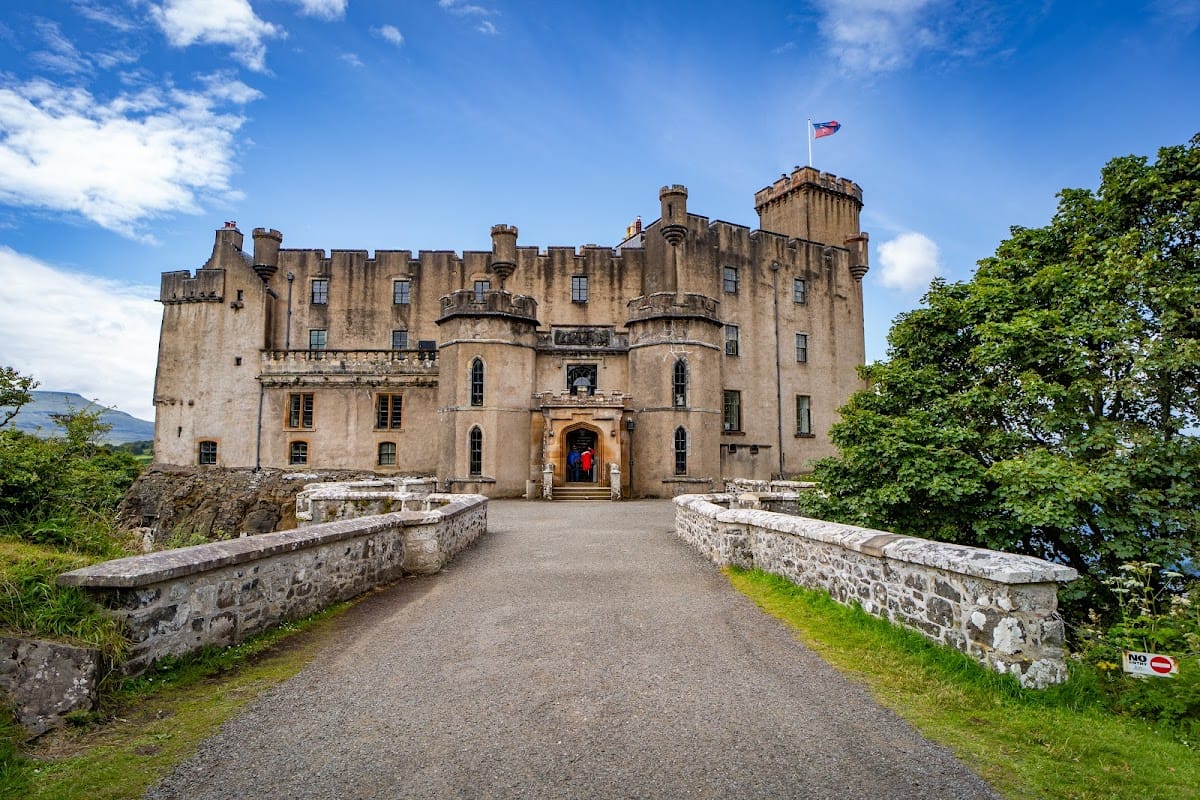
By the 18th century, the castle’s defensive role diminished, and it was modified to enhance comfort and domestic use. In 1748, a land entrance was introduced to the previously sea-access-only stronghold. The estate later endured financial hardships caused by the potato famine between 1847 and 1851, leading to a period during which the castle was left unoccupied until it was reinhabited in 1929.
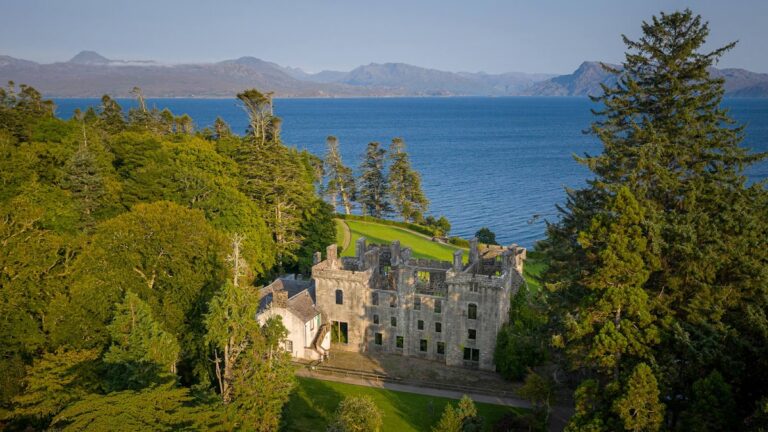
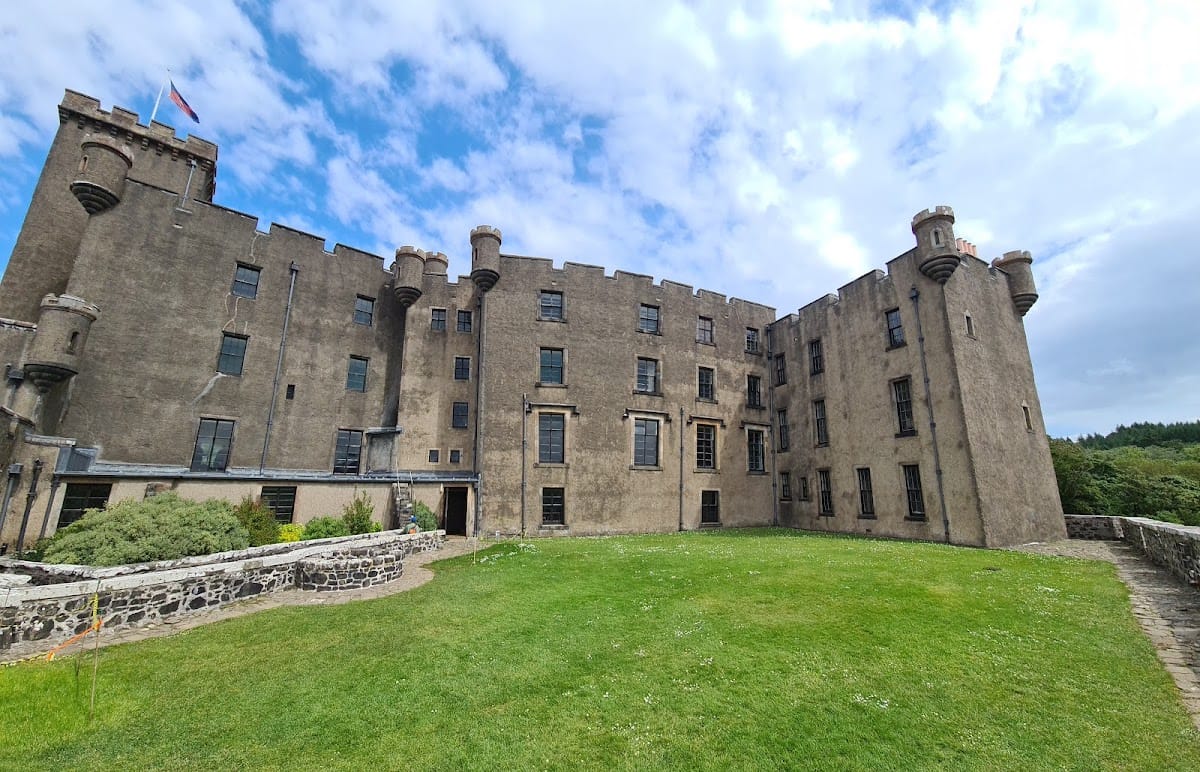
The Victorian era saw Dunvegan Castle undergo significant aesthetic changes. Around 1840, architect Robert Brown led remodeling that added decorative pepper-pot turrets and other ornamental features, transforming the building’s appearance into a more palatial home. Despite these alterations, the castle has remained continuously occupied, maintaining its distinction as Scotland’s longest-inhabited castle.
Dunvegan Castle opened its doors to the public in 1933, under the stewardship of the 27th clan chief, Reginald MacLeod. The site houses important clan relics, including the Fairie Flag, a mystical yellow silk banner reputed to have ancient origins and symbolic importance; the Dunvegan Cup, an elaborately adorned wooden vessel dating from around 900 AD; and various objects linked to the Jacobite era, such as embroidered pincushions commemorating fallen Jacobite fighters and a lock of hair believed to belong to Bonnie Prince Charlie.
The surrounding formal gardens were laid out in the 18th century, with significant developments occurring in the early 19th century. Starting in 1978, restoration efforts were undertaken by the 29th clan chief, John MacLeod. The gardens have since achieved recognition, including partnership with the Royal Horticultural Society as of 2022, reflecting the estate’s ongoing legacy as both a historic home and cultivated landscape.
Remains
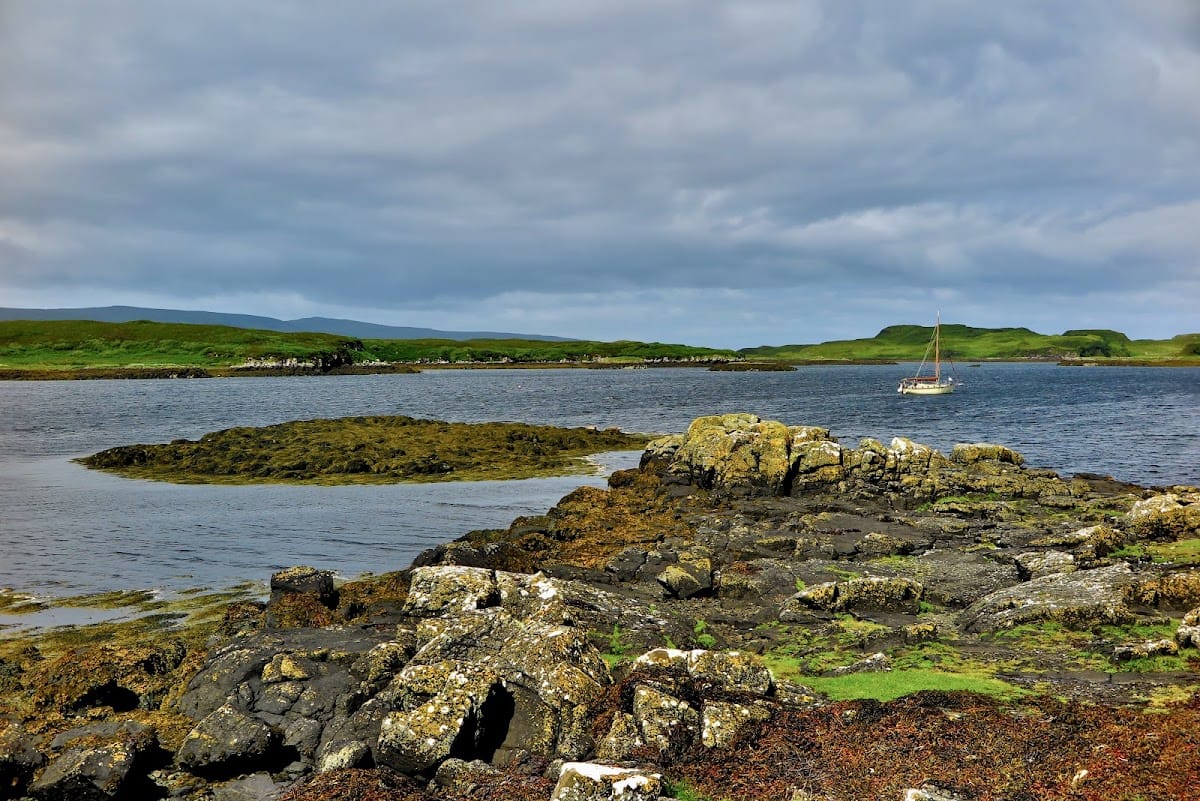
Dunvegan Castle occupies a striking site atop a basalt outcrop approximately 15 meters high on the eastern shore of Loch Dunvegan. The complex is characterized by a blend of medieval and later architectural phases that reveal its evolution from a fortress to a family residence. Originally, access to the castle was only possible via a sea gate, with land access established in 1748, a change that facilitated more convenient entry as the castle’s defensive demands waned. A natural freshwater spring on the rock contributed to its sustainability.
The centerpiece of the castle is a four-story medieval tower house, or donjon, dating to around 1350. This tower was constructed using local stone, serving as the primary fortified residence for Malcolm MacLeod and his successors. Its robust walls and height reflect its role as a stronghold in a turbulent medieval landscape.
At the southeast corner of the main tower, the Fairy Tower was added circa 1500 by Alasdair Crotach MacLeod. This separate, four-story structure is notable for its narrow, spiral staircases, designed to allow defenders to ascend and descend efficiently while hindering attackers. The tower’s placement and design underscore the ongoing need for security during this period.
In 1623, Rory Mor expanded the residential area by building infill structures between the main tower and the Fairy Tower. This expansion provided additional living space, enhancing domestic comfort. Alongside these medieval components, ancillary buildings support the estate’s functions; for example, a laundry building constructed in 1734, gate piers, stables, and a sawmill contribute to the operational aspects of the castle complex.
The 18th century brought changes that balanced historic preservation with improved domestic use. A stone bridge built in 1801 allowed easier access across the surrounding terrain. In the Victorian era between 1840 and 1850, decorative elements like pepper-pot turrets were added, offering ornamental character that departed from strict military architecture. These small corner turrets evoke oriel windows and give the castle a grander, though less fortified, appearance.
The castle complex is protected under various heritage classifications, with different structures recognized as having importance on national levels (Category A, B, and C listings), ensuring careful maintenance of its historic fabric.
Surrounding the castle, about five acres of formal gardens display diverse features developed over several centuries. The water garden includes ponds, ornamental bridges, and small islands arranged for aesthetic effect. A circular rose garden contains a patterned planting of Ilex crenata (a type of holly) and is centered around a Chilean monkey puzzle tree (Araucaria araucana), a distinctive and unusual specimen.
Additional garden areas feature a walled vegetable garden with a variety of cultivated plants, herb beds, and raised beds for vegetables. Historic elements like a 17th-century sundial and a larch pergola contribute layers of heritage to the landscape, as do the greenhouse and the remarkable “Dunvegan Pebble,” a 2.7-ton rotating marble sculpture.
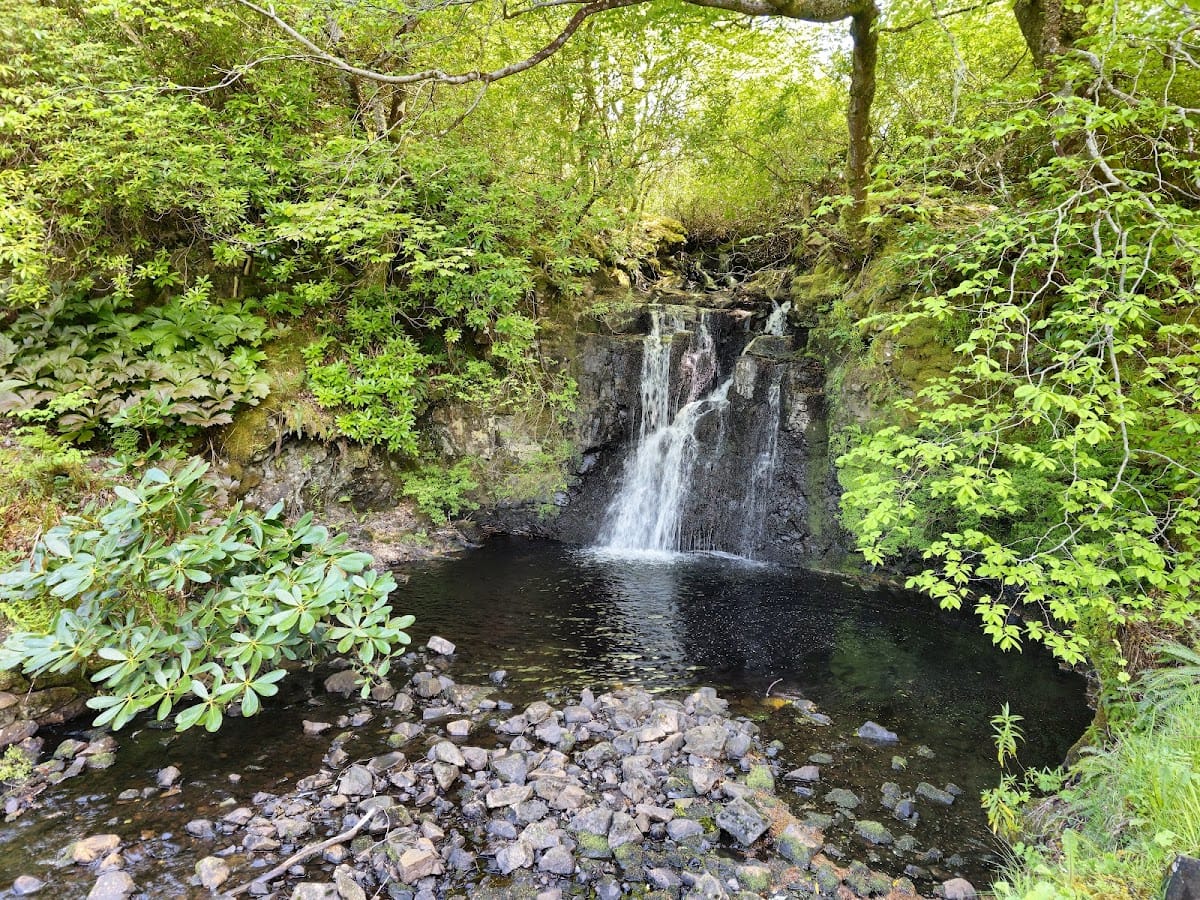
The gardens extend into wooded areas, offering forest trails, a rhododendron demonstration garden, and a wild forest zone. Within this natural setting, a children’s play area includes imaginative features such as a willow tunnel and an insect hotel named Bugvegan, which serves ecological and educational purposes.
Inside the castle museum, numerous clan relics are preserved and displayed. Among the most notable is the Fairie Flag, a yellow silk banner originating from the Middle East, dated between the 4th and 7th centuries, carrying legendary significance for the clan. The Dunvegan Cup, an elaborately decorated wooden vessel with silver elements, dates from around the year 900 AD and reflects the long continuity of the clan’s heritage. Jacobite-related items, including a pincushion embroidered with the names of fallen Jacobites and a lock of hair purportedly belonging to Bonnie Prince Charlie, illustrate the site’s connection to wider Scottish history.
Nearby sites