Strome Castle: A Medieval Castle in Scotland
Site at a Glance
- Rating
- 4.4
- Popularity
- Low
- Country
- United Kingdom
- Primary era
- Medieval
- External website
- Open
- Eras represented
- Medieval
- Civilizations
- Kingdom of Scotland
- Site type
- Military
- Remains
- Castle
On this page9 sections
History
Strome Castle is a medieval castle in the United Kingdom, on the west coast of the Scottish Highlands. It was built in the fifteenth century by Alexander MacDonald, Lord of the Isles, the medieval title of the principal MacDonald ruler in the Hebridean and west-coast territories, and Earl of Ross, a Scottish noble title connected with the historic earldom.
MacDonald ownership
By 1472, the castle belonged to Celestine of Lochalsh, Alexander MacDonald’s eldest son and a member of Clan MacDonald of Lochalsh. Alan MacDonald Dubh, the twelfth chief of Clan Cameron, served as constable. A constable was responsible for a castle’s custody and military administration, placing him in charge of Strome on behalf of the MacDonalds of Lochalsh.
Transfer and destruction
In 1539, James V, King of Scots from 1513 to 1542, granted Strome Castle to Clan MacDonell of Glengarry. Hector Munro, the first of Erribol and a member of Clan Munro, then served as constable for the MacDonells of Glengarry.
Following the Battle of Morar in 1602, Kenneth Mackenzie, the first Lord Mackenzie of Kintail and chief of Clan Mackenzie, besieged the castle with help from Clan Matheson and Andrew Munro of Novar. The MacDonells surrendered, after which Strome Castle was demolished and blown up. The MacDonells later built Invergarry Castle farther inland, and Strome was probably not rebuilt.
Preservation
The ruined castle was presented to the National Trust for Scotland in 1939. The organization, a Scottish charity that conserves historic and natural places, owns the site today. Strome Castle is also a Scheduled Monument, a site protected under Scottish law because of its archaeological or historical importance.
Remains
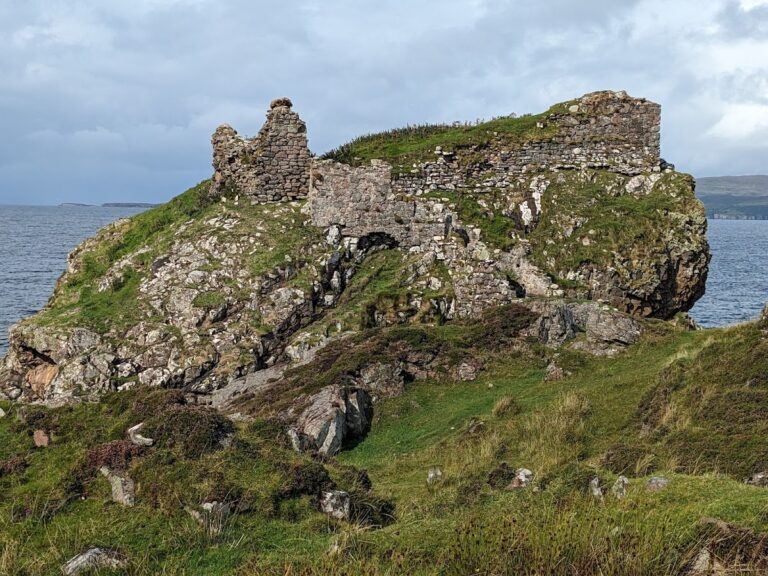
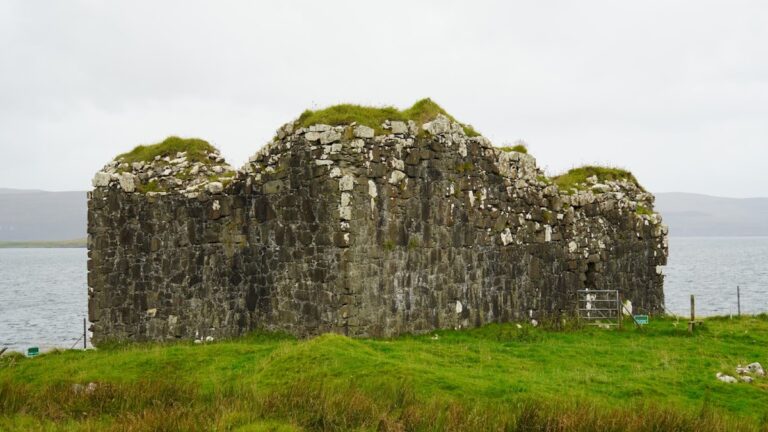
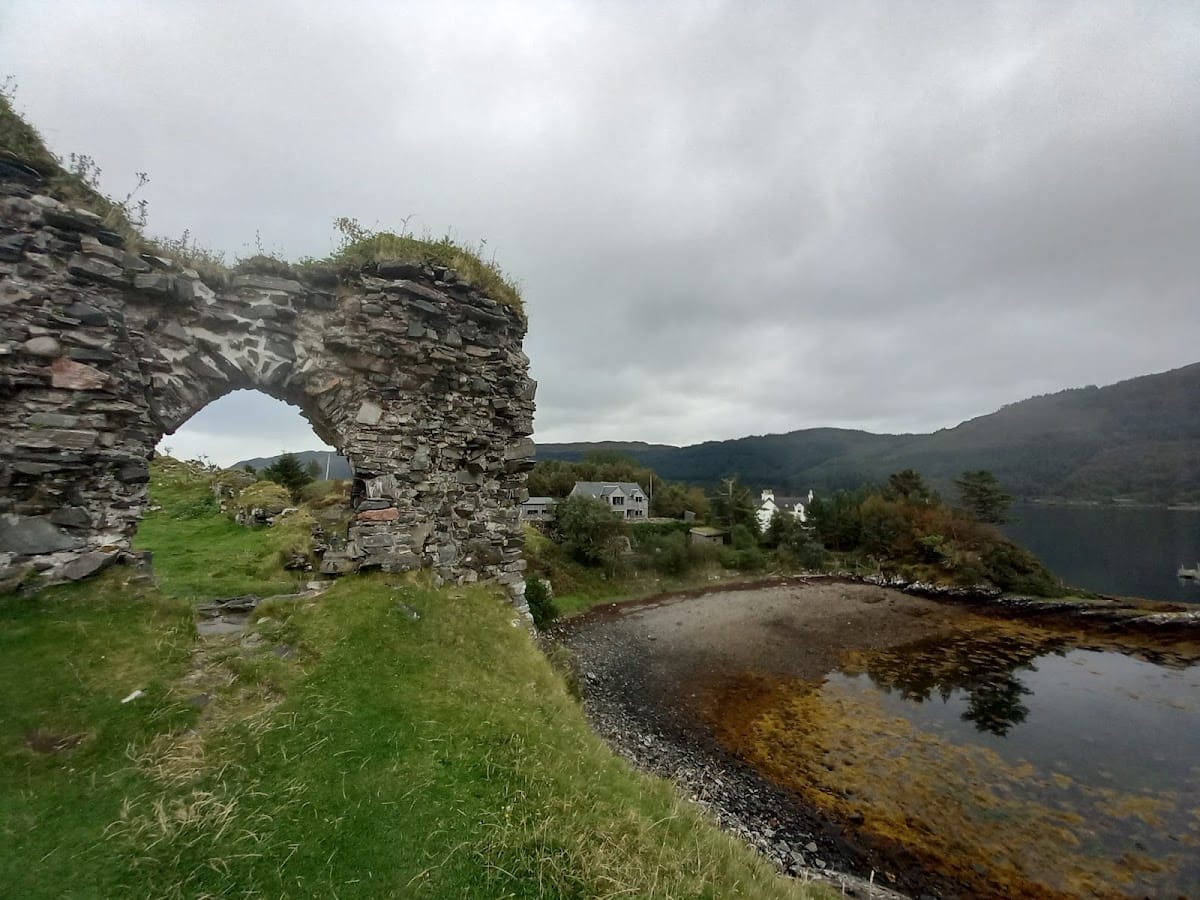
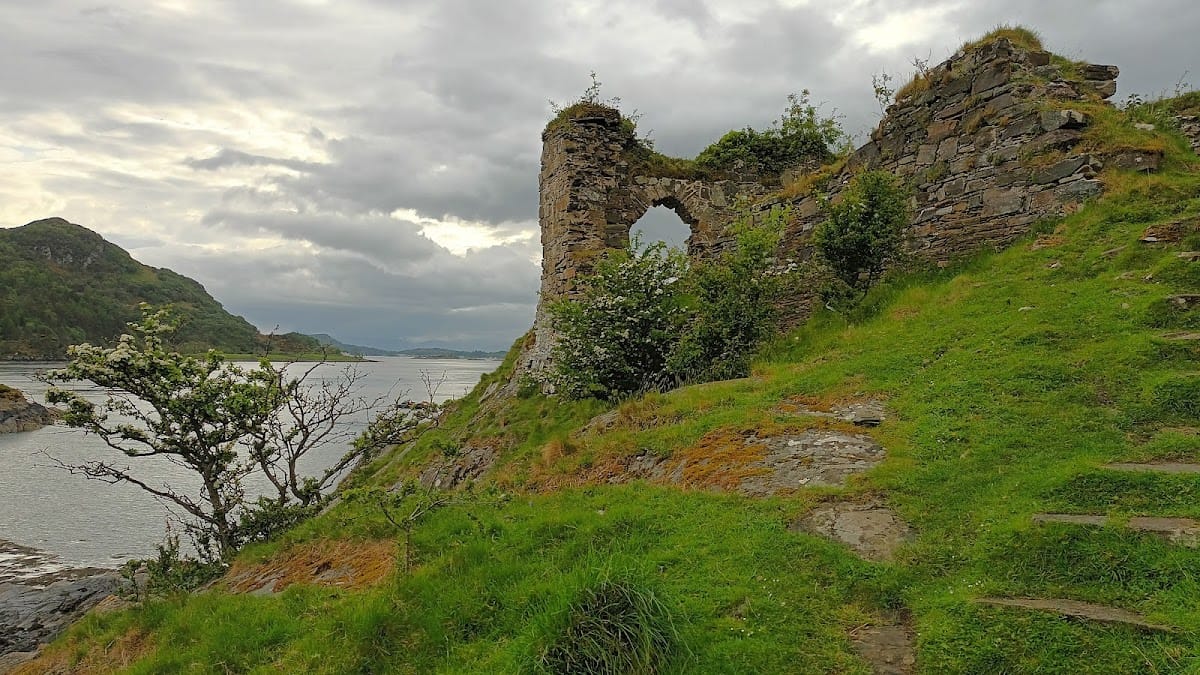
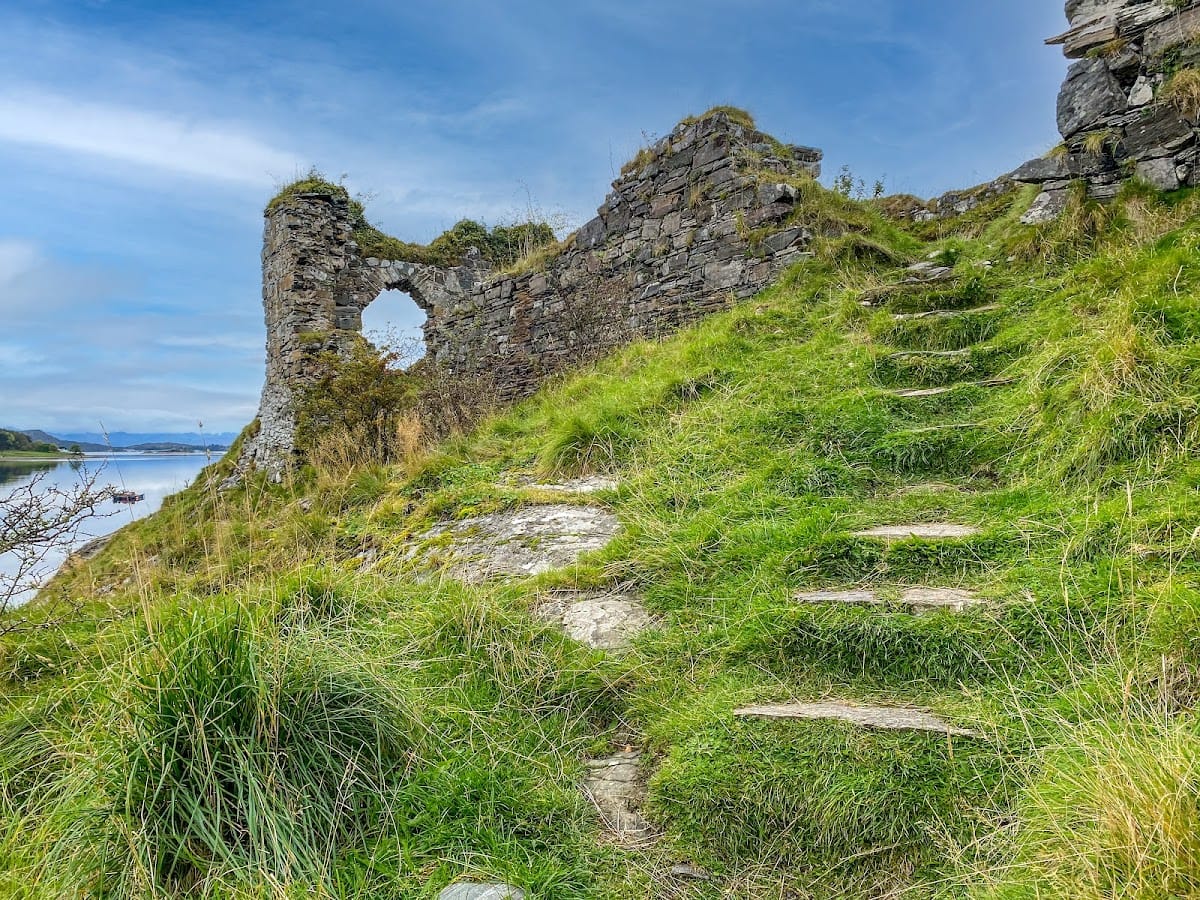
Strome Castle stands at Stromemore on the shore of Loch Carron, about 3.5 miles (5.5 km) south-west of Lochcarron. The castle occupies a headland between Loch Carron and Loch Kishorn. Its surviving structure is built of rubble stone and is organized around a courtyard, with the ruins of a square tower and a large hall forming the principal remains.
Courtyard and tower
Courtyard
The courtyard forms the central surviving area of the castle. It is accompanied by the remains of the square tower and the large hall, allowing the principal parts of the ruined complex to be identified within the same headland setting.
Square tower
The square tower is now ruined. Its destruction scattered parts of the structure over a wide area, leaving the tower among the most severely damaged elements of the castle.
Large hall
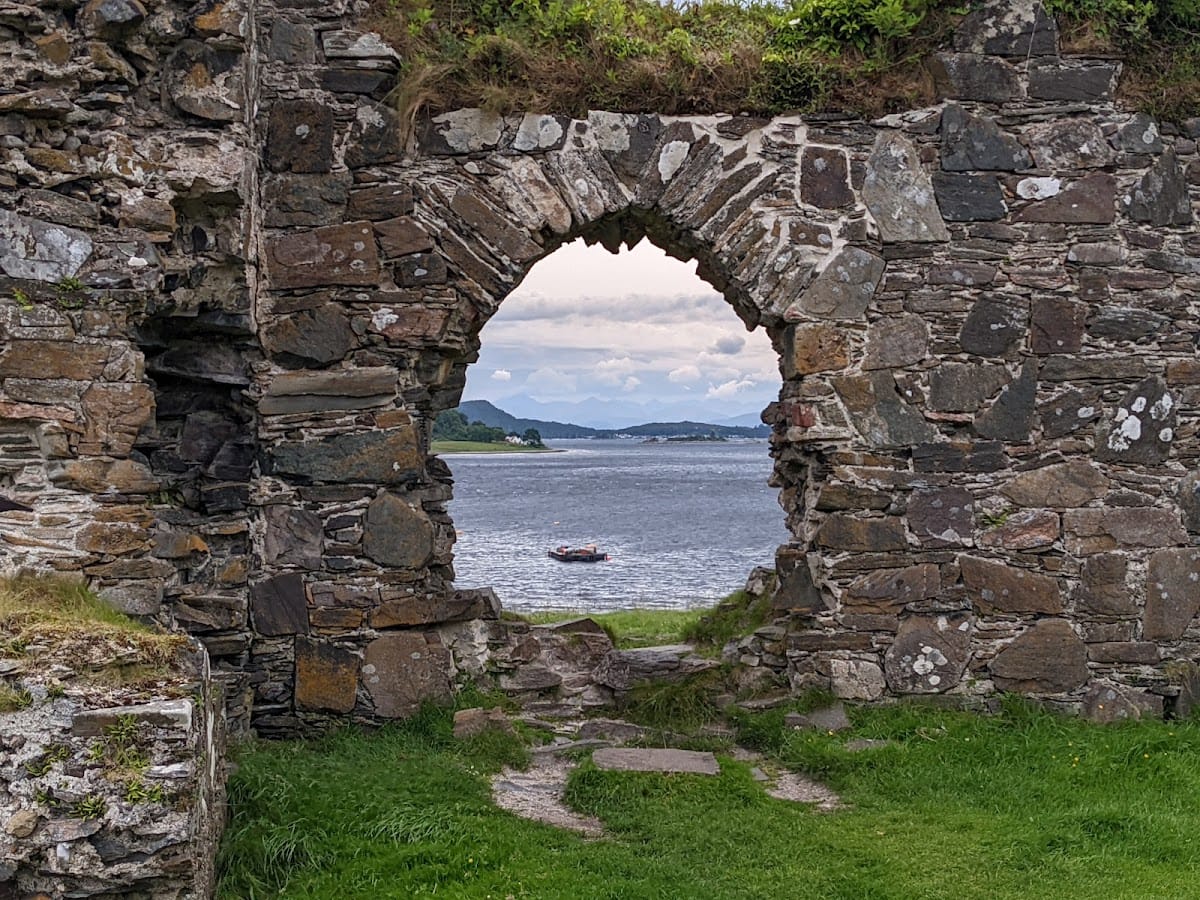
The large hall survived in less severely damaged condition than the tower. It had doorways on its northern and western sides and originally contained a wooden floor. A dressed-stone well was located in the eastern part of the hall.
No fireplaces have been found in the hall. Its heating has therefore been understood as having depended on an open hearth positioned at the centre of the room.