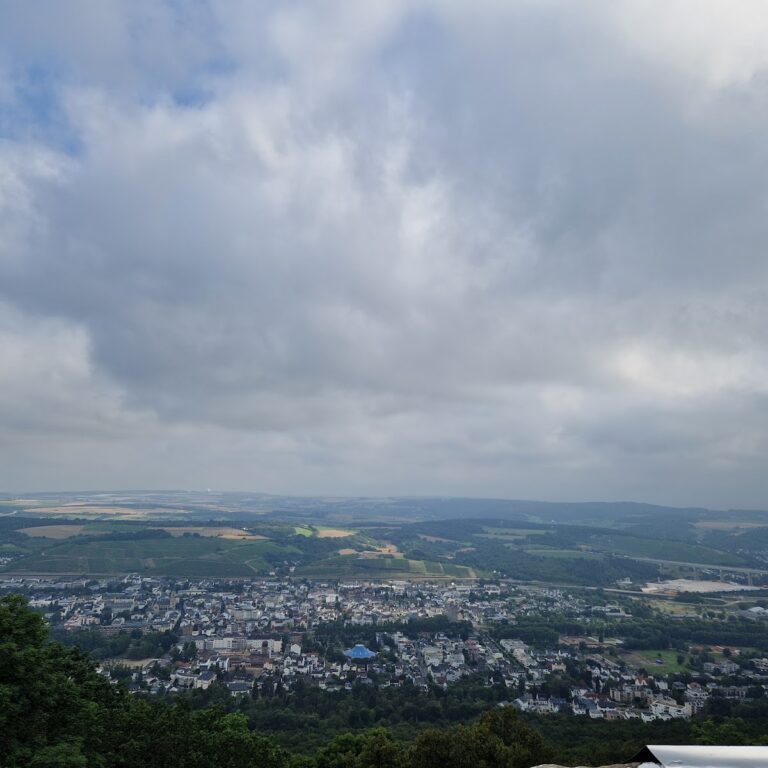
Are Castle: A Medieval Hill Castle above Altenahr, Germany
Site at a Glance
- Rating
- 4.6
- Popularity
- Medium
- Country
- Germany
- Primary era
- Medieval
- Eras represented
- Medieval, Early Modern
- Civilizations
- Holy Roman Empire
- Site type
- Military
- Remains
- Castle
On this page14 sections
History
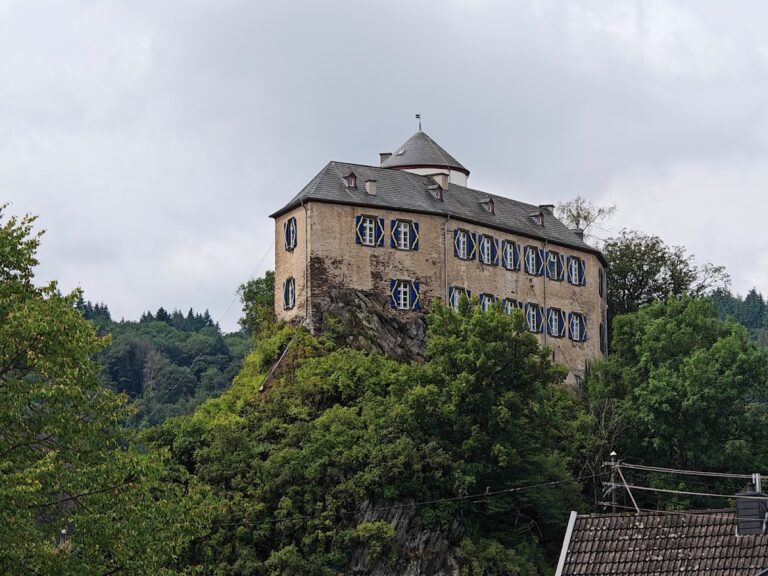
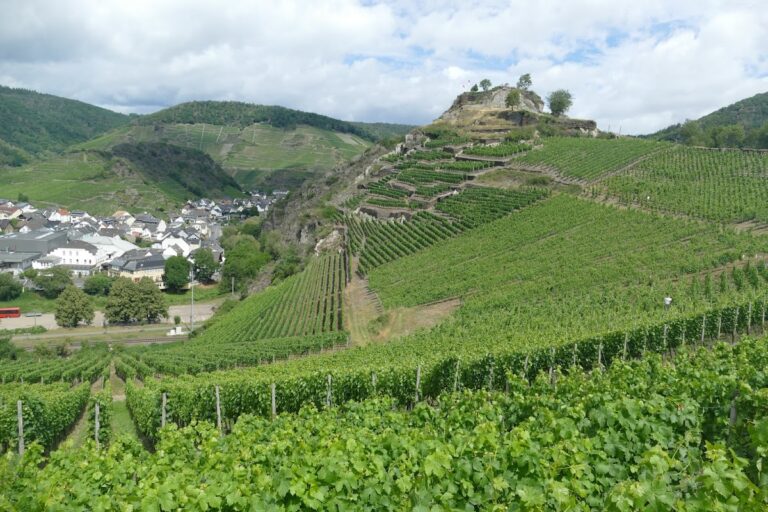
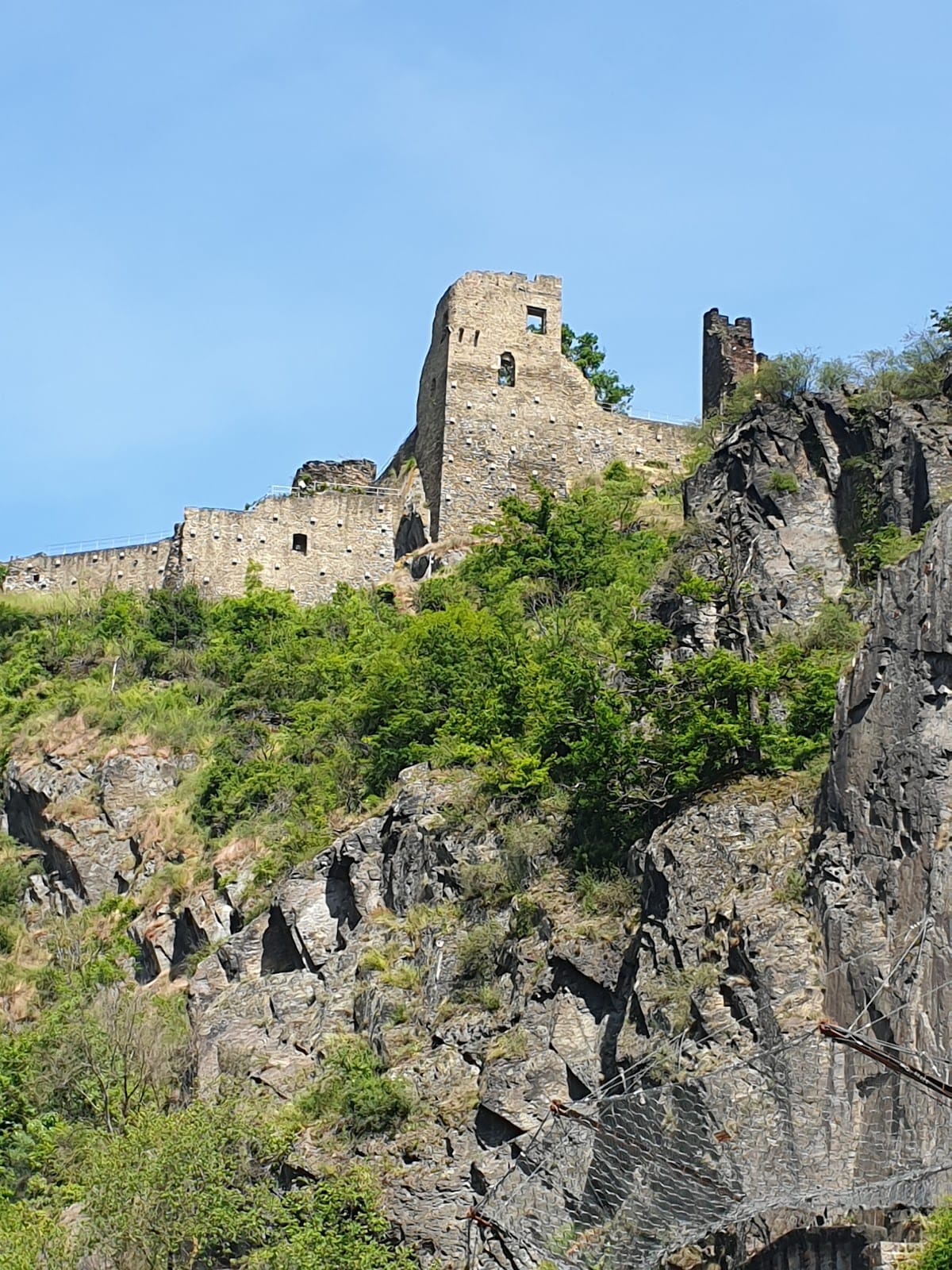
Are Castle is a medieval hill castle above Altenahr in Germany, built by Count Dietrich I of Are between 1095 and 1105, around 1100. It was first recorded in 1121 and stands on a pointed rocky elevation at about 240 metres above sea level. The Counts of Are took their name from the River Ahr and the territory around it.
The Counts of Are and Cologne
In 1140, the family divided into the lines of Are-Hochstaden and Are-Nürburg. In 1246, Frederick of Hochstaden, provost of Xanten, gave the county and the castles of Are, Hardt, and Hochstaden to the Archbishopric of Cologne with the assent of his brother Conrad of Are-Hochstaden. The Archbishopric of Cologne was the ecclesiastical territory governed by the Archbishop of Cologne.
During the fourteenth and fifteenth centuries, when the archbishop also held the political status of an elector within the Holy Roman Empire, Are Castle was expanded with extensive fortifications. These works protected Cologne’s possessions in the Ahr region. The archbishops repeatedly pledged the castle and the Altenahr district as security for obligations. The pledge holders, who held rights to the property in this way, served as district officials and often lived at the castle.
Early modern use and decline
The pledge holders frequently failed to undertake necessary repairs, leaving the complex in poor condition for long periods. Heinrich von der Horst, who died in 1625, was an exception. During the sixteenth and seventeenth centuries, work at the castle was largely limited to repairs and replacement buildings. The castle also periodically served as a prison in which the Archbishops of Cologne confined opponents. For a long period, it was a spiritual and cultural centre for the surrounding region.
The Gymnicher Porz was probably built in the fourteenth or sixteenth century, when members of the House of Gymnich held the castle as pledgees. At times, it functioned as an independent castle fief, meaning property or jurisdiction granted in return for service or allegiance, belonging to that family.
Siege, destruction, and later protection
French troops captured Are Castle in 1690 after a nine-month siege. Shelling during the siege caused severe damage. French forces withdrew in 1697 but occupied the castle again during the War of the Spanish Succession, the European conflict that began in 1701 over the contested succession to the Spanish throne. Electoral Cologne troops regained control in 1706.
In 1714, Prince-Elector Joseph Clemens of Bavaria ordered the castle walls to be blown up, with the agreement of the villagers. Joseph Clemens was one of the imperial princes entitled to participate in choosing the Holy Roman Emperor. Are Castle has remained a ruin since that destruction. Reusable timber and stone were taken from the complex to build the district administrative house at the foot of the castle hill.
Between 1997 and 1999, the ruins were secured chiefly because stones threatened to fall onto the federal highway below. The work placed the site under monument protection. During the operation, a Hughes 500 helicopter carrying construction material crashed on 9 April 1997 after thirty flights when its load cable caught on the helicopter’s skids. The pilot suffered fatal injuries. From 2005 to 2012, rubble that had filled the castle well after the destruction was cleared. Since 1965, the Are Gymnasium grammar school in Bad Neuenahr-Ahrweiler has borne a name derived from the castle and the Counts of Are.
Remains
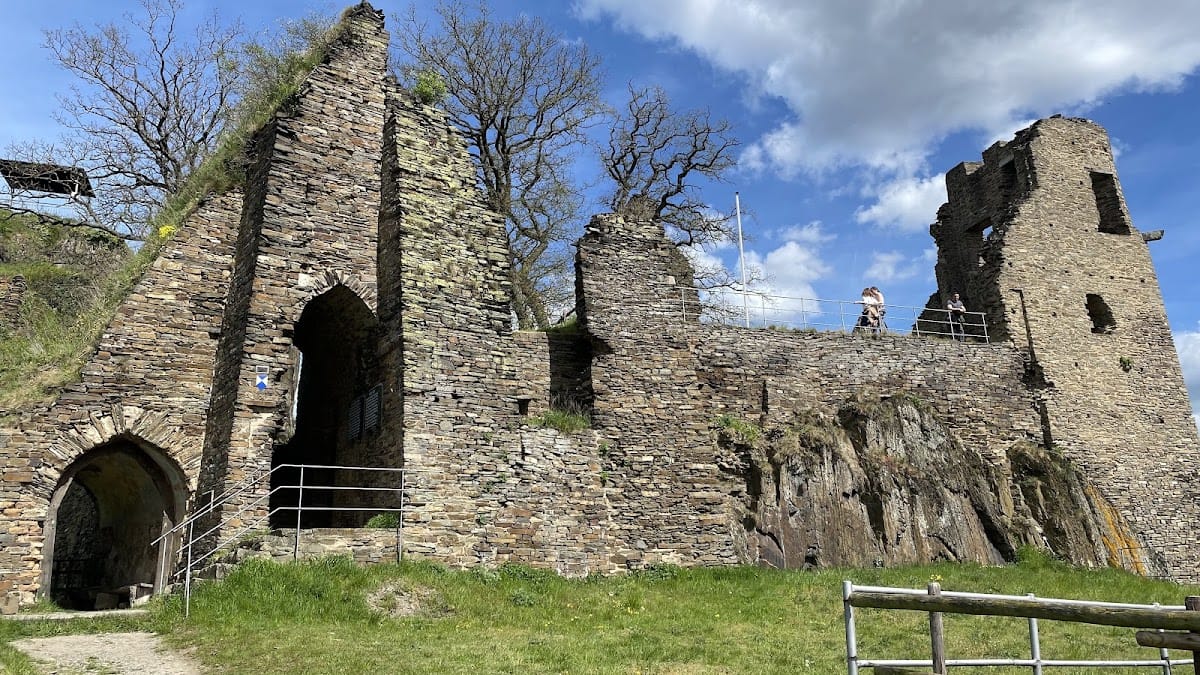
Are Castle occupies a pointed rocky height within a roughly rectangular plan. The surviving complex includes parts of the outer ward, a gate complex, sections of the defensive wall, the southern Schellenturm gate tower, the ruins of the palas, and extensive remains of a Romanesque castle chapel. Romanesque architecture is a medieval form marked by massive masonry, thick walls, and rounded arches.
Northern summit and chapel
First bergfried
The first bergfried probably stood on the summit of the pointed rock in the northern corner of the castle. A bergfried was a prominent defensive tower used mainly as a strongpoint rather than as the lord’s permanent residence.
Romanesque castle chapel
North of the probable first bergfried are extensive remains of the Romanesque castle chapel, dating from the twelfth century. Its surviving masonry forms one of the principal early elements of the castle complex.
Southern residential buildings
Palas
The palas, the main residential and representative building of a medieval castle, stood on the southern side of the complex. It formerly contained a heated bishop’s chamber. In autumn 1997, the 22-metre-long wall and both side walls were restored. Sixty-five anchors, reaching as far as 14 metres into the slate rock, were installed to stabilize the structure.
Schellenturm and defensive walls
The southern gate tower known as the Schellenturm survives with sections of the defensive wall and the gate complex. These remains form part of the castle’s outer and entrance defenses, together with surviving portions of the outer ward.
Approach and water supply
Gymnicher Porz
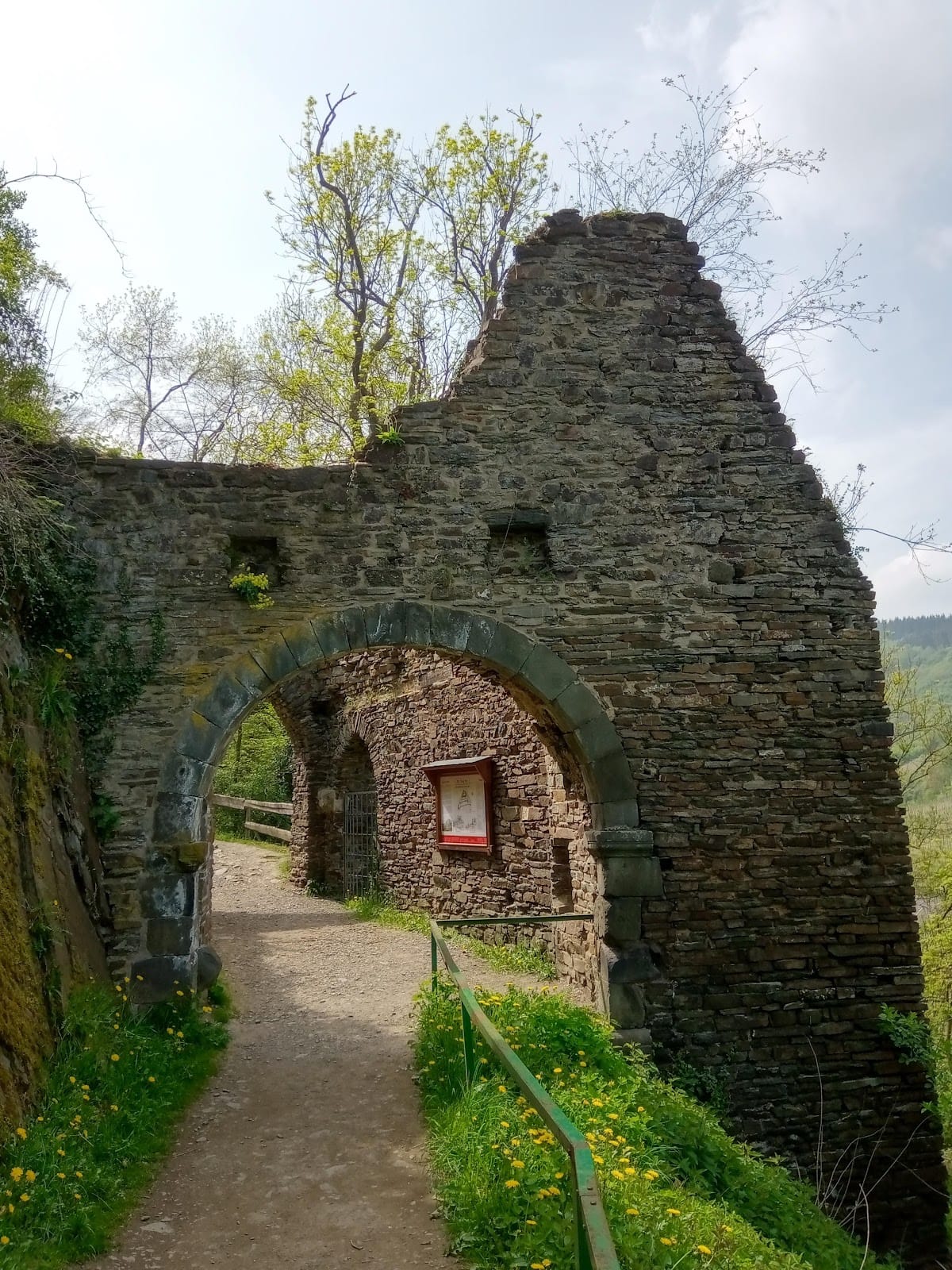
The Gymnicher Porz lies below the main castle along the approach road. Its lower gateway, joined to a wall, blocked access to the castle hill. The complex included a gatehouse built over the road, an attached castle house with a basement and two residential storeys, and another attached tower.
Castle well
The castle well was cleared of rubble between 2005 and 2012. Its shaft now reaches 29 metres in depth and is protected by a metal grille. The well’s infilling had followed the destruction of the castle in 1714.