Dolmen de Barbehère: A Middle Neolithic Burial Tomb in France
Site at a Glance
- Popularity
- Very Low
- Country
- France
- Primary era
- Stone Age
- Eras represented
- Stone Age
- Civilizations
- Unclassified
- Site type
- Burial
- Remains
- Tomb
On this page12 sections
History
The Dolmen de Barbehère is a prehistoric megalithic tomb at Saint-Germain-d’Esteuil, France. A culture that has not been identified built it during the Middle Neolithic. Groups associated with several later archaeological cultures reused the monument, and its use continued into the Chalcolithic.
Middle Neolithic origins and later use
After its construction, the tomb was used by groups associated with the Matignons, Artenacian, and Peu-Richard cultures of western France, as well as the Bell Beaker tradition, a widespread late prehistoric culture partly recognized through its distinctive pottery. Use extended into the Chalcolithic, or Copper Age, which followed the Neolithic.
Early records and archaeological work
The monument has been known by several names, including the covered gallery of Barbehère and the dolmen of Bois Charnier; Bois du Carney and Bois des Haures also appear in historical descriptions. A map of Gironde marked a mound at its location in 1875. That year, J. B. Gassies, director of the Bordeaux Prehistoric Museum, described the Bois Charnier dolmen as disturbed and reported human skeletons from the middle of its chamber. François Daleau placed the dolmen near Potensac, in the commune of Ordonnac, in 1876. An early twentieth-century debate over whether Bois Charnier was a separate nearby tomb ended with the conclusion that the names referred to one monument.
The landowner, Dr Jeanty, arranged excavations in 1904. Later writers discussed the site, and some subsequent digging was unauthorized. A rescue excavation took place in 1987, followed by planned work from 1988 to 1991. Poor bone preservation prevented the later excavations from producing a radiocarbon date. France designated the dolmen a historic monument in 1989, and it has also been restored.
Remains
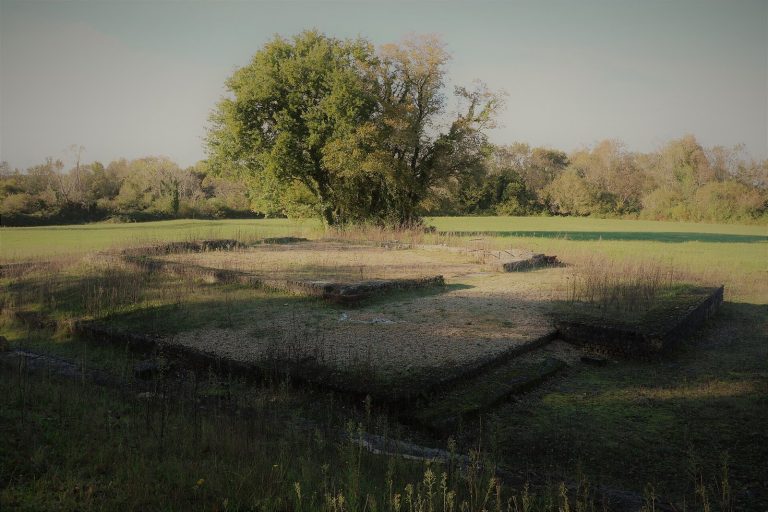
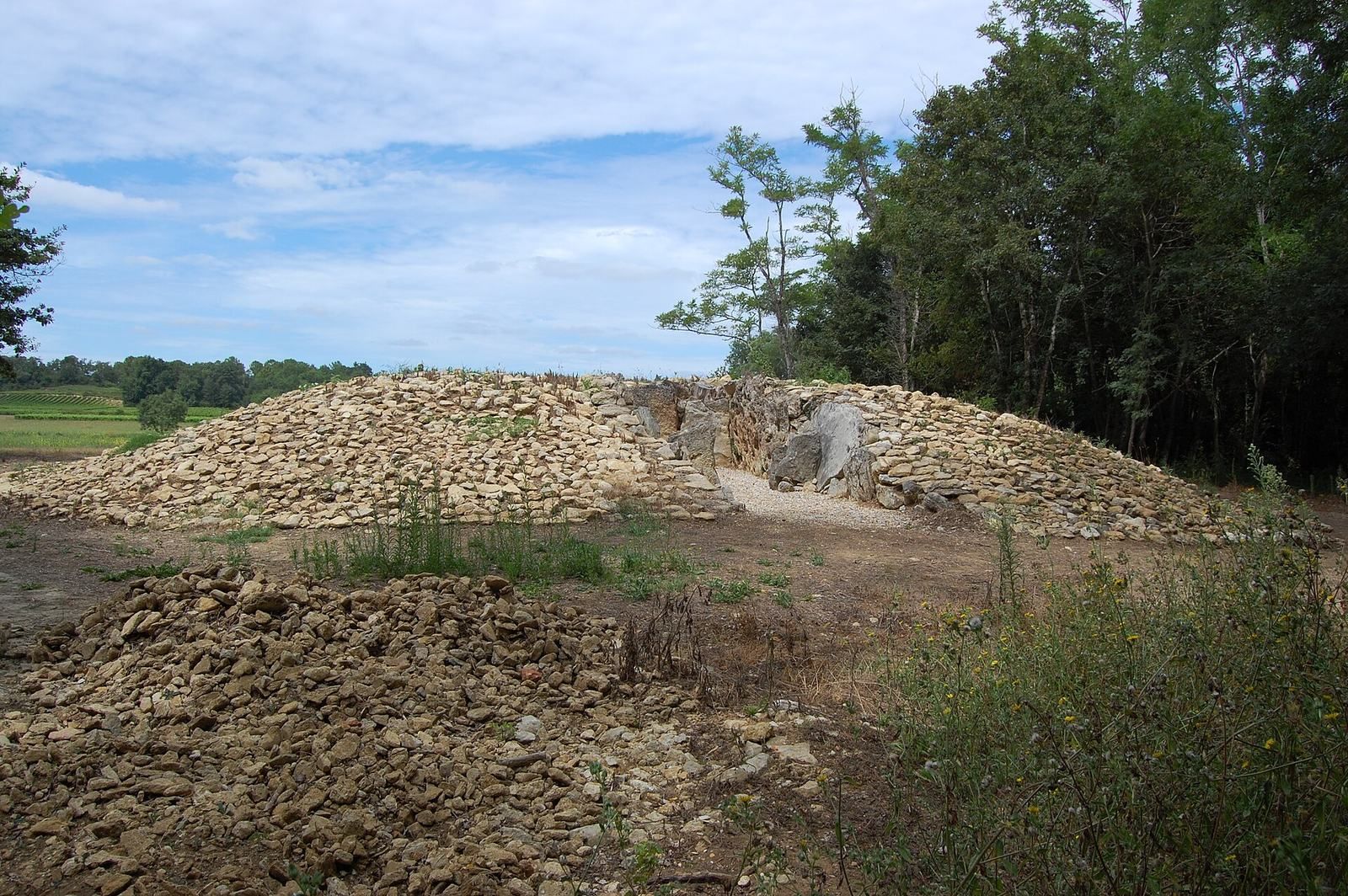
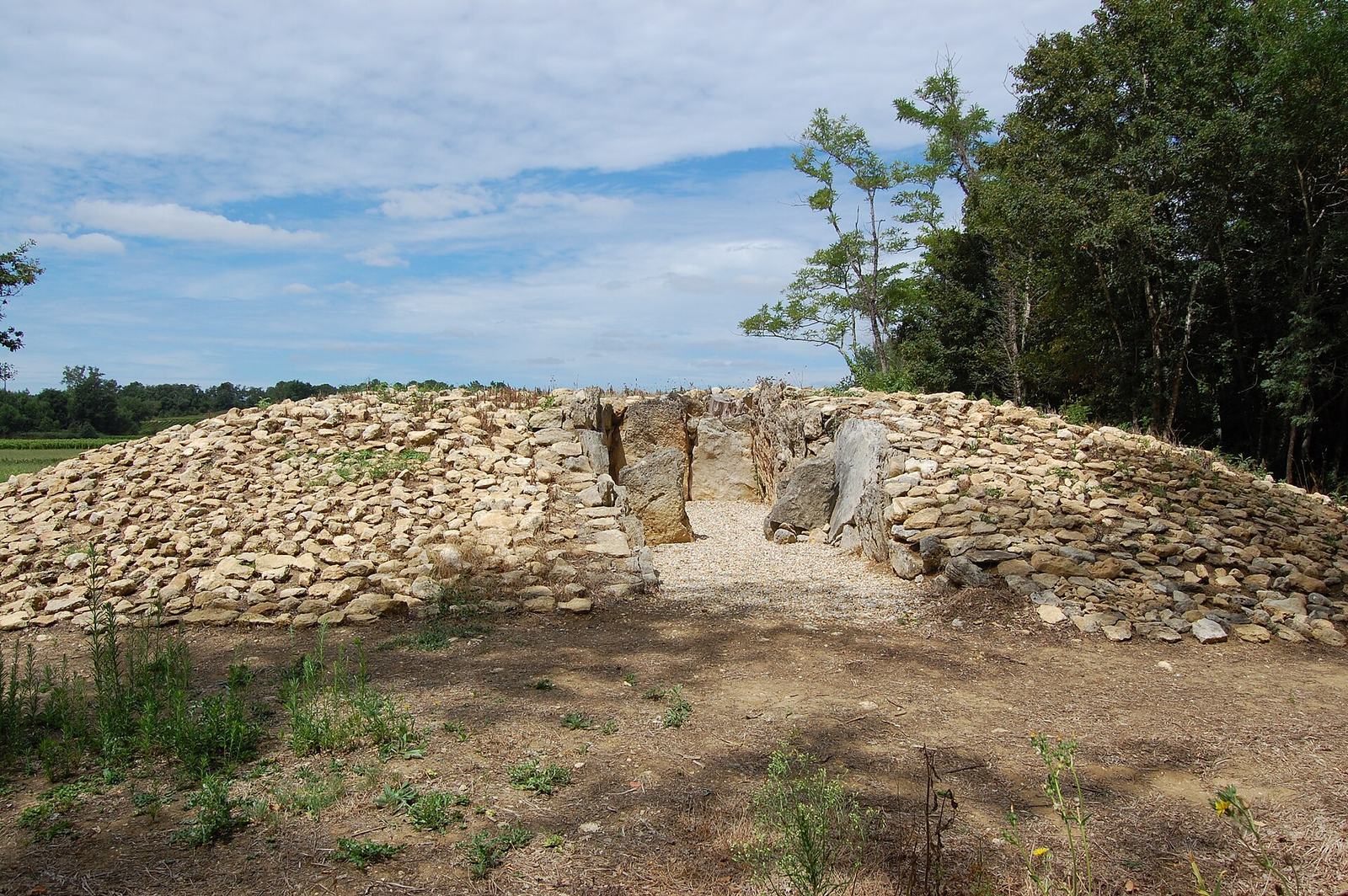
The monument occupies low-lying ground at about 12 metres above sea level. An elongated mound surrounds a burial gallery set off-center in its eastern portion, with the gallery opening toward the east-southeast. The mound is formed from sandy clay laid over the ancient ground surface, while limestone blocks define its upper surface and perimeter.
Mound and burial gallery
Burial mound
The mound measures approximately 20 metres long, 17 metres wide, and 2 metres high. Its core is sandy clay; small limestone blocks cover the surface, and a low perimeter wall consists of larger blocks. The original outline is thought to have been an elongated polygon.
Gallery and chamber
The burial gallery is about 6.3 metres long and rests directly on exposed limestone bedrock. Seven upright supporting stones form the structure, decreasing in height and width from the rear toward the entrance. The gallery is over 2 metres wide at both ends but narrows at the center, where two upright slabs divide it into a nearly trapezoidal chamber and a short entrance vestibule. The chamber measures about 4 by 2 metres. The paired dividing slabs leave an opening roughly 1 metre wide; the two stones at the rear are also arranged symmetrically. Inner faces of the slabs beside the vestibule entrance were worked, and pecking regularized the rear stones. All the slabs are Saint-Estèphe limestone, quarried from a small hill about 500 metres to the west. The original roof form is uncertain: it may have used stone capstones or wooden beams. Two fragments of red ochre from the chamber may relate to pigment applied to the rear slabs or to other painted decoration.
Architectural interpretation
The tomb is associated with Aquitaine-type galleries, a regional category of covered gallery tombs, but its plan is unusual. Marc Devignes interprets the varying width and the supports that diminish toward the entrance as features of this regional type. Roger Joussaume considers the chamber’s form unlike a standard covered gallery and instead understands the structure as a hybrid between a dolmen and a gallery tomb, reflecting different influences.
Excavated evidence
Human remains and burial goods
The 1904 excavation recovered many human bones. L. Manouvrier identified 19 individuals: 16 men, two women, and one child. He estimated that the monument may have held about 80 burials. J. Labrie’s account of the finds lists a barbed flint arrowhead with a tang, flint flakes, four limestone beads, a bone disc, and Bell Beaker pottery fragments. A local schoolteacher found a polished stone axe at the gallery entrance in the early twentieth century.
The 1988–1991 excavations recovered more than 2,000 teeth and nearly 50,000 bone fragments. The remains add to evidence for the monument’s use across successive prehistoric periods.
Pottery
The later excavations yielded 1,020 pottery fragments, 510 of which could be identified. Most were Neolithic; others belonged to the Bell Beaker, protohistoric, Gallo-Roman, and modern periods. Of 510 fragments collected within the monument, 333 were assigned to the Peu-Richard culture. At the ancient ground surface, excavators found 178 undecorated sherds with rounded bases and a fine, shiny mineral temper. Their resemblance to pottery from Tumulus E at Bougon supports their attribution to the Middle Neolithic.
Stone tools and ornaments
The stone tools include 82 flint objects attributed to the Middle or Late Neolithic, including the Peu-Richard culture. They comprise transverse arrowheads, barbed arrowheads with tangs, a perforating tool, and a scraper. Personal ornaments reflect different periods of use: about 100 beads made from Saint-Estèphe limestone and about 50 tubular dentalium shells, used as beads, are attributed to the Middle Neolithic. Three gold spirals belong to the Chalcolithic.