Huthügel: A Corded Ware Burial Mound in Germany
Site at a Glance
- Popularity
- Very Low
- Country
- Germany
- Primary era
- Stone Age
- Eras represented
- Stone Age, Modern
- Civilizations
- Unclassified
- Site type
- Burial
- Remains
- Burial Mound
On this page10 sections
History
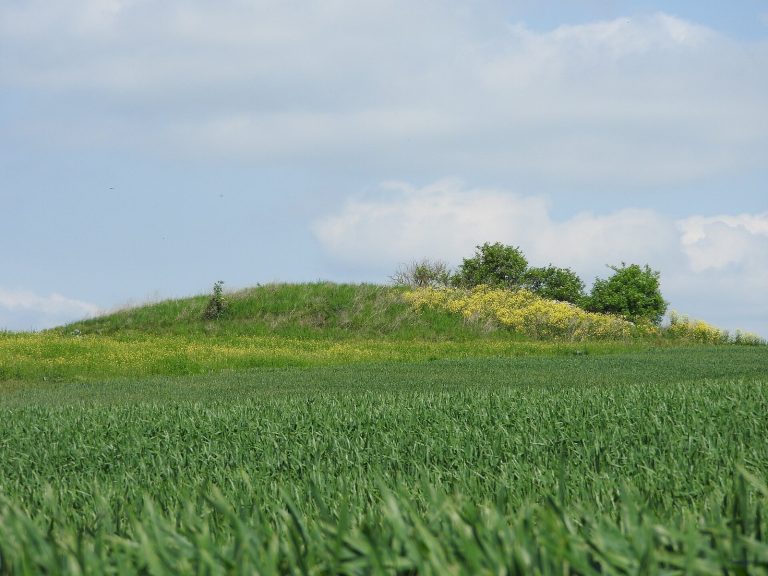
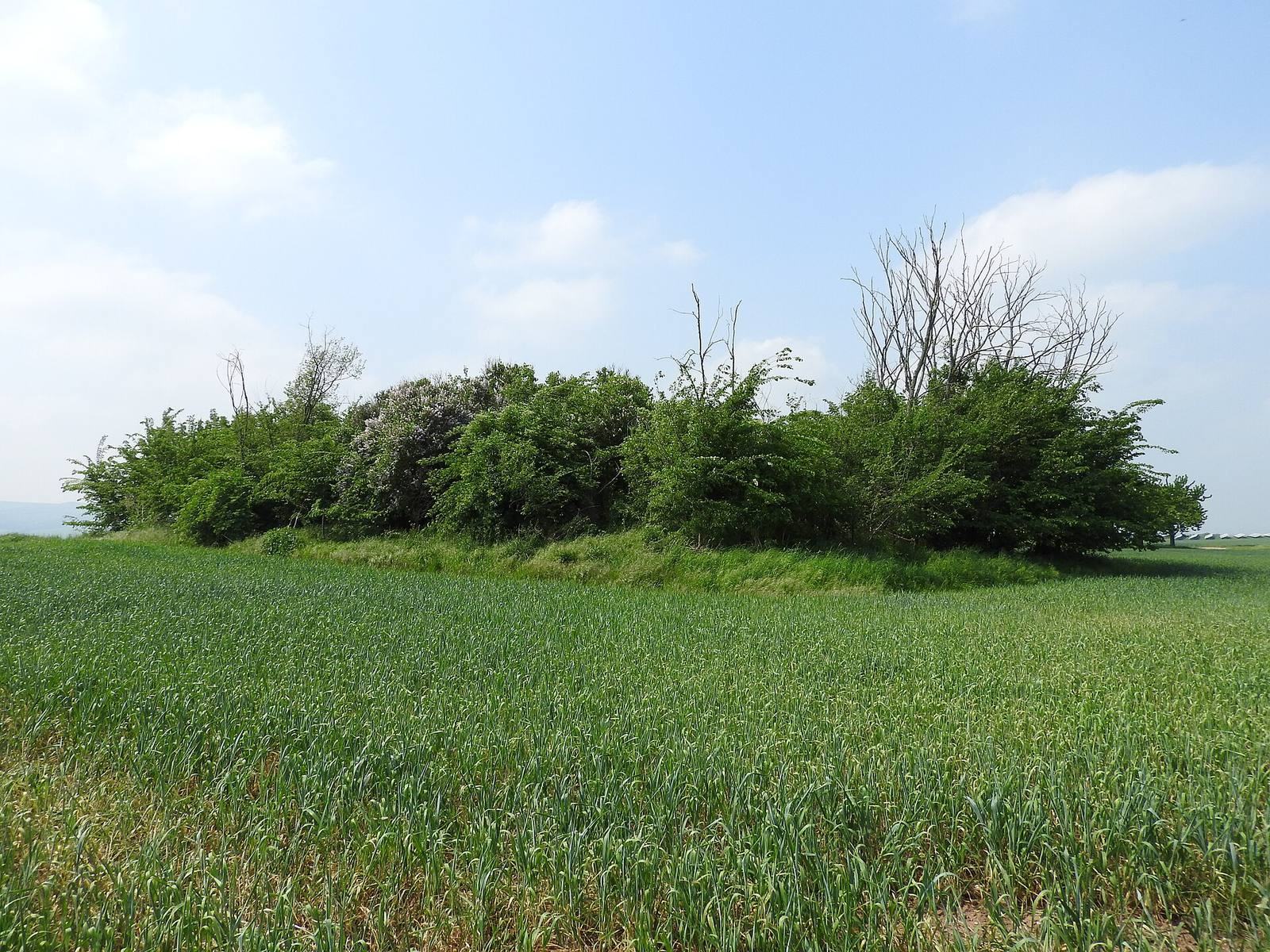
Huthügel is a Late Neolithic burial mound in Germany, 1.3 km east-southeast of Kalbsrieth. It is associated with the Corded Ware culture, a later Neolithic cultural horizon named for pottery decorated with cord impressions, and dates to 2800–2200 BC.
Burial landscape
Other Corded Ware burials have been found at five nearby locations: the field called In der Loh, 3 km east-southeast of Kalbsrieth; southeast of the village on the road to Schönewerda; at Klasing gravel pit on Rabenhüttenhügel, 2.5 km southeast of the village; in a gravel pit between Kalbsrieth and Schönewerda; and in a gravel pit east of the village beside the road to Artern. Isolated finds from the same culture have also come from several places in the municipality.
The Derfflinger mound, 800 m south of Huthügel, served as a burial place over several millennia, including during the Corded Ware period. A local legend tells of a carriage drawn by headless horses passing along a nearby road. The story was sometimes linked to the road beside Huthügel.
Later history and investigation
Huthügel is also called Häuschenhügel. Its name probably refers to a small shepherd’s hut erected on the mound in the nineteenth century or earlier. In 1901, archaeologist and Weimar City Museum curator Armin Möller examined Huthügel while carrying out extensive excavations at the nearby Derfflinger mound from July to October. His investigations of both mounds were published in 1912. Möller considered a secondary burial possible and identified no other substantial human disturbance apart from the hut.
Remains
The mound stands on elevated ground beside a field path. Its natural soil consists of humus mixed with sand and limestone, with gravel beginning about 40 cm below the surface. The mound fill is made of similar material, with a darker layer between it and the natural ground.
Nineteenth-century land consolidation cut back the mound’s edges except on the south side. It now has an approximately square plan, measuring 27 m by 26.15 m and rising 2.55 m. The amount removed was probably limited, so the original round mound’s diameter likely did not greatly exceed its present dimensions. Its surface is highly irregular.
Burial and associated deposits
Central grave
The original burial occupied an oval pit at the mound’s center, cut 55 cm into the natural ground and aligned east–west. The deceased lay on the left side in a flexed position, with the head toward the west. The skeleton was not examined in detail: after it was uncovered, it was destroyed overnight despite being covered with sacks and earth. Two triangular arrowheads lay beside the body, between the knees and the right elbow.
Eastern stone and axe
At ground level, 4.5 m east of the grave, excavators found a block of coal-bearing quartzite measuring 90 × 55 × 30 cm. Directly beneath it lay a faceted axe of gray-green serpentine, 17.3 cm long, 5.1 cm wide, and 4.3 cm thick.
Western vessel deposit
At ground level, 3.75 m west of the grave, a sandstone slab 55 cm long and 25 cm thick covered a small pit. Inside was a beaker decorated with cord impressions, 9.3 cm high, with a base diameter of 5 cm, a belly diameter of 8.4 cm, and a rim diameter of 7 cm. A small piece of iron ochre beside the beaker crumbled during recovery but was kept. The connection between these eastern and western deposits and the central burial is uncertain, although their position at the same level makes an association likely.
Later cup
About 50 cm below the mound summit, above the main grave, a partly preserved cup was found. Its surviving section includes the lower part, a pronounced break between the belly and shoulder, and the start of a handle. It measures 5.2 cm across the base and 10.6 cm at its widest point. The vessel probably belongs to the Únětice culture, an Early Bronze Age culture of central Europe dated to 2300–1550 BC.
Hut remains
Remains of the shepherd’s hut were found 40 cm deep on the mound’s northwest side. They included angular pieces of limestone, part of a pot, and other pottery fragments. Finds from Huthügel are held at the Museum of Prehistory and Early History of Thuringia in Weimar under inventory numbers H 2040–2045.