Dolmen D30: A Neolithic Passage Grave in the Netherlands
Site at a Glance
- Popularity
- Low
- Country
- Netherlands
- Primary era
- Stone Age
- Eras represented
- Stone Age
- Civilizations
- Unclassified
- Site type
- Burial
- Remains
- Tomb
On this page6 sections
History
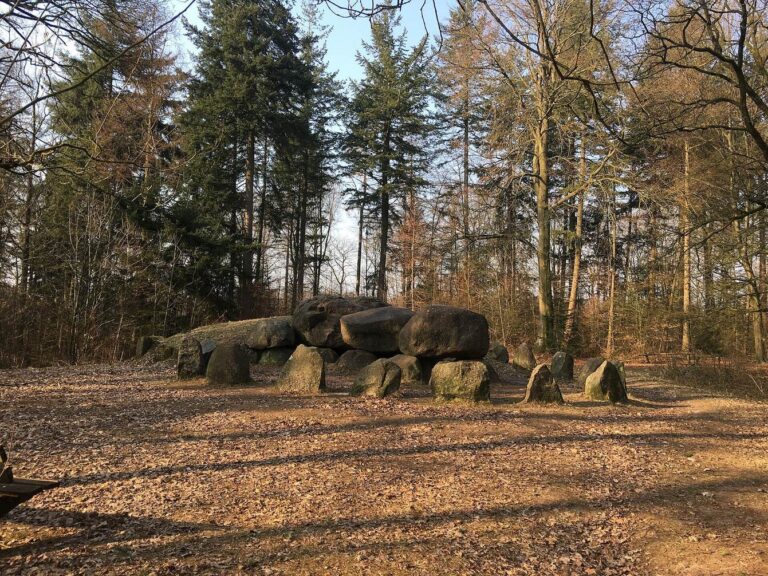
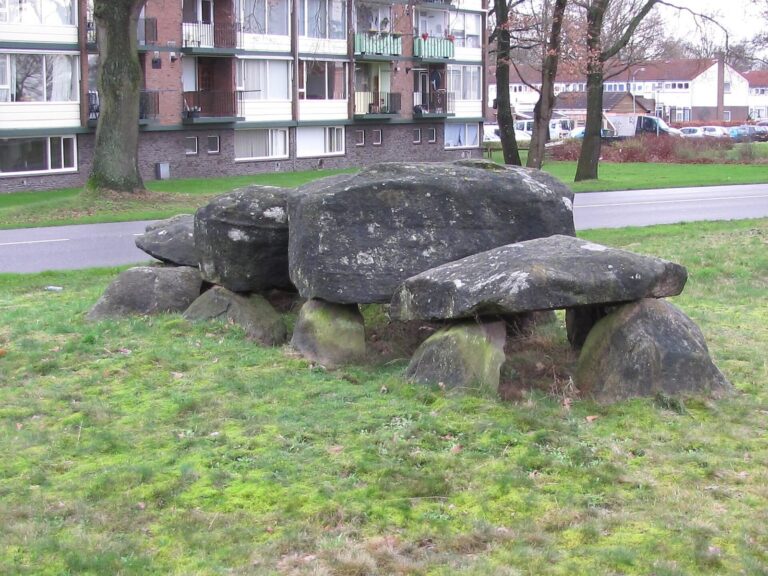
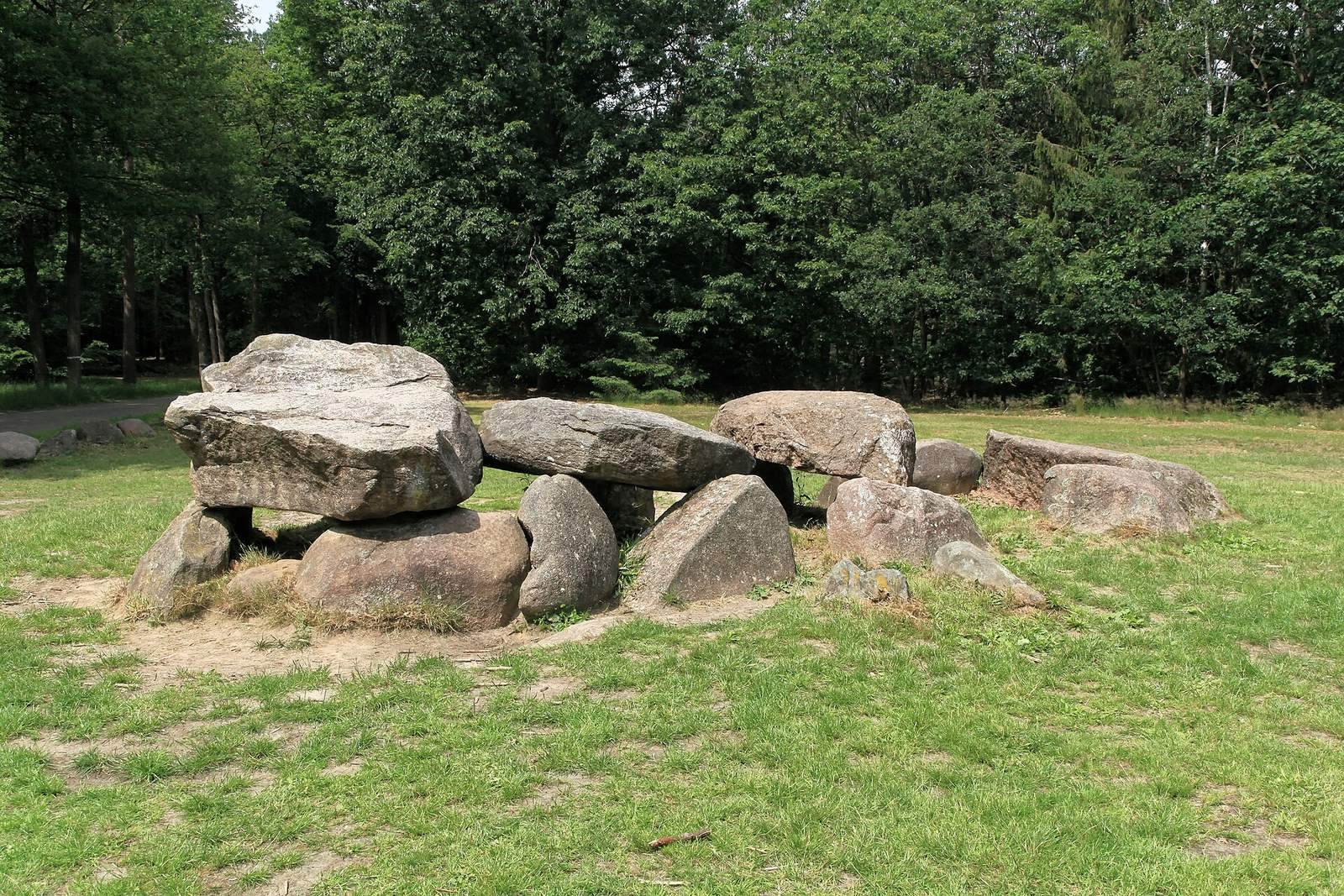
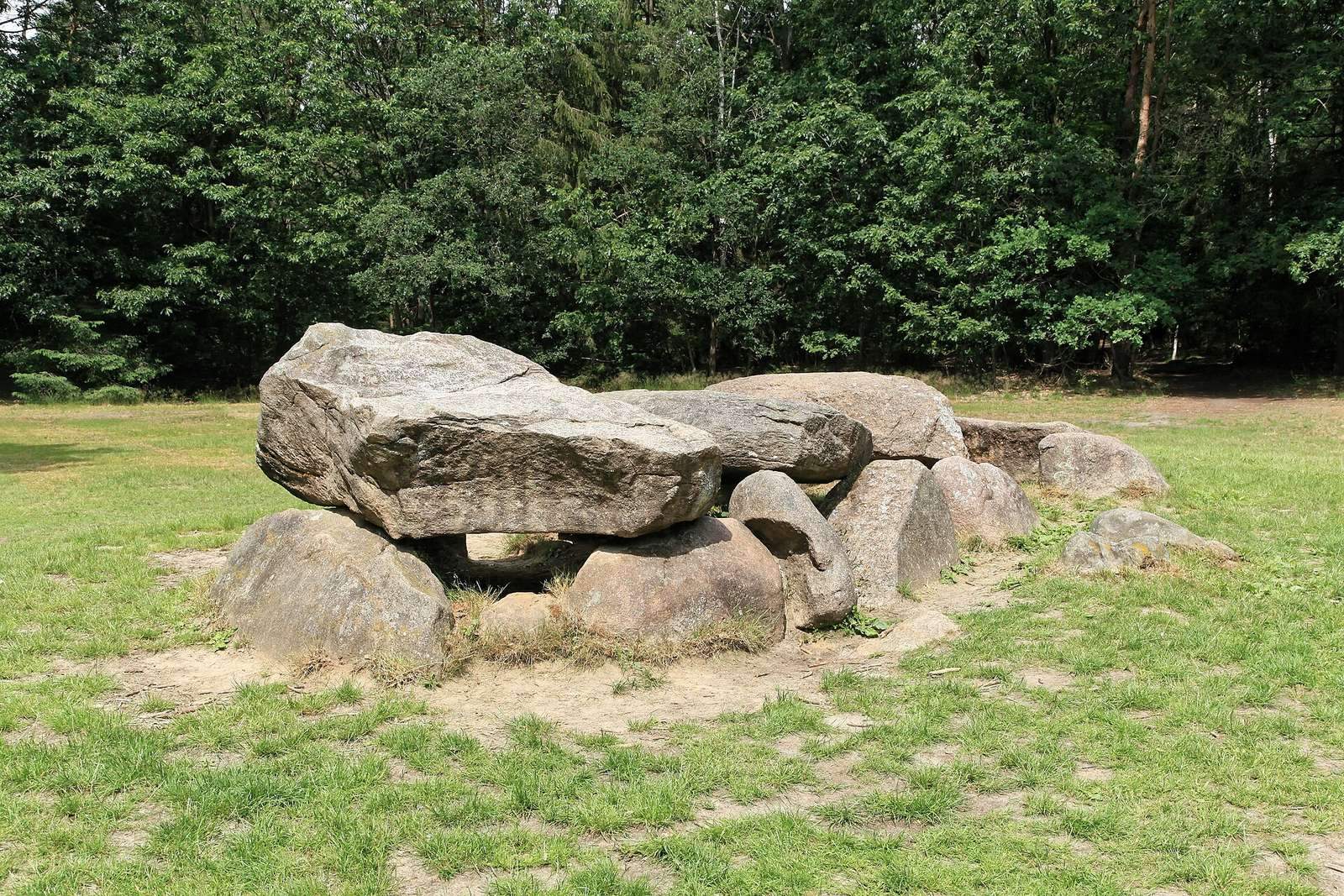
Dolmen D30, also known as Exloo-Noord, is a Neolithic passage grave near Ees in the Netherlands, northwest of Exloo. A passage grave is a megalithic burial chamber reached through a stone-lined passage. D30 is associated with the western group of the Funnel Beaker culture, a Neolithic culture named for its characteristic pottery, and its construction is dated to 3470–2760 BCE.
Nineteenth-century surveys
R. Boelken first recorded the tomb in 1818. A description written in 1822 called it exceptionally well preserved and counted five capstones. Leonhardt Johannes Friedrich Janssen visited in 1847, then included a description and schematic plans in his 1848 survey of Dutch megalithic tombs. In 1874, Willem Pleyte and photographer Jan Goedeljee made a systematic photographic record of Drenthe’s tombs, from which Pleyte produced lithographs. Conrad Leemans made a separate survey journey in 1877, with plans prepared by Jan Ernst Henric Hooft van Iddekinge, but Leemans’s report was not published.
British antiquarians William Collings Lukis and Henry Dryden surveyed D30 in July 1878. Their work responded to concern that restoration might erase evidence of the tombs’ original appearance, and their record of D30 appeared as Plan XXV. Drenthe archaeologist Wijnand van der Sanden published their documentation in 2015 and judged it to be of high quality.
Excavation and later care
Archaeologist Albert Egges van Giffen surveyed and excavated D30 in 1918, then restored it. Jan N. Lanting investigated the tomb in 1985. Further restoration followed in 1992 and 1999, with a capstone added during the later work. D30 became a Dutch National Monument, a legally protected heritage site, in 1993.
Paint was applied to the stones in 2005; subsequent cleaning removed much of their moss. In 2017, the province of Drenthe and the University of Groningen made a three-dimensional record of the tomb from photographs (photogrammetry) for a 3D atlas.
Remains
The tomb lies in the Exloo forest area at the Bodenpad. Its chamber follows a south-southeast to north-northwest axis, roughly north to south. Seven burial mounds lie in the surrounding area, and Exloo-Zuid (D31) is about 3.1 kilometres to the south-southeast.
Chamber and mound
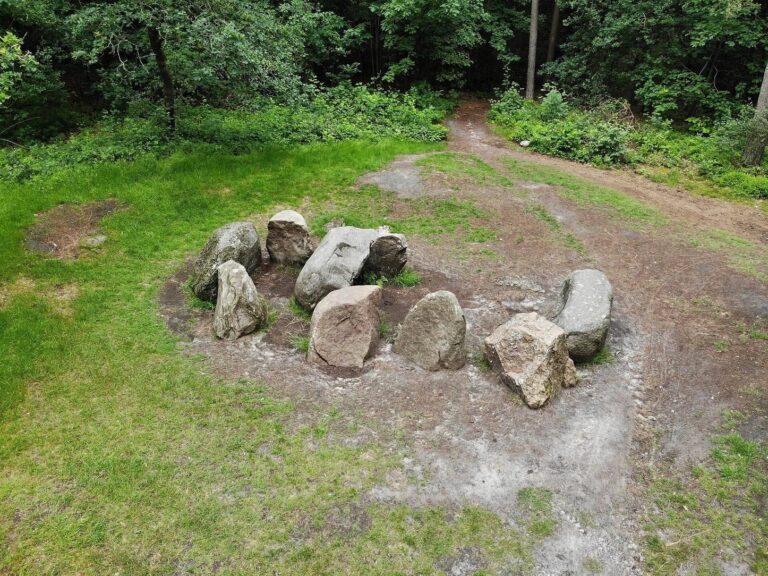
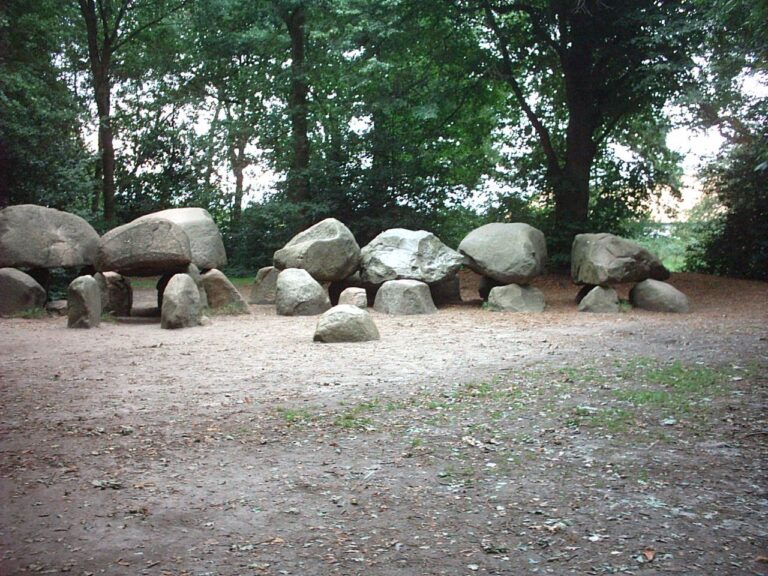
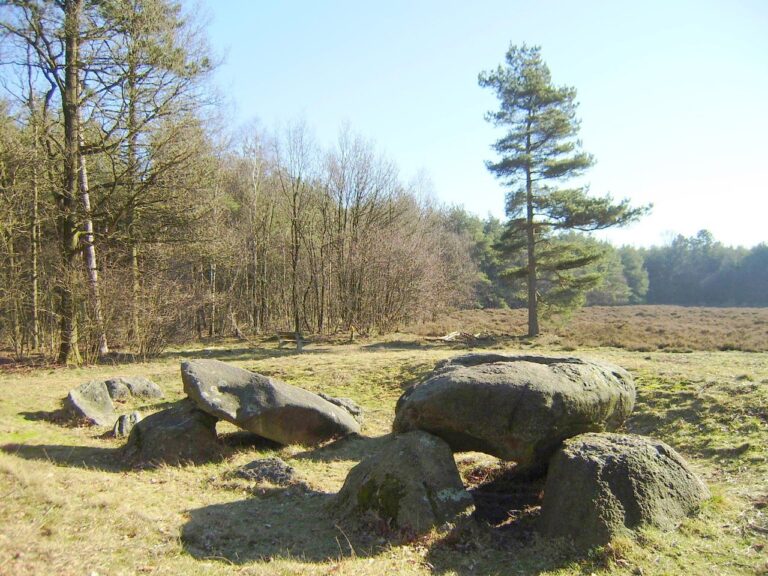
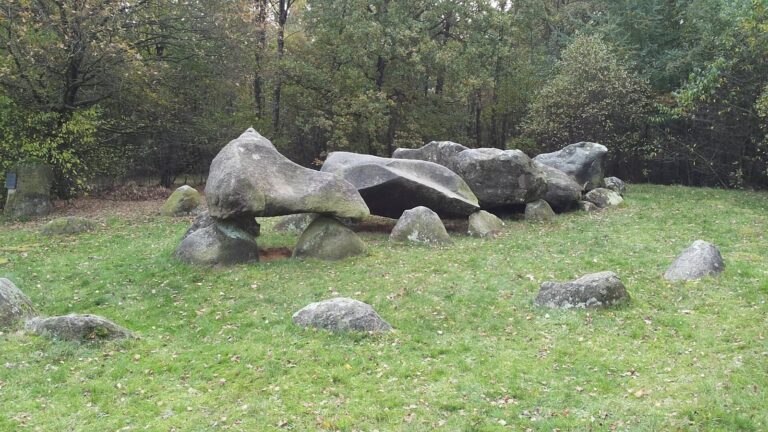
The chamber measures 7.3 metres long by 3.4 metres wide. Four pairs of side stones and a stone at each short end form its sides; three of the four original capstones remain, with capstones being the large slabs spanning the chamber. The entrance sits midway along the eastern long side, where two stones form the passage. The covering mound developed in two phases, although the date of its later phase is uncertain. Its base measured about 20 metres across in 1878, and Van Giffen found it largely intact in 1918.
Excavation evidence and finds
Van Giffen’s 1918 excavation revealed five floor layers. The lowest stone layer lay 1.70 metres below the capstones, and the burial chamber was about one metre deep. Finds included human skeletal remains, flint axes and arrowheads, and pottery sherds from more than 65 vessels, estimated at about 80. Most of the pottery was decorated with incised lines. Some sherds belonged to the Funnel Beaker culture and others to the later Single Grave culture, a prehistoric grouping identified partly through burial customs and pottery. Footed beakers and cremated human remains were also found. Lanting suggested that the cremated remains might relate to the later Bell Beaker culture, another grouping identified partly through burial customs and pottery. Outside the tomb, Van Giffen found three decorated bowls.