Dolmen D27: A Neolithic Passage Grave in Borger, Netherlands
Site at a Glance
- Popularity
- High
- Country
- Netherlands
- Primary era
- Stone Age
- Eras represented
- Stone Age
- Civilizations
- Unclassified
- Site type
- Burial
- Remains
- Tomb
On this page11 sections
History
Dolmen D27 is a Neolithic passage grave, a burial chamber reached by a stone-lined passage, on the northeastern edge of Borger in the Netherlands. It dates to 3470–2760 BC and belongs to the western regional group of the Funnel Beaker culture, a Neolithic culture of northern and central Europe named for the shape of some of its pottery.
Excavation and changing interpretations
On 11 June 1685, Titia Brongersma arranged an investigation of the tomb at the suggestion of the poet and antiquarian Ludolph Smids. She took part with her cousin Jan Laurens Lentinck, the local magistrate. Their work was the first documented excavation of a megalithic tomb in the Netherlands.
Brongersma, a Frisian poet, wrote two poems about the investigation. They portrayed the tomb as a temple dedicated to nature and recognized it as an ancient burial place, rather than a structure built by giants. Smids published a fuller account in 1694, and his writing and correspondence helped weaken the belief that giants had built the megalithic tombs. That idea had been promoted by the antiquarian Johan Picardt. After converting from Catholicism to Calvinism, Smids returned to Picardt’s interpretation in a work published in 1711.
Visits and nineteenth-century recording
Louis Napoleon, king of Holland from 1806 to 1810 and the younger brother of Napoleon Bonaparte, visited D27 in 1809. In 1847, Leonhardt Johannes Friedrich Janssen examined the tomb. His 1848 overview of Dutch megalithic tombs included descriptions and schematic plans.
In 1874, Willem Pleyte and photographer Jan Goedeljee systematically photographed the surviving tombs and made lithographs from their images. Conrad Leemans organized a separate survey in Drenthe in 1877, with tomb plans prepared by Jan Ernst Henric Hooft van Iddekinge. In 1878, William Collings Lukis and Sir Henry Dryden measured and described 40 tombs, including D27, recording them in plans, sections and watercolors. The survey was commissioned amid concern in England that Dutch restoration might obscure the tombs’ original appearance. Drenthe archaeologist Wijnand van der Sanden published the survey in 2015 and reviewed later research through that year.
Restoration and later study
A pine grove near the tomb was cleared in 1903 and replaced by an English-style garden. Willem Johannes de Wilde made a detailed record of surviving Dutch megalithic tombs between 1904 and 1906. Albert Egges van Giffen documented D27 in 1918.
The tomb was restored in 1937 and again in 1992. It has been listed as a national heritage monument since 1992. In 2017, D27 was included in a photo-based three-dimensional atlas of surviving Dutch megalithic tombs.
Remains
Stone structure
Chamber and passage
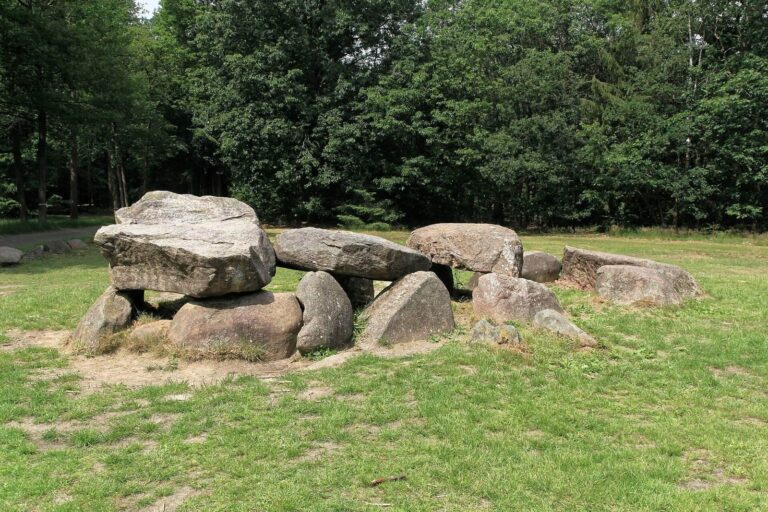
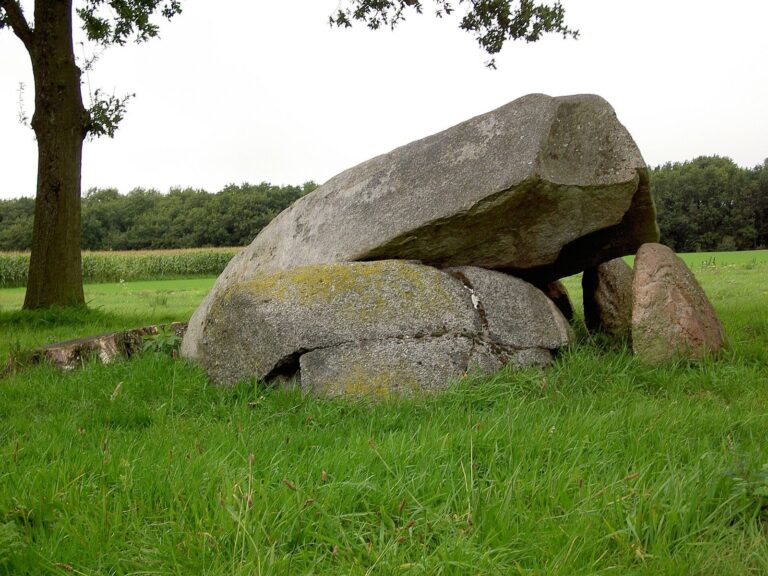
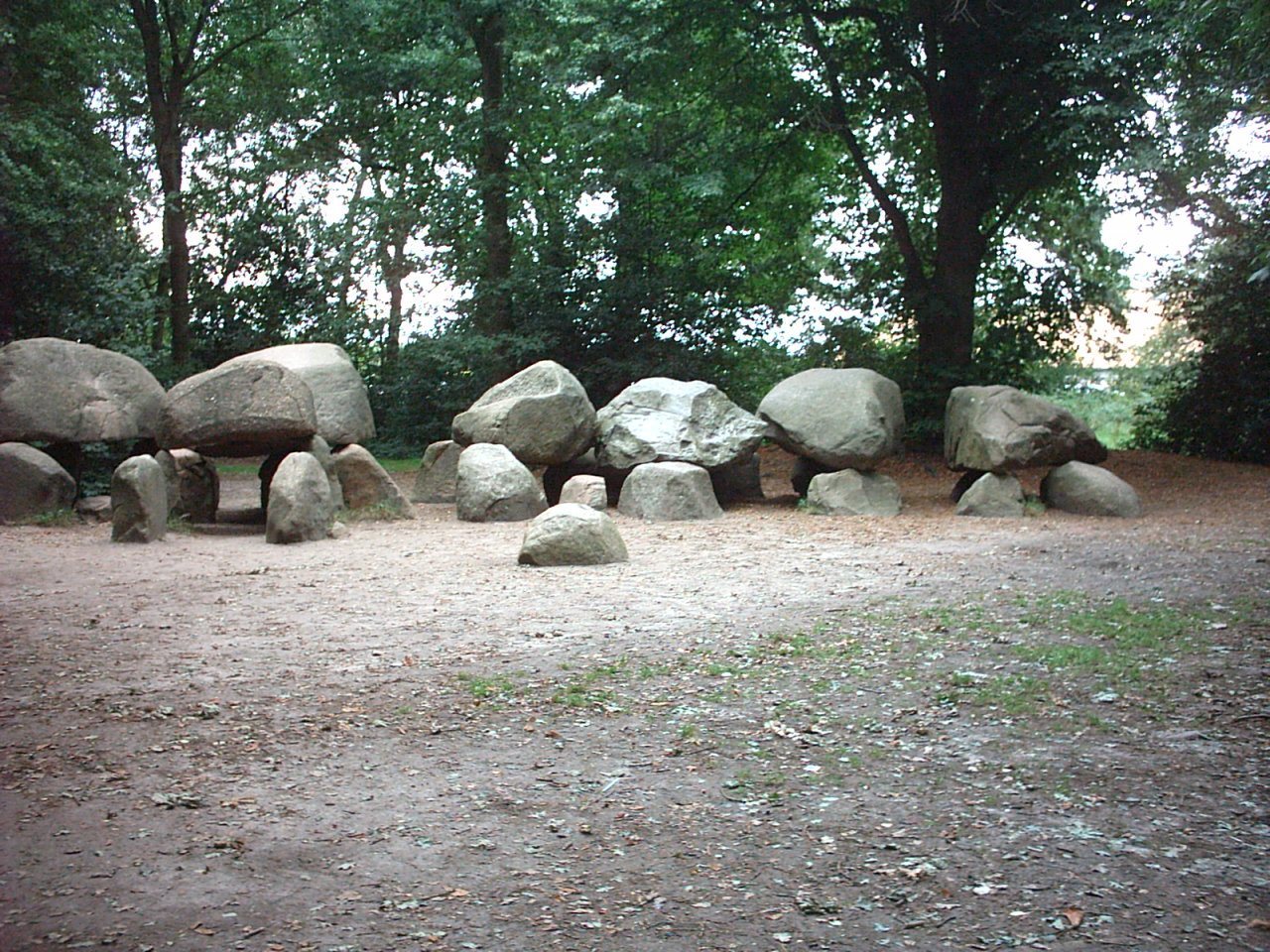
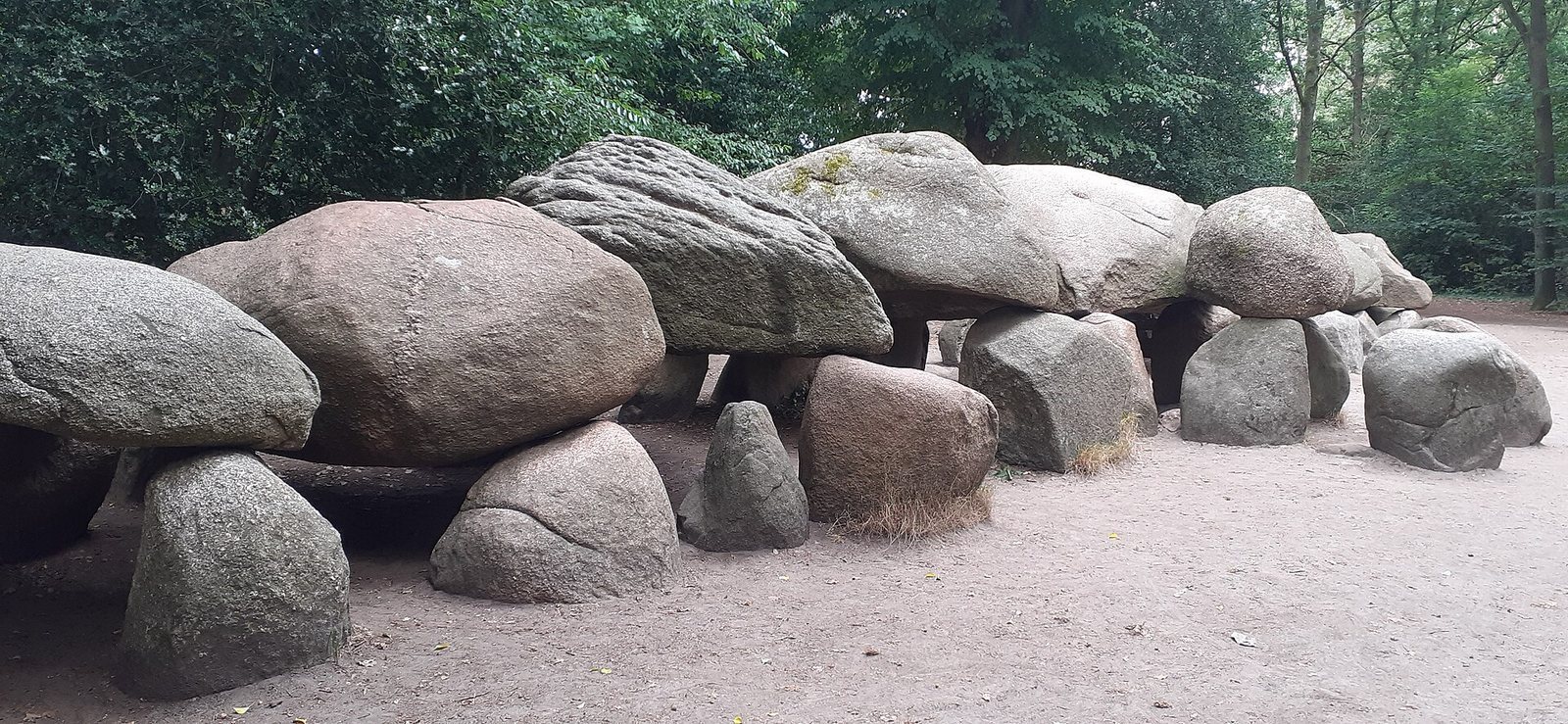
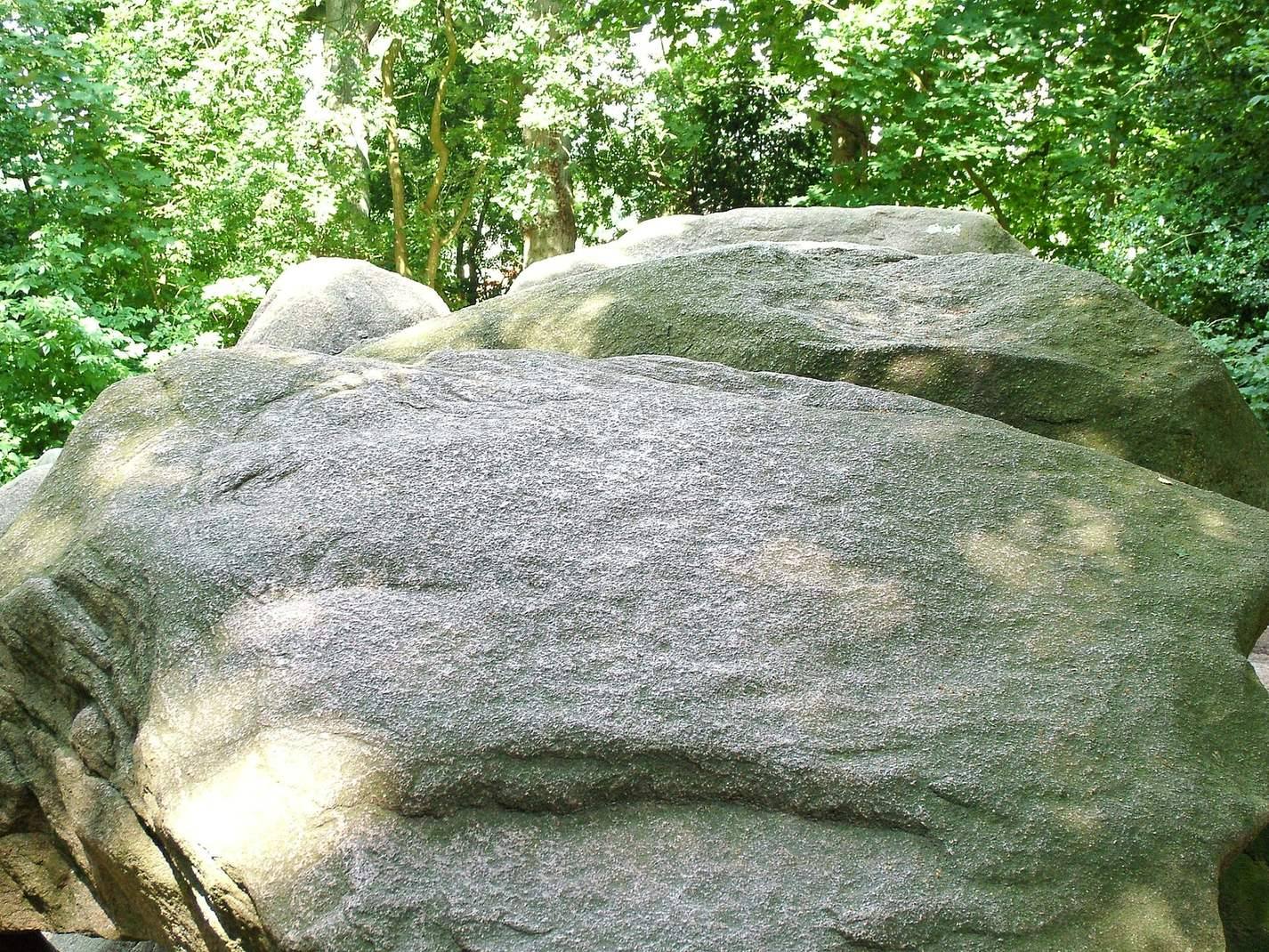
The tomb is aligned from east-southeast to west-northwest. Its chamber measures 22.6 metres long and about 4.1 metres wide, making it the largest megalithic tomb chamber in the Netherlands. Twenty-six supporting stones line its sides, with an end stone at each short end and nine capstones, the large stones covering the chamber. The entrance is midway along the southern side. A passage made from two pairs of stones and a capstone leads into the burial chamber.
A plan made in 1878 counted 25 supporting stones and nine capstones, and proposed that the chamber may originally have had ten capstones. At the eastern end, three capstones had slipped from their supports and a fourth lay on the ground; the seventh and eighth were still in position. The survey also noted part of the covering mound on the northeastern side.
Enclosure, cup marks and buried features
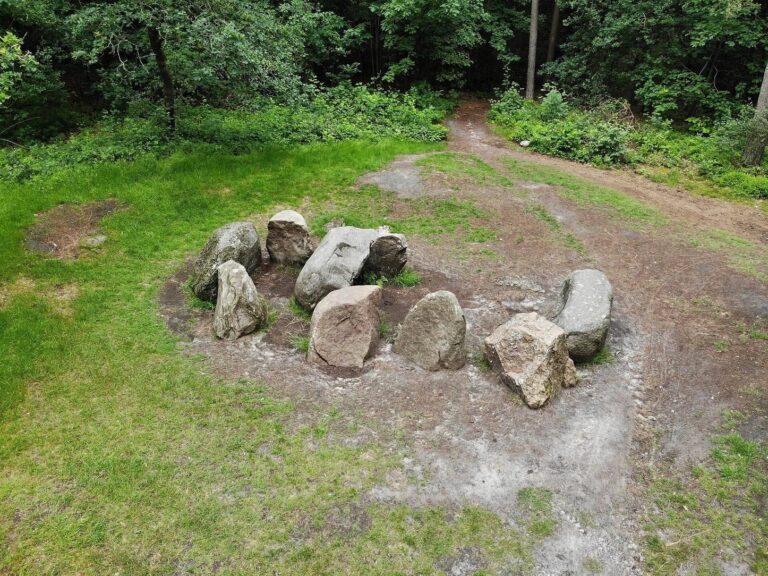
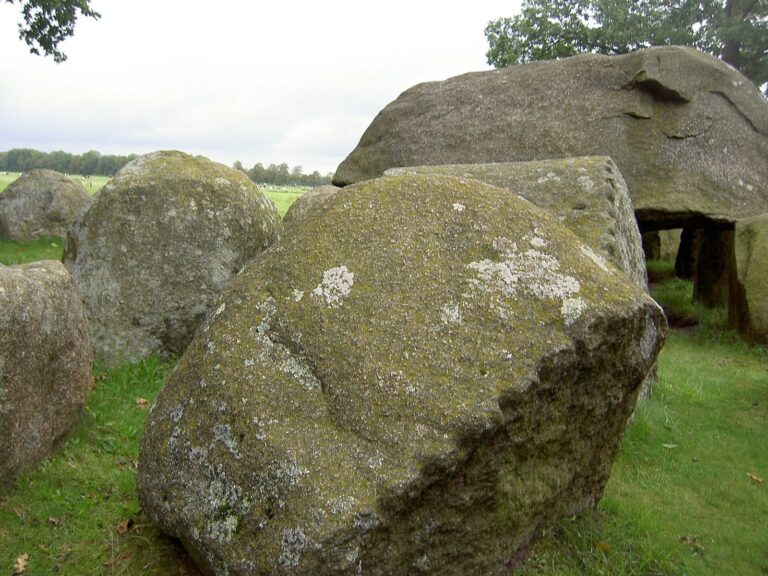
The stones of an outer enclosure had been removed by 1835, although their positions were still visible then. Two boulders near the tomb may have belonged to the enclosure. Small cup-shaped depressions on the tomb stones were discovered in 2018. A scan commissioned by the Hunebedcentrum revealed a pebble floor about 30–40 centimetres beneath the tomb, with further structures below it.
Burial evidence
Pottery and pebbles
During the 1685 excavation, Brongersma’s group found round pottery vessels, some brownish-blue and others dark red. Some had two handles and others four; they broke apart to reveal human bones and ash. The excavators also found many pebbles arranged in rows. Lukis and Dryden found Funnel Beaker pottery sherds that are now in the British Museum in London. They belong to phases 2–5 and 7 of the western group and date to about 3470–2760 BC. The 1878 survey noted both plain and ornamented urn fragments, and a complete urn was found in a nearby field in 1874.
Human and animal remains
The tomb yielded 223 grams of cremated human remains from two people of undetermined sex. One was between 30 and 50 years old at death; the other person’s age could not be determined. Recovered burnt animal bones weighed 51 grams and included cattle bones. One sheep bone was recent.