Dolmen D26: A Funnel Beaker Passage Grave in the Netherlands
Site at a Glance
- Popularity
- Low
- Country
- Netherlands
- Primary era
- Stone Age
- Eras represented
- Stone Age
- Civilizations
- Unclassified
- Site type
- Burial
- Remains
- Tomb
On this page9 sections
History
Early references and nineteenth-century surveys
Dolmen D26 is a Neolithic passage grave on Veldweg near Drouwen in the Netherlands. It is associated with the western group of the Funnel Beaker culture, a Neolithic culture named for its characteristic pottery, and dates to about 3300–3075 BCE. The western group is a regional subdivision of that culture.
Megalithic tombs near Drouwen were mentioned by 1711, and Dutch antiquarian Nicolaas Westendorp specifically noted D26 in 1812. Museum curator Leonhardt Johannes Friedrich Janssen visited the tomb in 1847. His survey, published the next year, was the first overview of Dutch megalithic tombs to include architectural descriptions and schematic plans.
Later surveys and archaeological study
In 1874, Willem Pleyte and photographer Jan Goedeljee systematically photographed Drenthe’s megalithic tombs; Pleyte later made lithographs from the photographs. Concern that restoration might obscure the tombs’ original appearance led the Society of Antiquaries of London to commission British antiquarians William Collings Lukis and Henry Dryden to survey them in 1878. Their work included D26 but remained unpublished until Drenthe archaeologist Wijnand van der Sanden published it in 2015. J. Craandijk described the tomb in 1879. Willem Johannes de Wilde surveyed surviving Dutch megalithic tombs between 1904 and 1906, and Albert Egges van Giffen included D26 in an atlas of Dutch tombs in 1918.
Excavation and modern recording
Stone remains of the enclosure were exposed in 1964–1965. The University of Amsterdam investigated D26 from 1968 to 1970, making it the last megalithic tomb in the Netherlands to receive a full excavation and the last in Drenthe to be investigated. Van Giffen carried out a further small investigation in 1972; after it, his twenty-year project to restore Dutch megalithic tombs was complete.
D26 has been a Dutch National Monument since 1993, a status that protects it under the Netherlands’ national heritage system. In 2017, a photographic survey recorded the tomb for a three-dimensional atlas of surviving Dutch megalithic tombs.
Remains
Chamber and stone enclosure
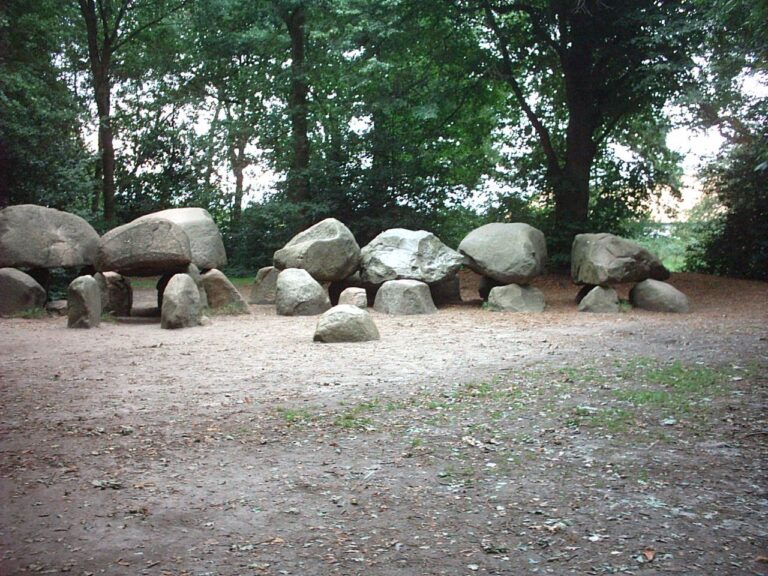
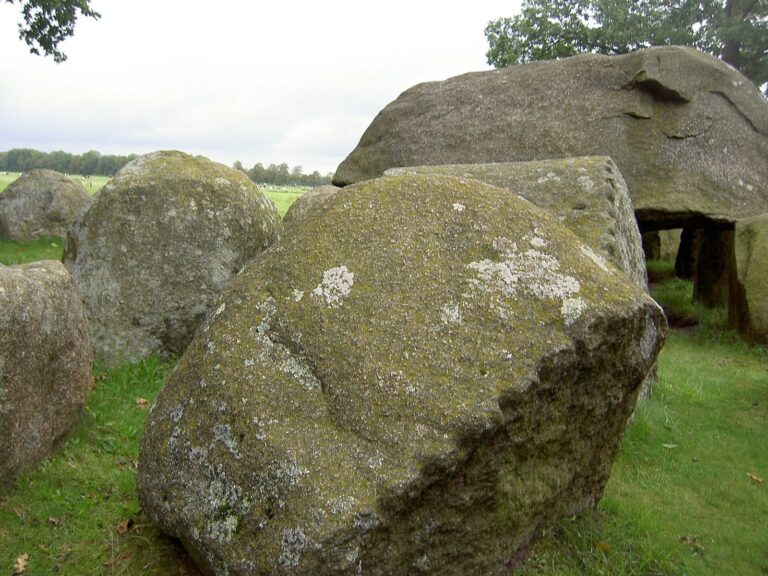
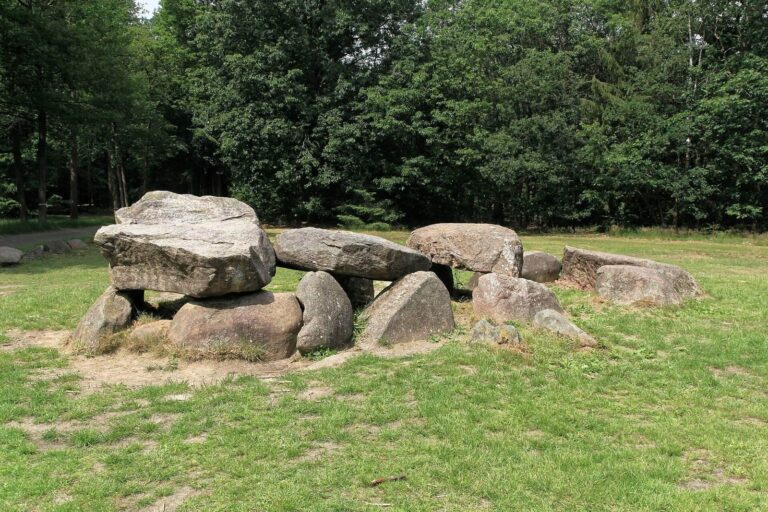
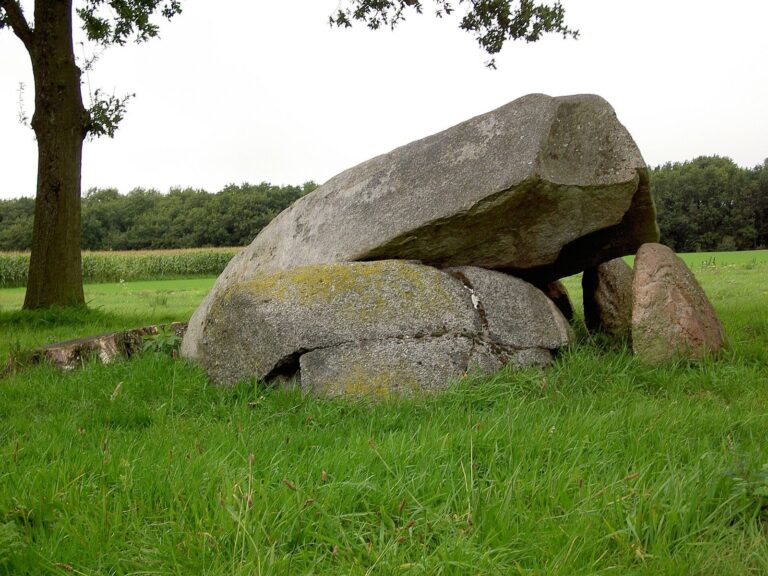
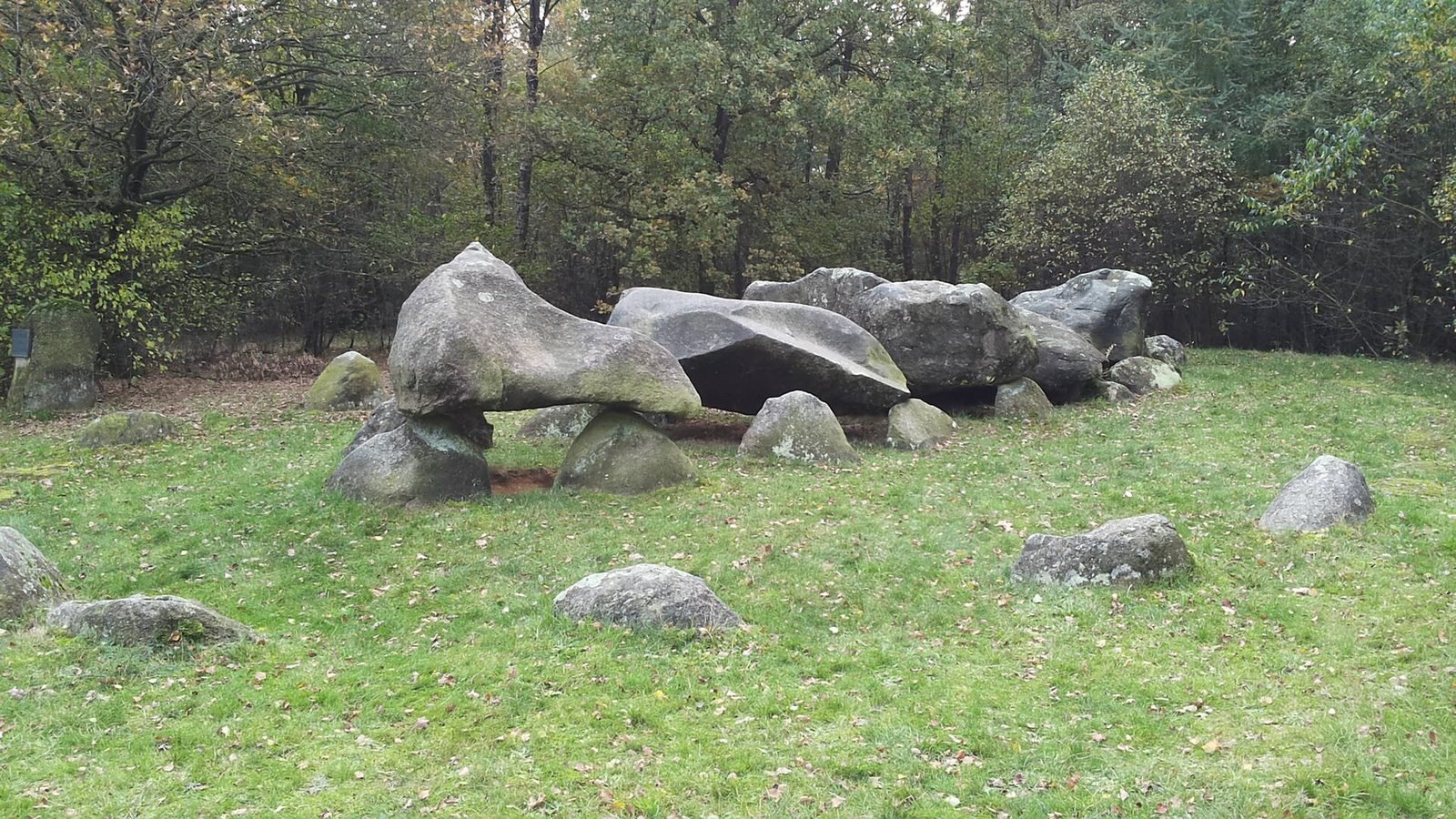
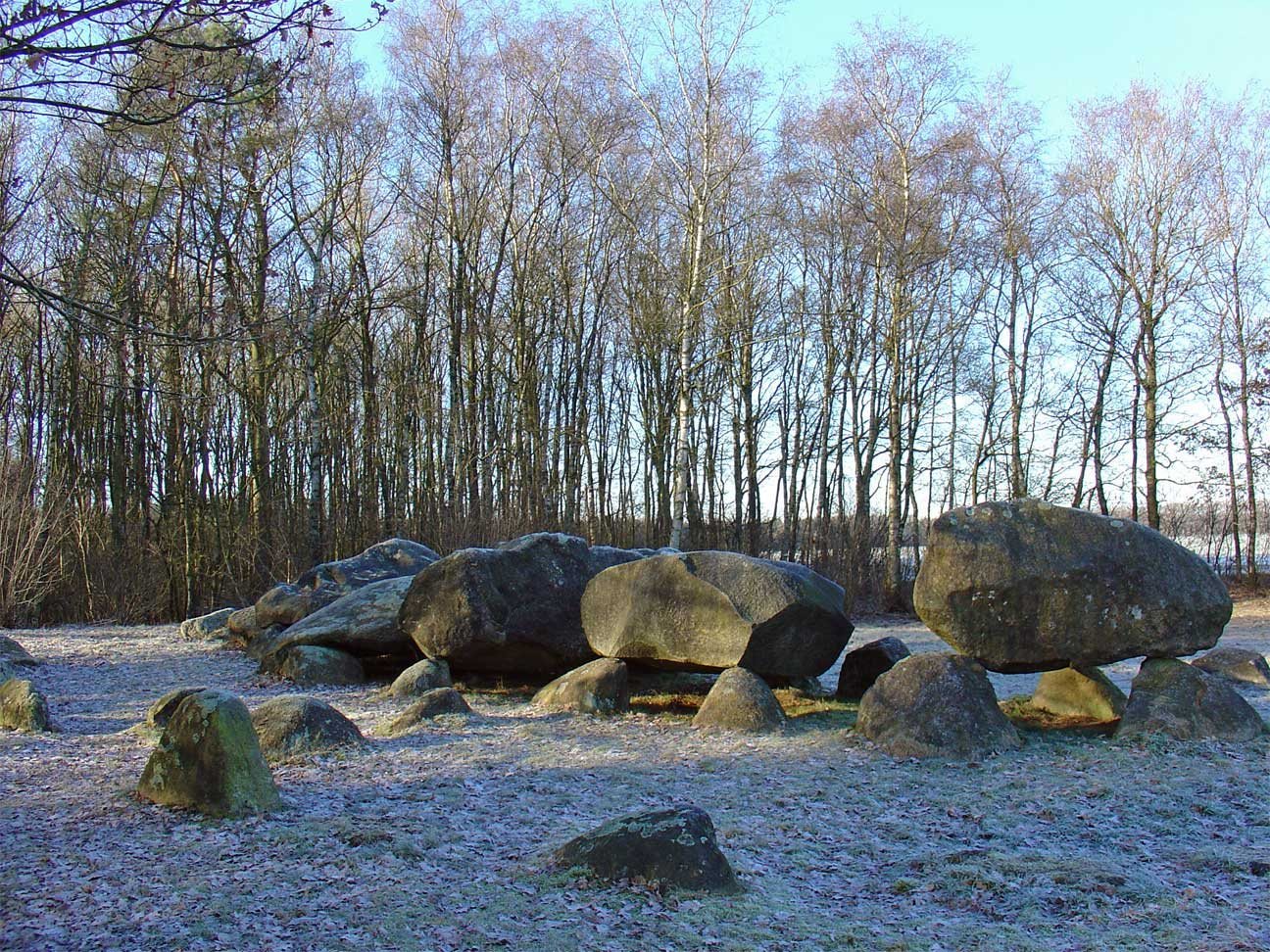
D26 is oriented northeast to southwest and has the layout of a passage grave, a chambered tomb entered through a passage. It stands where a field meets woodland at the edge of the Gieten-Borger forestry, southeast of Drouwen. The chamber measures about 12 metres long and 3.8 metres wide. Six pairs of supporting stones form its long walls, with an end stone closing each short end. Five of the six original capstones survive. The entrance lies midway along the southern wall, reached by a passage formed by two pairs of stones.
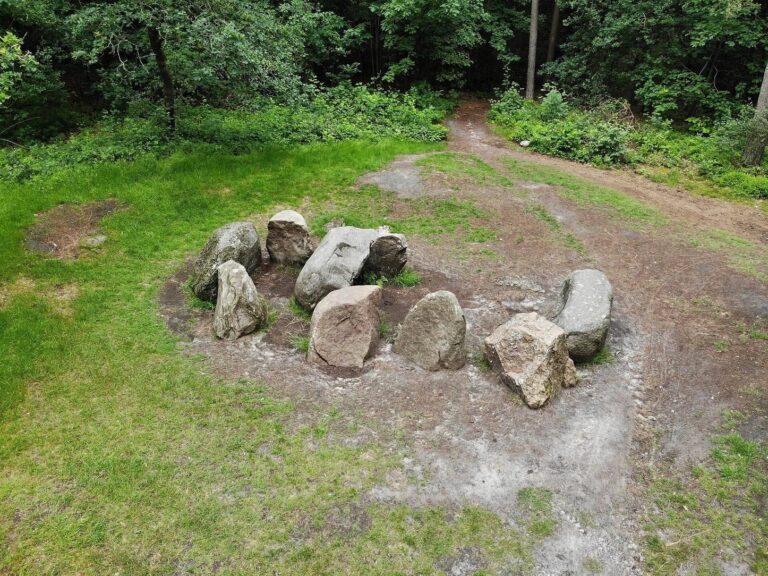
An oval arrangement of stones encloses the chamber. Thirteen stones from the original group of 27 remain, and the stone holes trace the positions of the enclosure. The outline of the covering mound is still recognizable. Lukis and Dryden’s 1878 survey describes capstones that had been lifted and tilted in different directions, and notes thirteen supporting stones, one portal stone and several enclosure stones. The University of Amsterdam’s restoration work involved removing capstones from their positions and bracing the supporting stones with tree trunks.
Excavated evidence
Human remains
Excavation recovered 332 grams of cremated human remains representing five people: a child aged between 0 and 6, a person aged 12 to 15, a probable man aged 18 to 40, a probable adult woman, and an adult of undetermined sex who died before 60. These remains may relate to later burials associated with the Single Grave culture, a Late Neolithic culture linked to individual burials, or to an earlier beginning of cremation among Funnel Beaker communities in the region. The evidence does not resolve which explanation applies.
Pottery and other finds
The chamber had a pebble floor. Excavators found an offering pit in front of the entrance containing two complete pots; an 1878 search for the floor had also produced urn fragments. The excavation yielded material from 157 pots and 159 pottery fragments. Funnel Beaker pottery ranges from late stage 2 or early stage 3 to early stage 5 in Anna Brindley’s classification for the western group. Other pottery dates to the Late Neolithic and Iron Age. The finds also include stone weapons and tools, amber beads, and 17 grams of burnt animal bone from a pig and a canid. Whether the animal bone was related to tool use or served as food offerings remains uncertain. The excavated finds were lent by the University of Amsterdam to the Hunebedcentrum in Borger.