Dinas Emrys: A Welsh Hillfort and Medieval Castle
Site at a Glance
- Rating
- 4.9
- Popularity
- High
- Country
- United Kingdom
- Primary era
- Medieval
- External website
- Open
- Eras represented
- Medieval
- Civilizations
- Kingdom of Gwynedd
- Site type
- Military
- Remains
- Castle
On this page8 sections
History
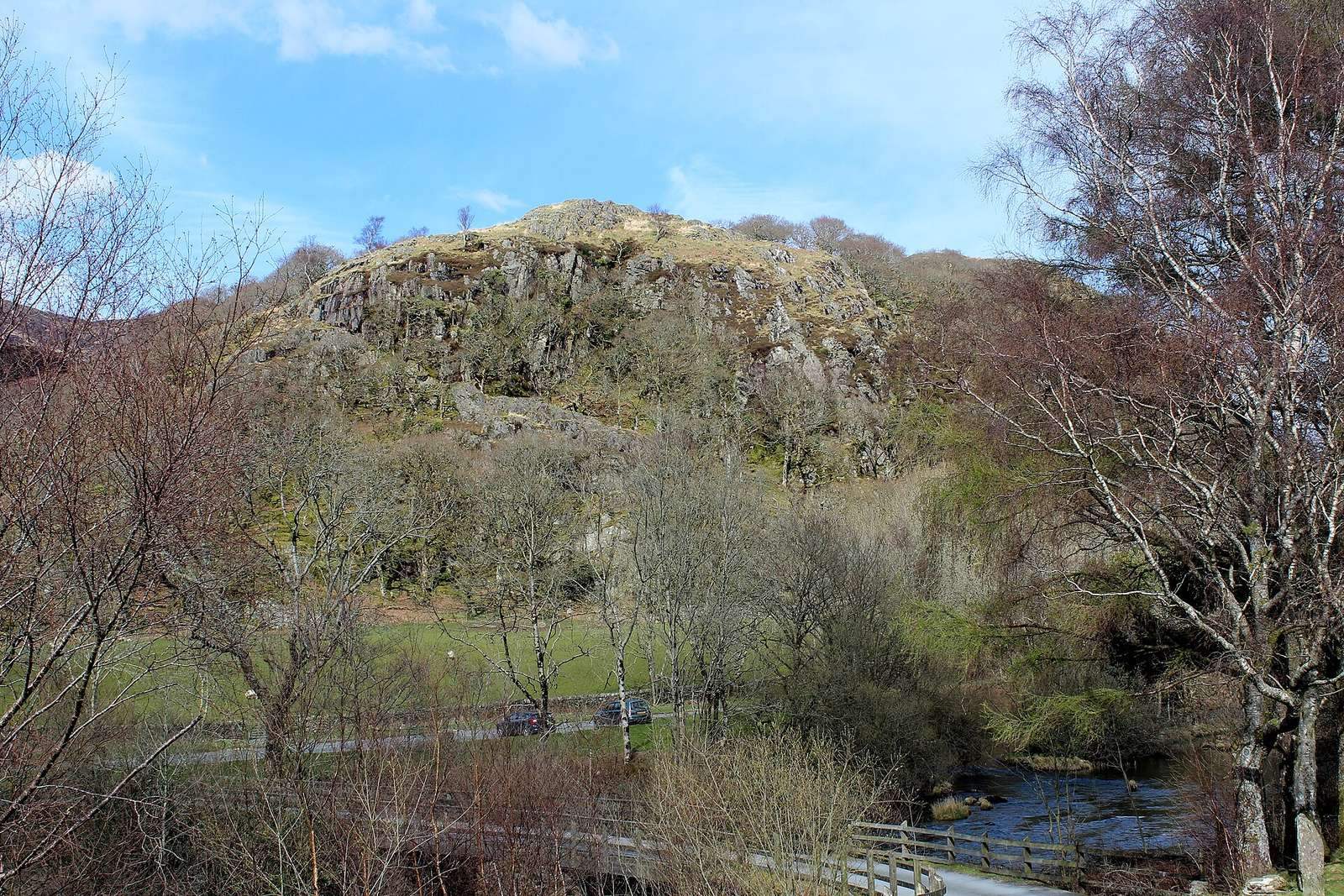
Dinas Emrys is a hillfort and castle site on a rocky hill near Beddgelert in Gwynedd, north-west Wales, United Kingdom. A hillfort is a fortified enclosure on elevated ground. The earliest occupation dates to the Iron Age, perhaps the first or second century, and activity continued into the fifth century. The fortifications themselves were built after Roman rule in Britain had ended. The site is also known through medieval Welsh stories that place Vortigern and two dragons here.
Occupation and medieval castle
Excavations revealed several periods of activity, beginning in the Iron Age. Later traces indicate that people continued to use the hill into the fifth century, although the fortifications belong to the post-Roman period.
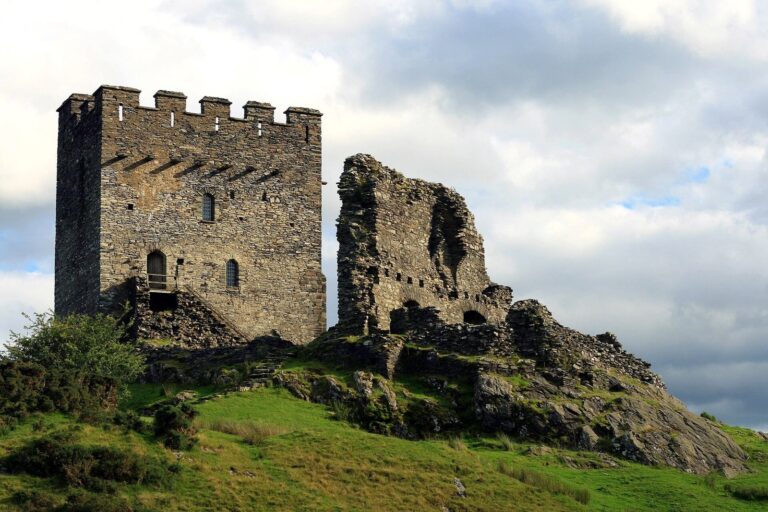
The base of a rectangular tower is generally attributed to a castle built in the eleventh century by the princes of Gwynedd, a medieval Welsh kingdom and principality. The castle is otherwise undocumented. It has also been associated with Llewelyn the Last, the last native prince of Wales before Edward I’s conquest. On that interpretation, it may have guarded the road to the Snowdon mountain pass.
Welsh names and legends
Medieval Welsh literature gives the site the earlier names Dinas Ffaraon and Dinas Ffaraon Dandde, meaning “Fortress of Pharaoh” and “Fortress of Fiery Pharaoh.” The name Dinas Emrys has also been linked to a Roman ruin in Snowdonia, an identification that may reach back to the Historia Brittonum, an early medieval Latin chronicle.
In the chronicle’s legend, Vortigern, a figure in early accounts of post-Roman Britain, flees Anglo-Saxon invaders and chooses the hill as a royal retreat. His men repeatedly find their newly built masonry collapsed the following morning. After weeks of failure, Vortigern seeks a boy said not to have been conceived by a mortal man. The boy, Myrddin Emrys, a Welsh figure associated with Merlin, explains that two dragons lie hidden in a pool beneath the fort and are preventing its construction. The White Dragon, representing the Saxons, is winning, but the Red Dragon, representing the Welsh, will ultimately prevail. In the story, Vortigern later falls and gives the fortress to Ambrosius Aurelianus, a Romano-British leader also called Emrys Wledig. The site takes its name from him.
A separate Welsh legend, set around 100 BC during the rule of Lludd, tells how the dragons came to be buried at the hill. A terrible scream heard each May Eve causes infertility, panic, and disorder. Lludd’s brother Llefelys, king of Gaul, explains that two dragons are fighting, one native to Britain and one foreign. After they turn into pigs, Lludd captures them with a cauldron of mead and buries them at what he considers the safest place. Their struggle also serves as a metaphor for the arrival of the Saxons in Britain.
Local folklore also places treasure hidden by Myrddin in a cave at Dinas Emrys. A bell would summon the golden-haired, blue-eyed person destined to find it, and the cave would open when that person’s foot touched it. A young man who tried digging near the tower was frightened away by strange noises, shaking ground, darkness, lightning, and thunder; he never returned for his pickaxe.
Excavation and protection
Excavations took place in 1910 and from 1954 to 1956, when archaeologist H. N. Savory worked at the hillfort. Dinas Emrys is a scheduled monument in Wales, a designation that provides legal protection for an archaeological or historic site.
Remains
Hilltop enclosure
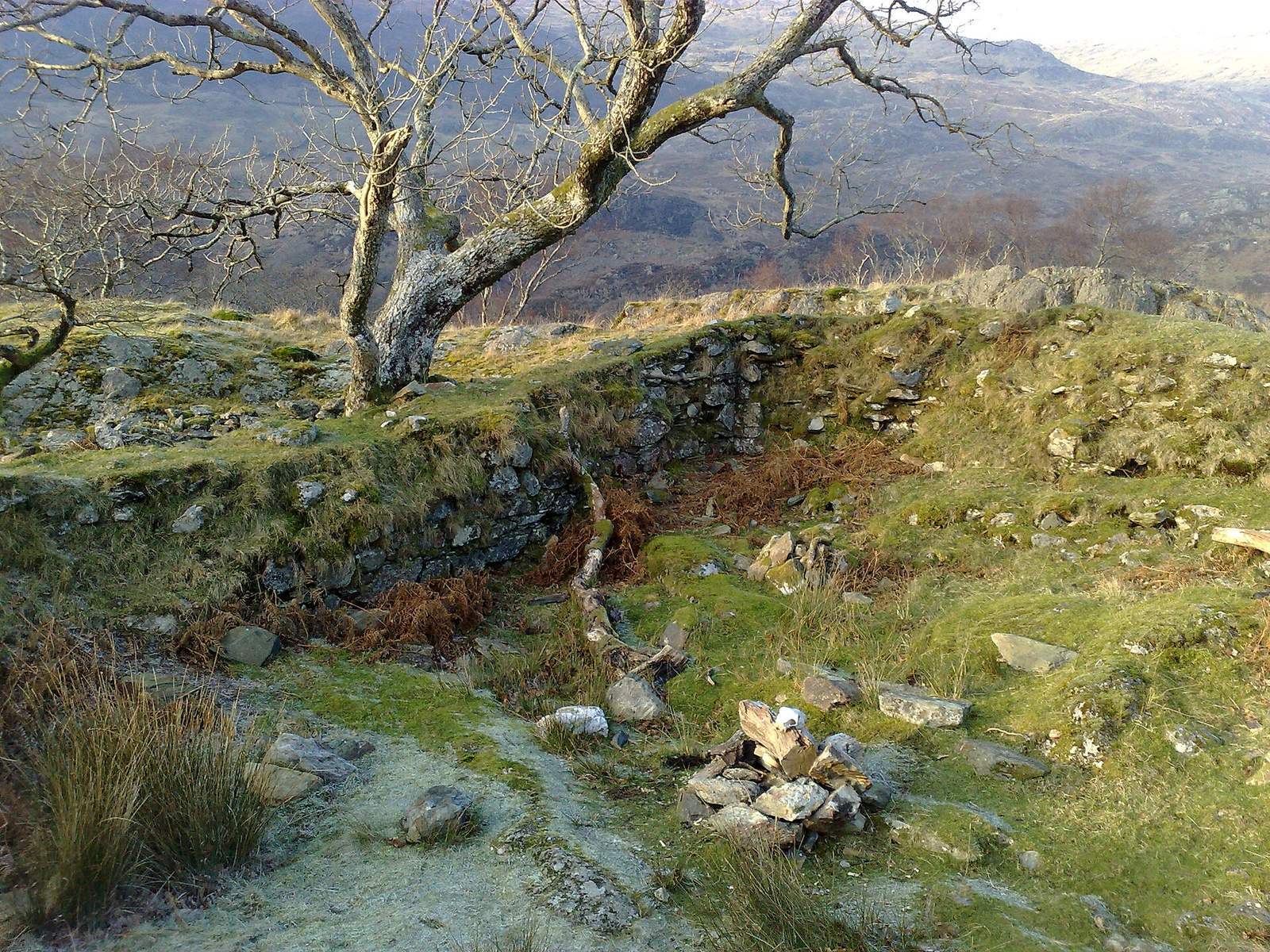
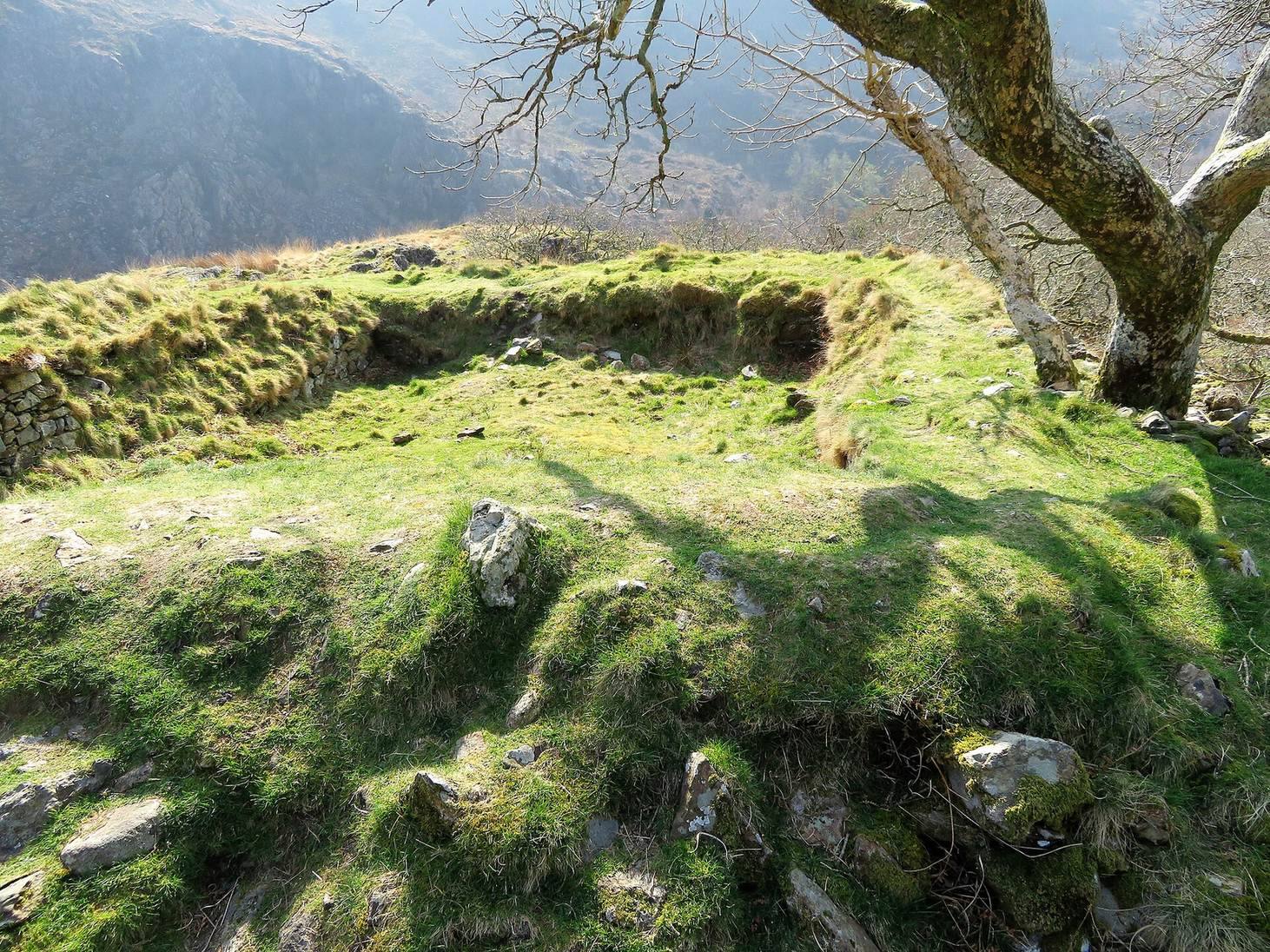
The site occupies a rocky, wooded hillock rising about 76 metres above the Glaslyn valley floor and overlooking the southern end of Llyn Dinas. Its enclosure covers an irregular area of about 10,000 square metres, with stone walls that follow the uneven summit. Three lines of ramparts, other walls, foundations, and a tower base survive, and most visible remains date to the Middle Ages. Savory described the fortification walls as 2.5 to 3 metres thick and poorly built; they appear to have been constructed on two or three occasions.
Approach and pool
The original approach climbed a steep path on the western side, while the present entrance on the north-east side was added later. A pool lies within the enclosure and may be artificial. Its date is uncertain, with proposed dates in the Iron Age or fifth century. A platform above the pool was also found. Although it resembles the feature in the Vortigern legend, Savory considered it much later than the lifetimes traditionally assigned to Vortigern and Ambrosius.
Tower base and stone circle
The most conspicuous structure is the base of a rectangular keep, a castle’s principal fortified tower, measuring about 36 by 24 feet. Nearby, a circle of tumbled stones about 30 feet across is traditionally identified as the place where the dragons were hidden.