Miravet Castle: An Islamic Fortress in Spain
Site at a Glance
- Popularity
- Medium
- Country
- Spain
- Primary era
- Medieval
- Eras represented
- Medieval
- Civilizations
- Unclassified
- Site type
- Military
- Remains
- Castle
On this page8 sections
History
Early origins and medieval contests
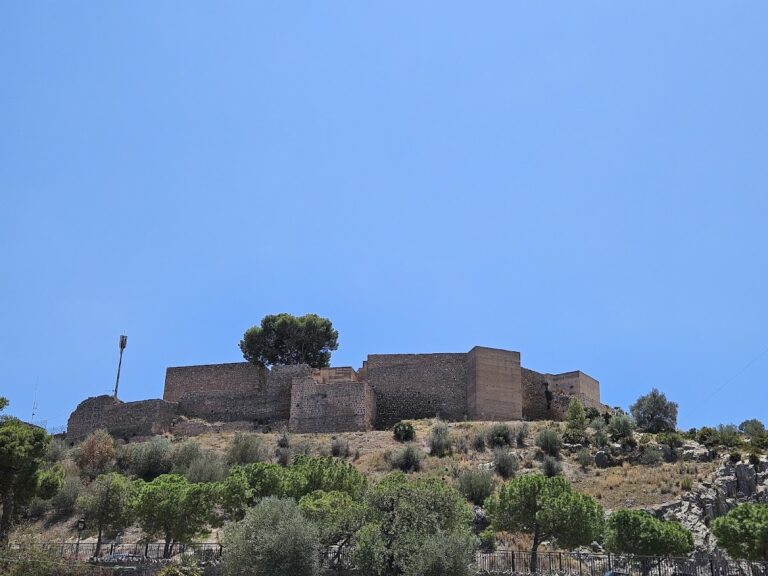
Miravet Castle is a fortress of Islamic construction in Spain; its foundation date is unknown, and it was modified during the medieval period. Nearby Eneolithic sites, from a prehistoric period when people used copper alongside stone tools, indicate occupation in the surrounding area. Some historians have proposed that the castle site was Ildum, a Roman roadside station, but the identification is unconfirmed.
A siege took place in 1090, and the Castilian military leader El Cid captured the castle from Muslim forces the following year. From 1093 to 1103, governors appointed by the Aragonese kings Sancho Ramírez and Pedro I held Miravet to contain the Almoravid advance. The Almoravids were a Muslim dynasty that ruled parts of North Africa and the Iberian Peninsula, but their advance was not permanently checked by these governors. Another siege of Miravet is dated to 1643.
Conquest and episcopal grants
In 1178, Alfonso II promised the Cathedral of Tortosa land in the area, conditional on its conquest. Under James I, king of Aragon, the conquest was consolidated and the donations confirmed. The arrangements helped secure the support of the bishop and cathedral chapter, the clergy associated with the cathedral, and recognized their assistance.
On 27 April 1224, James I confirmed the old boundaries of the Bishopric of Tortosa, the diocese led by its bishop, along with donations involving several castles. On 27 April 1225, at Tortosa, he granted Bishop Poncio de Torrella Miravet, Zufera, and Fadrell, defining the territories attached to them. James confirmed the grants on 3 September that year while besieging Peñíscola. The siege was unsuccessful, and the confirmation again recognized the bishop’s aid.
After Burriana surrendered in July 1233, other castles fell later that summer. Miravet and Zufera are thought to have surrendered around the same time. One proposed interpretation of Miravet’s name has prompted the suggestion that it may have been a Muslim monastery of warrior monks devoted to religious warfare. Zufera’s name appears to mean “the crag,” and the place is probably the Azafuz mentioned in a document of Pedro I from 1100. After the conquest, Zufera was absorbed into the territory of the more powerful neighboring Miravet.
Resettlement and territorial boundaries
After the conquest, Poncio de Torrella, bishop of Tortosa from 1213 to 1254, organized the Christian resettlement of the district. It included the castles of Miravet, Zufera, and Albalat, the town of Cabanes, and the places later known as Bell-lloc or Benlloch and Torreblanca. Cabanes was settled in 1243 and Benlloch in 1250. Albalat and Torreblanca were settled before 1350, though their settlement dates are unknown.
In March 1245, Berenguer de Trago and Guillermo Berdén, appointed by Bishop Poncio and the master of the Order of the Temple, set boundaries for Xivert, Miravet, and Oropesa. The Order of the Temple was a Catholic military-religious order. In 1262, its master and the Bishop and Chapter of Tortosa disputed ownership of Miravet and Zufera. Later rulings addressed boundaries between Miravet and Montornés: arbitration in 1285 and 1333 proceeded at the request of, and with the agreement of, the respective lords.
Cabanes and later status
As Cabanes gained strength during the sixteenth century, Albalat and Miravet, with their territories, were formally joined to it on 5 July 1575. The act was made at Casa de la Sal in the district of Albalat. On 22 April 1949, the castle received the general legal protection for Spanish castles and was classified as an Asset of Cultural Interest in the monument category, Spain’s formal designation for protected cultural heritage.
Remains
Hilltop layout and defenses
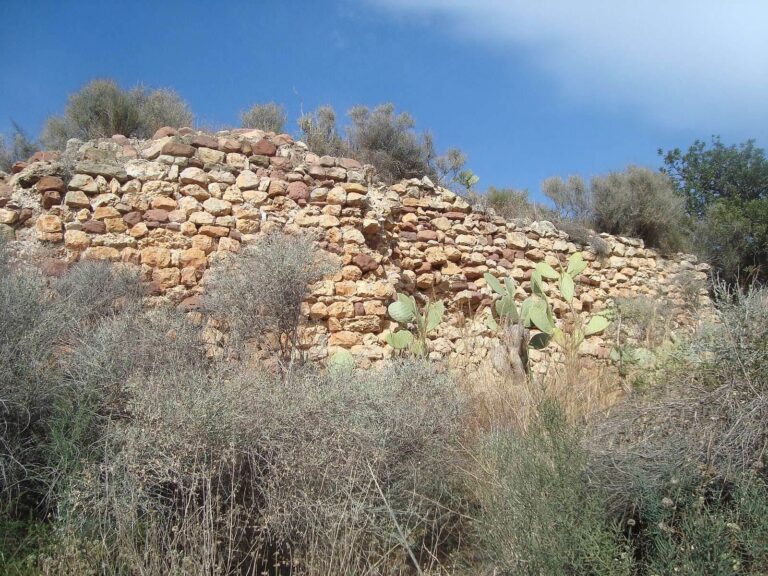
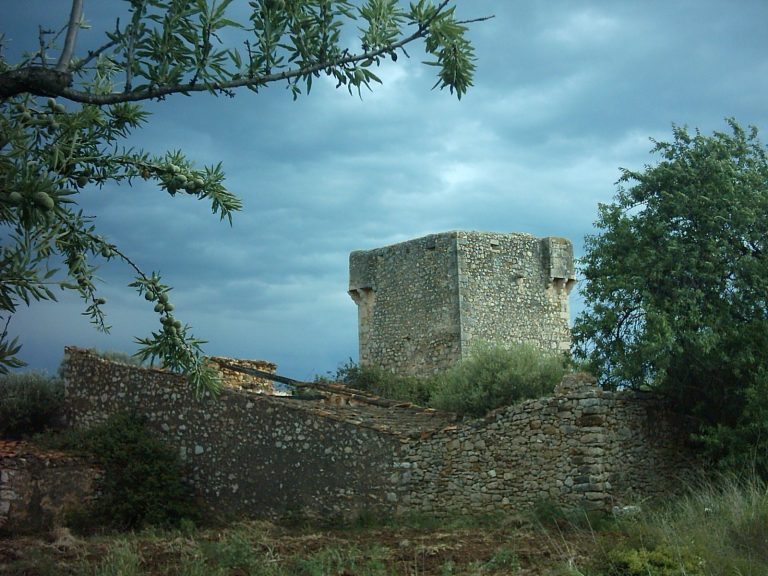
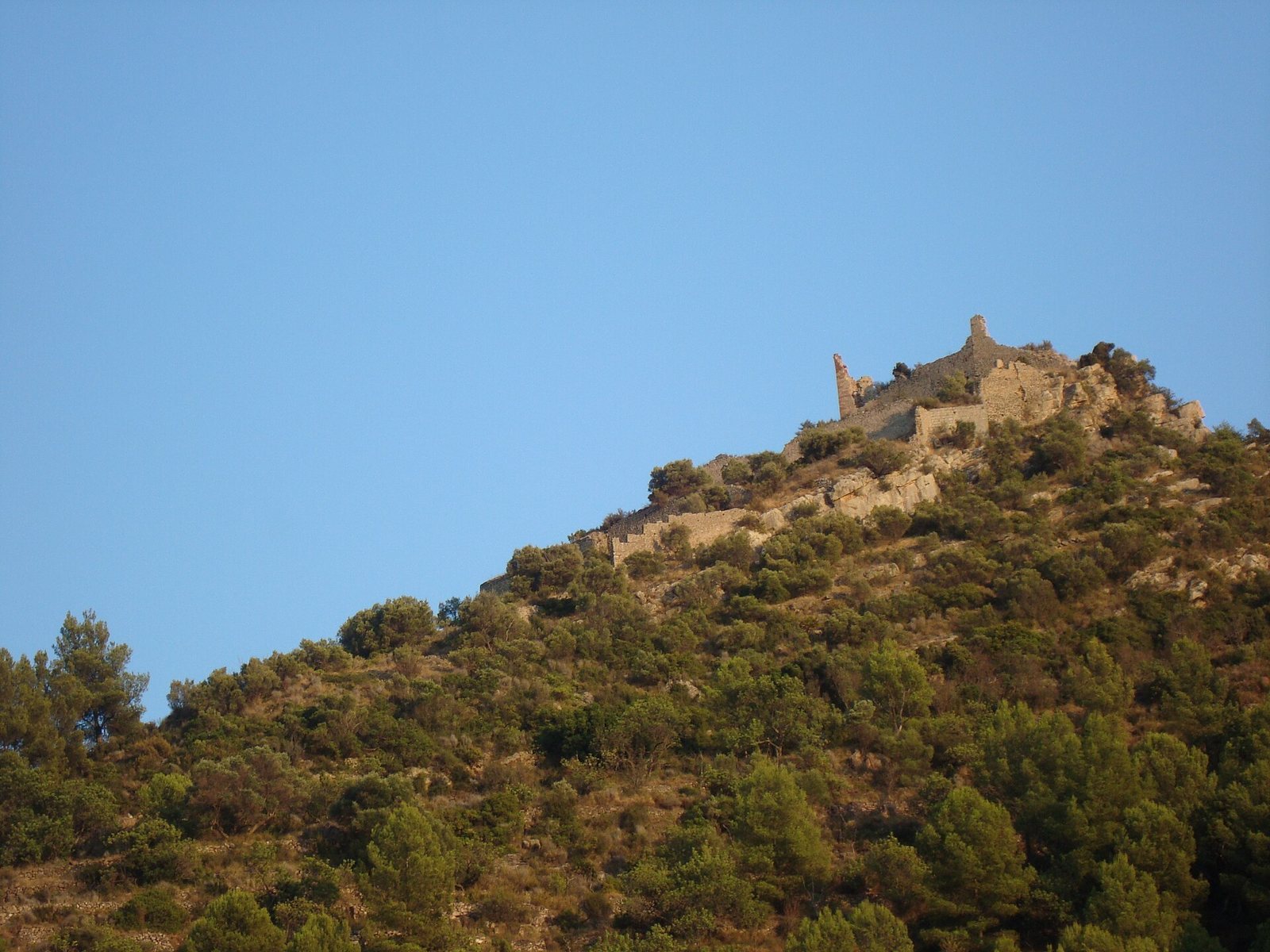
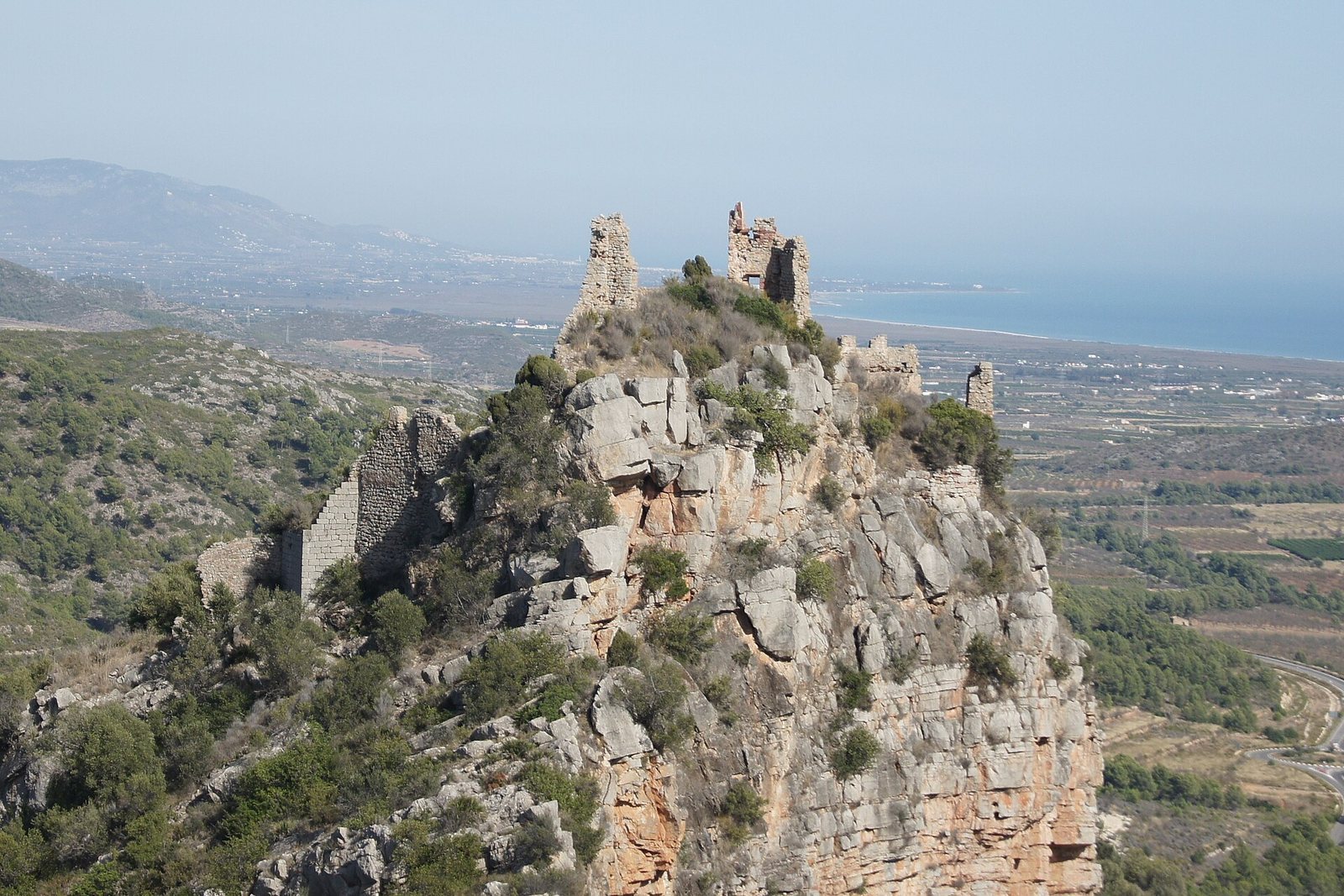
The castle stands on a hill at an elevation of 286 metres, beside the road from Cabanes to Oropesa. Classified among mountain castles, it occupies steep ground with approaches between 30 and 60 degrees. Its irregular, dispersed layout follows a long lateral axis. An artificial moat defended the side with the easiest approach. Surviving defenses include side walls, outer defensive works, parts of towers, interior structures, and battlements, the raised protective features along the tops of walls.
Lower enclosure and surviving structures
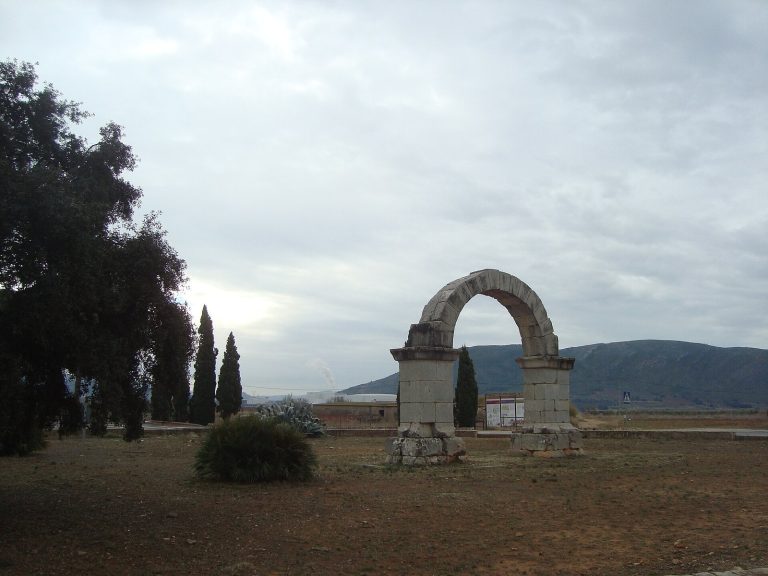
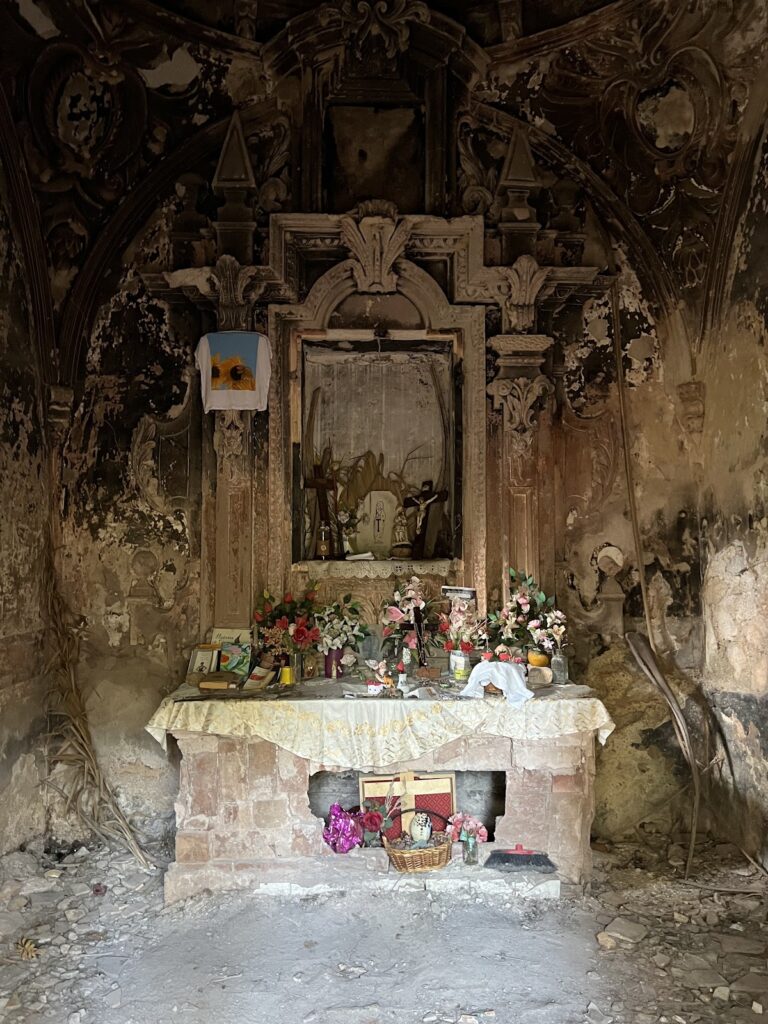
A double lower enclosure contains architectural remains and traces of dwellings from the former settlement. It also includes the ruins of the Church of Saint Martin and Saint Bartholomew. Several pointed and semicircular arches survive among the castle’s remains.