Sanctuary of Nostra Signora della Misericordia: A Marian Sanctuary in Savona
Site at a Glance
- Rating
- 4.6
- Popularity
- Low
- Country
- Italy
- Primary era
- Early Modern
- External website
- Open
- Eras represented
- Early Modern, Modern
- Civilizations
- Genoese
- Site type
- Religious
- Remains
- Basilica
On this page19 sections
History
The Sanctuary of Nostra Signora della Misericordia is a Roman Catholic Marian sanctuary in Italy, located in the Letimbro valley about six kilometers from Savona. It was established at the site of reported apparitions of the Virgin Mary in 1536 and developed as a Renaissance and Genoese Mannerist basilica dedicated to Our Lady of Mercy.
The apparitions of 1536
The sanctuary’s founding tradition is associated with Antonio Botta, a local peasant who reported seeing the Virgin Mary beside a stream at its confluence with the Letimbro torrent. The apparitions are traditionally dated to 18 March and 8 April 1536, during a period of conflict between Savona and Genoa. The first apparition instructed Botta to visit his confessor, receive Communion, and encourage the people to do the same.
During the second apparition, the Virgin requested three Saturdays of fasting and three processions in honor of Jesus. She asked for mercy rather than justice and praised the work of religious confraternities, lay associations devoted to shared worship, charitable activity, and religious practice. Botta reported the first event to Bishop Bartolomeo Zabrera, and diocesan authorities accepted his account.
The Genoese podestà Baldassarre Doria, who governed Savona for the Republic of Genoa, questioned Botta because he feared that the new religious movement might encourage opposition to Genoese rule. The apparition site subsequently became a place where the Virgin was believed to offer mercy to those in need. A nearby hospice was established for orphans, the sick, and the poor.
Foundation and construction
Growing pilgrimages and charitable offerings led Savona to appoint a commission to regulate the influx of visitors. Bishop Bartolomeo Chiabrera approved an initial oratory project on 21 April 1536. The plan was then enlarged into a sanctuary with an adjoining hospice for the poor. Savona’s civic council and Cardinal Orazio Spinola approved the expanded project on 24 July, and construction began on 11 August 1536.
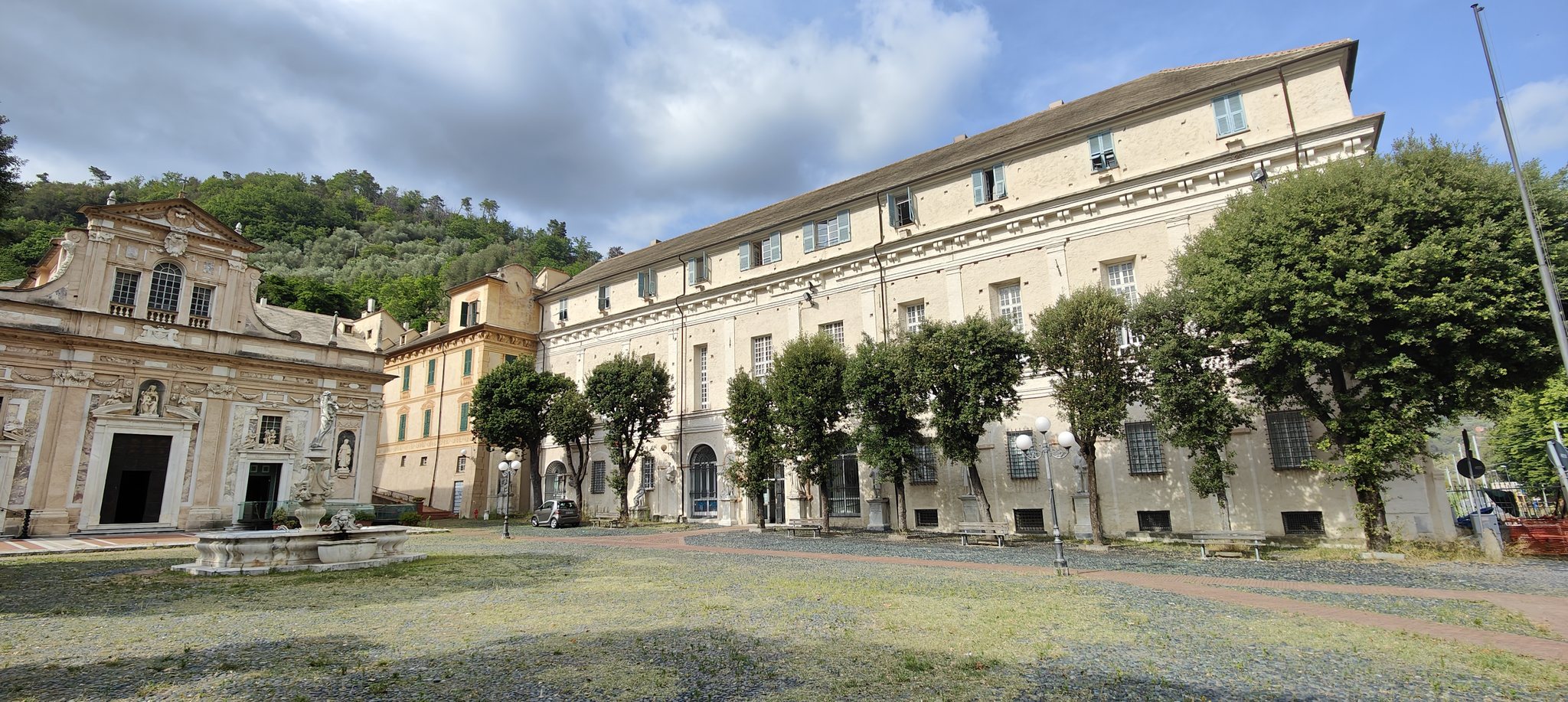
The original masonry structure was substantially complete by 1540. The principal church was designed by Pace Antonio Sormano, while the Baroque facade was built by Taddeo Carlone between 1609 and 1611. The sanctuary is therefore associated with a foundation in 1536 and with the completion of its principal construction around 1610.
Savona declared 18 March a public holiday and undertook to hold an annual votive procession to the sanctuary. Its connection with confraternities continued over the following centuries. In 2009, the church became the National Sanctuary of Confraternities, and the diocesan bishop leads a procession there every 18 March.
Papal associations and later history
Pope Pius VII visited the sanctuary in 1815 and crowned the statue of Our Lady of Mercy on 10 May. Napoleon had imprisoned Pius in Savona from 1809 to 1814, and the pope had vowed to return and crown the statue if he were released. Savona’s confraternities organized a solemn procession in 1915 to commemorate the centenary of the coronation and repeated it in 2015. Participants came from throughout the diocese and often carried their characteristic processional crucifixes.
Pope Pius X elevated the church to the rank of minor basilica in 1904, a special papal status granted to churches of particular religious, historical, or devotional importance. Pope Benedict XVI visited on 17 May 2008 and awarded the sanctuary the Golden Rose, a traditional papal honor for important Catholic churches and sanctuaries. The ceremony took place in the crypt.
The buildings around the sanctuary included hospices for elderly people and orphanages. Many continued operating until the second half of the twentieth century, while one elderly-care hospice remains in operation. On 29 June 2011, two ancient silver oil lamps beside the crypt statue were stolen.
Remains
Church layout and exterior
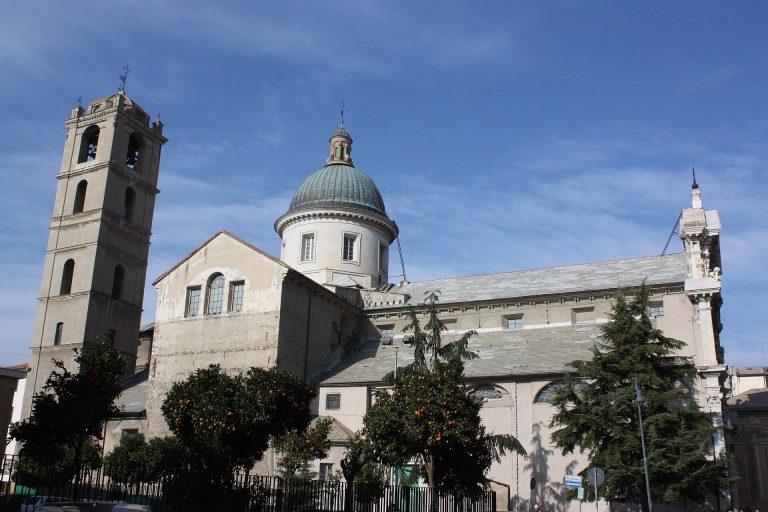
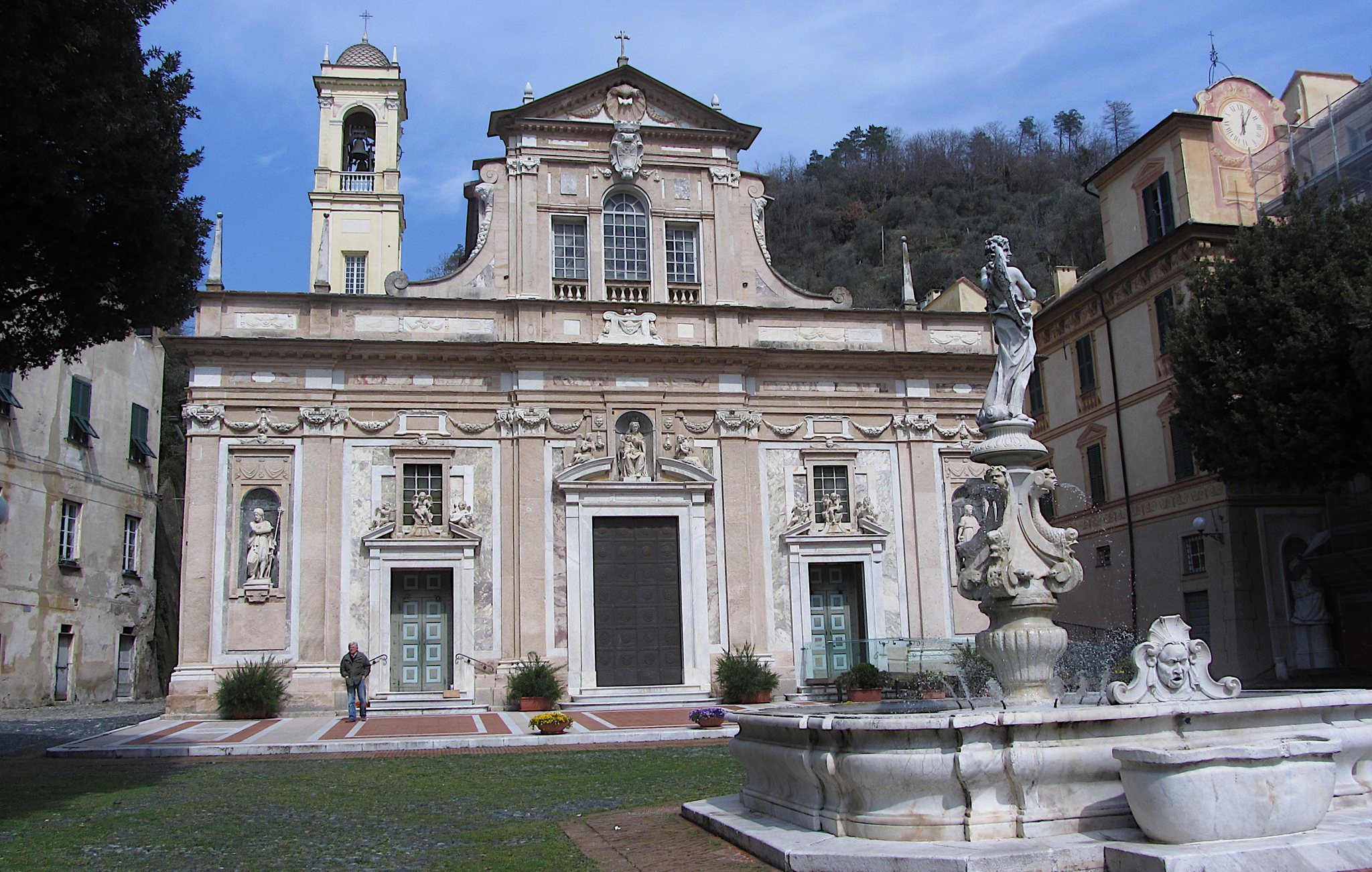
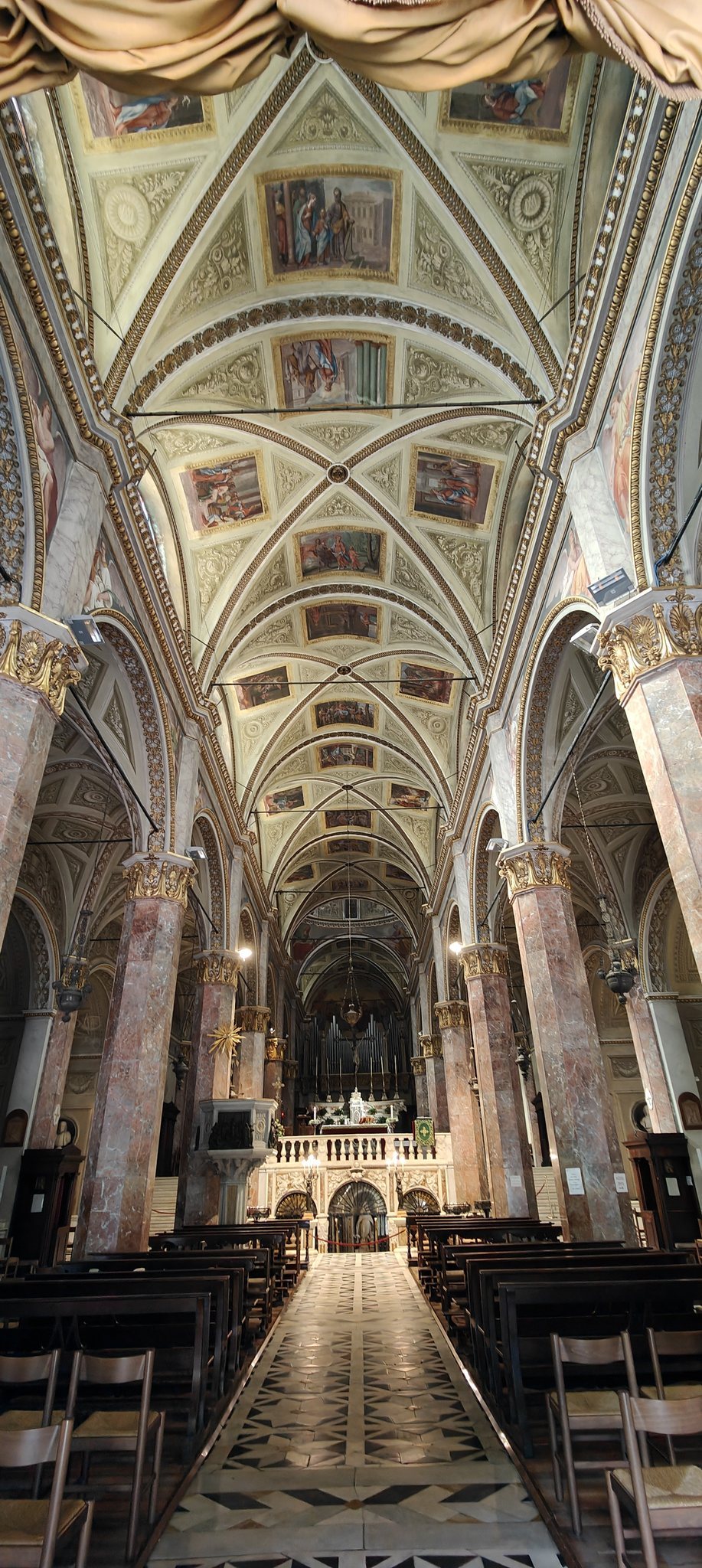
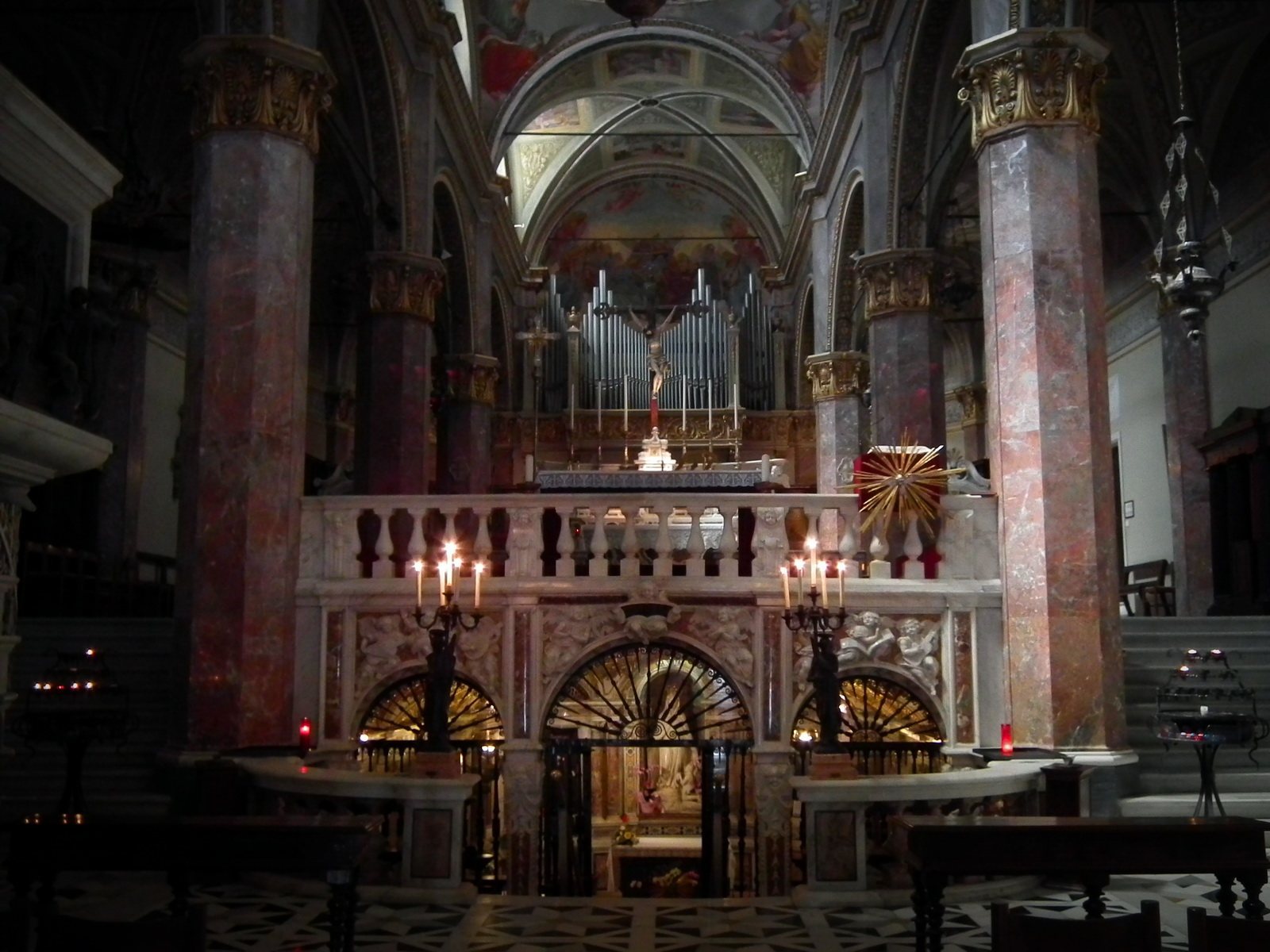
The sanctuary stands in the Letimbro valley and has the form of a three-level basilica consisting of a nave, a crypt, and a presbytery, the area surrounding the main altar. Its three aisles and raised choir were apparently arranged to recall the Romanesque cathedral formerly located on Priamar, which the Genoese destroyed to build a Renaissance fortress. The central nave is divided into seven bays. A dome on a windowed drum rises above the altar area, while the bell tower stands to the left of the choir.
Facade and square
The three-door facade is faced with Finale stone. Niches hold statues of Saint John the Baptist, Saint John the Apostle and Evangelist, and the Virgin Mary. In the square before the church stands a fountain made by Giacomo Antonio Ponsonelli and dated 1708.
Interior structure
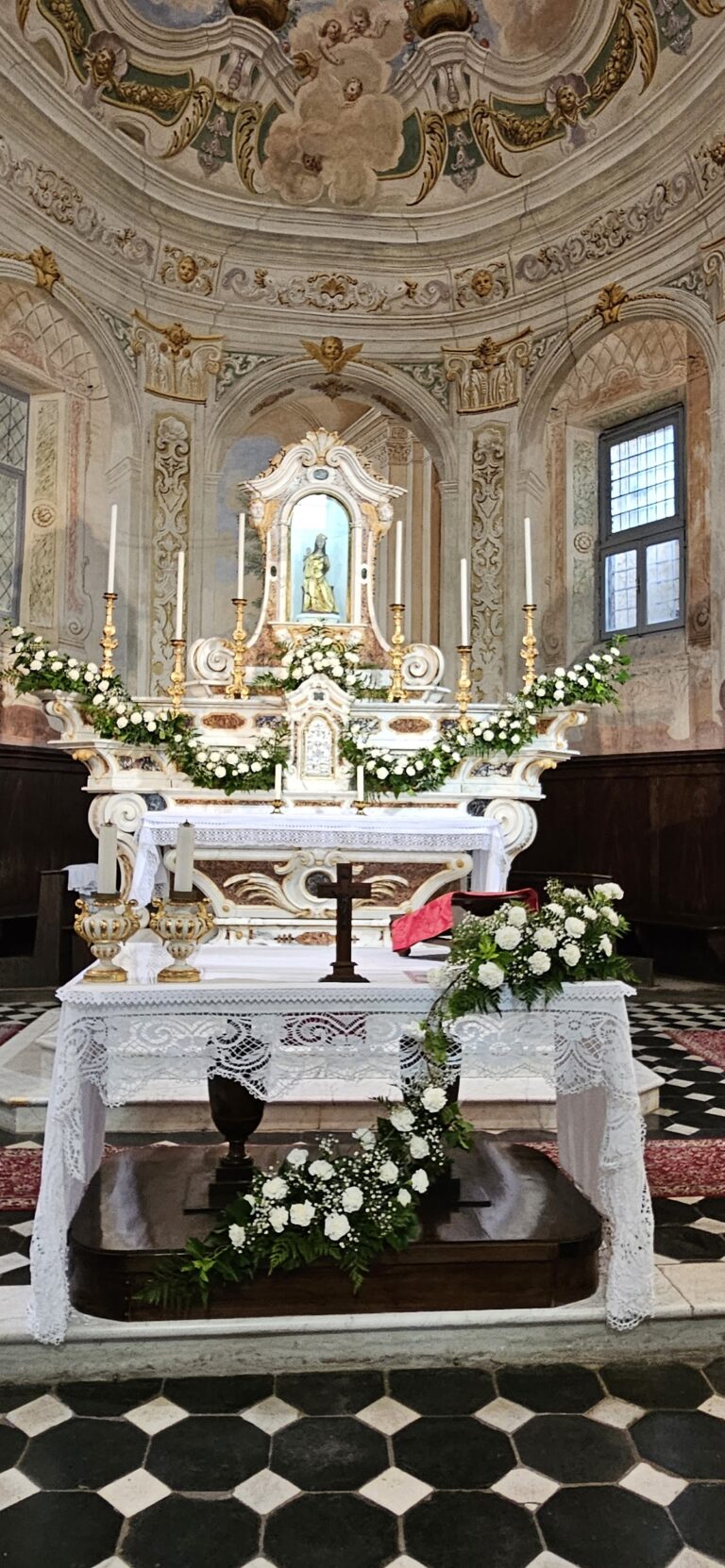
A central staircase descends from the nave to the crypt beneath the raised choir. The main altar is attributed, probably, to the sculptor Francesco Maria Schiaffino or his workshop and was donated by the governors of the Pia Opera. Nearby are a marble statue of Giovanni Battista Veretta Bava and a bronze plaque commemorating the coronation of the Madonna of Mercy.
Altars and painted decoration
Left aisle altars
The left aisle contains four marble side altars. The first is dedicated to Madonna della Neve and has a 1610 altarpiece by Bernardo Castello set on an eighteenth-century structure. Paolo Burnengo restored the painting in 1875. The second altar is dedicated to the Visitation of the Blessed Virgin Mary. Its high decorated pedestals feature palm, lily, and rose motifs, while a marble relief dated 1665 is attributed to Gian Lorenzo Bernini. The architectural design and sculptural work are associated with Bernini, and his pupil Matteo Bonarelli of Lucca completed the altarpiece.
Bernardo Castello’s Nativity occupies the third altar in the left aisle. The fourth contains Andrea Semino’s Annunciation of Mary.
Right aisle altars
The four marble altars in the right aisle include the altar of the Immaculate Conception, which has an altarpiece by Paolo Gerolamo Brusco. Antonio Botta’s tomb lies at its foot. The second altar is dedicated to the Nativity of the Virgin and contains an altarpiece by Orazio Borgianni. The third holds Domenico Zampieri’s, known as Domenichino, Presentation of Mary at the Temple. Borgianni’s painting and Domenichino’s work are regarded as the sanctuary’s principal artistic masterpieces. The fourth altar contains Giovanni Battista Paggi’s Crucifixion.
Frescoes and dome
Seventeenth-century fresco decoration includes scenes from the Gospels. Bernardo Castello painted the dome above the presbytery and the fresco above the entrance to the nave. The dome’s pendentives are attributed to Narducci, while Narducci, Riva, Giuseppe Ghislandi, and the stuccoist Raffaele Cattori of Lamone worked on the decoration of the nave vault.
Crypt and choir
Crypt chapel
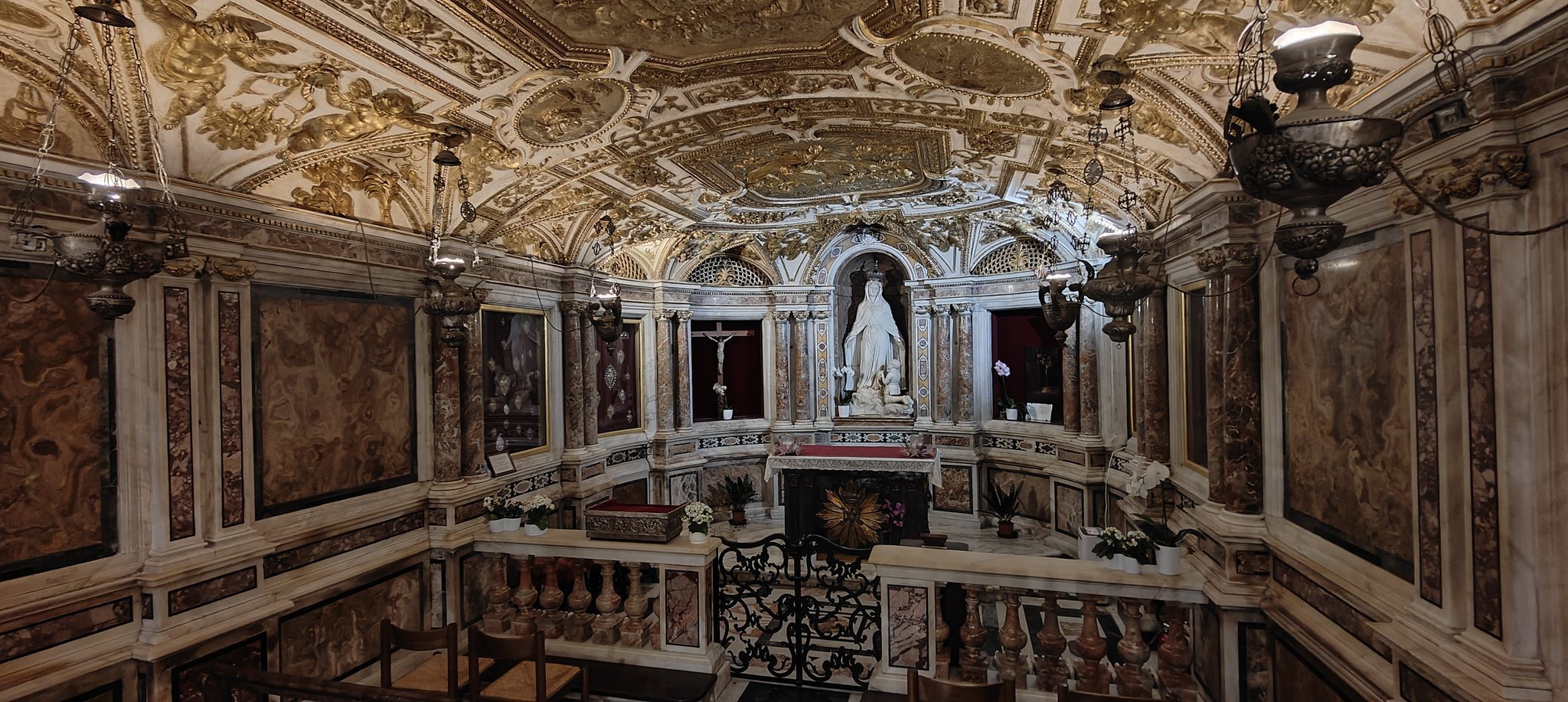
The crypt contains the marble statue of the Madonna of Mercy, traditionally regarded as the spiritual heart of the sanctuary. Some studies attribute the statue to Pietro Orsolino, who may have received the commission in 1560. The interior decoration has also been attributed to Giovanni Battista Orsolino and his son Giovanni.
Three round arches and a vault covered with gilded stucco define the crypt. Panels show the Holy Trinity and the Madonna blessing the community of Savona. A tabernacle stands to the right of the statue, while a fifteenth-century crucifix is positioned to its left. Display cases contain ex votos, devotional objects offered by worshippers in fulfillment or acknowledgment of vows. Singing angels at the front of the crypt are attributed to Giovanni Battista Orsolino.
Choir stalls
The choir has carved and inlaid wooden seats and back panels and was constructed in 1644. During the second half of the nineteenth century, the brothers Vincenzo and Giuseppe Garassino of Savona produced later inlaid panels, some using pyrography. The central panel reproduces Giuseppe Agostino Ratti’s Annunciation. Behind the main altar, an inlaid panel attributed to Ignazio Scotto depicts the Marriage of the Virgin after Raphael.
Sacristy, organ, and treasury
Sacristy
The sacristy was built in 1643 on a raised floor above the crypt, to the right of the main altar. Its walnut furnishings include a large carved and sculpted cupboard made by the Jesuit Orazio Grassi of Savona and a lectern from the same period.
Organ and apse
The Malvestio firm of Padua built the organ in 1928. It has two manuals, 25 speaking stops, and couplings between the manuals and pedalboard. During a complete restoration in 1982, its pneumatic-tubular action was converted to electric action, the windchests were rebuilt, the pipes were cleaned, voiced, and tuned, and the console was reconstructed with an electronic system for adjustable combinations.
The basin of the apse contains a fresco of an angel and singing choir attributed to Eso Peluzzi and completed in 1928 in an antique-inspired manner.
Treasury museum
The treasury museum preserves ex votos from different periods, vestments, and sacred objects. Among its holdings is a silver-gilt Cross reliquary by Vincenzo Belli, an eighteenth-century goldsmith from Turin.