Dainichi Kofun: A Late Kofun-Period Burial Mound in Japan
Site at a Glance
- Rating
- 4.1
- Popularity
- Very Low
- Country
- Japan
- Primary era
- Medieval
- External website
- Open
- Eras represented
- Medieval
- Civilizations
- Yamato
- Site type
- Burial
- Remains
- Burial Mound
On this page7 sections
History
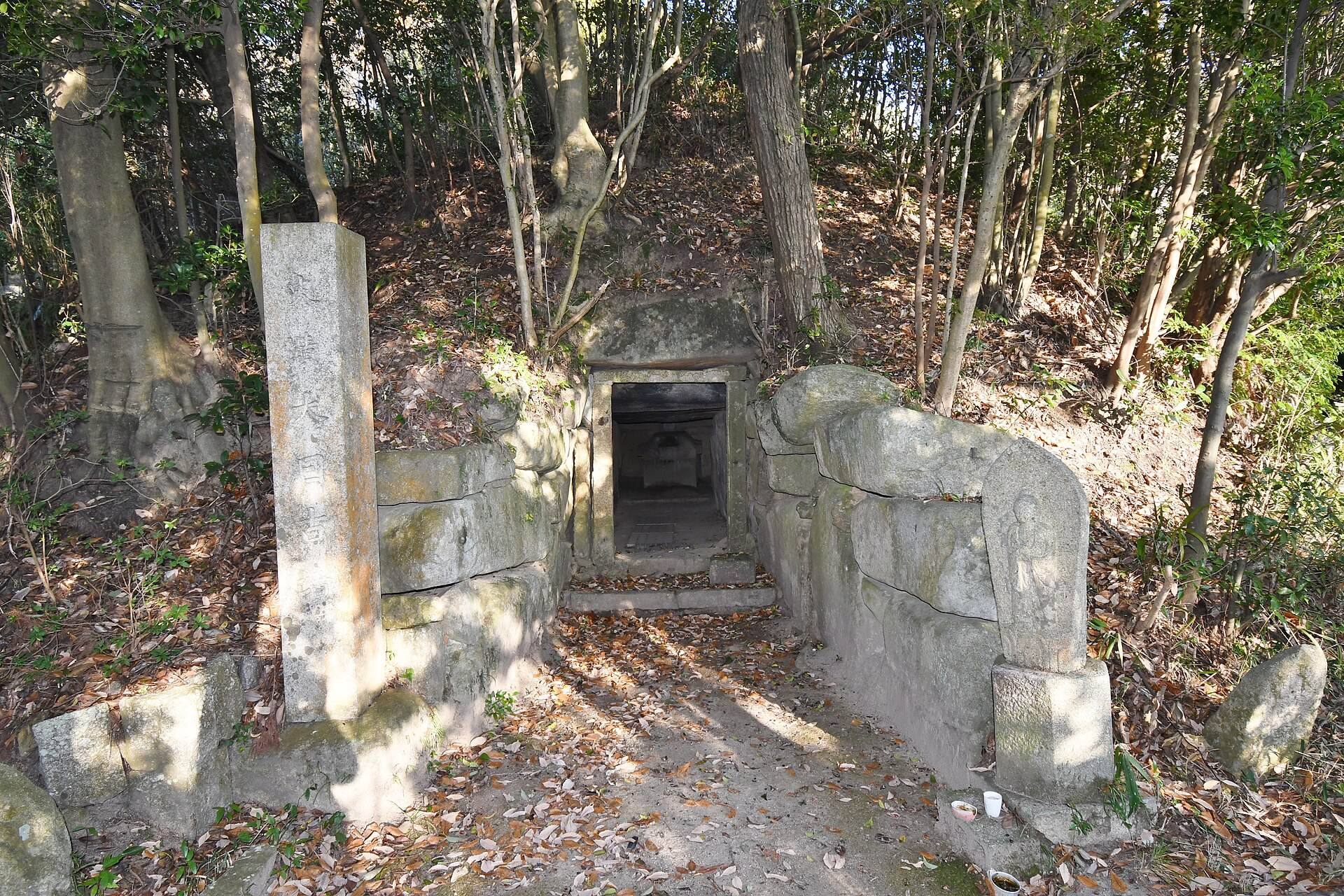
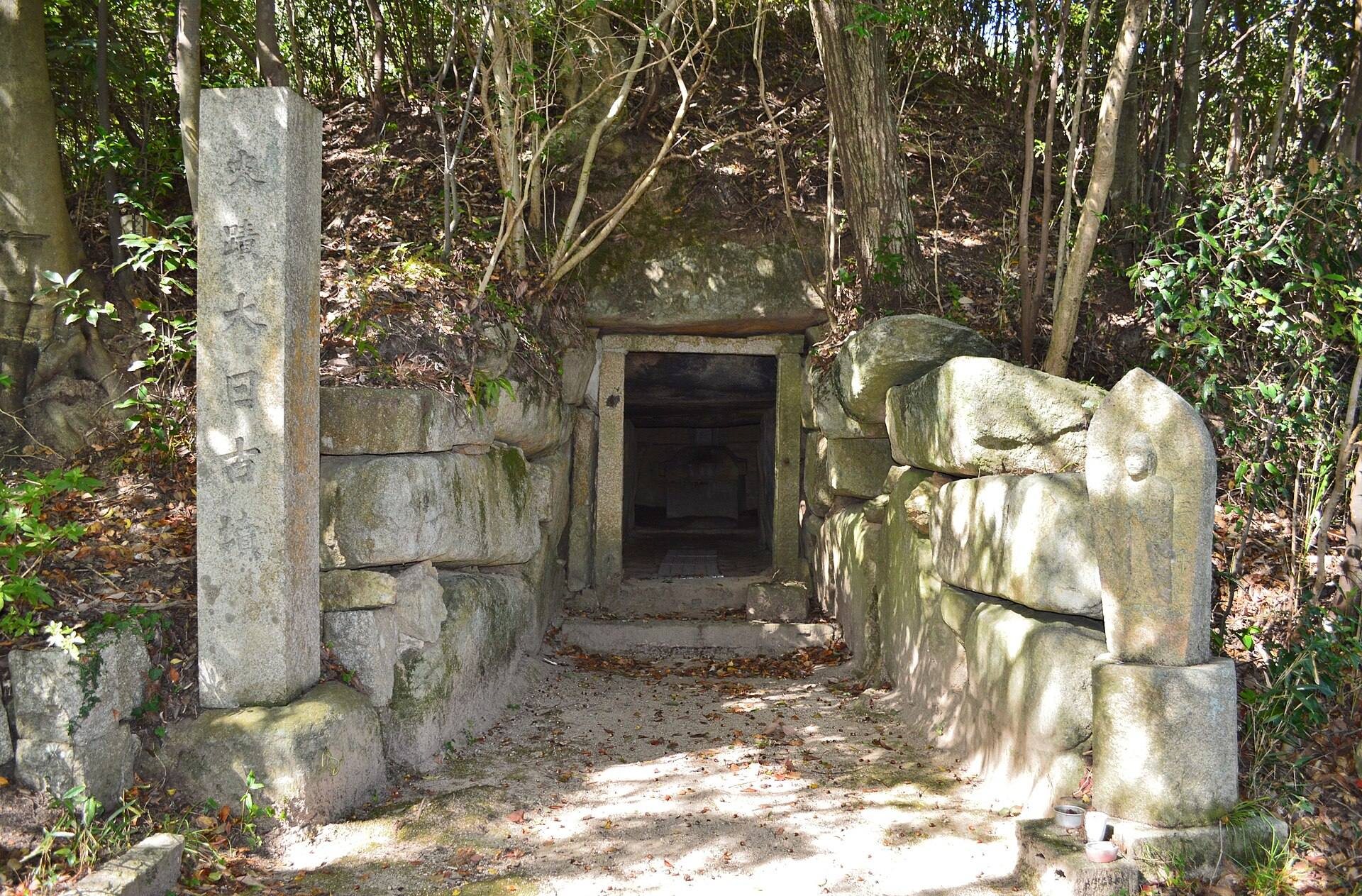
Dainichi Kofun is a Kofun-period burial mound in Japan, constructed at Takai in Hofu, Yamaguchi Prefecture, during the latter half of the seventh century, the final phase of the Kofun period. The Kofun period, lasting broadly from the third to the seventh centuries, was an era when elite burials were placed in large mounds with stone chambers. Dainichi Kofun is important for understanding the political circumstances of its time because its burial architecture and sarcophagus show an exceptionally strong connection with the Kinai, the historical region around the ancient political centers of Nara and Osaka.
Uncertain identity of the occupant
The person buried at Dainichi Kofun has not been securely identified. A local tradition recorded in 1841 in the Bōchō Fūdo Chūshin’an names Prince Imseong of Baekje as the occupant. Baekje was an ancient kingdom on the Korean Peninsula, and Prince Imseong was traditionally regarded as an ancestor of the Ouchi, a powerful Japanese family. Other interpretations identify the buried person as Haji no Ite, a local chieftain, or as Prince Kume, a son of Emperor Yomei. In the latter interpretation, Dainichi Kofun was a temporary funerary palace, where a deceased person was ceremonially housed before final burial, rather than necessarily his tomb.
Records and designation
The same 1841 record preserves both the tomb’s existence and the tradition associating it with Prince Imseong. A further tradition holds that the mound was opened during the latter half of the seventeenth century. It reportedly produced a sake bottle, a sake flask, and an iron-like object, although these objects no longer survive and the account remains uncertain. Archaeologist Umehara Sueji reported the site to an academic society in 1922. Dainichi Kofun was designated a National Historic Site of Japan on January 14, 1948.
Remains
Mound and setting
The mound stands on a plateau at the foot of Mount Nishime, on the right bank of the Sabagawa River, overlooking the northwestern part of the Hofu Plain. It has been interpreted as a keyhole-shaped mound, with a presumed square or rectangular front directed toward the southwest and a circular rear section. The proposed mound would be about 40 meters long, with a rear circular section slightly under 20 meters in diameter. A keyhole-shaped mound combines a rectangular or trapezoidal front with a circular rear when viewed from above. The presumed front has been converted into a cemetery, so its form has not been archaeologically verified. An alternative interpretation treats the surviving earthwork as an elongated circular mound measuring about 40 by 20 meters.
Horizontal stone chamber
The burial facility is a south-opening, double-shouldered horizontal stone chamber with a total length of 13.2 meters, making it the longest known stone chamber in Yamaguchi Prefecture. The burial chamber is 3.6 meters long, 2.1 meters wide, and about 2.5 meters high. Its passage extends 9.7 meters, measuring 1.45 meters wide at the inner doorway and 2.2 meters wide at the entrance.
Roughly split granite forms the chamber. The rear and side walls of the burial chamber are arranged in three courses, while the passage has between one and three courses. The upper side walls slope inward, and the passage has a stepped ceiling. These features place the chamber within the Iwayayama style, a late Kofun-period form defined partly by inward-sloping upper walls and a stepped passage ceiling. The design resembles the chamber of Iwayayama Kofun in Nara Prefecture. Dainichi’s chamber is about four-fifths the size of that example, while its passage is about three-quarters as long. It differs in using split stone rather than cut stone, in the arrangement of its masonry courses, and in the presence or absence of plaster.
House-shaped stone sarcophagus
At the center of the burial chamber, toward the rear wall, stands a hollowed-out house-shaped stone sarcophagus. It is made from Ryuzan stone, a layered volcanic stone obtained from the Kakogawa basin in Hyogo Prefecture. The stone body measures 1.85 meters long, 0.93 meters wide, and 0.65 meters high. Its lid is 1.88 meters long, 0.95 meters wide, and 0.40 meters high.
The lid has a flat upper surface whose width relative to the total lid width is expressed by an index of 62. Six projections for fastening ropes are arranged as one pair at the front, one pair at the rear, and two pairs along the sides. This is the only known house-shaped stone sarcophagus in Yamaguchi Prefecture. Together with the chamber’s construction, the sarcophagus gives the burial a material connection with the Kinai region that distinguishes it from locally rooted burial mounds, which show little apparent influence from Dainichi Kofun.