Hōfu Tenmangū: A Shinto Shrine Dedicated to Tenjin in Japan


Site at a Glance
- Rating
- 4.3
- Popularity
- Medium
- Country
- Japan
- Primary era
- Modern
- External website
- Open
- Eras represented
- Modern
- Civilizations
- Japanese
- Site type
- Religious
- Remains
- Sanctuary
On this page12 sections
History
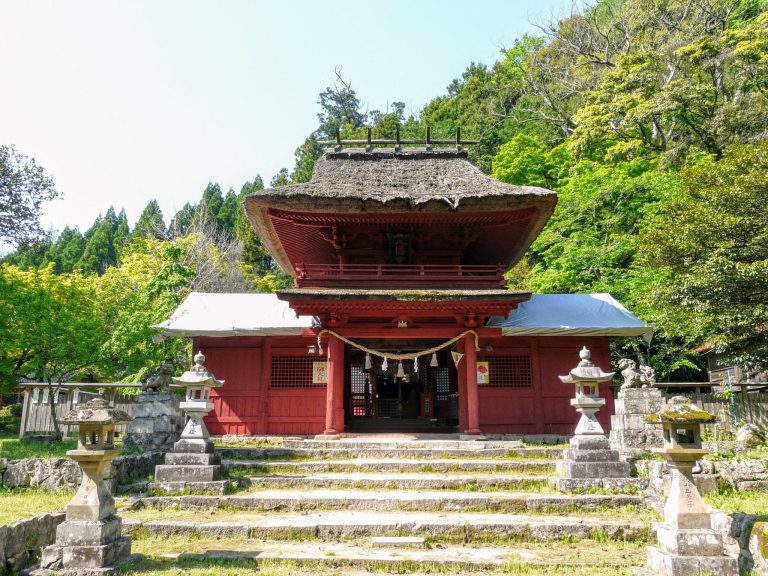
Hōfu Tenmangū is a Shinto shrine in Hofu, Japan, dedicated to Sugawara no Michizane and traditionally founded in 904, the year after his death. It presents itself as Japan’s first established Tenjin shrine. Tenjin is the deified form of Michizane, a court scholar and statesman revered as a deity of learning and scholarship.
Michizane and the shrine’s foundation
Michizane is traditionally said to have stayed at Hōfu while traveling toward exile in Dazaifu after losing a power struggle at the imperial court. Hōfu Tenmangū, together with Kitano Tenmangū in Kyoto and Dazaifu Tenmangū in Fukuoka, is regarded as one of Japan’s Three Great Tenjin Shrines. A Tenmangū is a Shinto shrine devoted to Tenjin.
The shrine’s hereditary chief-priest tradition identifies its founder as the provincial governor of Suō. The founder’s second son established the family line, which supplied the shrine’s chief priests through its thirty-fifth generation. The head of the thirty-sixth generation later became Hofu’s first mayor. The city developed around the shrine, whose religious events continue to draw people connected with Michizane’s association with learning, including those seeking writing brushes and examination amulets.
Names, reconstruction, and modern status
The shrine was formerly known as Matsuzaki Tenmangū, Miyaichi Tenmangū, or simply Tenmangū. In 1873 it became Matsuzaki Shrine and was ranked as a prefectural shrine under Japan’s modern shrine-ranking system. The name Hōfu Tenmangū was adopted in 1953.
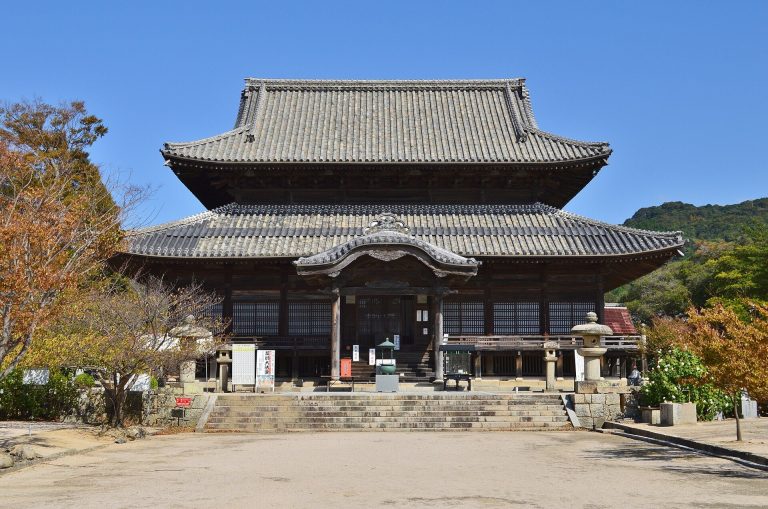
The former shrine buildings, erected in the middle of the Edo period, burned in 1952. The present buildings were completed in 1958 after design work directed by a Kyoto University professor from Yamaguchi Prefecture, with architectural drawings prepared by a Doctor of Engineering. Hōfu Tenmangū is now classified as a Beppyo Shrine within the Association of Shinto Shrines. This modern category is used for shrines regarded by the association as having particular importance. The present buildings were registered as Tangible Cultural Properties in 2009.
Annual observances
The shrine’s continuing observances include the February ox-replacement rite, when the ox drawing Tenjin’s ox cart is replaced, and the August festival celebrating Michizane’s birth. More than 1,000 candles traditionally illuminate the main approach during the August observance. The annual festival is held on December 5.
In November, the Procession Festival, also called the Naked Pilgrim Festival, follows the main approach. Participants pull a sacred shrine object weighing about one tonne down the large staircase and then haul it back up. The hazardous procession has been associated with recurring injuries.
Remains
Shrine buildings
Main sanctuary
The main sanctuary is covered by an irimoya, or hip-and-gable roof. This form combines a gabled upper section with sloping hipped roof sections. The sanctuary belongs to the group of buildings completed in 1958 after the fire that destroyed the earlier structures.
Spring Wind Tower
Spring Wind Tower stands on the western side of the grounds as a tower-like devotional retreat building. It overlooks Hofu’s urban area and is also used during shrine observances, including the festival celebrating Michizane’s birth.
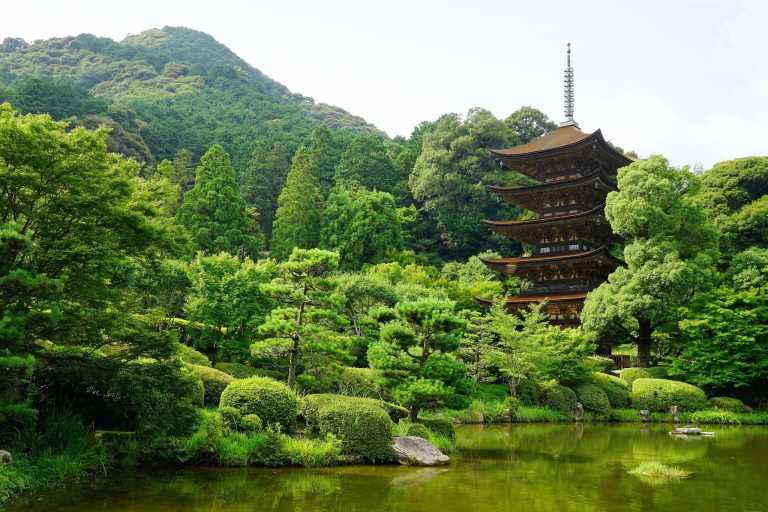
The tower originated in an unfinished five-story pagoda project begun in 1822 by Mori Narihiro, the tenth lord of the Choshu domain. Choshu was a major feudal domain in western Japan during the Edo period and later played an important role in the political changes that ended the shogunate. Construction of the pagoda stopped in 1831 because of an unforeseen impediment and was not completed amid the upheavals of the late nineteenth century. Brackets already made for the pagoda were incorporated beneath the floor of Spring Wind Tower, built in 1873. These brackets are assemblies that transfer roof loads to a supporting structure.
Grounds and associated features
Main approach and festival route
The large staircase of the main approach forms part of the November procession route. The sacred object travels down the staircase on the outward journey and returns up it during the procession.
Tenjin Mountain and archaeological material
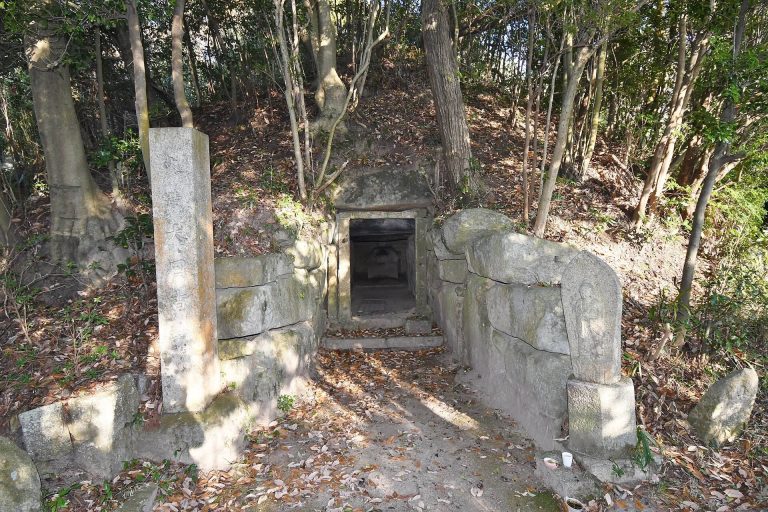
Tenjin Mountain rises immediately north of the shrine, and the mountain and shrine area have been developed as Tenjin Mountain Park. Plum trees flower in spring and form part of the shrine precincts. Artifacts excavated from Tenjin-yama Burial Mound and dating to the sixth century are associated with the shrine’s cultural-property record.
Pagoda model and commemorative monument
A small five-story pagoda in Yamaguchi City, no longer owned by Hōfu Tenmangū, is a miniature model of the sacred pagoda once planned for the shrine.
A monument commemorating the song “Namida Koi” was erected in the grounds in February 2020. It honors the song’s composer, who was an uncle of the shrine’s chief priest. The lyrics were written by Yuki Keiko, and the song was performed by Aki Yashiro.