Collegium Melitense: Valletta’s Jesuit College and University
Site at a Glance
- Popularity
- Medium
- Country
- Malta
- Primary era
- Early Modern
- Eras represented
- Early Modern
- Civilizations
- Crusader, Knights Hospitaller
- Site type
- Civic
- Remains
- University
On this page7 sections
History
The Collegium Melitense was a Jesuit college in Valletta, Malta, formally established in 1592 and active until 1769. The Jesuits are members of the Catholic religious order founded by Ignatius of Loyola. The college began as a centre for educating clergy and later gained the authority to award university degrees.
Early efforts and foundation
An initial plan took shape in 1553, when Bishop Domenico Cubelles sought Jesuit assistance in founding a college. Ignatius of Loyola supported the proposal, but too few Jesuits were available to carry it out. During the Ottoman siege of Malta in 1565, Jesuit leader Francis Borgia sent seven members of the order to support the population spiritually on behalf of Pope Pius IV. A further attempt followed in 1578, when three Jesuits, including the first Maltese member of the order, arrived at the invitation of Tommaso Gargallo. Political disputes prevented the college from being established, and the Jesuits returned to Sicily.
A diocesan synod decided in 1591 to establish a seminary, an institution for training clergy. Pope Clement VIII instead directed that a Jesuit college be set up in Valletta the following year, using funds intended for the seminary. The transfer caused friction because money that might have supported the secular clergy, priests who were not members of a religious order, went to the Jesuits. The college was formally founded on 12 November 1592 through the legal document Instrumentum Fundationis Collegii. Notary Giacomo Sillato drew it up, and its witnesses included Grand Master Hugues Loubenx de Verdalle, Bishop Tomas Gargallo, Inquisitor Ludovico dell’Armi, and Jesuit priest Pietro Casati.
Teaching and growth
The college began teaching in 1593, shortly after a plague epidemic, with 12 Jesuits on its staff. It also served as a seminary because no separate seminary existed. Local clergy petitioned the pope that year to place the college in Mdina, but Gargallo supplied temporary premises and financial support in Valletta. Its first studies centred on grammar and the humanities. Theology was being taught by 1615 and logic by 1622; philosophy and Scholastic theology, a Christian tradition using reasoned argument to explain doctrine, became regular subjects by the end of the seventeenth century. French and Arabic were also taught.
Enrolment increased over time. The logic class had 34 students in 1622, and the college had more than 100 students by 1630–31. The humanities class counted 97 students in 1658; by 1706, the college enrolled more than 400 students. Its Jesuit teaching staff generally numbered between 15 and 20, with about 15 teaching in 1706. A rector headed the institution. Grand Master Giovanni Paolo Lascaris established a mathematics professorship in 1655, but it ended after his death in 1657 and was restored in 1682.
In 1676, Grand Master Nicolas Cottoner y de Oleza appointed Joseph Zammit, a Jesuit brother who cared for the sick, to teach anatomy and surgery at the Order of St John’s hospital. The Order, also known as the Hospitallers, governed Malta. Zammit’s appointment indirectly contributed to the creation of one of the earliest medical universities. Student life also involved rules and routines: in the seventeenth century, students wore simple clothing and spoke Latin except on Thursdays and Sundays, when Italian and Maltese were allowed. Their schedule included choir practice and prayers several times a day.
University status
On 7 June 1727, Grand Master António Manoel de Vilhena granted the college university status. That year its rector, Martino de Andrea, secured permission from Jesuit Superior General Michelangelo Tamburini for eligible students to receive degrees. The institution became a pontifical university, one recognized by the Catholic Church to grant ecclesiastical degrees. It could confer bachelor’s, master’s, and doctoral degrees, and awarded master’s and doctoral degrees in philosophy and theology. It was also sometimes called the Academia Parthenia, perhaps referring to the ancient Greek poet Parthenius of Nicaea, although the connection is uncertain.
At the end of each academic year, students gave public demonstrations of their learning known as Accademie. A preparatory class for the youngest pupils, La Terza (Classe), was established on 19 October 1741.
Suppression and successor institution
In 1768, under pressure from Bernardo Tanucci, prime minister of Naples, Grand Master Manuel Pinto da Fonseca expelled the 28 Jesuits working in Malta. The Order of St John’s Treasury took control of Jesuit property, including the college. Pinto ordered the institution closed on 28 April, and most of its Jesuit staff were sent to Civitavecchia, although interim staff were appointed to resume lectures.
On 29 August 1769, Pinto requested a replacement public university. Pope Clement XIV authorized it through the brief Sedula Romani Pontifici on 20 October, and Pinto established the Pubblica Università di Studi Generali by decree on 22 November. This institution continued as the University of Malta.
Remains
College and church
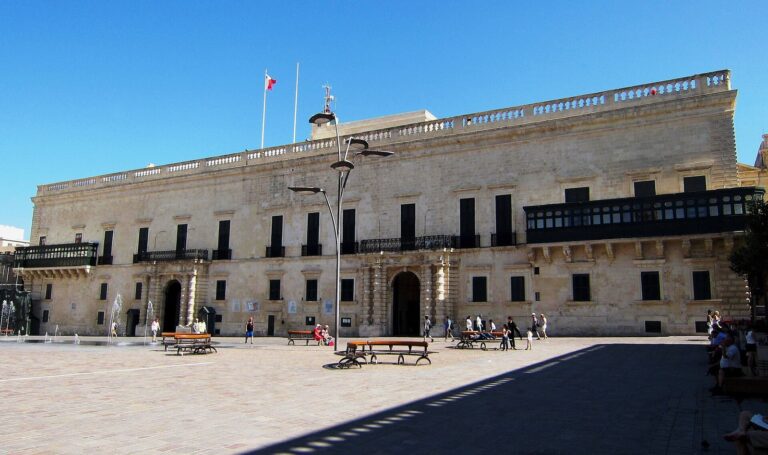
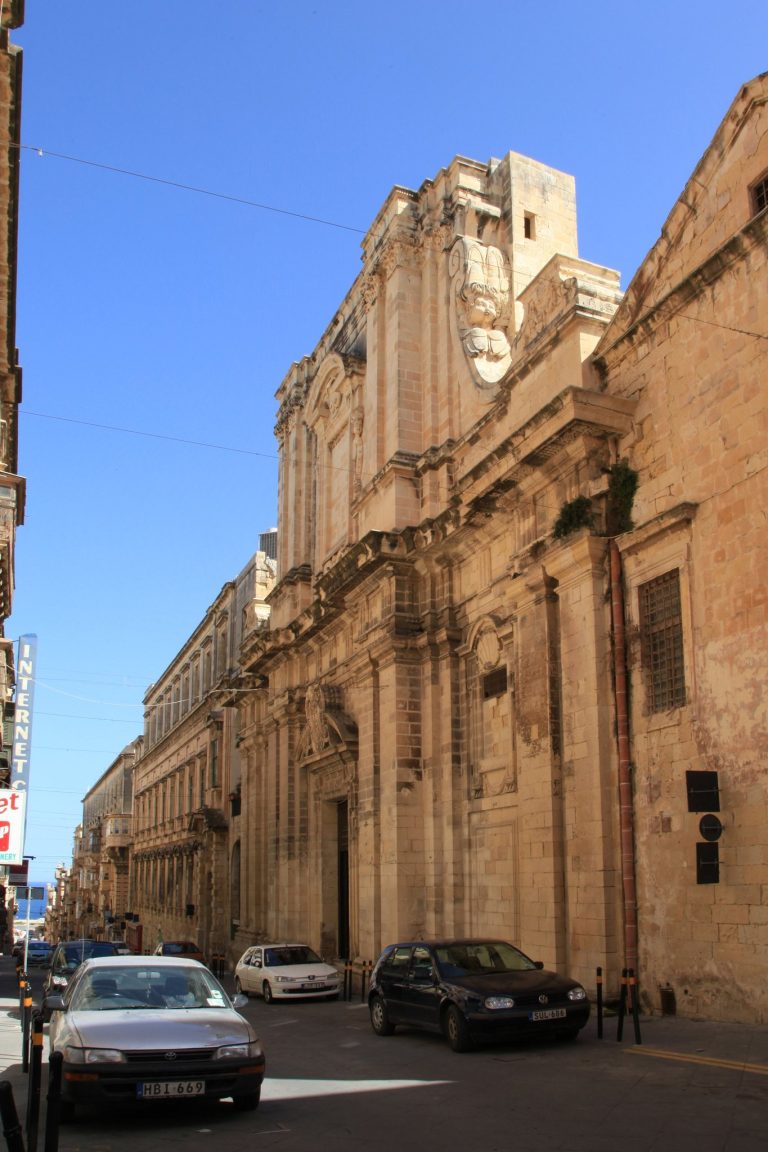
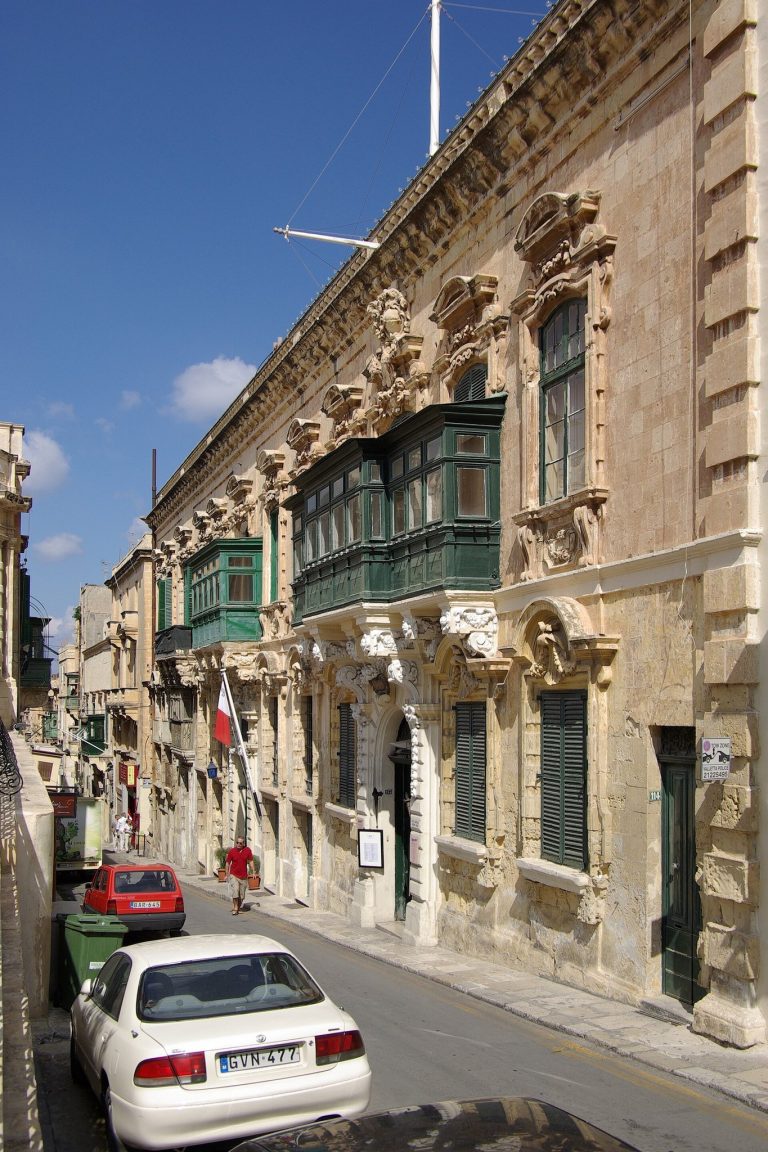
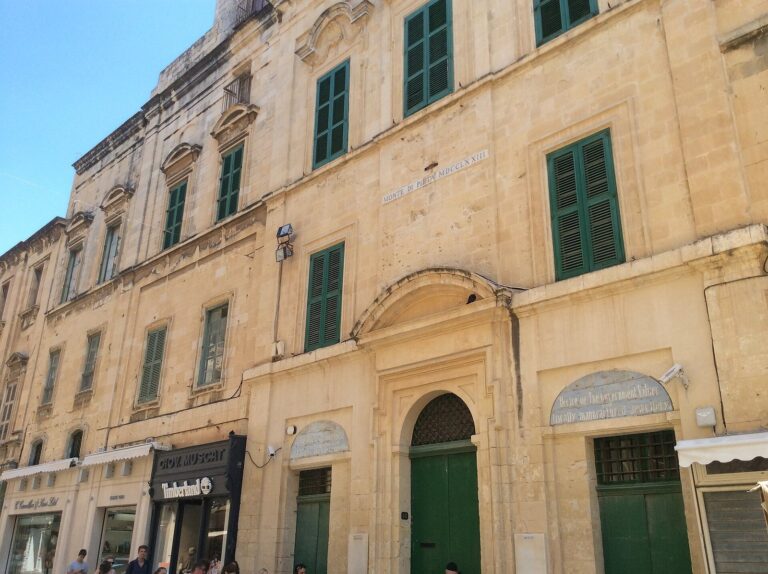
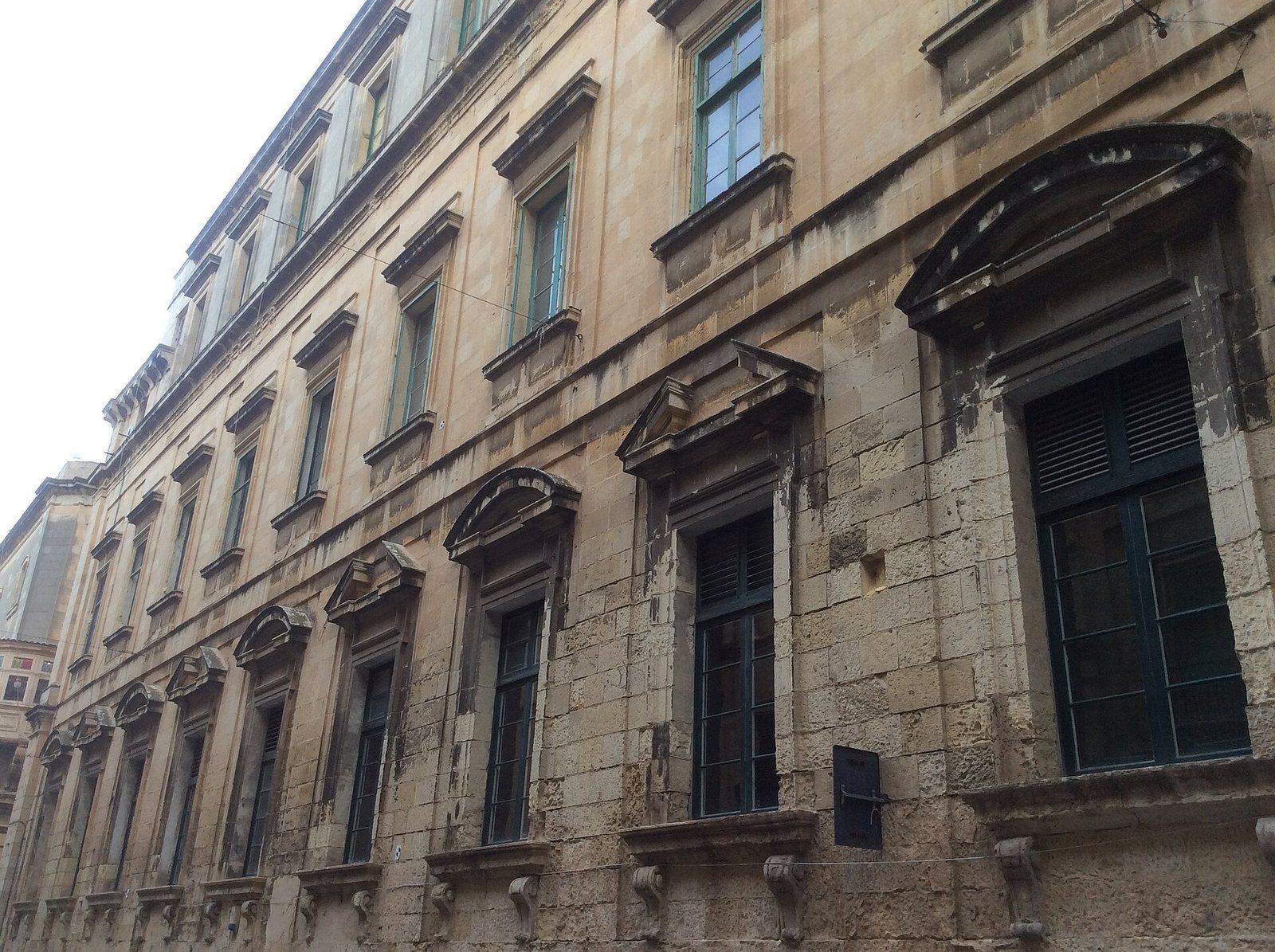
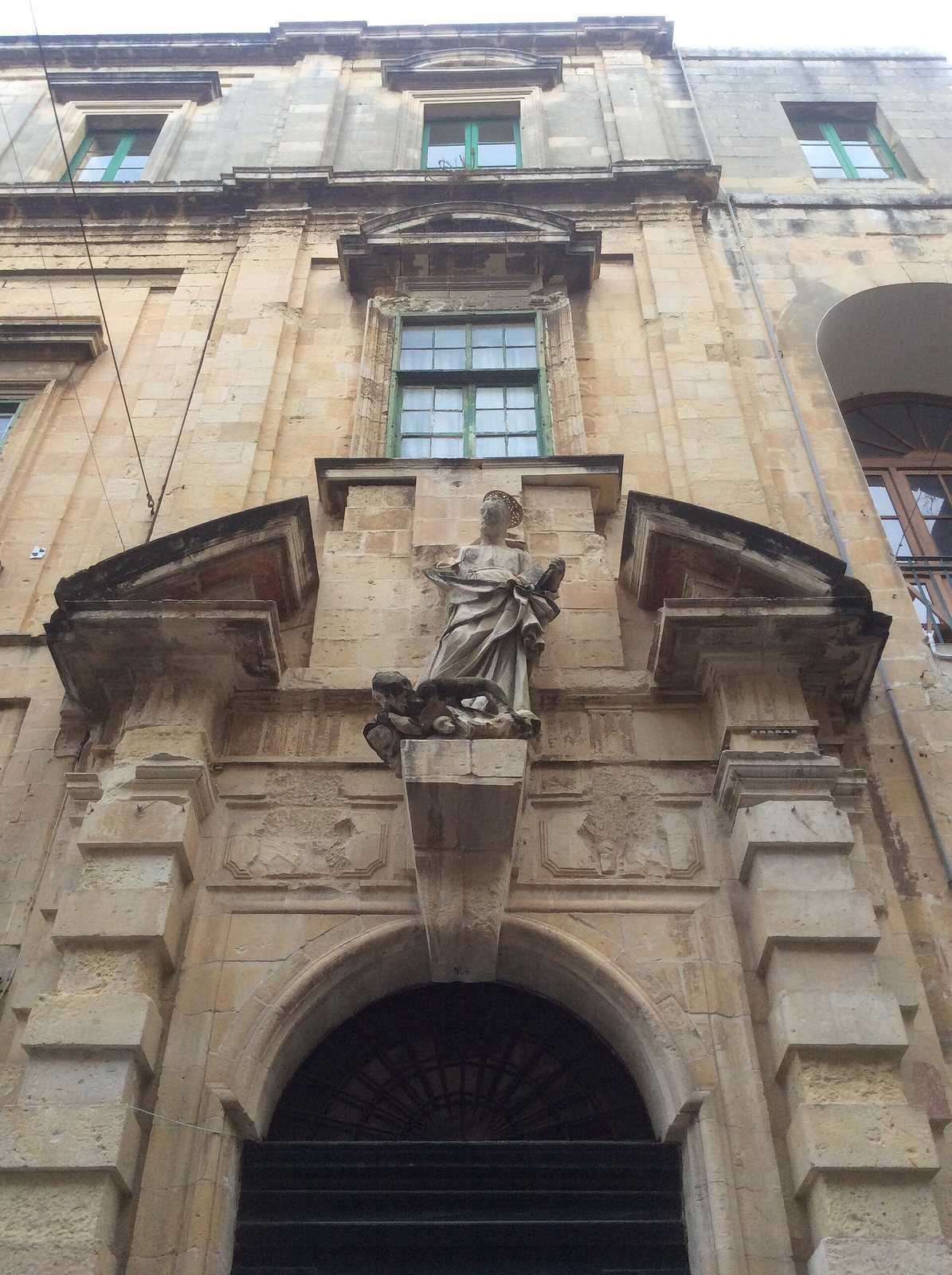
The former college complex comprises a purpose-built college building beside a Jesuit church. Construction of the college building began in 1595, and the college moved into it in 1597 while work continued until 1602. Work on the church began in 1592, and it was completed in 1609. A gunpowder-factory explosion damaged both buildings in 1634, after which they were remodelled; earthquake damage in 1693 was later repaired. The college building was altered again in the nineteenth century. Now known as the Old University Building, it remains part of the University of Malta’s Valletta campus. It served as the university’s main campus until the institution moved to a larger site at Msida in the 1960s, and it is used for conferences and seminars.