Coatetelco: A Pre-Hispanic Archaeological Settlement in Morelos
Site at a Glance
- Rating
- 4.2
- Popularity
- Low
- Country
- Mexico
- Primary era
- Medieval
- Eras represented
- Medieval, Early Modern
- Civilizations
- Aztec
- Site type
- City
On this page17 sections
History
Coatetelco is a pre-Hispanic archaeological site beside the Coatetelco Lagoon in Morelos, Mexico. Its surviving architecture belongs principally to the Tlahuica and Nahuatl cultural world and to the Mexica era of the Late Postclassic, approximately 1350 to 1521. The settlement was a medium-sized altepetl, a Nahua political and territorial community organized around a settlement, its governing institutions, and surrounding lands. It developed near Xochicalco, a major pre-Hispanic urban and ceremonial center in present-day Morelos.
Early occupation and regional development
The region was occupied during the Late Pleistocene by mobile hunter-gatherers and fishermen who used rocky shelters. This early activity may date to approximately 25,000 years ago. During the Early Preclassic, small settlements of fewer than 100 inhabitants cultivated land near rivers, made ceramics influenced by the Basin of Mexico, and produced early clay figurines.
Between approximately 900 and 500 BCE, during the Middle Preclassic, settlements became concentrated near the Chalma River. Agriculture expanded, and communities developed ceramics with distinctive local forms. Coatetelco reached its greatest development during the Late Preclassic, approximately 500 to 150 BCE. Communities in the area then numbered roughly 250 to 500 people, supported a diversified economy, and possessed a complex sociopolitical organization.
Later pre-Hispanic history
Occupation continued during the period of Teotihuacan influence, approximately 450 to 600 CE. The surviving structures, however, are principally associated with the Late Postclassic, especially the Mexica period from approximately 1350 to 1521. The site went through four construction stages during its development.
After Xochicalco declined around 1000 CE, Miacatlán became the leading regional center, while Coatetelco controlled the surrounding region. Written documents and codices provide additional information about the later history of the settlement. The name has several interpretations. Coatetelco has been translated as “place of snakes’ mounds,” while Cuatetelco and related forms have been connected with trees and mounds, a stone serpent, or a tree above a pyramid. The Tlahuica glyph depicts a tree over a pyramid.
Excavation and reconstruction
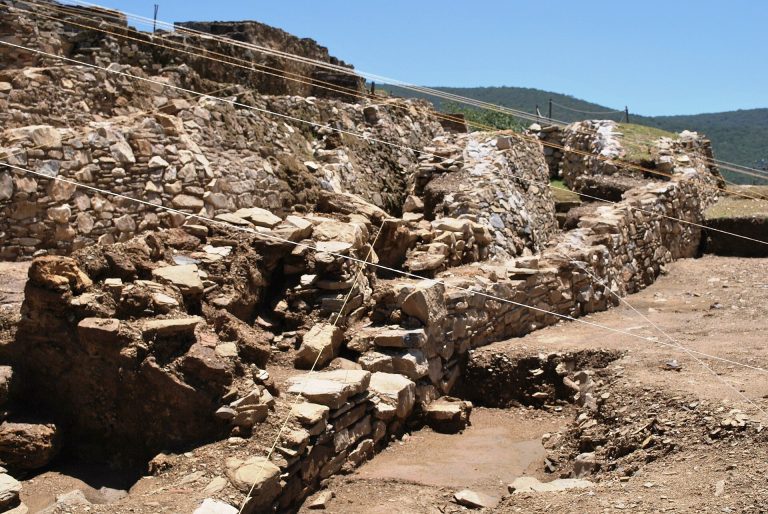
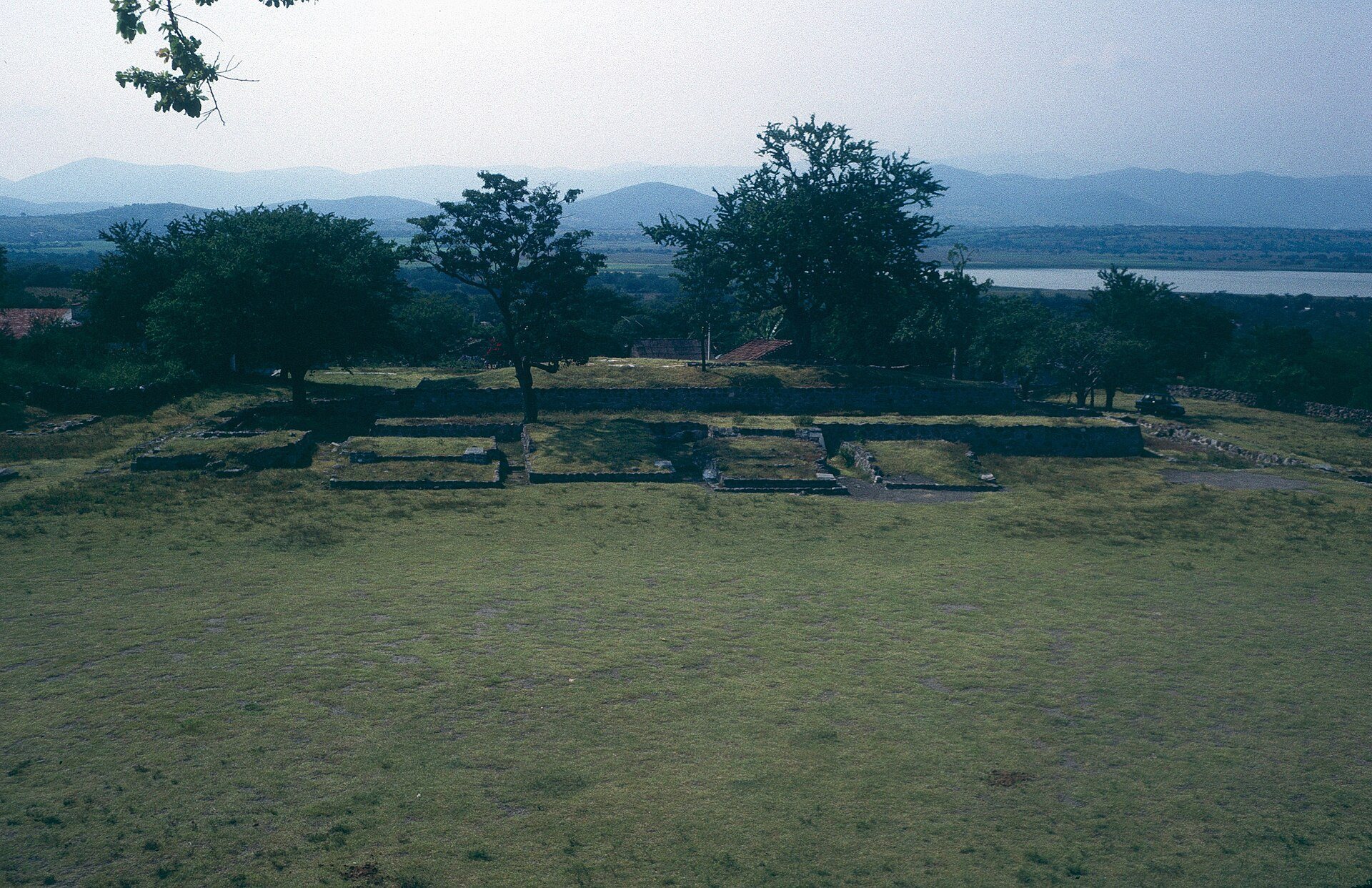
The central part of Coatetelco was excavated in 1970 and during the 1970s under the supervision of archaeologist Raúl Arana. Much of the architecture was reconstructed during this work. Later small excavations supported the maintenance of the site, and ceramics from Arana’s excavations were studied in a specialist report. The excavated and restored central area now includes the public plaza, temple platforms, ballgame court, and a small site museum.
Remains
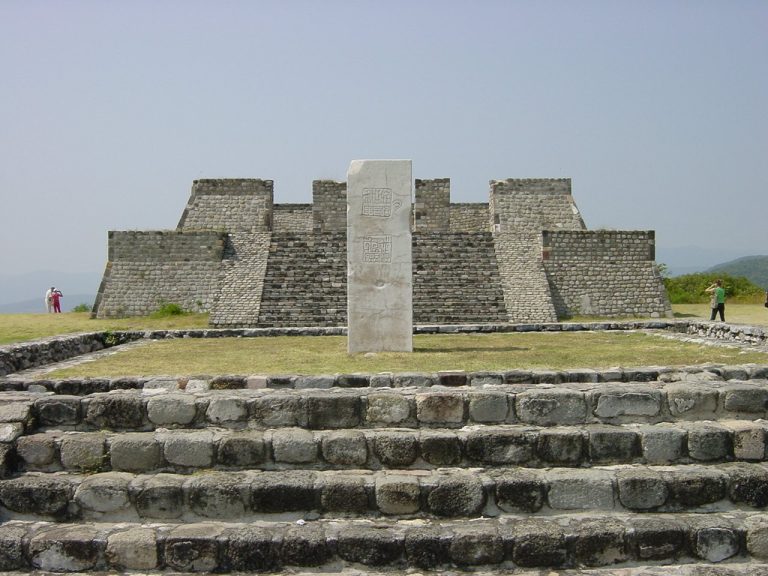
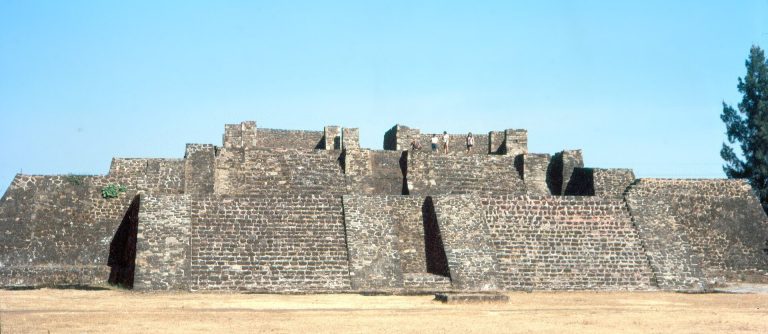
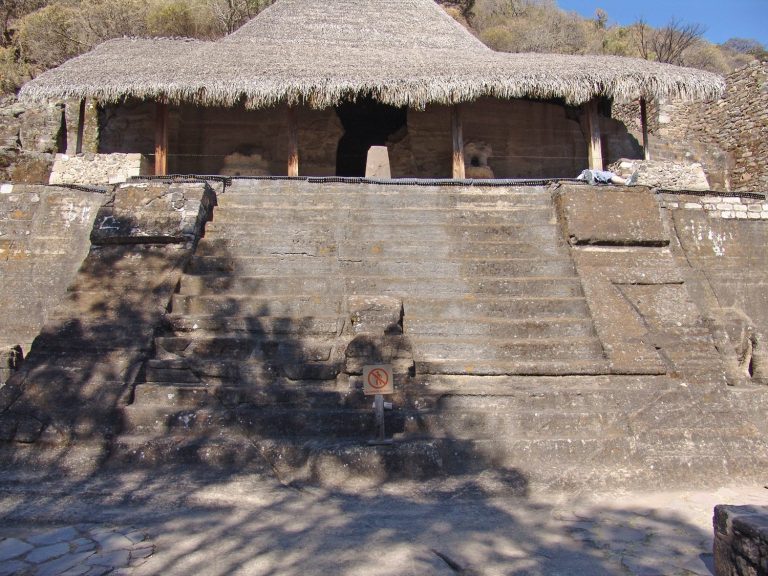
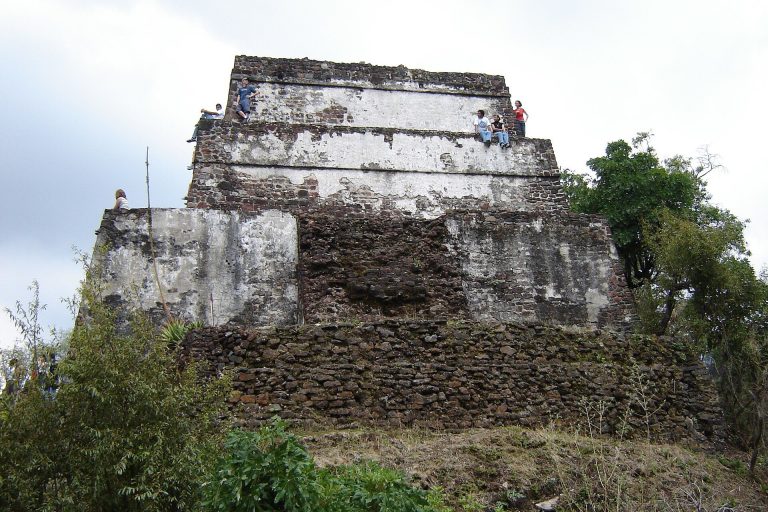
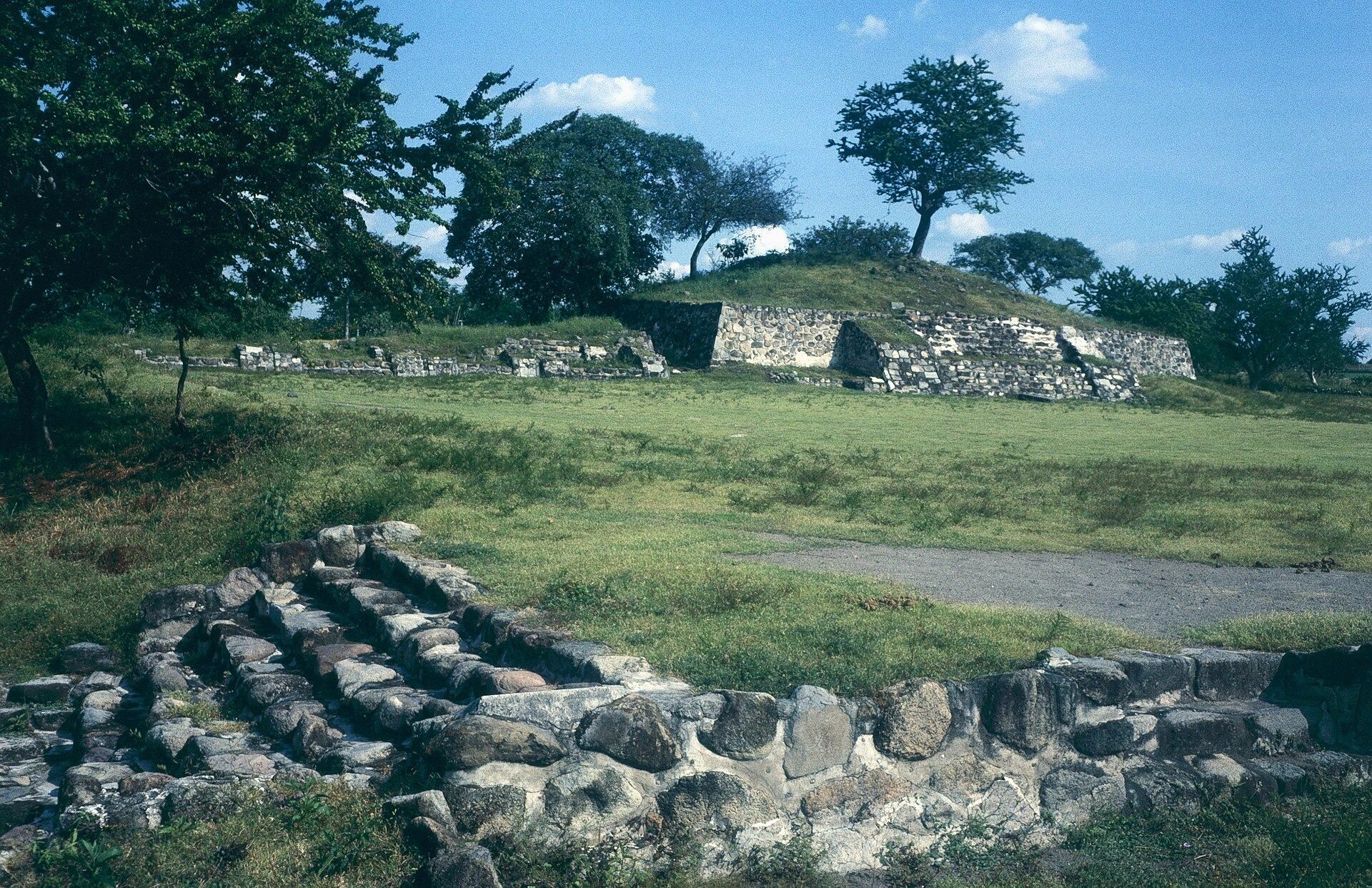
The excavated structures form a medium-sized urban complex arranged around a roughly rectangular public plaza in accordance with the local topography. Pyramidal bases, raised platforms, temples, and a ballgame court define the central area. Buildings were made with earth cores covered by faced or carved stone. Some walls and stairways retain stucco, a plaster-like coating, while several pyramidal bodies have sloping sides and stucco surfaces.
Western side of the plaza
Western platform
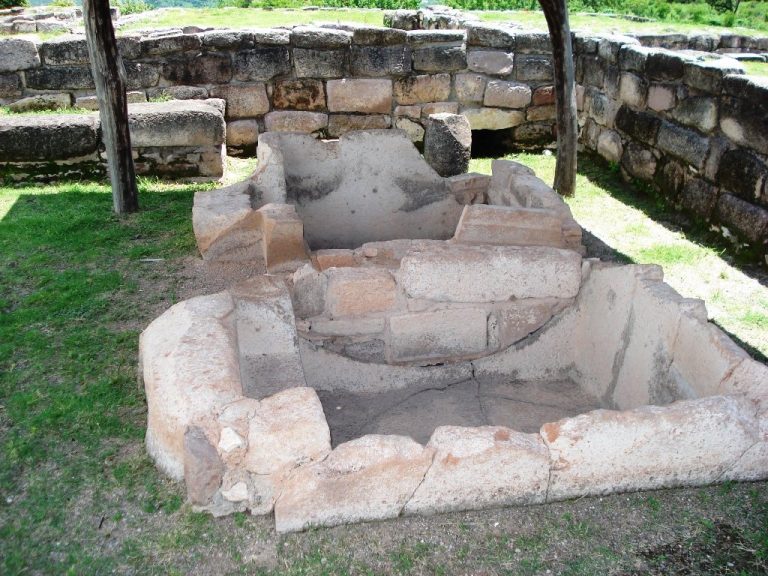
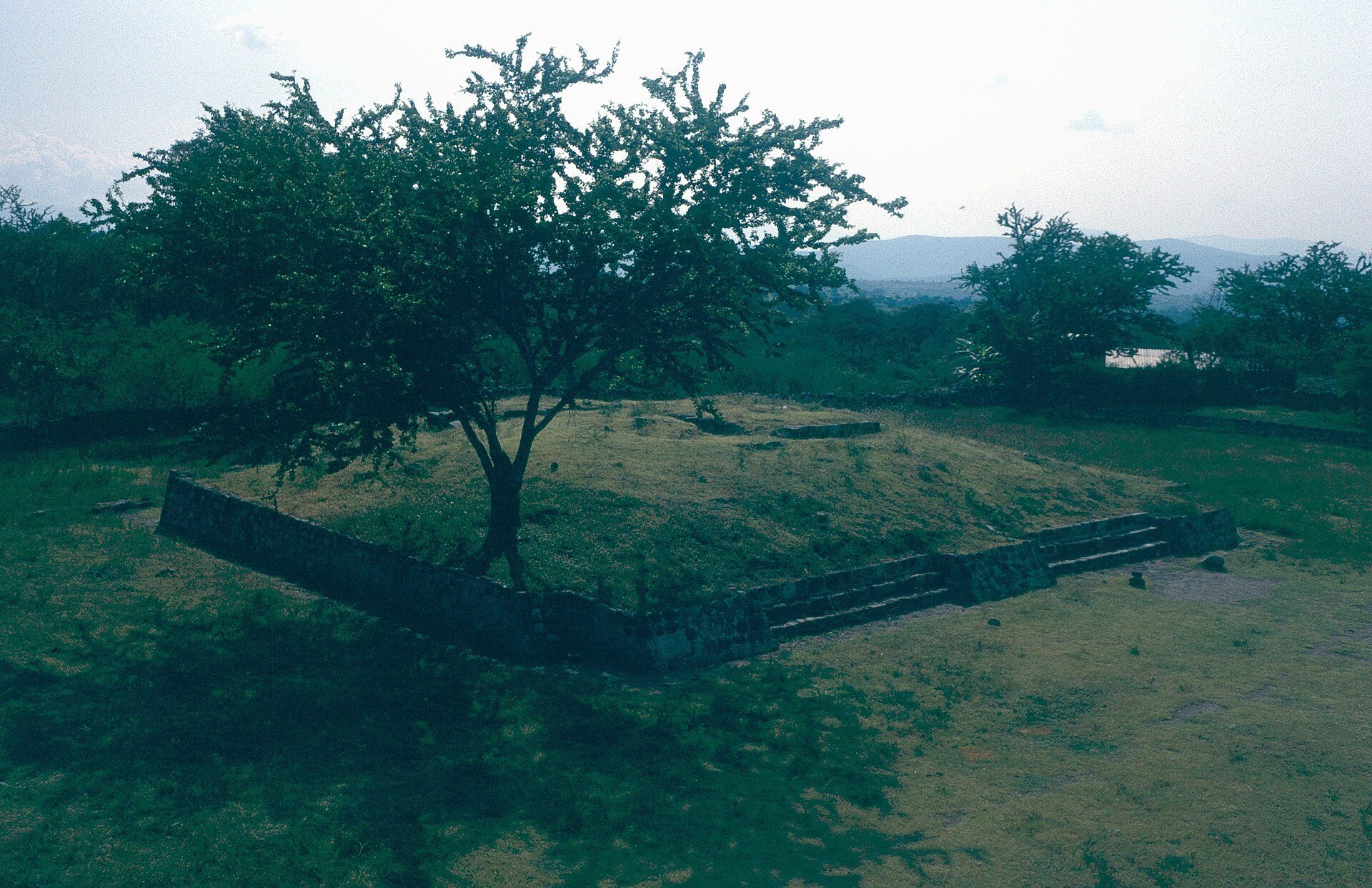
The western platform is almost destroyed. It consisted of three structures with two stairways bordered by lateral side walls. Remains of stucco floors and two stone boxes survive at the top. A smaller platform beside it has two steps, while stone cylinders found in that area have an unknown function.
Ballgame court
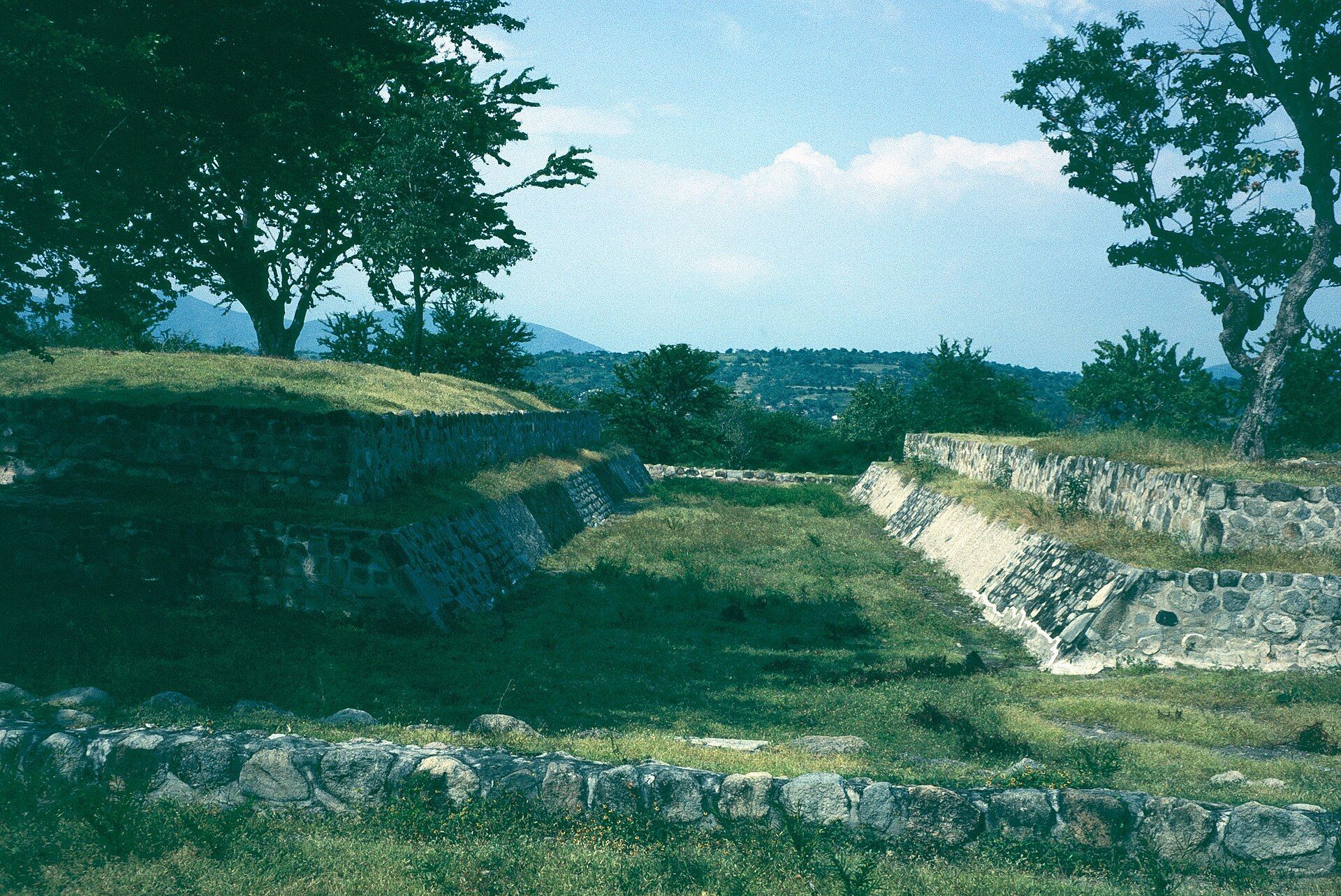
Behind the western platform, the relatively small ballgame court forms the western side of the plaza. It is oriented north to south and has a closed end. Low, sloping stuccoed surfaces run along its long sides, with a narrow level strip above them and a vertical wall closing the court. The closing wall is only partly preserved. Broader areas mark the ends of the court, and a narrow stairway at the northern end descends to the playing surface.
A double stairway from the west leads to platforms bordering the court. Several low rectangular platforms and a circular platform project toward the plaza. The court retains traces of stucco, and a tzompantli, or rack for displaying human skulls, was found beside it. Its religious, recreational, and political functions identify this group of buildings as a ceremonial center.
Burials and offerings
Burials beneath the court’s main stairway contained hundreds of offerings, including ceramic vessels, obsidian, jade, and copper-bronze objects. A carefully arranged group of basalt grinding implements and metate hands, the hand stones used with a metate or grinding slab, remains visible beside the court.
Extension platform
The extension platform forms part of the ballgame complex and its circular basement. Its circular design has led to the interpretation that it was probably dedicated to Ehécatl, a Mesoamerican wind deity commonly understood as an aspect of Quetzalcoatl.
Eastern platforms and ritual structures
Eastern platform
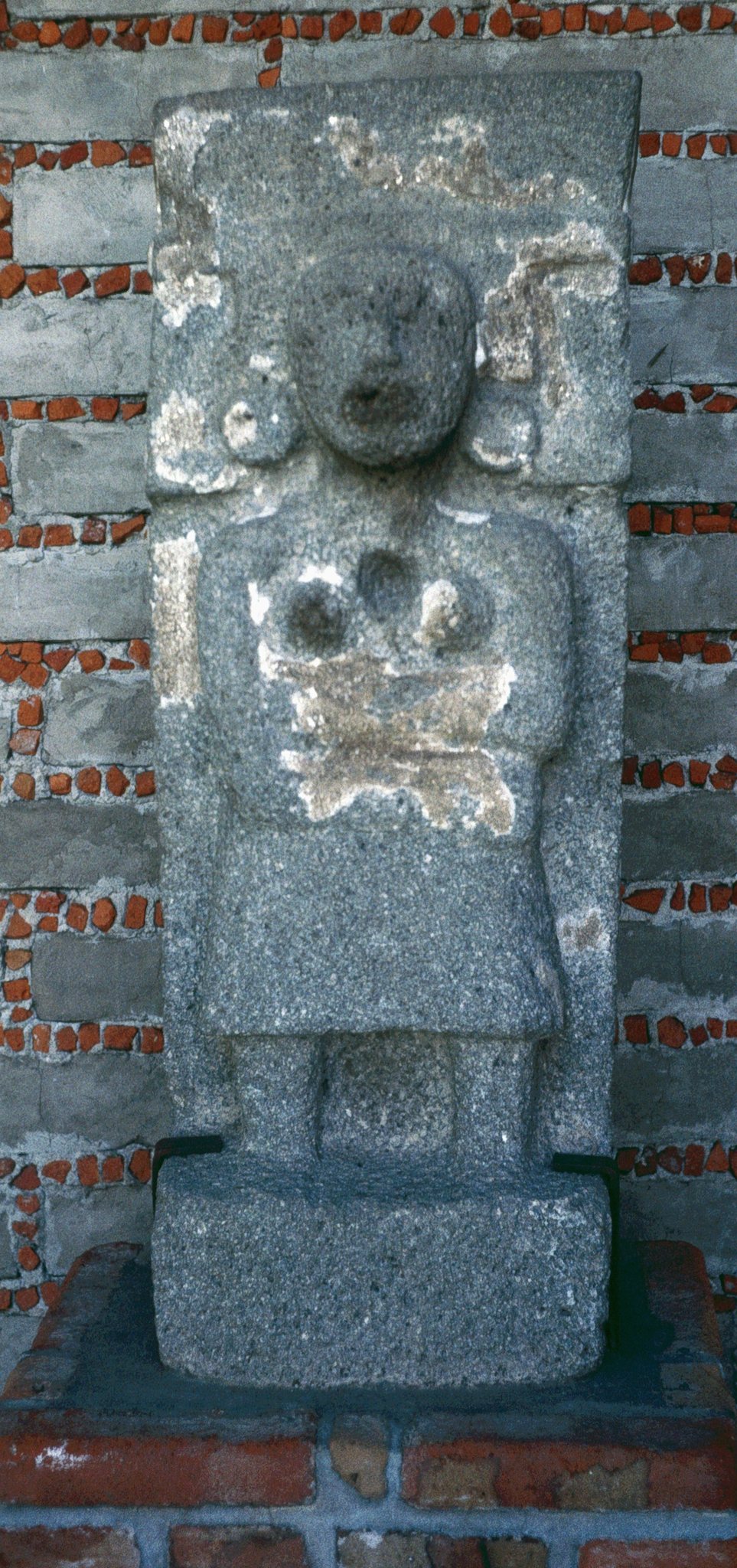
The eastern platform contains several partly separate structures that were probably altars. Collective and individual burials were placed in the altars and stairways, together with several types of offerings. The largest pyramid stood on the eastern side of the plaza. It had one broad stairway with wide lateral side walls, and a female stone figure was found inside it.
Incense altar
An incense altar was identified through a female stone sculpture and clay incense burners. The burners resemble large ladles with long handles and correspond to forms shown in the Codex Mendoza. Incense spoons known as tlemāitl were also found in the southernmost platform, where they may have served as offerings or remained from sacrificial activity.
Xipe-Totec platform
The Xipe-Totec platform forms the final section of the partly separate basement. A fragmented stone sculpture of Xipe-Totec, a Mexica deity associated with agricultural renewal, fertility, and ritual flaying, was found there. The figure lacks its head and feet. A stone temalacatl, a stone used in certain sacrificial ceremonies and associated with Xipe-Totec in Mexica religion, was found in the rubble of a sixteenth-century chapel. It is linked with the circular altar and the platform. The damage to the sculpture has been interpreted as possibly resulting from Spanish colonial destruction of Indigenous artifacts.
Temple platforms
Cuauhtlitzin Temple
The Cuauhtlitzin Temple is the highest structure at Coatetelco. A broad stairway with lateral side walls leads to the summit, where remains of a temple survive. Its pyramidal bodies have sloping sides and stucco coverings. A badly damaged stele lies at the foot of the stairway, and remains of additional structures stand to the side.
Excavation uncovered a female stone sculpture identified as Cuauhtlitzin. Its sculpted head had been concealed inside a vault made from carved stones.
Southern temple-pyramid
A strongly damaged temple-pyramid remains on the southern side of the plaza. It has the characteristic double stairway of central Mexican architecture. The structure may have supported two temples dedicated to different deities, although that interpretation remains uncertain.