Ixcateopan: A Late Postclassic Ceremonial and Administrative Center in Mexico
Site at a Glance
- Rating
- 4.7
- Popularity
- Very Low
- Country
- Mexico
- Primary era
- Medieval
- Eras represented
- Medieval, Early Modern
- Civilizations
- Unclassified
- Site type
- City
On this page14 sections
History
Ixcateopan was a regional ceremonial, administrative, military, storage, and trading center in the mountains of northern Guerrero, Mexico, used by Cohuixcas, Chontals, and later Mexica communities during the Late Postclassic period, approximately 1350 to 1521. A native community existed at the southern edge of the modern town by at least 350 CE, while the explored settlement developed through at least five construction periods.
Regional center and Mexica rule
The settlement had a multicultural character rooted in its originally Chontal population and later shaped by Cohuixca and Mexica presence. Its economy included cotton cultivation and the production of spun cotton goods. Ixcateopan probably stored food and military equipment, collected tribute from surrounding communities, and distributed those goods. Cotton garments produced there were supplied to Mexica soldiers and sent to Tenochtitlan, Texcoco, and Tlacopan.
Ixcateopan was among the last places in the region conquered by the Mexica. Campaigns under Itzcoatl, the fourth Mexica ruler, were followed by the formal conquest of northern Guerrero during the rule of Moctezuma Ilhuicamina. The settlement then became a tributary province of Tepecoacuilco and, by the late fifteenth or early sixteenth century, belonged to the tributary system of the Triple Alliance, the political and military union commonly identified with the Aztec Empire.
Mexica soldiers and other people from the empire came to Ixcateopan during conflicts with the Purépecha. Its position away from the principal war belt probably placed it within the Mexica rear area and helped establish its role as a storage center. The site was abandoned around 1521, when the Mexica capital fell to the Spanish-led forces of Hernán Cortés.
Cuauhtémoc and the burial tradition
Cuauhtémoc, the final ruler of the Mexica state, was born at Ixcateopan in 1501. His mother, Cuayauhtitali, was the daughter of the local lord. After the Mexica subjugation of Ixcateopan, she was taken to Tenochtitlan and married Prince Ahuizotl. Cuauhtémoc was educated in the capital, later returned to Ixcateopan, and was summoned back in 1519 to help defend Tenochtitlan against the Spanish.
After the fall of Tenochtitlan in 1521, Cortés captured Cuauhtémoc. Following torture, Cuauhtémoc and nine other Mexica lords were hanged near Izancánac in present-day Chiapas. Their remains, along with those of a priest who opposed the executions, were brought to Ixcateopan for burial.
Documents preserved through the family of the Ixcateopan physician Salvador Rodríguez Juárez stated that Cuauhtémoc was first buried in 1525 at the palace of his maternal grandparents. In 1529, Fray Toribio de Benavente reportedly moved the body to a location in front of a destroyed pre-Hispanic temple. The Church of Santa María de la Asunción was later built there.
Excavation and interpretation
The location of Cuauhtémoc’s tomb remained unknown until the mid-twentieth century. After Rodríguez Juárez showed the inherited documents to parish elders, the Instituto Nacional de Antropología e Historia sent archaeologist Eulalia Guzmán to assess them. Documentary, oral, archaeological, and historical evidence led to excavation at the indicated location.
The former parish church associated with the burial was converted into a museum. It contains pre-Hispanic artifacts, offerings made in Cuauhtémoc’s honor, and remains identified as those of Cuauhtémoc. In northern Guerrero, Ixcateopan is described as the only extensively explored site assigned to the Late Postclassic period, approximately 1200 to 1521.
Religion and ritual life
Sixteenth-century descriptions associated the local cult with Iztac Tlamacazqui and Acxoyatl Cihuatl. Two priests were said to supervise the cult and the sacrifice of virgin women. Inhabitants also practiced penance and self-sacrifice by piercing their tongues and ears, drawing blood, and burning copal, an aromatic tree resin used as ritual incense.
Remains
Terraces and central platform
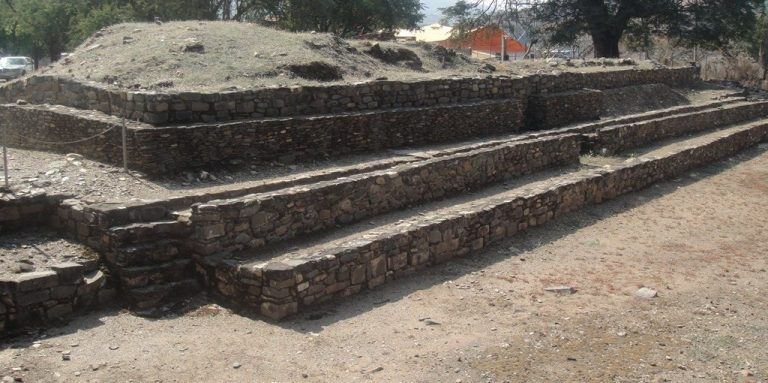
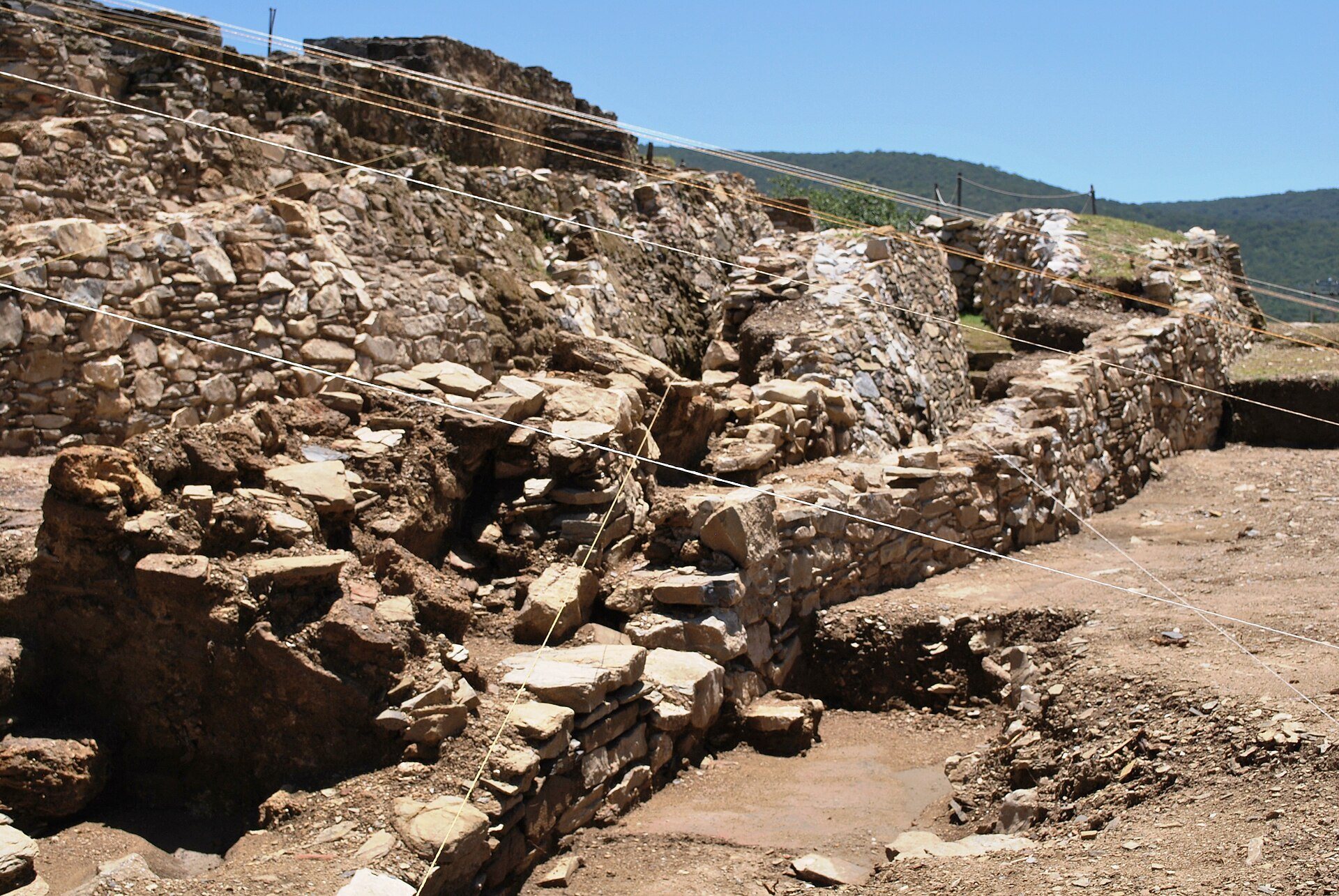
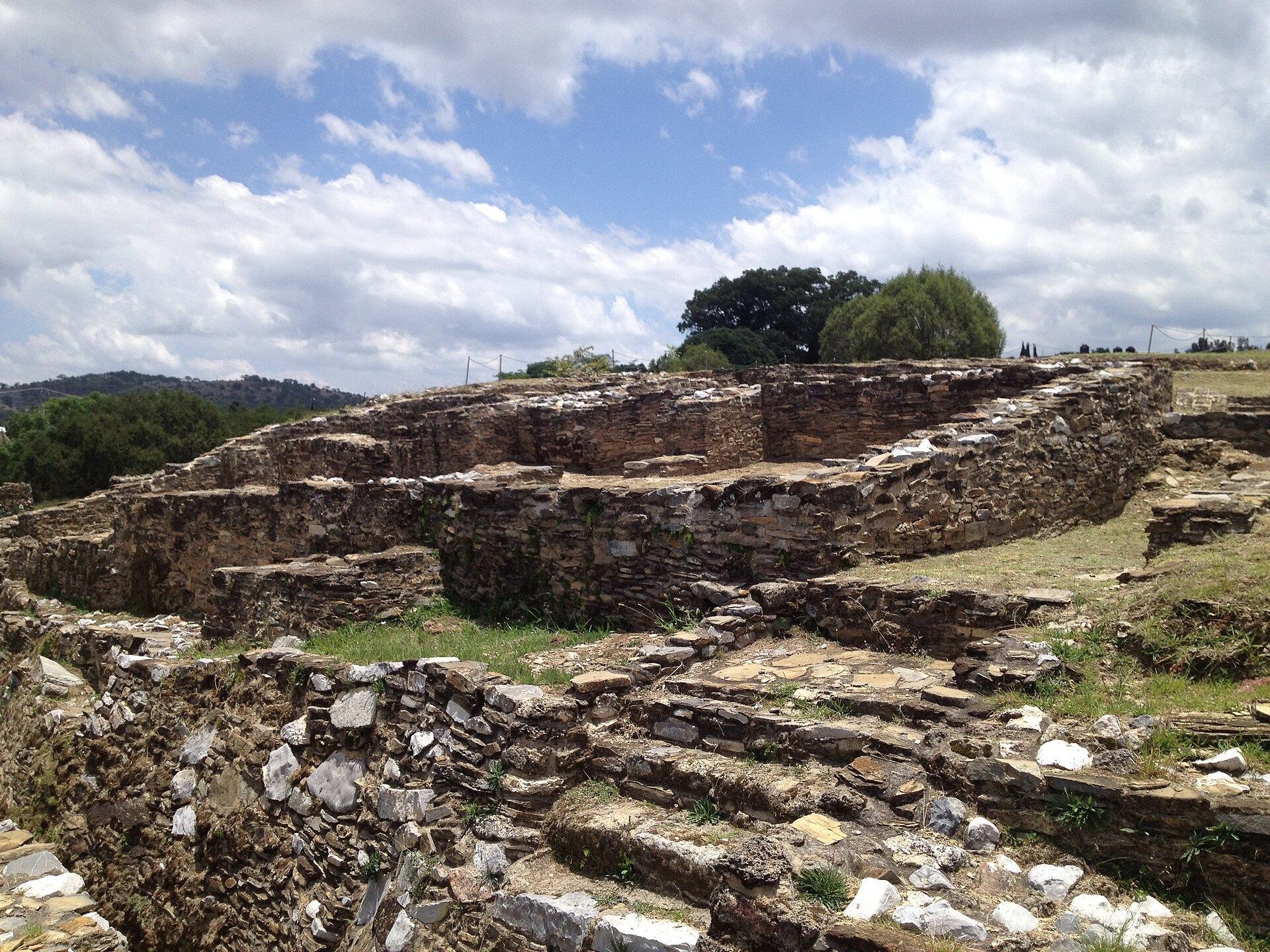
The archaeological zone lies within the modern town of Ixcateopan de Cuauhtémoc, about 36 kilometers from Taxco, in the isolated and rugged mountains of northern Guerrero. Built on a natural slope and elevation, the settlement was reshaped with artificial terraces. It covers approximately one and a half hectares, while overlaid structures in the principal archaeological zone occupy about 5,000 square meters.
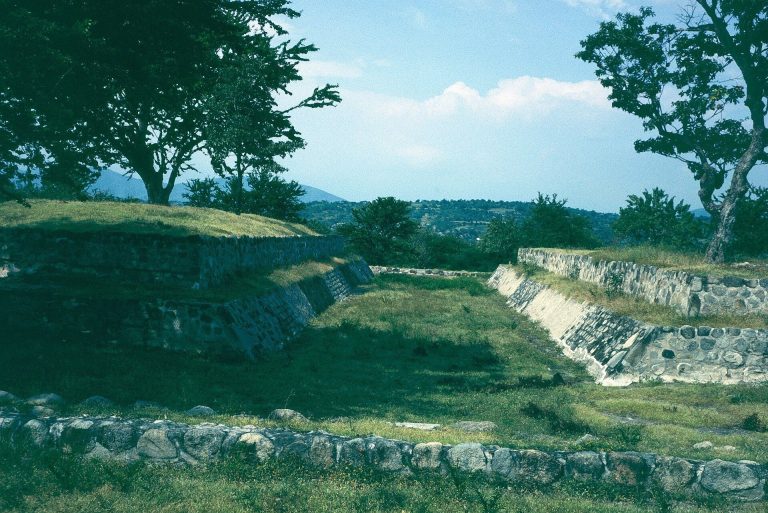
The terraces supported a large platform containing the ceremonial center, plazas, internal walkways, stairways, living quarters, and storage areas. The eastern section includes part of a platform wall about 56 meters long, while the western section contains a series of terraces. Street construction and repeated removal of stones by people seeking carved material damaged or destroyed portions of the explored remains.
Ceremonial buildings
Plazas and altars
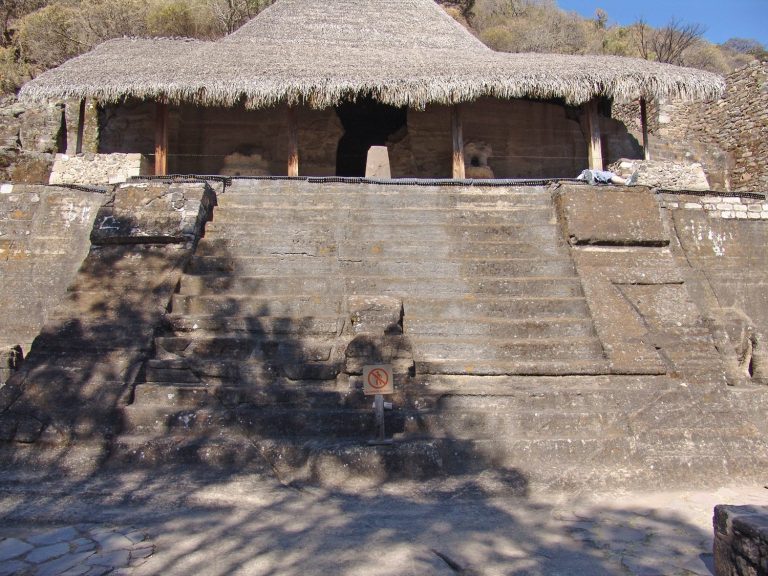
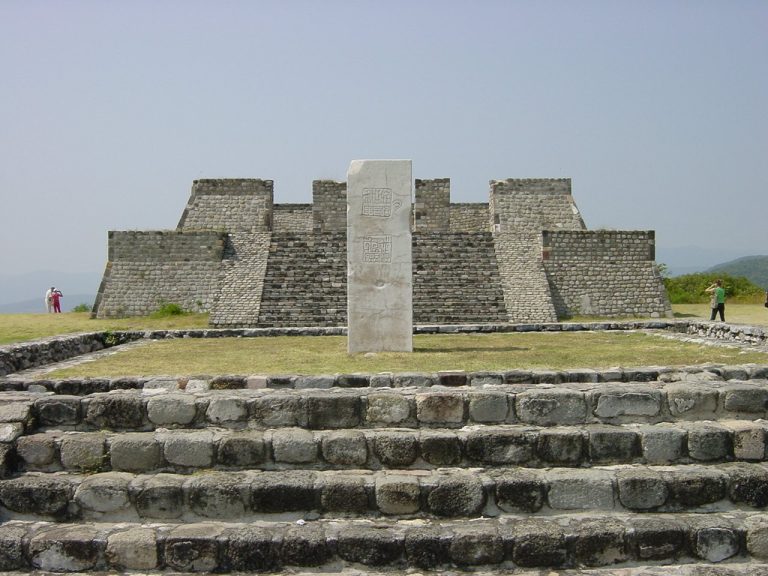
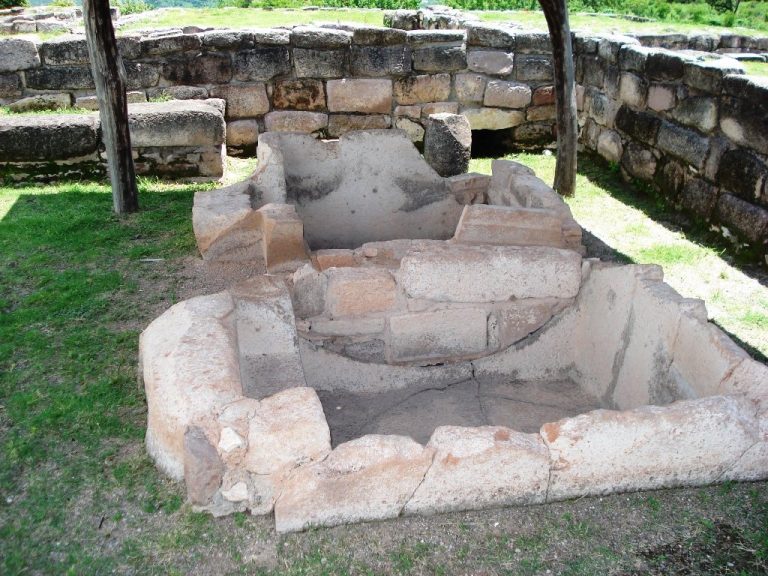
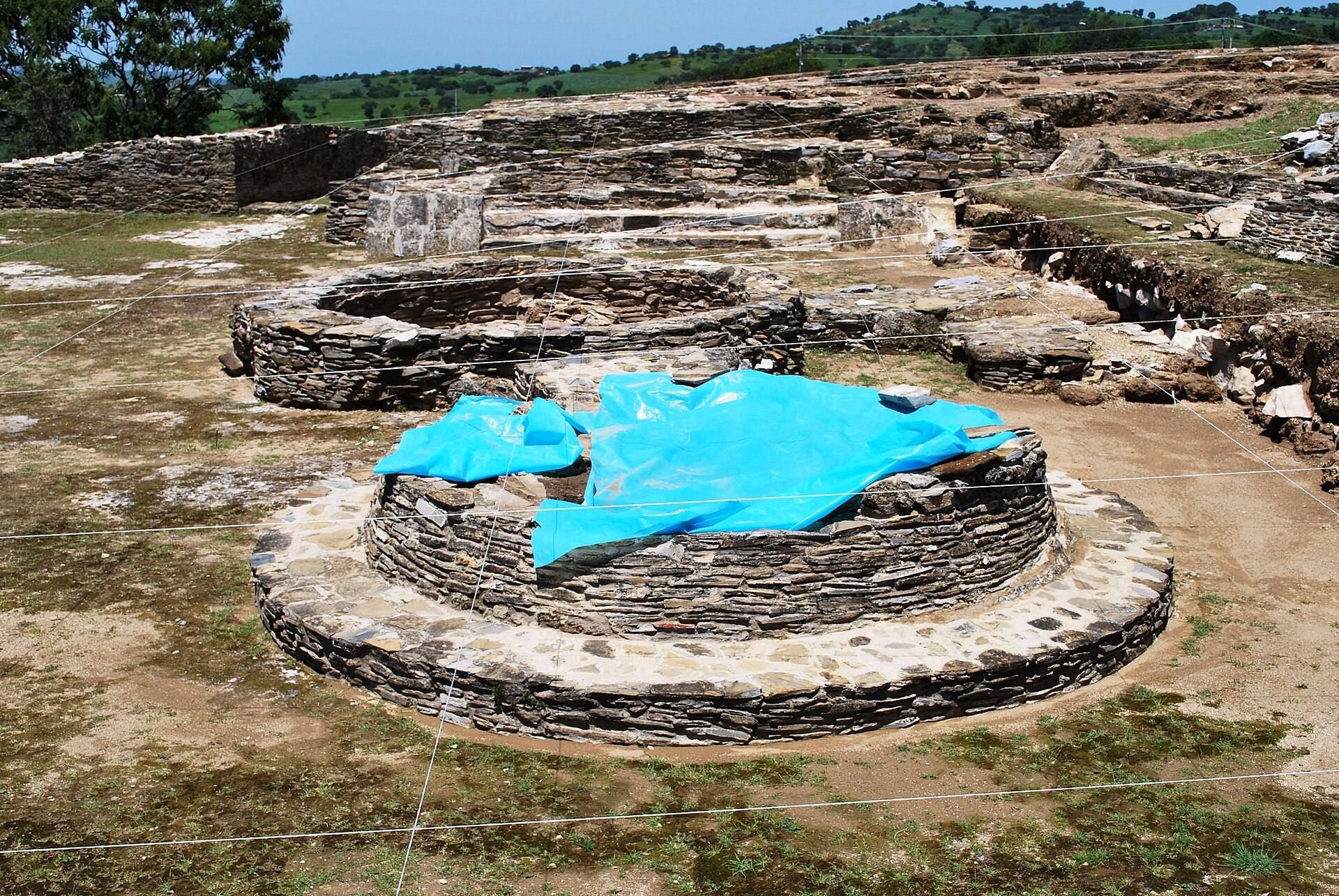
The visible civic-religious area consists of several rooms and open spaces. Circular altars and stairways with dice-like finishes form part of the surviving complex, although only a portion of the original built area remains.
Circular principal structure
The principal structure is circular and may have been dedicated to Quetzalcoatl, the Mesoamerican deity associated with the Feathered Serpent. Some floors retain traces of red stucco. Buildings throughout the settlement used local stone slabs, limestone, marble, and boulders, with stucco and red paint applied as surface finishes.
Pottery and cotton production
Spinning implements
Excavated rooms contained perforated ceramic disks known as malacates, generally interpreted as spindle whorls, the weighted implements used to add momentum when spinning fibers. They have central holes, varied cross-sections, and often decorated upper surfaces. They may alternatively have served as beads or pendant ornaments. Together with locally produced ceramics comparable to pottery from the Valley of Mexico, these objects indicate connections with central Mexico and support the interpretation of local cotton spinning.
Ceramic vessels
The pottery includes hollow, three-legged cajetes, small ceramic bowls or vessels, as well as streamlined vessels with serpent-like forms called metlapilcoate. The cajetes were painted brown over beige, while other vessels carried brown, black, or polychrome beige decoration.
Construction phases
Excavations during the first field season in 2008 identified at least three construction stages dating from approximately 1450 to 1521. The sequence included Aztec III pottery, local imitations, fragments of Rojo Texcoco pottery from Cholula, and locally made dark-red-on-beige and Yestla-Orange wares. These materials define successive building activity and connections between Ixcateopan, Cholula, and the Valley of Mexico.