Clifford Castle and Barbican: The Principal Seat of a Marcher Barony
Site at a Glance
- Popularity
- High
- Country
- United Kingdom
- Primary era
- Medieval
- Eras represented
- Medieval
- Civilizations
- English, Norman
- Site type
- Military
- Remains
- Castle
On this page12 sections
History
Clifford Castle and Barbican are the remains of a Norman fortress in the village of Clifford, Herefordshire, United Kingdom. William FitzOsbern began the castle in 1070 as a motte-and-bailey stronghold, made up of a raised earth mound beside an enclosed area. Clifford became the principal seat of the Clifford barony, a Marcher lordship on the English-Welsh border whose lords held special authority, owed direct allegiance to the king and remained distinct from the rest of the kingdom.
Foundation and stone rebuilding
FitzOsbern built the castle on wasteland previously occupied by Browning to protect a planned Norman settlement of about 200 plots. The settlement was intended to extend roughly half a mile uphill toward Llanfair and its hilltop church. After FitzOsbern was killed in battle, his son Roger de Breteuil inherited the castle. Roger lost his lands after rebelling against the king in 1075, and the Crown granted Clifford to Ralph Tosny.
The Tosnys rebuilt the castle in stone, in a style resembling their stronghold at Conches in Normandy. Ralph spent much of his time in Normandy and leased Clifford to Gilbert, the royal administrator for Herefordshire, for 60 shillings. After Ralph’s daughter Margaret married Walter Fitz Richard, Walter managed the estate as steward, later claimed it for himself and adopted the name Walter de Clifford before 1162.
The Clifford family
Walter’s daughter Rosamund Clifford, known as Fair Rosamund, was the mistress of Henry II. She died in 1176 or 1177 and was buried at Godstow in Oxfordshire.
Revolt, inheritance and transfer
In 1233 Walter de Clifford rebelled against Henry III. The king’s forces besieged the castle in early September, and its garrison surrendered after several days. Walter then made peace with the Crown and led his troops against his father-in-law, the Welsh prince Llywelyn ab Iorwerth, who had entered the conflict in support of Walter. About twenty years later, Walter forced a royal messenger to swallow a royal writ and its wax seal, said to be as large as a dinner plate. He consequently lost many of his special privileges as a Marcher lord.
Walter had no son, and the castle passed to his daughter Matilda in the 1260s. During the Second Barons’ War, a conflict between Henry III and rebellious barons, John Giffard of Brimpsfield seized Clifford, abducted and raped Matilda, and compelled her to marry him. Although Giffard was fined, Matilda pursued no further action and accepted him as her husband. They lived on the Clifford estate until his death in 1299, after which the king granted the castle to the Mortimers of Wigmore.
Decline and later work
After the English Crown conquered Wales, Clifford’s strategic value diminished and the castle fell into decline. It was garrisoned in 1402 during Owain Glyndŵr’s rebellion against English rule, which had begun in 1400, but was not used again. Damage from the uprising went unrepaired, and the castle was abandoned and largely demolished during the fifteenth century.
Twentieth-century excavations clarified the castle’s layout, including the barbican. Later, the owners worked with English Heritage to stabilize the structure and limit further decay; this work was completed.
Remains
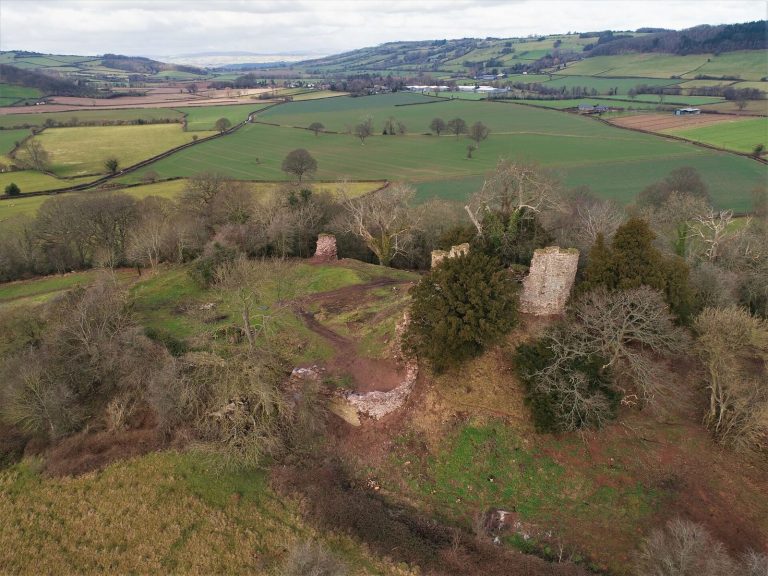
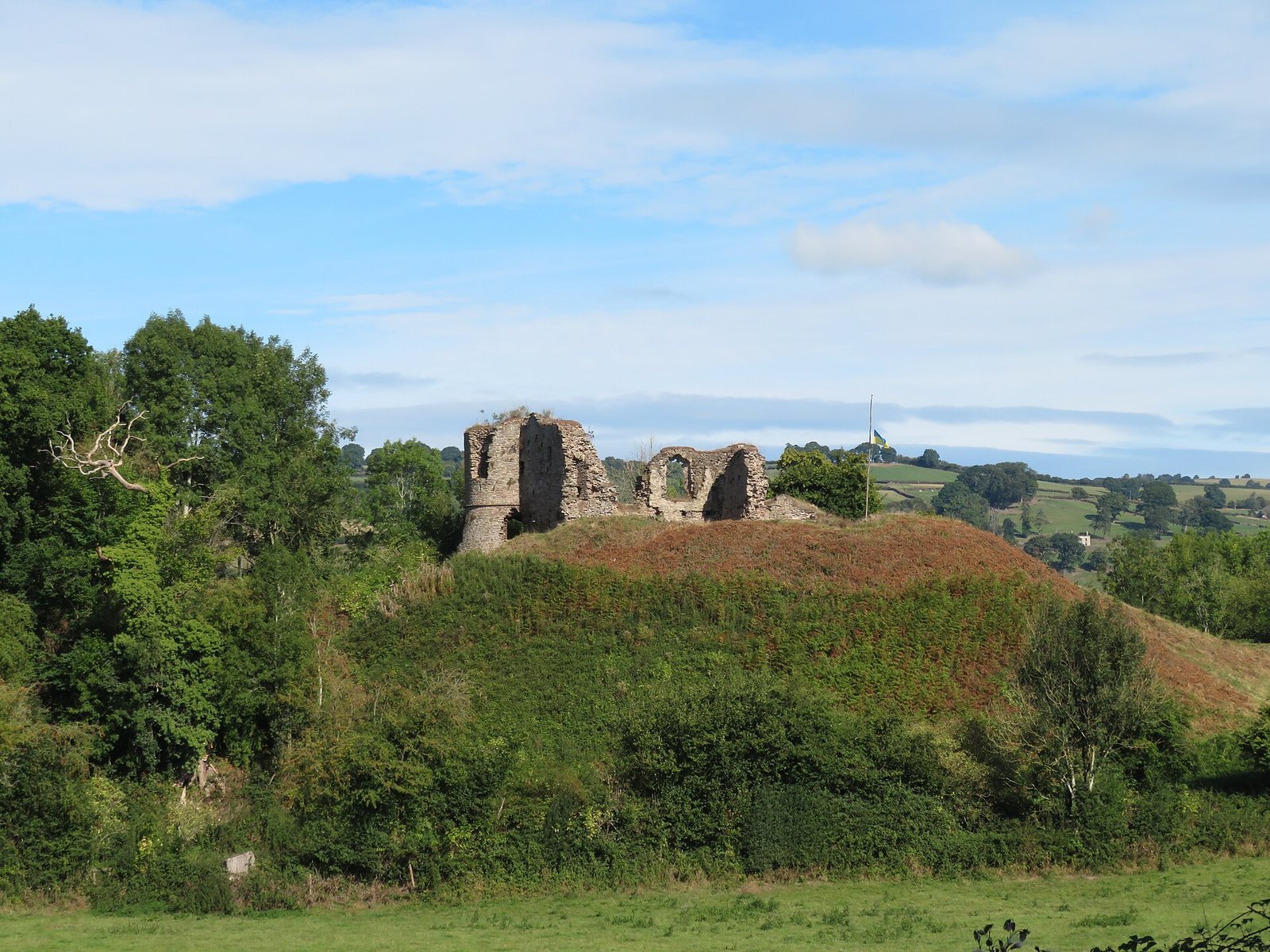
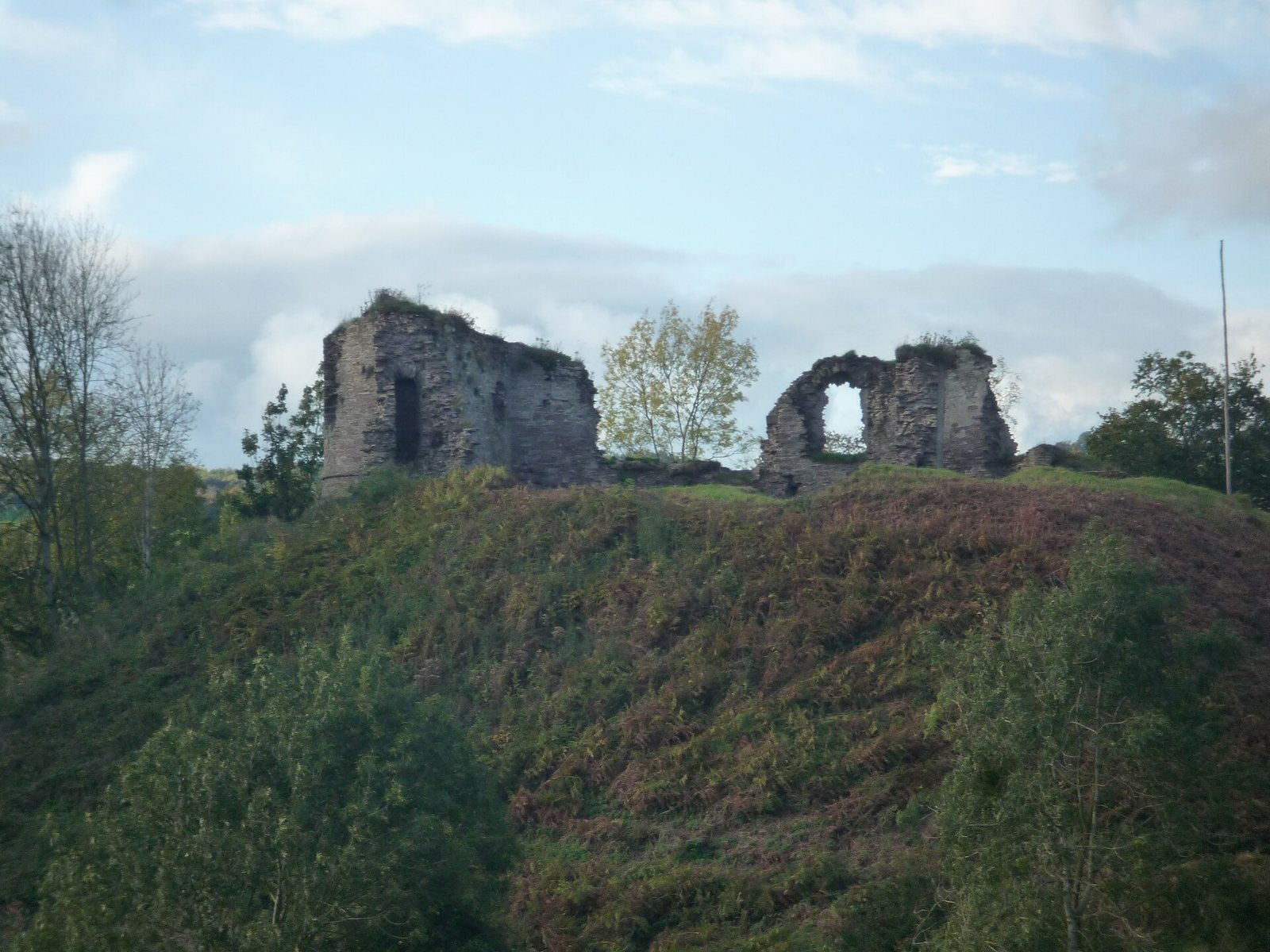
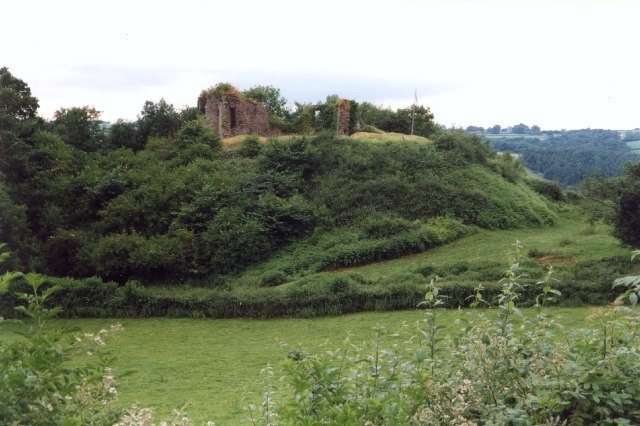
The castle occupies a cliff above a ford on the River Wye. Its defenses were organized around a large earthwork mound, with an enclosed area to the east, and included stone fortifications and water defenses. The surviving remains show parts of this arrangement, along with features revealed by excavation.
Motte and keep
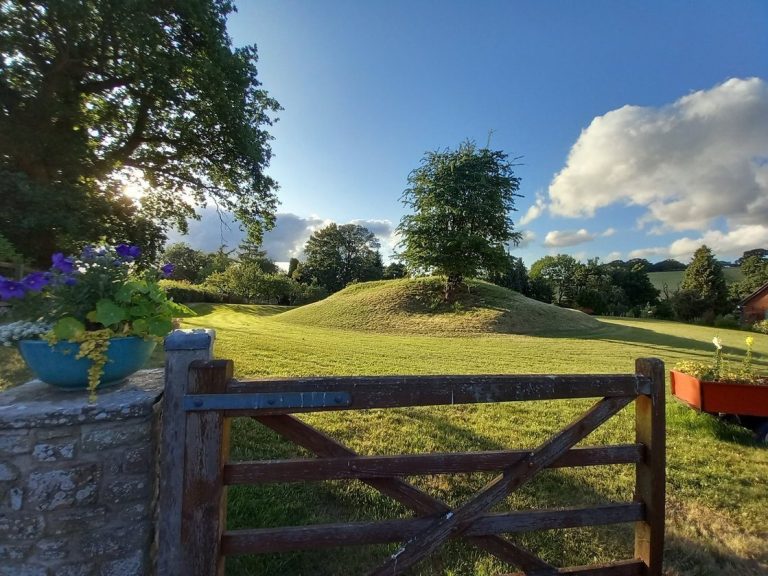
The large mound was later divided, and an oval shell keep, a fortified enclosure built on a mound, stood on its eastern part. Five D-shaped towers formed part of its circuit. The keep’s north wall appears to overlie part of the hall built by William FitzOsbern.
Bailey and entrance
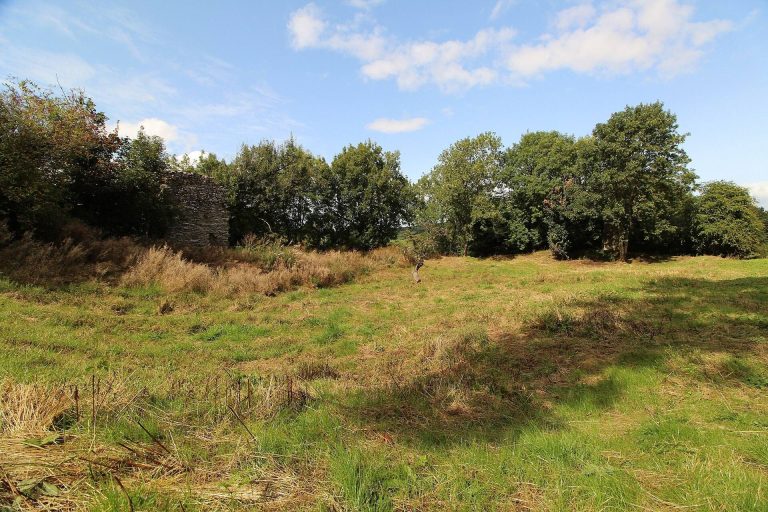
East of the mound, remains of a central gatehouse with twin towers survive. The gatehouse probably dates to the mid-thirteenth century. One of its surviving towers is known as Rosamund’s Tower, and a nearby property bears the name Rosamund House.
Landscape and water defenses
A broken earthwork dam lies west of the castle. It would have flooded the valley to the south; with the River Wye to the north, water surrounded the fortress except on its eastern side. St Mary’s Church at Llanfair survives on the hilltop toward which the planned settlement was to extend, though it was substantially altered during the Victorian era.
Excavated evidence
Structural features
Excavations in 1925–28 exposed foundations of the entrance’s paired towers and a large building east of the castle, described as having an annexe and bailey. They also revealed a southern tower, a guardroom, a portcullis, a heavy gate raised vertically within an entrance passage, and part of a curtain wall, an enclosing defensive wall. Work in 1950–53 uncovered the foundations of a tower on the mound and further wall sections. It also exposed a roadway associated with the barbican, a defensive work protecting an entrance; the barbican was fully excavated.
Finds
The 1925–28 excavations recovered a boar’s tusk, a wolf vertebra and a Roman brooch, all regarded as unrelated to the castle. Finds from 1950–53 included pottery, arrowheads, a knife, a bullet mould, a key, iron nails, a bridle bit and other iron objects. Much of the castle’s stone was reused in older village buildings, and large dressed blocks remain visible in garden walls.