Cimburk Castle: A Gothic Fortress in the Czech Republic
Visitor Information
Google Rating: 4.5
Popularity: Medium
Official Website: cimburk.eu
Country: Czechia
Civilization: Early Modern, Medieval European
Site type: Military
Remains: Castle
History
Cimburk Castle is located in the municipality of Cimburk, within the modern Czech Republic. It was constructed during the early 14th century by the medieval Moravian nobility, reflecting the Gothic architectural style brought to the region by Central European feudal lords.
The fortress was founded and built between 1327 and 1333 by Bernard of Cimburk, who made this site his new residence in 1348 after relocating from the original Cimburk near Svitavy. Early on, the castle served as a strategic stronghold and family seat, embodying the defensive needs and aesthetic preferences of its era.
In 1358, ownership passed to Moravian Margrave Jan Jindřich, brother of the Holy Roman Emperor Charles IV. The castle remained within powerful circles, but over the following decades, control shifted several times. By 1398, it was pledged to Čeněk of Drahotuš and then seized in 1407 or 1408 by Vok IV of Holštejn. Afterward, it remained with his descendants, including Wok V and Štěpán of Holštejn, indicating its continued importance within regional noble families.
Cimburk played a role during significant conflicts in the area, notably the Hussite Wars and the power struggles for the Bohemian-Hungarian throne. At one point, it was occupied by King Matthias Corvinus of Hungary, reflecting its strategic value amid broader Central European wars.
In the early 16th century, specifically after 1523, the castle was acquired by the Víckov family who undertook expansions. They added new sections including a lower castle and additional defensive towers and bastions, adapting the fortress to changing military needs of the Renaissance era.
The castle remained occupied intermittently until the late 17th century. Gabriel Horecký was the last lord to reside there before moving his seat to a palace in nearby Koryčany around 1674. After his departure, the fortress was abandoned. By 1709, Cimburk had been deserted permanently and began to deteriorate.
In the late 20th century, the castle suffered further damage as parts of the structure collapsed due to long-term neglect and natural decay. Since 1994, a local civic group named Polypeje has been involved in efforts to stabilize and protect what remains, preserving the site’s historical significance.
Remains
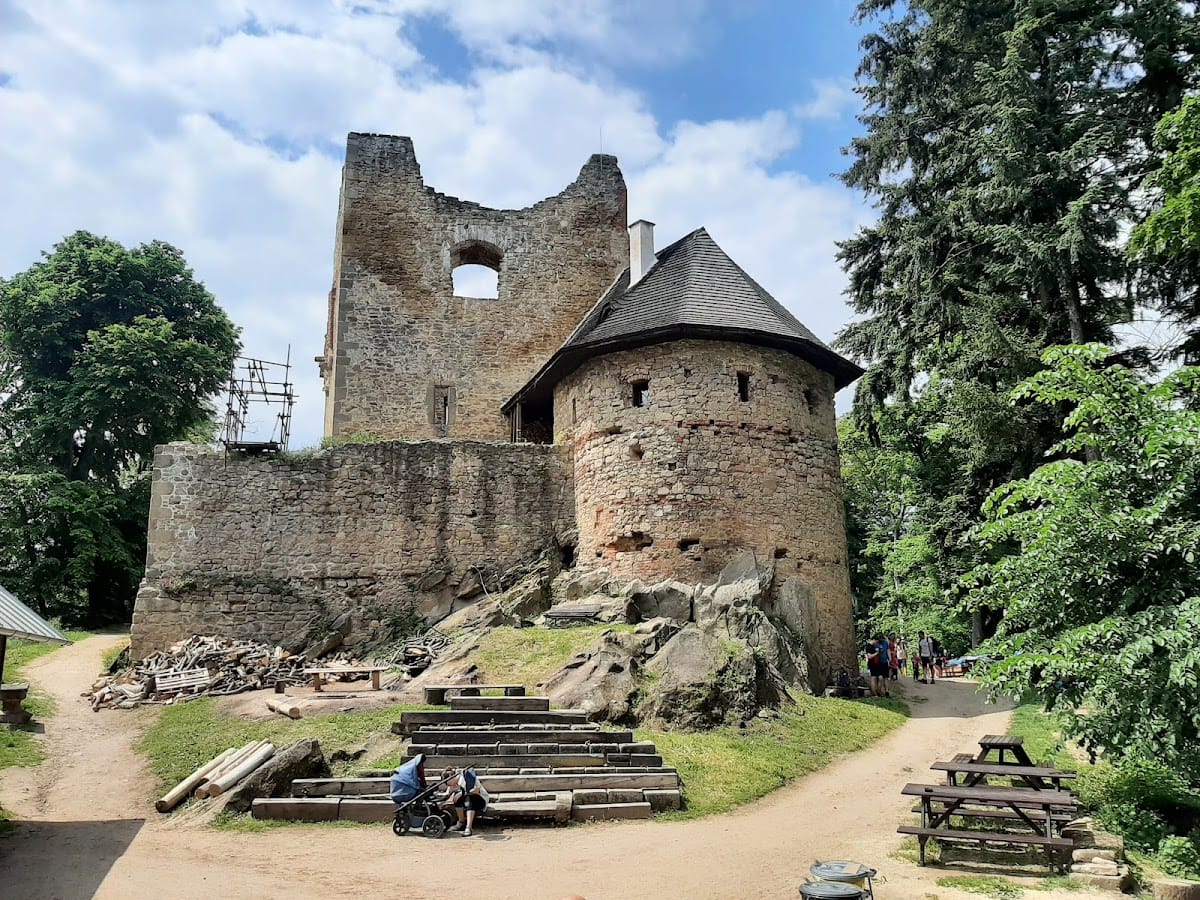
Cimburk Castle is built as a Gothic fortress with a distinctive elongated layout featuring two large towers known as bergfrieds—tall defensive towers typical of the period. This design reflects early 14th-century fortification concepts, incorporating sophisticated stonemasonry and French-inspired military architectural elements.
Among the better-preserved structures is the large western tower, which dominates the ruin and stands as a key defensive point within the castle’s layout. Its sturdy construction demonstrates advanced building techniques of the time, designed to withstand sieges and attacks.
Fragments of the main gate survive as well, providing insight into the castle’s controlled entry system. These remains highlight the combination of functionality and Gothic decorative features that once marked the fortress’s entrances.
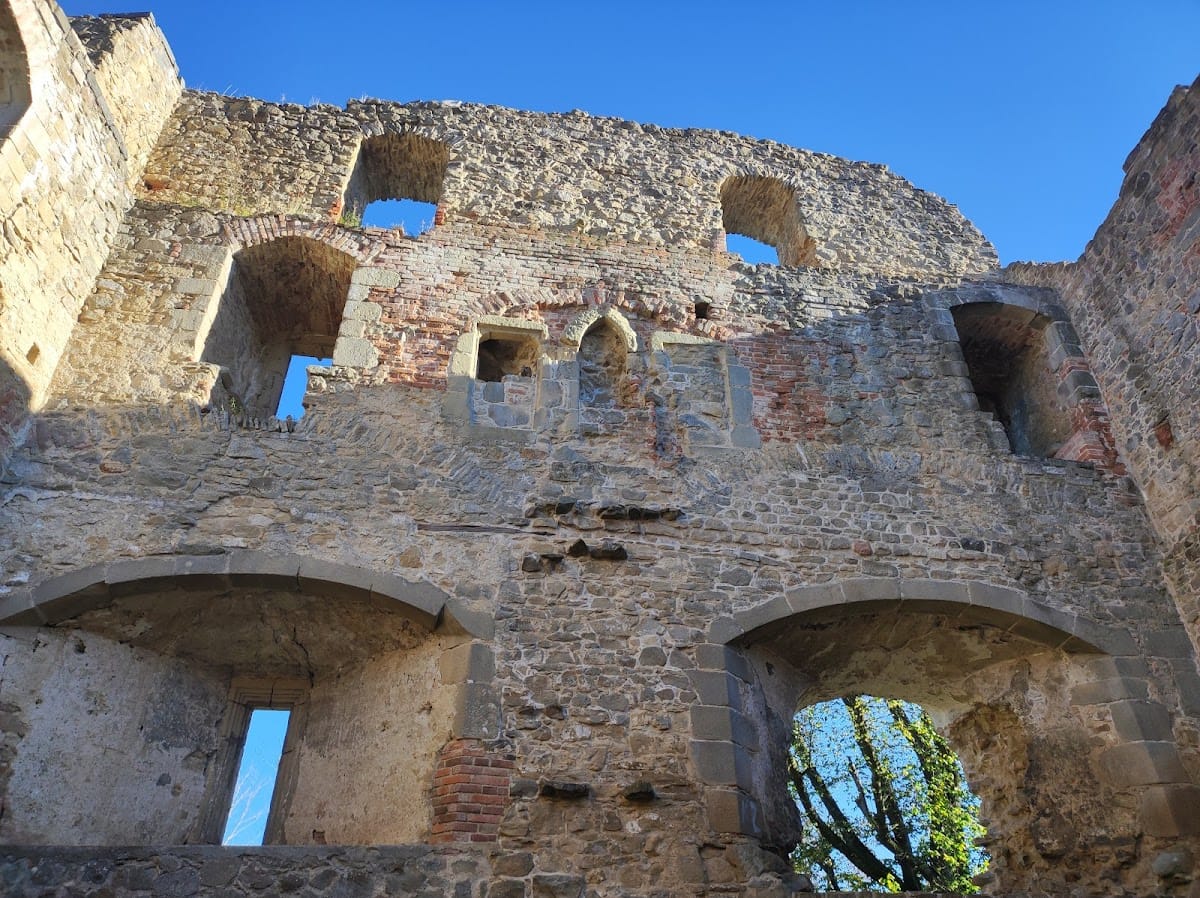
Parts of the principal residential and administrative building remain visible, including walls adorned with Gothic ornamental details. These fragments offer clues to the castle’s role beyond pure defense, suggesting spaces designed for noble living and administration.
Sections of both the original upper castle fortifications and later-added lower castle defenses are also present. The additions, originating from the 16th-century expansions under the Víckov family, include new bastions and towers that reinforced the castle against evolving military threats.
Today, much of Cimburk survives only as ruins due to centuries of abandonment and structural collapses. Although the site is fragmentary, many architectural details remain visible, preserving a record of its complex construction history and the craftsmanship employed by its builders.
While no documented myths or inscriptions have been noted among the ruins, the site’s history connects it to notable regional conflicts and noble lineages, underlining its historical importance in the Moravian landscape.
Nearby sites