Chūzen-ji Temple: A Tendai Buddhist Temple on Lake Chūzenji


Site at a Glance
- Rating
- 4.2
- Popularity
- Medium
- Country
- Japan
- Primary era
- Modern
- External website
- Open
- Eras represented
- Modern
- Civilizations
- Japanese
- Site type
- Religious
- Remains
- Temple
On this page8 sections
History
Chūzen-ji Temple is a Tendai Buddhist temple in Nikkō, Japan, traditionally founded in 784 within the sacred landscape of Mount Nantai and Lake Chūzenji. Its full name is Nikkō-san Rinnō-ji Betsuin Chūzen-ji, and it is a subsidiary temple of Rinnō-ji, a major Tendai complex that forms part of the Shrines and Temples of Nikkō World Heritage property.
Foundation and early history
Temple tradition attributes the foundation of Chūzen-ji to Shōdō Shōnin, an eighth-century Buddhist monk regarded as the founder of Nikkō’s religious complex. While travelling by boat on Lake Chūzenji, Shōdō is said to have encountered an apparition of Kannon, the Buddhist bodhisattva associated with compassion. He then established the temple around an image carved from a katsura tree.
Chūzen-ji originally served as the jingū-ji, a Buddhist temple established to serve or interpret a Shinto shrine, for Futarasan Jinja near the entrance to the pilgrimage route up Mount Nantai. It was known as Fudaraku-san Chūzen-ji, and its principal image was enshrined in the Kannon Hall. The earliest recorded mention of the temple is associated with Fujiwara no Atsumitsu, who made a pilgrimage there in 1141 and wrote the Chūzen-ji Shiki.
Medieval development and restricted worship
A major construction project took place in 1315. Minamoto no Yoritomo is traditionally said to have donated statues of the Four Heavenly Kings, Buddhist guardian deities protecting the four directions. These figures were placed beside the principal Kannon image.
Nikkō was regarded as a sacred area closed to women, so women worshipped the principal image from the Women’s Hall on the slope of Irohazaka. The restriction on women and horses within the temple precinct was lifted in 1872.
Separation, disaster, and rebuilding
The Meiji-era separation of Buddhism and Shinto, a government policy that dismantled the traditional institutional combination of temples and shrines, transformed Chūzen-ji in 1872 into a subsidiary of Rinnō-ji. The former shrine component continued as Futarasan Chūgūshi, an annex of Futarasan Jinja.
In September 1902, the Ashio Typhoon brought torrential rain and landslides to Mount Nantai. Debris devastated the temple, and the Kannon Hall was swept into Lake Chūzenji. The temple was rebuilt and moved to Utanohama on the lake’s eastern shore. Reconstruction was completed in 1913.
The principal image was carried into the lake during the disaster but later resurfaced apparently undamaged. It was installed in the present Kannon Hall, and its survival helped foster the belief that the image gives strength to people facing suffering and calamity. A hall dedicated to the Five Wisdom Kings, wrathful Buddhist protectors associated with defending Buddhist teaching, was built in 1969 during commemorations of 1,200 years since Shōdō’s foundation of the Nikkō religious complex.
Religious associations and protection
Chūzen-ji is the eighteenth station of the Bandō Thirty-Three Kannon pilgrimage. Through worship of Daikokuten, a Buddhist deity associated in Japan with prosperity, good fortune, and abundant food, it is also connected with the Shimotsuke Seven Lucky Gods pilgrimage.
The temple is protected as part of the cultural heritage of the Rinnō-ji complex. Its principal wooden Kannon statue was designated an old National Treasure under the former Ancient Shrines and Temples Preservation Law on August 25, 1914. Under the present system, it is classified as an Important Cultural Property.
Remains
Lakeside setting and principal image
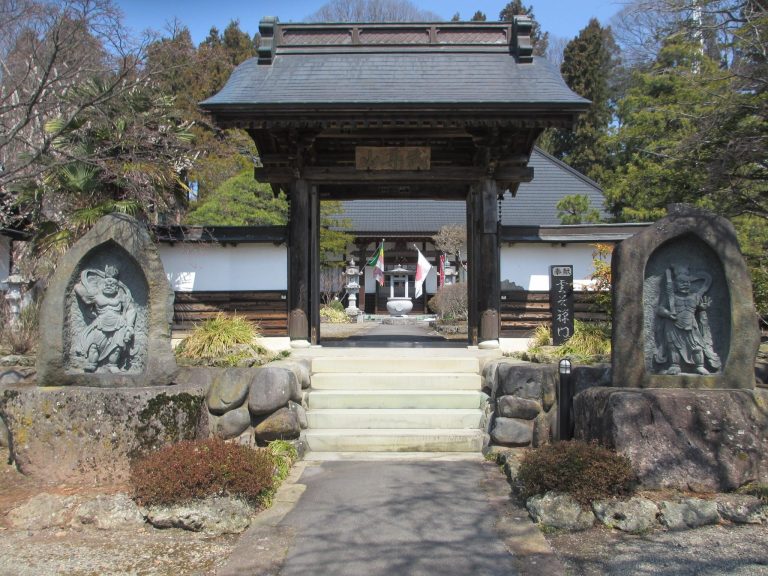
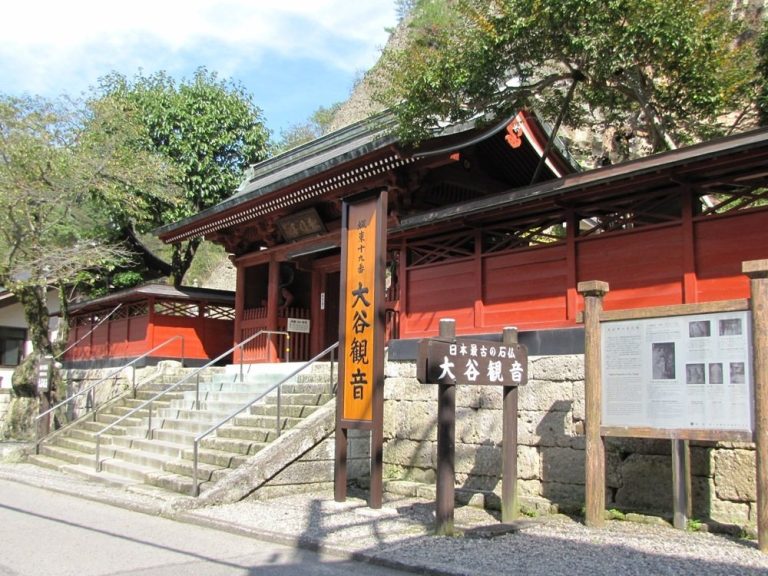
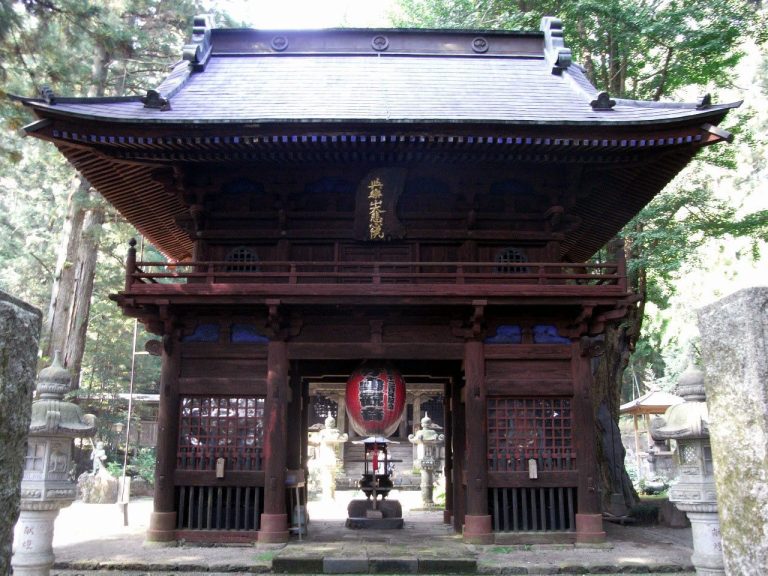
Chūzen-ji stands at Utanohama on the eastern shore of Lake Chūzenji, a volcanic lake at the foot of Mount Nantai. The present temple is organized around the Sanmon gate, the Tachiki Kannon Hall, the Five Wisdom Kings Hall, and the Women’s Hall, which preserves the memory of the earlier arrangement for women’s worship.
The Tachiki Kannon Hall contains the principal object of worship, a standing Kannon with eleven faces and a thousand arms. This form represents the bodhisattva’s capacity to perceive suffering and respond in many ways. The statue is approximately six metres high and is carved mainly from a single katsura tree. Its 42 hands and other components were assembled separately.
Carving and surviving buildings
The statue is traditionally said to have been carved by Shōdō during the Enryaku era while the katsura tree remained standing. The associated technique, Ittō Sanrei-bori, is said to have required the sculptor to recite a sutra three times with each stroke of the chisel. Its style and carving technique indicate a probable date in the late Heian period, later than the traditional eighth-century foundation story.
The Kannon image was first installed in the former Kannon Hall near the entrance to Mount Nantai. After the 1902 landslide swept that hall into the lake, the recovered statue was placed in the current Kannon Hall. The Four Heavenly Kings traditionally donated by Minamoto no Yoritomo were installed beside the principal image. The Five Wisdom Kings Hall and Sanmon gate form part of the present group of named buildings, while the Women’s Hall recalls the former restrictions governing access to worship.