Church of the Renewal of the Temple of the Resurrection in Sertyakino: Russian Orthodox Church
Site at a Glance
- Popularity
- Very Low
- Country
- Russia
- Primary era
- Modern
- Eras represented
- Early Modern, Modern
- Civilizations
- Russian
- Site type
- Religious
- Remains
- Church
On this page8 sections
History
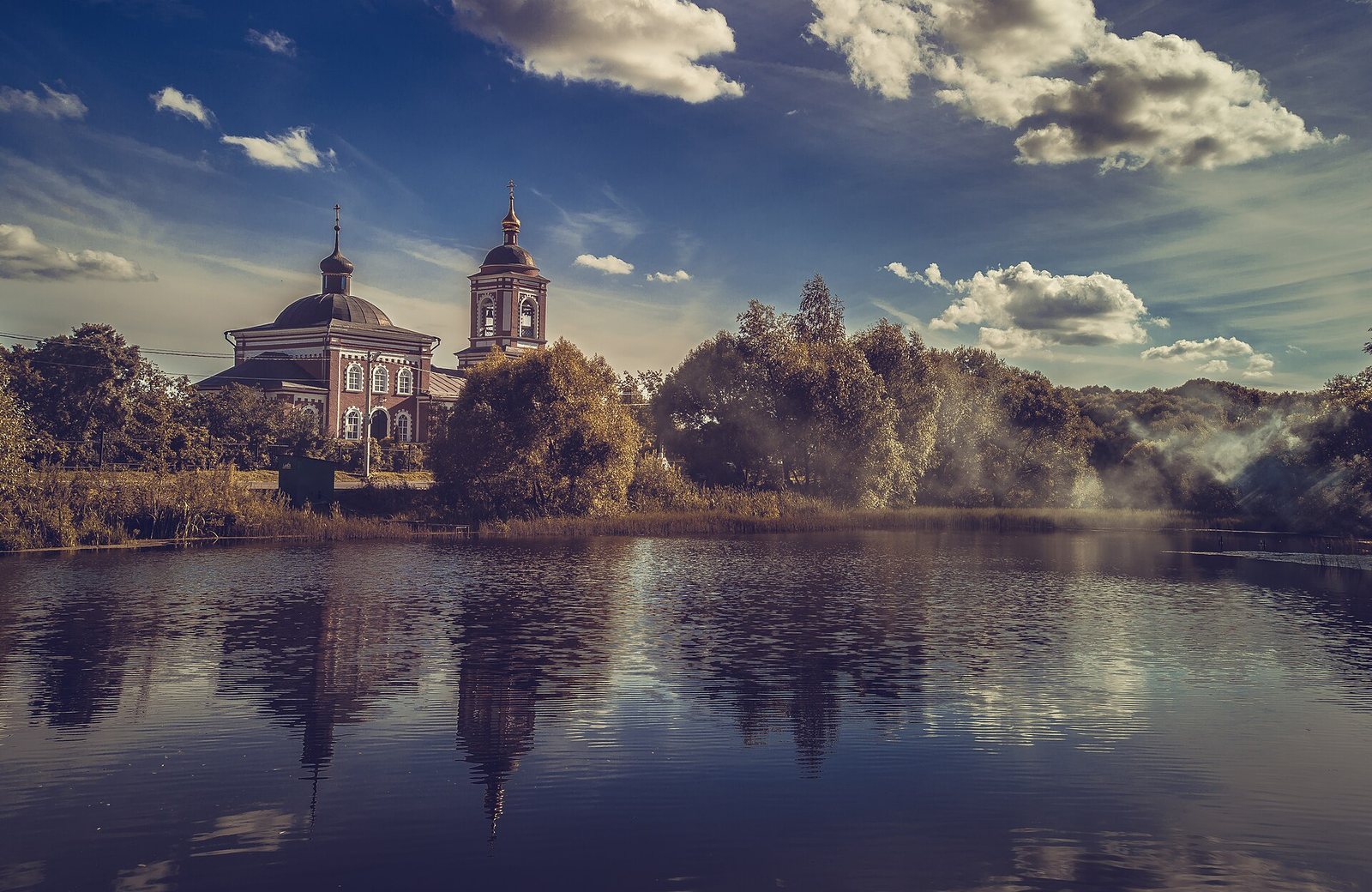
The Church of the Renewal of the Temple of the Resurrection in Sertyakino is a Russian Orthodox church in Russia, dedicated to the feast commemorating the dedication of the Church of the Holy Sepulchre in Jerusalem. Its history begins in the seventeenth century, and its 1859 building has facades in the Eclectic style. The church remains active and belongs to the Moscow Diocese, a district overseen by a bishop, and the Podolsk Deanery, a smaller group of churches within a diocese.
Foundation and early rebuilding
A local estate owner established the first church on the site in 1694. Its first clergyman was a deacon. By 1735 the building had become dilapidated, and in February a petitioner sought permission from the Synodal Treasury Office, an administrative office of the Russian Orthodox Synod, to replace it with a wooden church. A protopope, a senior cleric, of Moscow’s Great Assumption Cathedral consecrated the new church with the blessing of the Bishop of Kolomna.
In 1792, a captain financed the construction of another church. It was restored in 1812 during the Patriotic War, Russia’s conflict with Napoleon’s invasion.
Nineteenth-century changes
In the early nineteenth century, the dilapidated stone Church of the Nativity of the Mother of God in Tolbino was attached to the Sertyakino church. It belonged to Prince N. B. Yusupov, owner of the Arkhangelskoye estate. In 1832, the stone Church of the Savior Not Made by Hands in Spasskoye-Nikulino was also attached to Sertyakino.
In December 1847, Sertyakino’s landowner asked Metropolitan Filaret of Moscow and Kolomna, a prominent Orthodox leader later venerated as Saint Philaret of Moscow, for permission to raise funds for a new church. The building was completed in 1859.
Closure and restoration
The church closed in 1937 and fell into severe disrepair; local residents began taking bricks from the building. Restoration started in 1989. A priest appointed during the work continued to serve there, and on 2 July 1989 the Bishop of Mozhaisk reconsecrated the church.
Remains
Church buildings
The 1792 wooden church
The church financed in 1792 was built of wood on a stone foundation. Its refectory, a dining-hall-like church space, contained a side chapel dedicated to Nicholas the Wonderworker, also known as Saint Nicholas. A bell tower formed part of the building.
The 1859 brick church
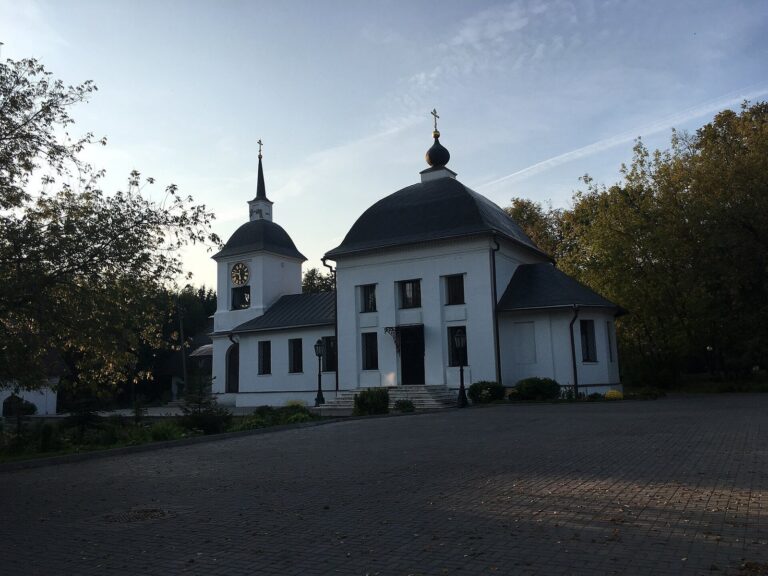
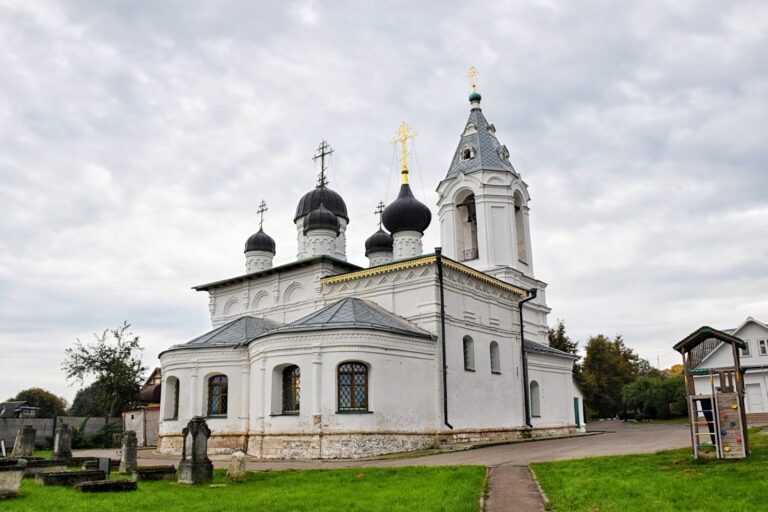
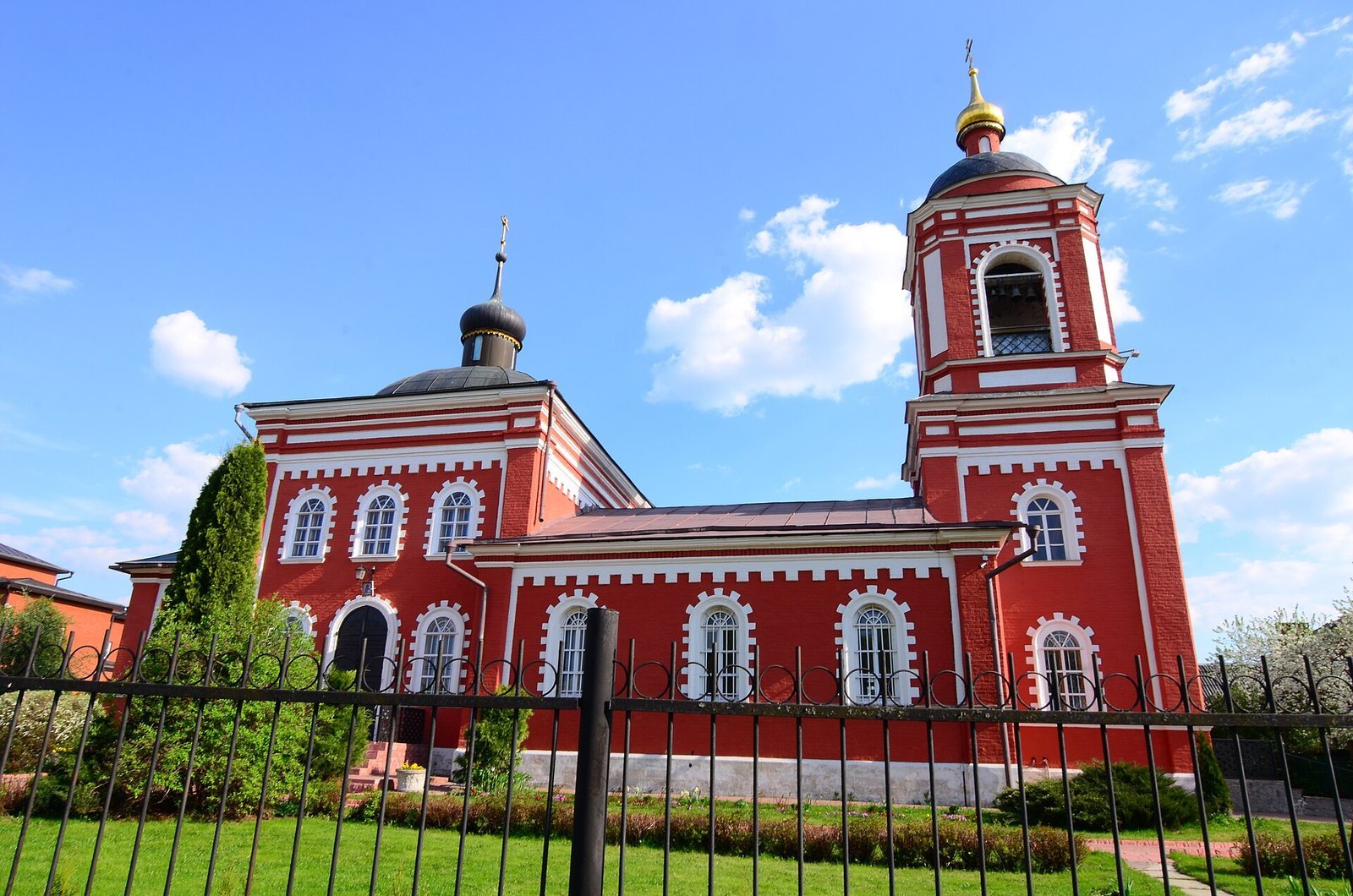
The 1859 church is built of red brick with white-stone details. Its main space has a cubic form and is topped by a low dome. An apse, a rounded projection at the end of a church, extends to the east; to the west are a refectory and a two-tier bell tower. The facades combine elements from different historical styles, an approach known as Eclectic architecture.