Collegiata di San Medardo: Baroque Collegiate Church of Arcevia
Site at a Glance
- Popularity
- Low
- Country
- Italy
- Primary era
- Early Modern
- Eras represented
- Medieval, Early Modern, Modern
- Civilizations
- Italian, Papal States
- Site type
- Religious
- Remains
- Church
On this page17 sections
History
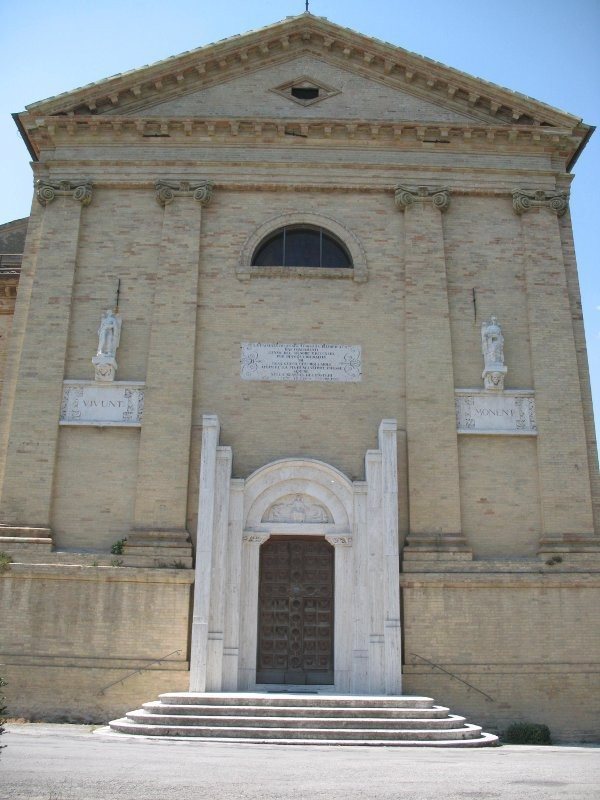
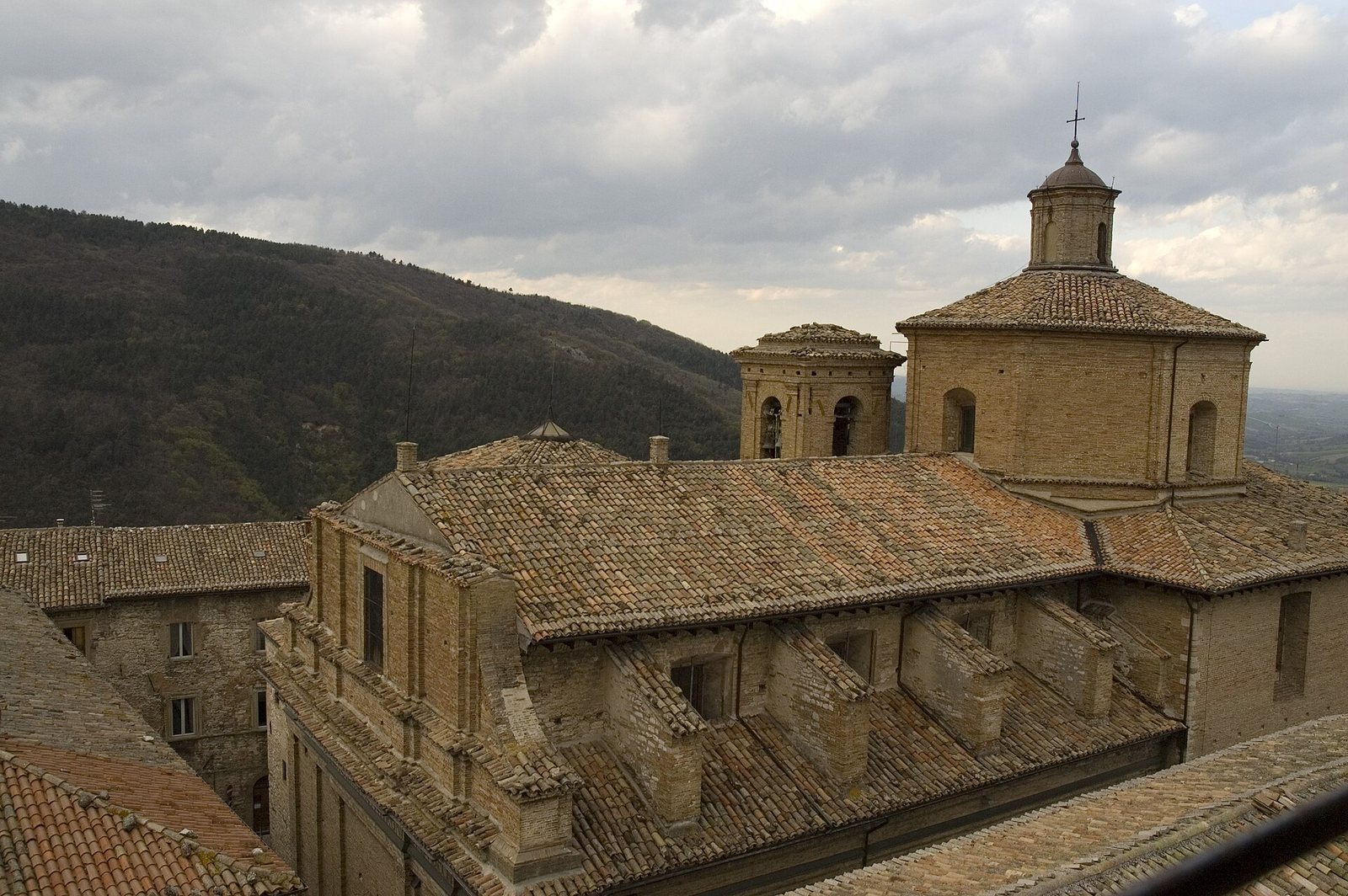
The Collegiata di San Medardo is a Roman Catholic church in Arcevia, Italy, rebuilt in the Baroque style between 1634 and 1702. It is the town’s principal religious building. A church occupied the site by 1208. The date when it was dedicated to Medard, a French bishop and saint, and the reason for that dedication are unknown.
In 1585 Pope Sixtus V raised the church to collegiate status, meaning it was served by a college of clergy. Its full reconstruction began in 1634 to a design by Michele Buti, an architect from Pisa. Ascanio Passeri of Pergola carried out the building work, which was completed in 1702. The church belongs to the Diocese of Senigallia, an ecclesiastical district under a bishop, and the Ostra-Arcevia vicariate, a local subdivision within the diocese.
Remains
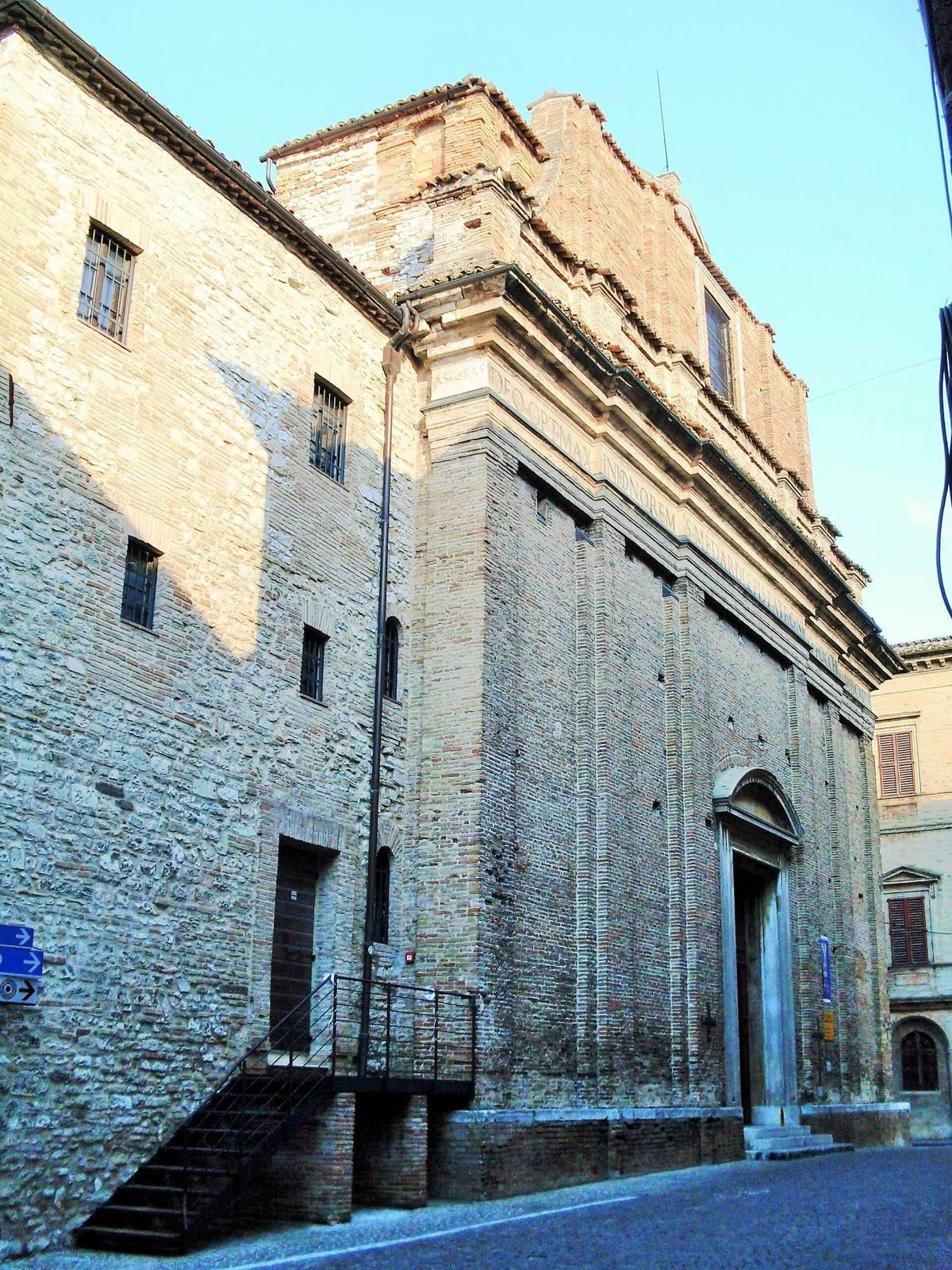
The church has a single nave crossed by a transept, forming a Latin-cross plan, and a polygonal dome. Its façade remains unfinished. Passeri’s signature appears on the exterior entablature, the horizontal architectural section above a supporting wall or columns.
Presbytery and choir
Altarpieces and main altar
The presbytery, the area around the main altar, contains Ercole Ramazzani’s Last Judgment of 1597 and an altar dating to the late nineteenth century. It also holds the Arcevia Polyptych, a multi-panel altarpiece painted by Luca Signorelli in 1507 on commission from Marco Vigerio I Della Rovere, bishop of Senigallia. The work, measuring 393 by 315 centimetres, is painted in tempera, a medium made with a binding material, on wooden panels. It depicts the Eternal Father, the Virgin and Child, and saints.
Wooden choir
Behind the polyptych is a carved and inlaid wooden choir made by Corrado Teutonico between 1488 and 1490.
Chapels on the right
First chapel
The first chapel on the right is dedicated to people killed in the world wars.
Second chapel
A seventeenth-century copy of Guercino’s Mary Magdalene Contemplating the Instruments of the Passion is displayed in the second chapel.
Third chapel
The third chapel contains The Liberation of Souls from Purgatory, a canvas attributed to Ercole Ramazzani.
Fourth chapel
The fourth chapel contains the Altar of Saint Teresa, an elaborate wooden work dating to the mid-seventeenth century by Leonardo Scaglia and Francesco Giglioni.
Chapel of Saint Medard
The right transept forms the Chapel of Saint Medard. Its wooden altar, dedicated to the saint, and its statues of Charity, Fortitude, Prudence and Temperance were made by Scaglia and Giglioni around the mid-seventeenth century. The church also preserves a relic of Saint Medard.
Chapels and baptistery on the left
Second chapel
The second chapel on the left contains a 1529 oil painting on panel by Piergentile da Matelica and Venanzio da Camerino. It shows the Virgin and Child with Saint Joseph visiting Saints Anne and Joachim. A terracotta Nativity attributed to Ramazzani is also in the chapel.
Third chapel
A work by Scaglia and Giglioni in the third chapel presents a version, with altered details, of the Virgin and Child with Saint Adrian and Saint Teresa from Domenichino’s Bolognese Altarpiece.
Chapel of the Sacrament
The entrance to the Chapel of the Sacrament lies between the second and third chapels. Works in glazed terracotta inside include a crucifix by Fra Mattia della Robbia and the Virgin and Child with Saints John the Baptist and Jerome. The chapel also holds Giovanni Della Robbia’s glazed-ceramic altarpiece known as of the Miracles, dated 1513. Its altar frontal is assembled from fragments of an altar.
Baptistery
The Chapel of the Sacrament leads to the baptistery, which contains Luca Signorelli’s Baptism of Jesus from 1508. Its older frame was made by Corrado Teutonico and has painted panels by Luca di Paolo.
Chapel of the Rosary
The left transept forms the Chapel of the Rosary. Simone Cantarini’s Virgin and Child with Saint Dominic and Saint Catherine, painted in 1642, is displayed there. A side-wall canvas by Ramazzani shows the Ascension of Christ and dates to 1594; it came from the Church of San Francesco di Piazza. Its composition draws on Raphael’s Transfiguration and Lotto’s Assumption, recast in a plain, instructional manner associated with the Counter-Reformation, the Catholic Church’s response to the Protestant Reformation.