Church of the Assumption of the Virgin Mary (Předklášteří): A Cistercian Parish and Convent Church


Site at a Glance
- Rating
- 4.6
- Popularity
- Very Low
- Country
- Czechia
- Primary era
- Medieval
- Eras represented
- Medieval, Early Modern
- Civilizations
- Holy Roman Empire, Kingdom of Bohemia
- Site type
- Religious
- Remains
- Church
On this page13 sections
History
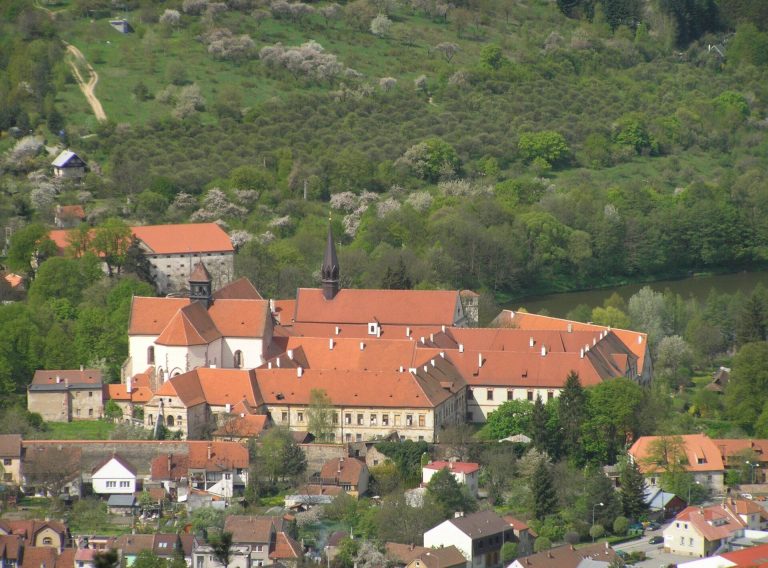
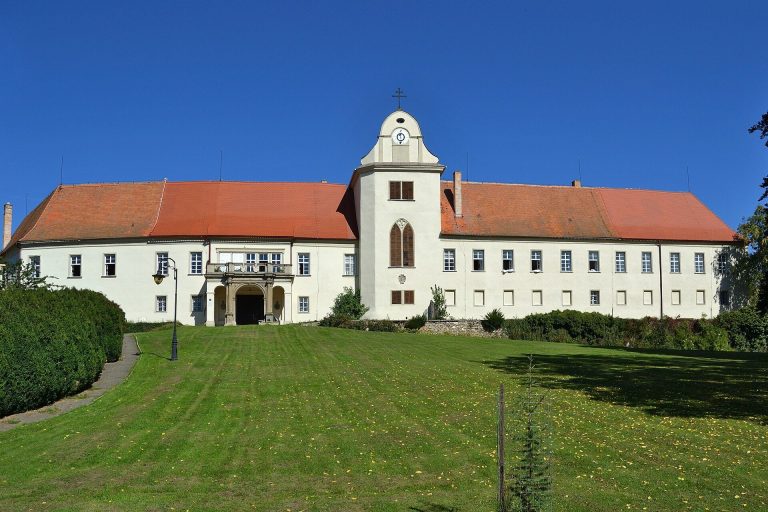
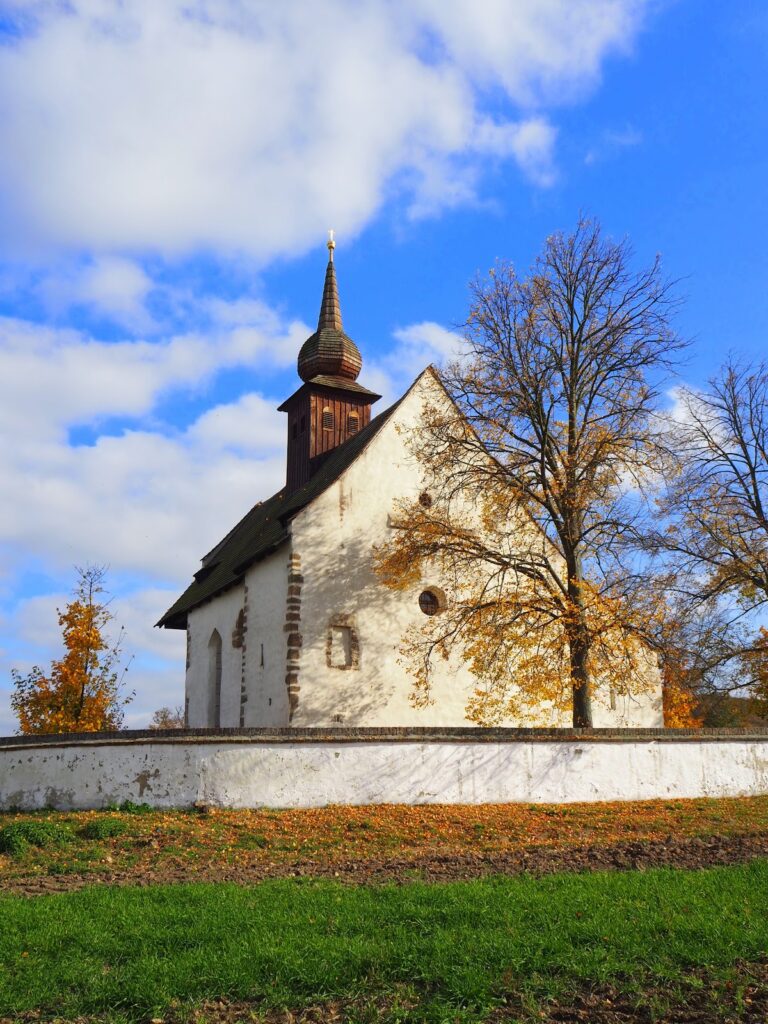
The Church of the Assumption of the Virgin Mary in Czechia is a Roman Catholic parish church in Předklášteří, built for the Cistercian convent between 1233 and 1240 in a combination of Romanesque and Gothic forms. It was consecrated in 1239 and forms part of the Porta Coeli monastery complex, which became a national cultural monument of the Czech Republic in 2010. The church remains associated with the Moravian Province, the Diocese of Brno, the Tišnov Deanery, and the Předklášteří parish.
Foundation and royal patronage
The church was built shortly after the foundation of the convent. Its official founder is regarded as Constance of Hungary, the daughter of King Béla III of Hungary and widow of the Bohemian king Přemysl Otakar I. Constance was also responsible for establishing the Porta Coeli monastery complex.
The presbytery later became Constance’s tomb. Her son, Margrave Přemysl, who was regarded as one of the monastery’s co-founders, was also buried there. These burials connected the church’s principal sacred space with the family that established and supported the convent.
Suppression and renewed convent use
The monastery complex experienced serious difficulties during periods of war. In 1782, it was dissolved under the monastery-suppression patent issued by Joseph II, a Habsburg ruler whose reforms included the closure of many monasteries. The church continued to function as a parish church after the dissolution.
From 1901, following an interruption of about a century, the monastery complex was used again and the church once more served as the convent church. The world wars brought further changes, but its religious function has continued to the present.
Baroque transformation
The church’s late-Baroque interior was commissioned and furnished under Abbess Cecílie Fundulusová. A new high altar was ordered from the workshop of the Znojmo sculptor Josef Winterhalder the Elder. Because Winterhalder was advanced in age, the altar was completed by the Brno sculptor Ondřej Schweigl, who also supplied its stucco sculpture.
The interior’s principal artistic furnishings include works by Franz Anton Maulbertsch, František Vavřinec Korompay, Josef Stern, Ondřej Schweigl, and Ignác Raab. Raab’s paintings belonged to a larger cycle made in the mid-1750s for the Jesuit college in Kutná Hora, giving several works in the church a history extending beyond the monastery itself.
Remains
The church measures 64.5 metres in length, 22 metres in width, and 17 metres in height. Its unequal-armed cross plan places a transept, the cross-arm of a church, between the presbytery and three longitudinal naves. The central nave rises above the two side naves, while the presbytery and side naves end in polygonal forms. This arrangement reflects Cistercian architectural principles, which favoured disciplined planning, functional construction, and restrained ornament.
Structure and vaulting
Inside, arcades connect the side naves with the central nave. Unarticulated piers continue directly into the walls, making the masonry itself a major structural element. The emphasis on broad, massive wall surfaces preserves a Romanesque architectural sensibility and gives the building a robust, austere character. Gothic rib vaults are carried by the walls, while external buttresses reinforce the outer masonry.
The vaults in the individual naves are groin vaults divided into separate bays. Their bosses vary from one bay to another, and some bays have no boss. In the left nave, one rib projects beyond the emphasized triumphal arch. This may have been intentional or may result from a construction error.
The presbytery has a six-part vault divided into two bays, with six ribs converging in each bay. Vegetal bosses mark the junctions, and the ribs spring from cylindrical responds. The covering plate of the wall rib is hexagonal, whereas those of the other ribs are square. Berry decoration appears on the capitals.
Pointed arches emphasize the windows, which contain stained-glass panels. Sky-blue Baroque decoration representing heaven strengthens their visual effect. Alongside richly decorated capitals and large circular windows with tracery, this colour contributes to the interior while the overall building retains the restraint associated with Cistercian construction.
Western entrance
The richly carved western portal is one of the rare monuments of its type in Central Europe. Set within the reinforced masonry of the western facade, it contrasts with the church’s otherwise restrained sculpture and gives physical expression to the monastery’s name, Porta Coeli, meaning “Gate of Heaven.”
The entrance has five stepped orders and is flanked by reclining lions. From the lions, carved acanthus and vine leaves with grapes extend around columns bearing statues of apostles. Above the doorway, the tympanum, the decorated field within a portal, shows Christ between a female and a male figure and is enclosed by luxuriant stylized floral ornament.
Consoles around the pointed archivolts, or bands of moulding that follow an arch, suggest that the portal may once have been sheltered by an open porch. It remains uncertain whether such a porch was demolished or merely planned. A comparable arrangement is associated with the Benedictine basilica in Třebíč. The church has no tower, but a square belfry rises above the crossing of the central nave and transept. Beside the main entrance stands a sixteenth-century Renaissance sculptural group of Christ on the Mount of Olives.
Altars and sacred furnishings
High altar
The late-Baroque high altar was made between 1764 and 1769 from grey and pink marble. It takes the form of a columned retable, an architectural or sculptural structure placed behind an altar. At its centre is Franz Anton Maulbertsch’s monumental painting of the Assumption of the Virgin Mary.
Pyramidal groups on either side show Saint Bernard and Saint Benedict with angels and nuns. Saint Bernard was a leading Cistercian theologian and reformer, while Saint Benedict was the founder of Western monasticism. The tabernacle, accompanied by a small Calvary group, is flanked by two gilded angels holding reliquaries containing skulls.
The upper part of the altar forms a Rococo conch and contains statues of God the Father, Cistercian saints, and angels. Above the side recesses for seats in the presbytery are paintings of Saint Philip and Saint James by František Vavřinec Korompay, held by angels made by Schweigl.
Side altars and chapels
The side altars beside the triumphal arch are dedicated to Saint John of Nepomuk and Saint John the Baptist. Their paintings are by Franz A. Maulbertsch, and their sculptures are by Ondřej Schweigl. Glass coffins on the altar bases contain reliquary figures of saints from the Roman catacombs, Saint Pinosa on the left and Saint Theodora on the right.
The northern side chapel contains an altar dedicated to the Holy Spirit, while the southern chapel is dedicated to Saint Bernard of Clairvaux. Josef Stern made the paintings, and the stucco sculptures came from Schweigl’s workshop.
Pulpit and baptismal font
Schweigl also produced the pulpit. Its front carries a relief of Saint Peter’s Basilica, its staircase depicts the Giving of the Keys to Saint Peter, and its canopy supports a sculptural group representing Faith. The baptismal font, including its sculptural group of the Baptism of Christ, is also his work.
Northern nave paintings
Three paintings by Ignác Raab hang on the wall of the northern nave: Christ Dying on the Cross, The Nativity of Christ, and Christ at Emmaus. They formed part of the larger cycle created in the mid-1750s for the Jesuit college in Kutná Hora.
Choir and organ
The western choir contains a modern organ mechanism installed in an original Baroque case. The case is decorated with statues of angels playing musical instruments, preserving an earlier artistic setting around the later mechanism.