Kaple Matky Boží Veverské: Chapel of the Assumption of the Virgin Mary
Site at a Glance
- Rating
- 4.6
- Popularity
- Very Low
- Country
- Czechia
- Primary era
- Medieval
- External website
- Open
- Eras represented
- Medieval
- Civilizations
- Holy Roman Empire
- Site type
- Religious
- Remains
- Chapel
On this page9 sections
History
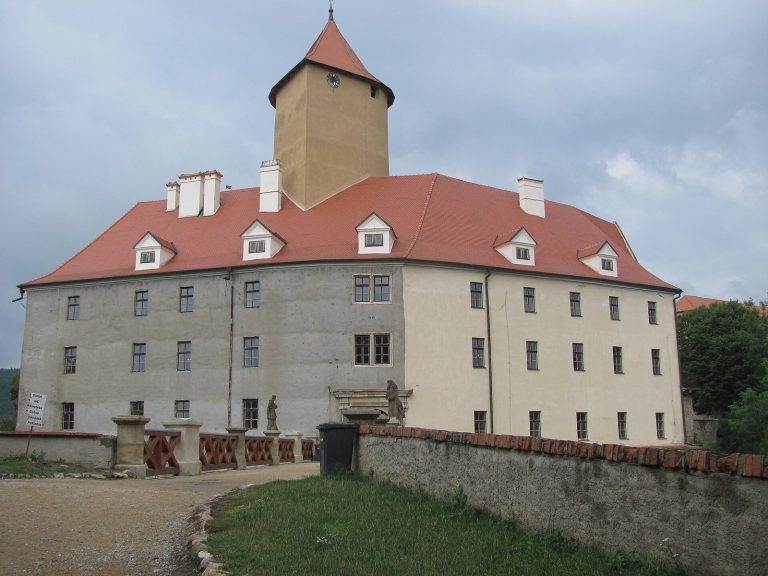
Kaple Matky Boží Veverské, also known as the Chapel of the Assumption of the Virgin Mary, is a medieval sacred building in Czechia, in the Brno-Bystrc area. Probably founded in the twelfth century, it was originally a parish church built in the Romanesque style, a medieval form known for massive construction and rounded shapes. Its first written mention dates from 1240. The church stood about 400 metres southwest of Veveří Castle and served a medieval village that formed the castle’s outer settlement.
The medieval settlement
The village grew around an old manorial court, an estate centre associated with the castle’s administration. It disappeared during the Hussite Wars, fifteenth-century religious and political conflicts in the Bohemian lands linked to the followers of Jan Hus. The former parish church survived as a chapel, later acquiring Gothic elements, a style associated with pointed arches and more vertical architectural forms.
War, burial, and later religious use
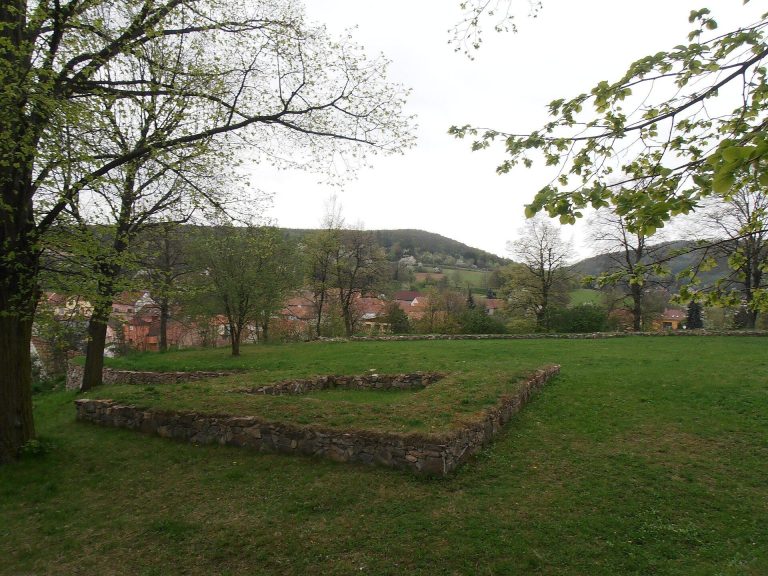
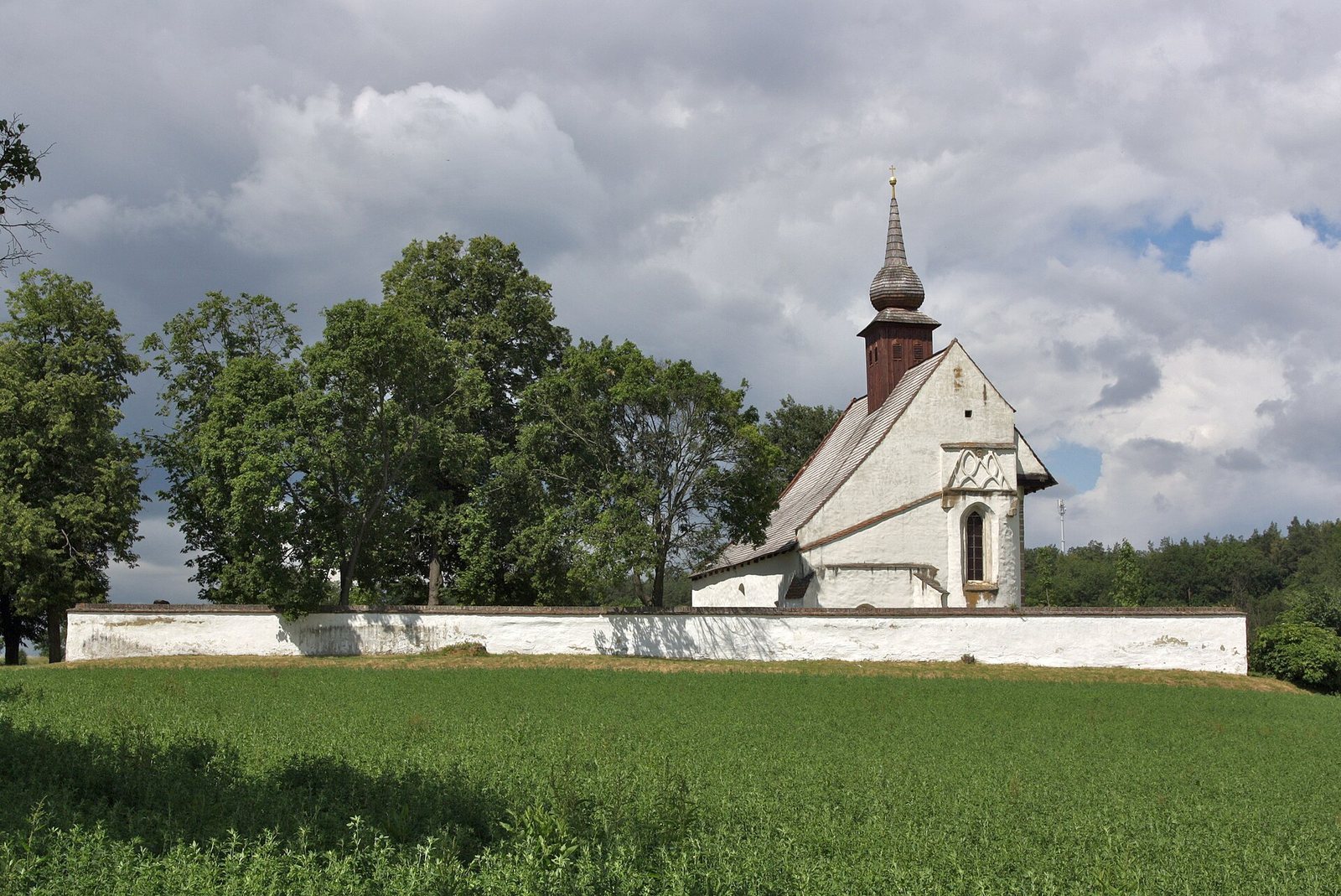
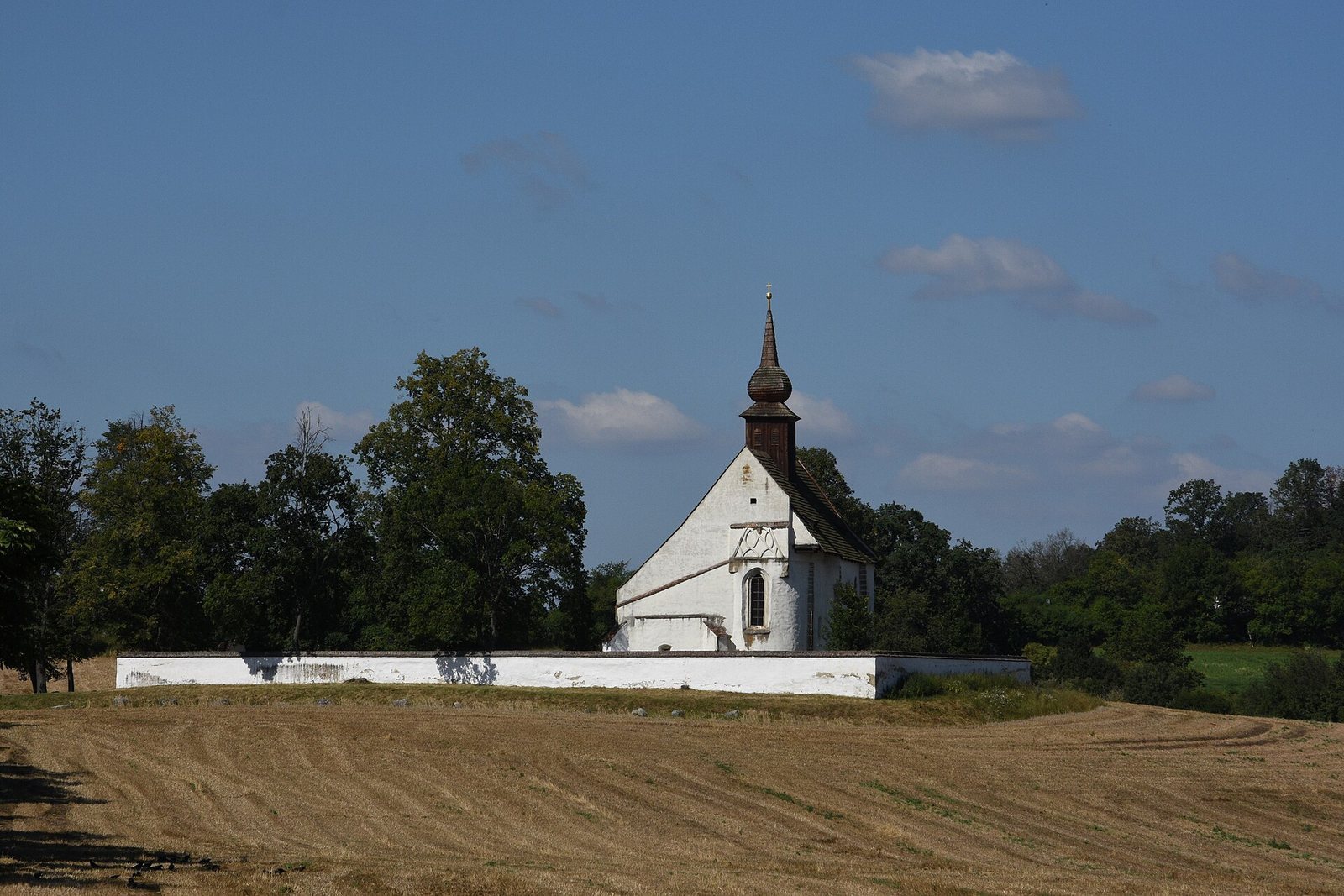
During the Thirty Years’ War, the major European conflict fought from 1618 to 1648, Swedish forces demolished the chapel’s tower. Only a small belfry with two bells survives from that structure. A hermitage stood nearby until 1797, when its poor condition led to its demolition; its foundations were later dismantled.
The ground around the chapel served as a cemetery for neighboring villages. People from Veverská Bítýška were buried there until 1837, when the village established a new municipal cemetery. The last burial at the chapel took place in 1880. The chapel remains under the administration of the Roman Catholic parish of Veverská Bítýška in the Diocese of Brno. Religious services are held irregularly, chiefly on certain Christian holidays, and the building continues to serve for church weddings and pilgrimages.
The burial of Gustav IV Adolf
On 27 February 1837, Gustav IV Adolf, the deposed king of Sweden, was buried in a niche in the choir-loft staircase. He had died three weeks earlier, on 7 February, in St. Gallen, Switzerland. His body was brought to Veveří because his son, Crown Prince Gustav Vasa, lived at the castle. After the family’s partial rehabilitation, his remains were exhumed in 1884 and transferred to the mausoleum of the Swedish kings at Riddarholmen Church in Stockholm.
Protection and the Madonna
The chapel and its immediate surroundings lie within the Podkomorské lesy natural park, and the building has been protected as a cultural monument since 1958. The original Veveří Madonna was taken to the National Gallery in Prague for restoration in 1938. It remained there for several decades and did not return to the chapel. In December 2015, the Prague Municipal Court ordered its return to the Roman Catholic parish of Veverská Bítýška, which loaned the sculpture for display at the Diocesan Museum in Brno.
Remains
Building and surviving tower
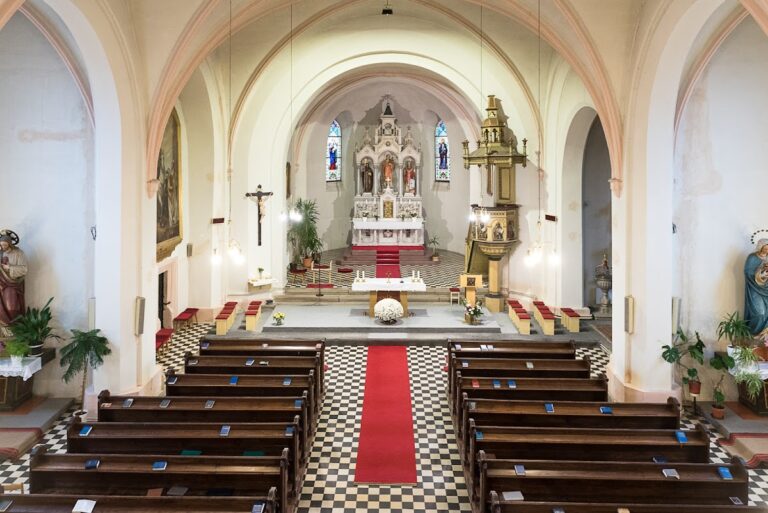
The chapel is a two-nave building in the Bystrc cadastral area of Brno, an officially defined unit used for land registration and surveying. Its original Romanesque construction was partly altered in the Gothic period. The former tower survives only as a small belfry containing two bells. The interior furnishings are austere, allowing the medieval fabric and later changes to remain the principal features of the building.
Portals and exterior sculpture
The southern Romanesque portal leads into the Gothic side nave. Above it, the tympanum, the decorated field above a doorway, terminates in a Greek cross accompanied by two lions. The main Romanesque nave is entered through a Gothic western doorway, showing the different building phases within the present structure. A clearly visible Late Gothic relief of a human face appears on the eastern gable.
Madonna and burial niche
The valuable original Veveří Madonna is attributed by some researchers to the Master of the Vyšší Brod Altarpiece, the conventional name for an unidentified fourteenth-century Central European painter active around 1350. A copy that remained in the chapel was stolen in October 1993. The choir-loft staircase contains the niche that formerly held Gustav IV Adolf’s burial. His remains were later removed, leaving the niche as a surviving physical reminder of that episode.