Church of St Ethelburga, Bishopsgate: A Medieval Church and Centre for Reconciliation
Site at a Glance
- Rating
- 4.8
- Popularity
- Medium
- Country
- United Kingdom
- Primary era
- Medieval
- Eras represented
- Medieval, Early Modern, Modern
- Civilizations
- British, English
- Site type
- Religious
- Remains
- Church
On this page7 sections
History
Medieval origins and dedication
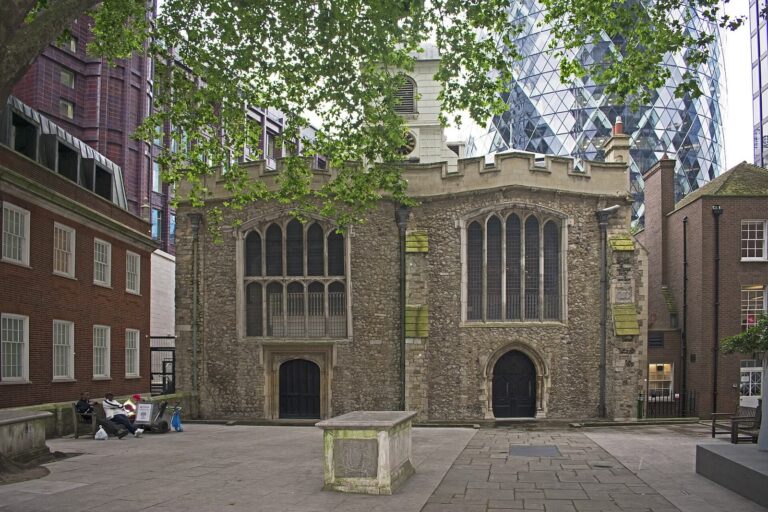
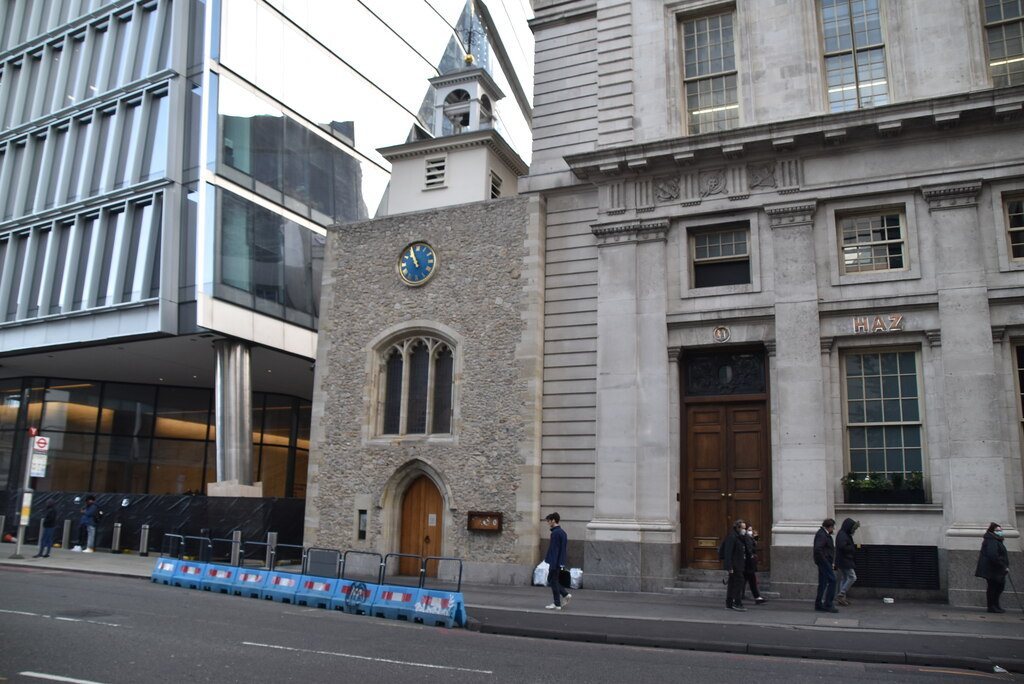
The Church of St Ethelburga, Bishopsgate, is a medieval church in London, United Kingdom, first recorded in 1250 and rebuilt in the fifteenth century in the Early English Gothic style. Its foundation date is uncertain. The earliest record names it as the church of St Adelburga the Virgin.
The church is dedicated to St Ethelburga of Barking, a seventh-century abbess, or head of a community of nuns, and sister of Erkenwald, an early English bishop and saint. The words “the Virgin” were dropped from the dedication during the Puritan period, a Protestant movement seeking further reform of the Church of England, and were later restored.
Parish and early modern history
Rector John Larke served from 1504 to 1544 and was martyred for rejecting the Crown’s claimed authority over the Church of England in spiritual matters. The church’s denomination was Roman Catholic until 1534; it is now Church of England. In 1607, the navigator Henry Hudson and his crew received communion here before departing to seek the Northwest Passage, a sea route through the Arctic between the Atlantic and Pacific.
In the sixteenth century, a wooden porch containing two shops was built to provide income for the church, whose parish covered only three acres. The shops and porch were removed in 1932 when Bishopsgate was widened, revealing the church façade after it had been concealed for centuries. The church survived the Great Fire of London in 1666, which destroyed most of the City’s medieval churches.
Twentieth-century damage and rebuilding
William Geikie-Cobb, rector from 1900 to 1941, became known for marrying many divorced people at the church. On 5 November 1938, singers Webster Booth and Anne Ziegler, born Irené Frances Eastwood, had their marriage blessed there in a special ceremony for divorced people. The church suffered modest bomb damage during the Second World War and was restored in 1953.
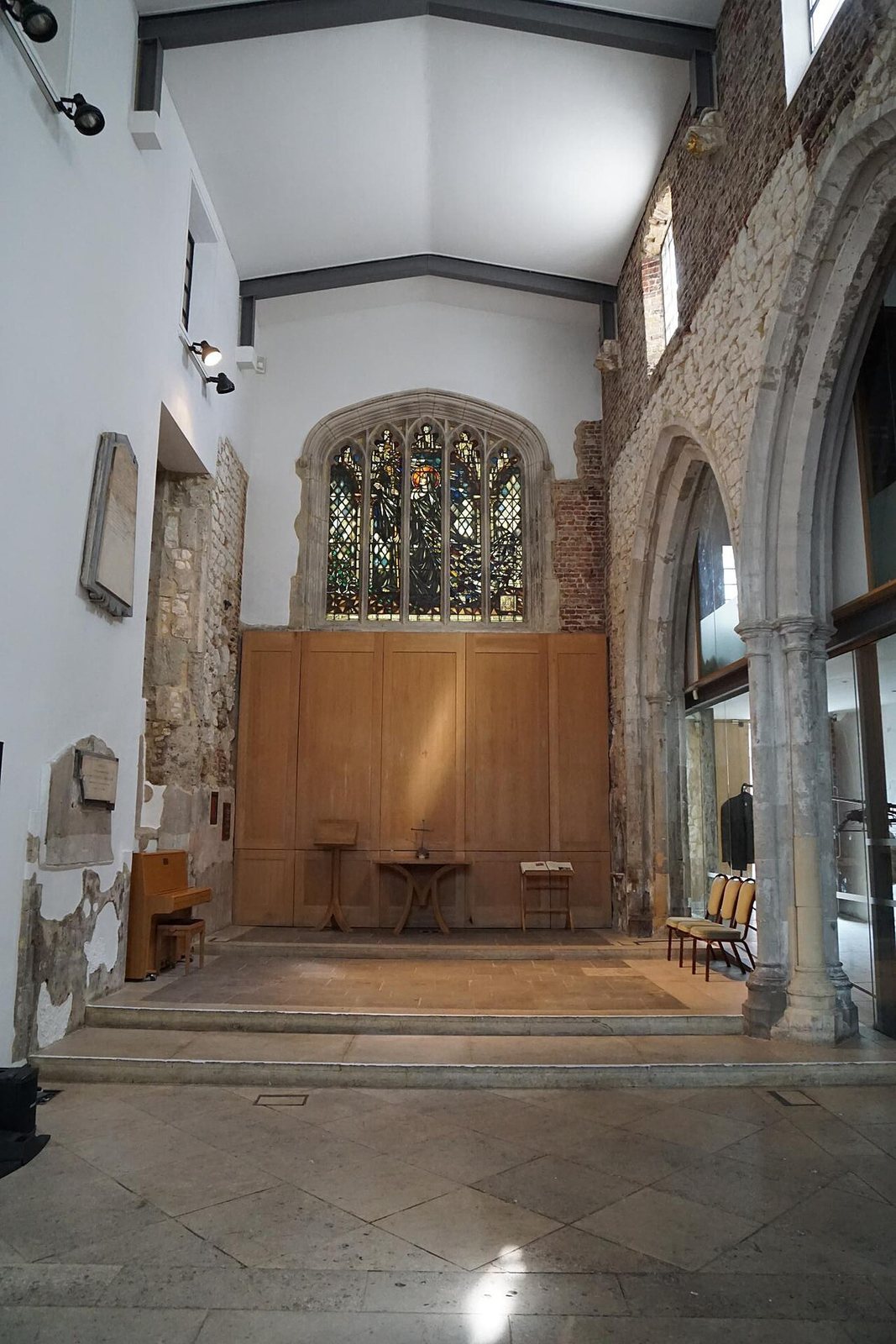
In 1993, an IRA bomb exploded seven metres from the church and destroyed about half the building. The wider damage to Bishopsgate was estimated at £350 million. Although an evangelical faction within the Church of England proposed demolishing the church, public opposition led to its reconstruction. The church was listed Grade I on 4 January 1950, the highest category of listed-building protection in England, and retained that status after rebuilding.
The church belongs to the Diocese of London and the parish of St Helen’s Bishopsgate. It now serves as a Centre for Reconciliation and Peace, a nonprofit organization that builds relationships across divisions of conflict, culture and religion, and is a partner in the Community of the Cross of Nails, a reconciliation network that began at Coventry Cathedral.
Remains
Layout and exterior features
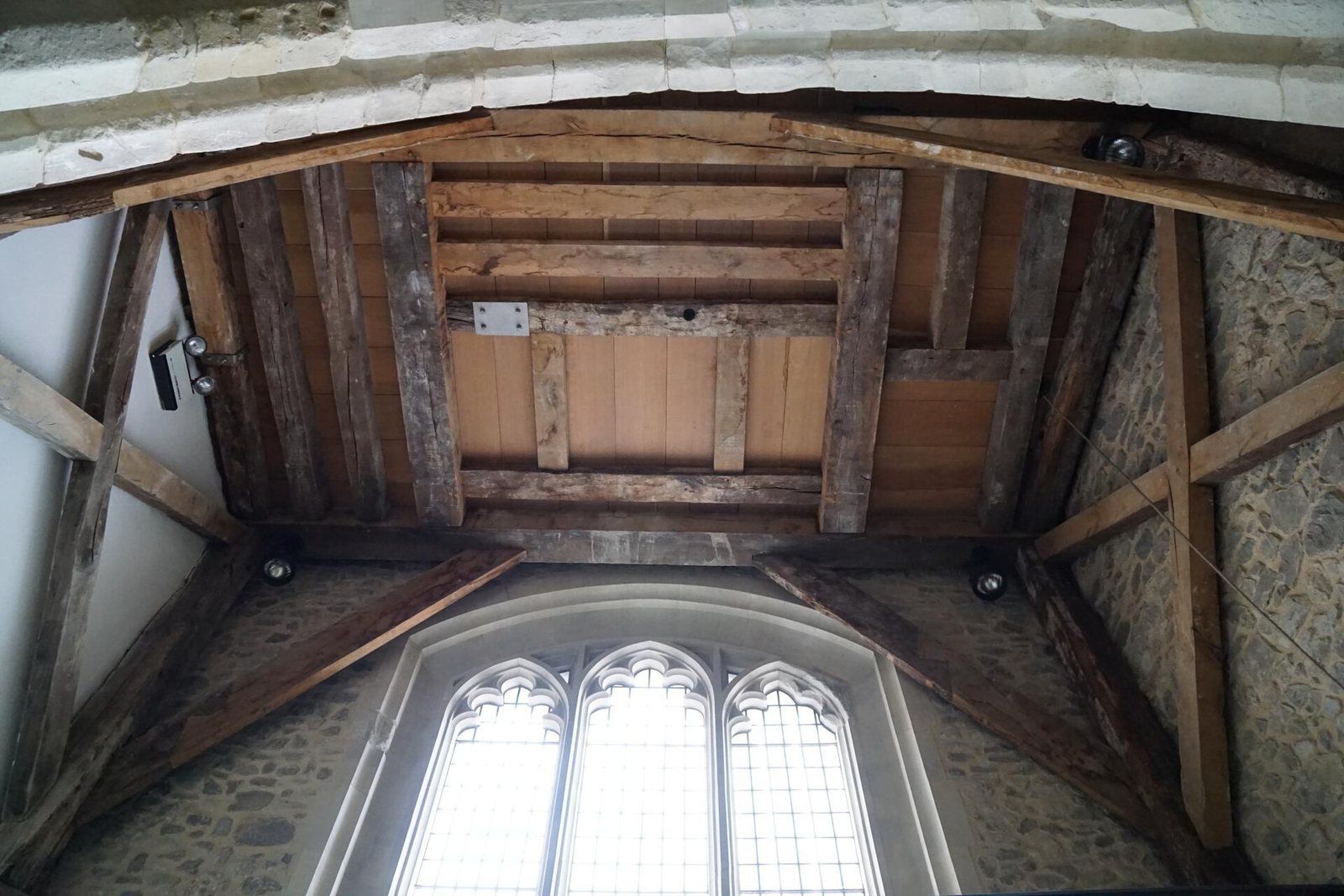
The church has a small interior arranged as a nave and an aisle, divided by an arcade. Its pointed forms reflect the Early English Gothic style. Material from the fifteenth-century rebuilding survives in the south arcade. A small, square bell turret was added in 1775, and the church’s weathervane dates to 1671.
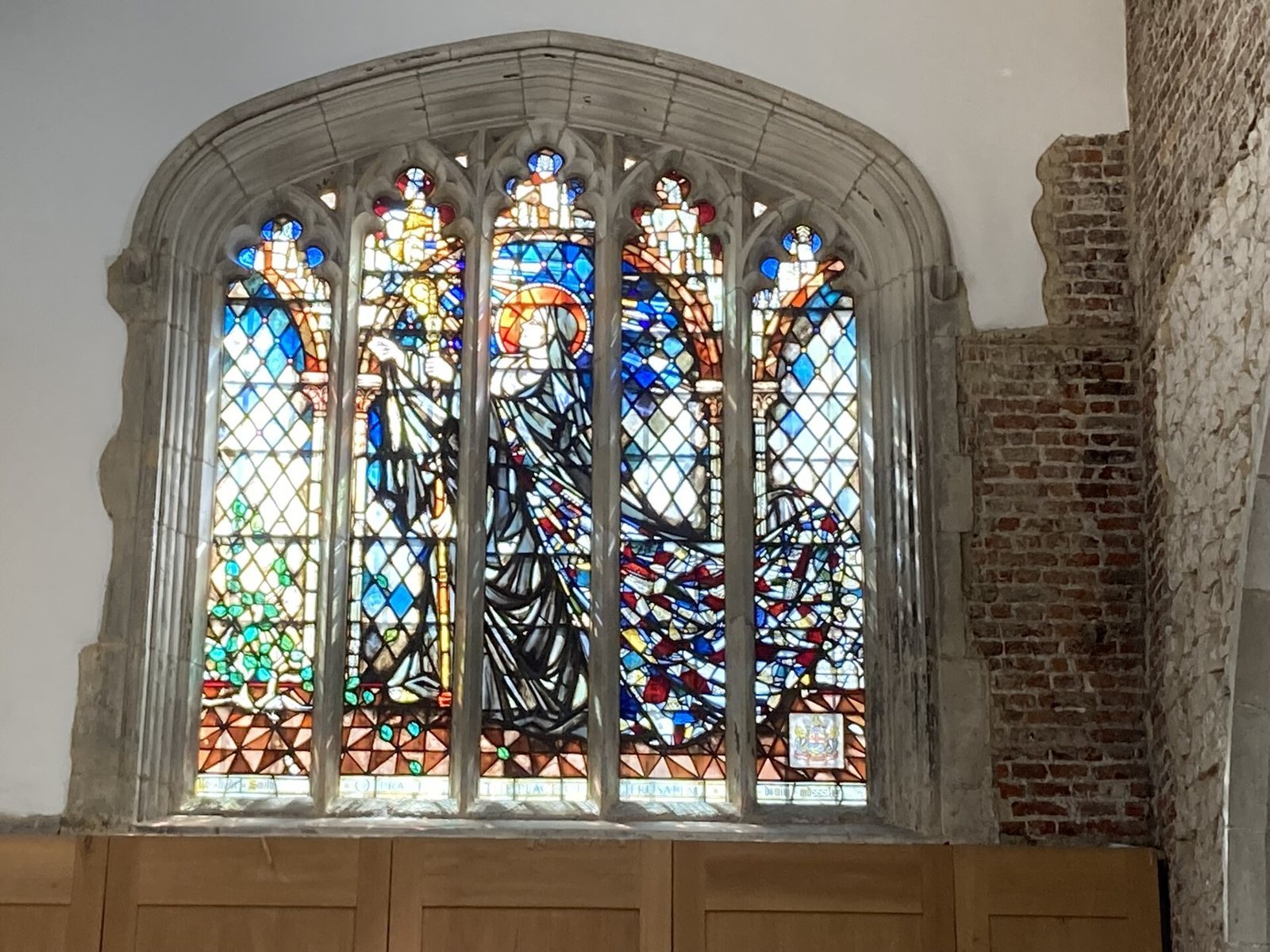
Interior and surviving fittings
The reconstruction retained the church’s original plan but substantially changed its interior. Most fittings made in the early twentieth century by Ninian Comper, an English architect and church designer, were destroyed in the 1993 bombing; they were later additions rather than medieval furnishings. A nineteenth-century font survives, bearing a Greek palindrome, a phrase that reads the same in either direction. Its translation is “Cleanse your transgressions, not only your face.”