Oberzell Abbey: A Premonstratensian Monastery in Germany
Site at a Glance
- Popularity
- Medium
- Country
- Germany
- Primary era
- Medieval
- Eras represented
- Medieval, Early Modern, Modern
- Civilizations
- Holy Roman Empire, Kingdom of Bavaria
- Site type
- Religious
- Remains
- Monastery
On this page11 sections
History
Foundation and medieval development
Oberzell Abbey is a Premonstratensian monastery founded in 1128 in Zell am Main, Germany, on the Main’s left bank about six kilometres from Würzburg. The Premonstratensians were a Catholic community of clergy living under a religious rule, established by Norbert of Xanten, a medieval religious reformer. Johannes, a canon of Würzburg Cathedral, and his brother Heinrich founded Oberzell at Norbert’s initiative. It began as a double monastery, housing communities of both men and women, and was dedicated to the Archangel Michael. Norbert was venerated as a saint from 1582.
Around 1230, Hermann I of Lobdeburg, Bishop of Würzburg, arranged for Oberzell’s women’s community to move to a new monastery at Unterzell. In 1525, rebellious peasants bound by hereditary serfdom plundered Unterzell.
Würzburg rule and Baroque renewal
In 1562, under Prince-Bishop Friedrich von Wirsberg, Oberzell came under the administration of Würzburg’s prince-bishops, church leaders who also held secular power over a territory. Until its dissolution, it was Franconia’s only Premonstratensian monastery with abbey rank.
The abbey flourished under Abbot Oswald Loschert, whose tenure lasted from 1747 to 1785. During this period, Balthasar Neumann designed a new Baroque abbey building. After Neumann’s death, his sons continued the work.
Dissolution and later uses
Bavaria’s secularization in 1803, the transfer of church institutions and property to secular control, brought the abbey to an end. Its last abbot, Christoph Kroh, received a pension, and the church was deconsecrated. The library went to the University of Würzburg, while the abbey’s holdings were confiscated. These included 90 Morgen of vineyards, 637 Morgen of meadows, 22 Morgen of garden land, and 8,180 Morgen of forest. A Morgen was a historical German land measure whose size differed by region. Farms and houses in Waldbrunn, Moos, Estenfeld, and Würzburg were also taken. Furniture was dispersed; most paintings by Oswald Onghers were lost, along with some documents and manuscripts.
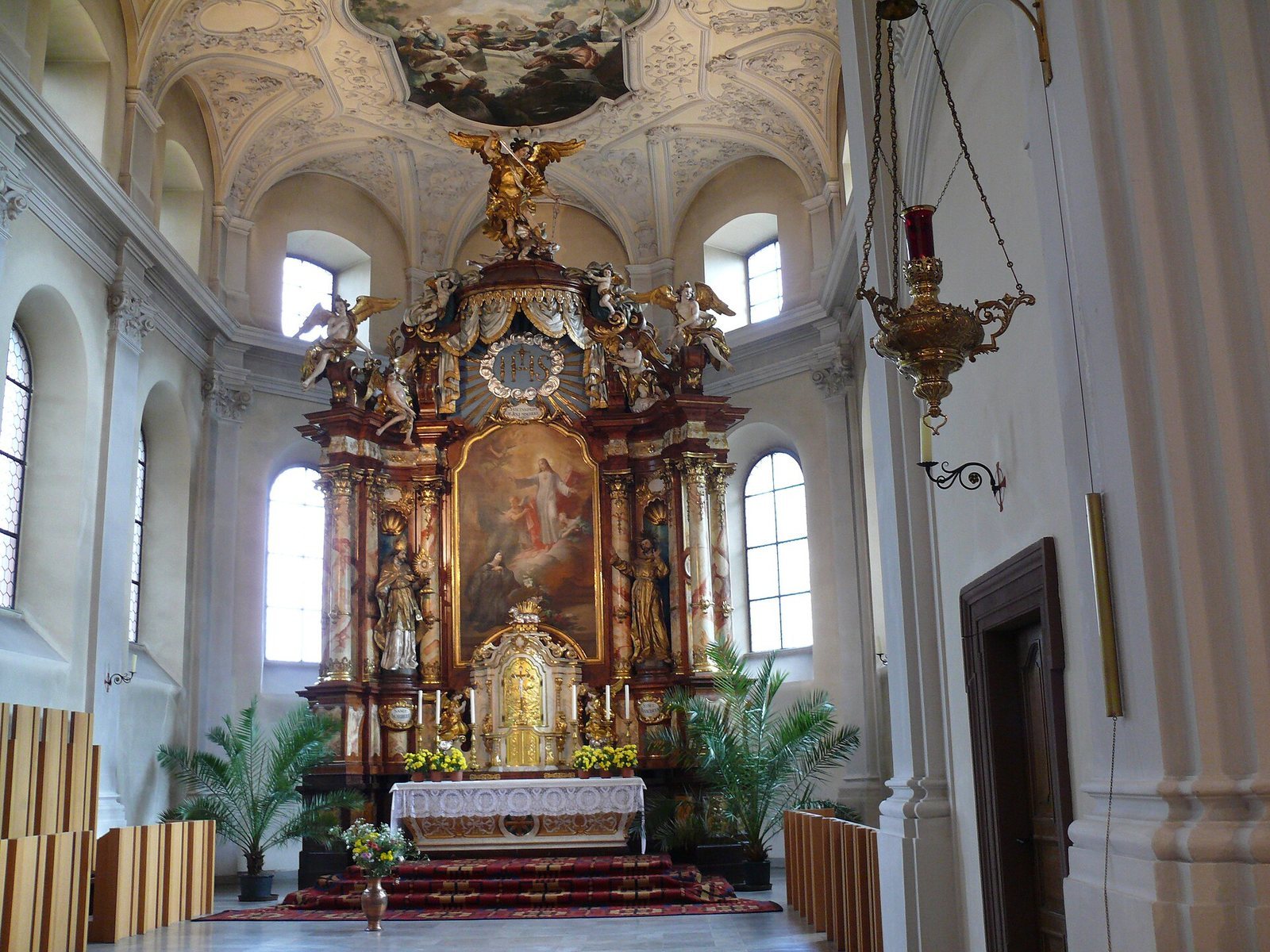
In 1817, Friedrich Koenig and Andreas Friedrich Bauer established a printing-machine factory in the former monastery buildings. Their enterprise later developed into Koenig & Bauer. On 2 July 1901, the Congregation of the Servants of the Holy Childhood of Jesus acquired the abbey under its General Superior, Sister M. Philomena Wenninger. Founded in 1854 by Antonia Werr, the congregation belonged to the Franciscan Third Order, whose members followed a Franciscan way of life outside the friars’ First Order. Restoration of the church began on 27 August 1903, and it returned to worship on 28 July 1905 with new furnishings by artists including Franz Wilhelm Driesler. In 1924, Neumann’s building became the motherhouse of the Zeller Sisters, an apostolic Franciscan women’s community.
Remains
Monastic precinct and garden
Church and precinct
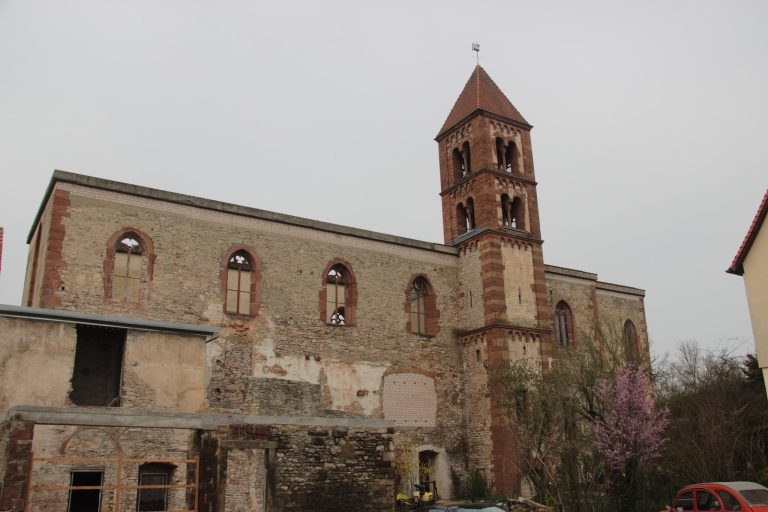
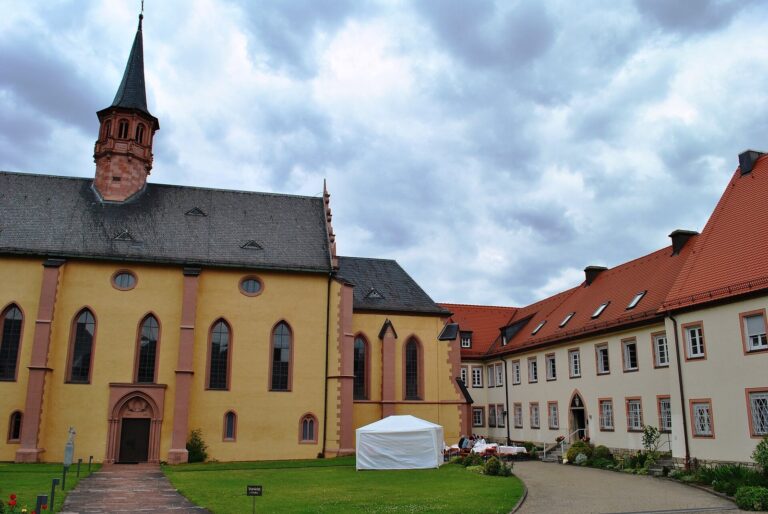
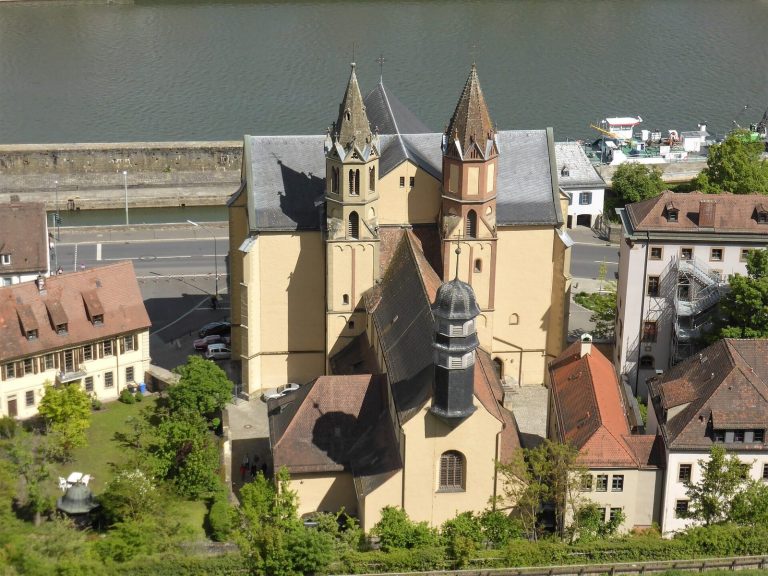
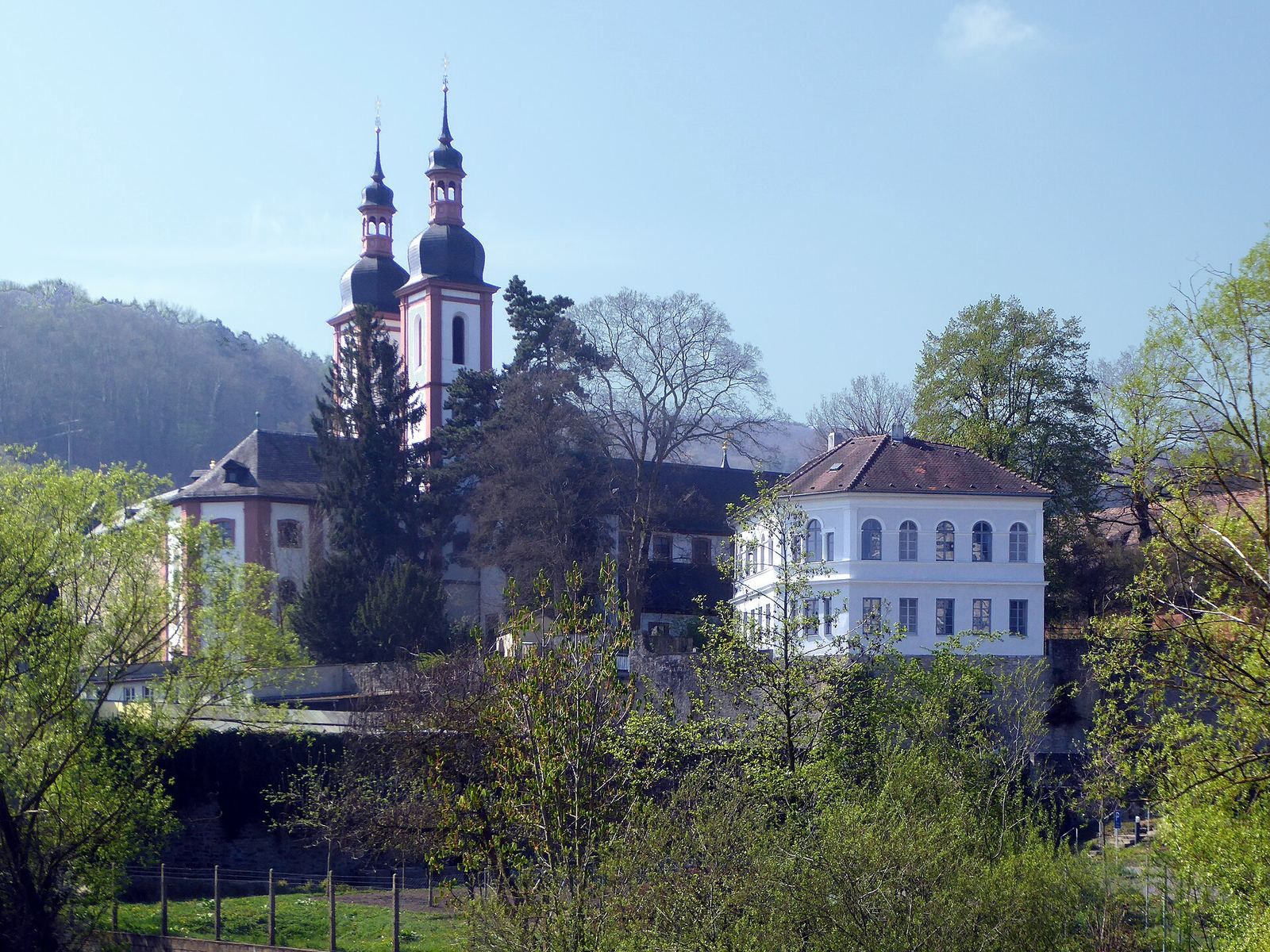
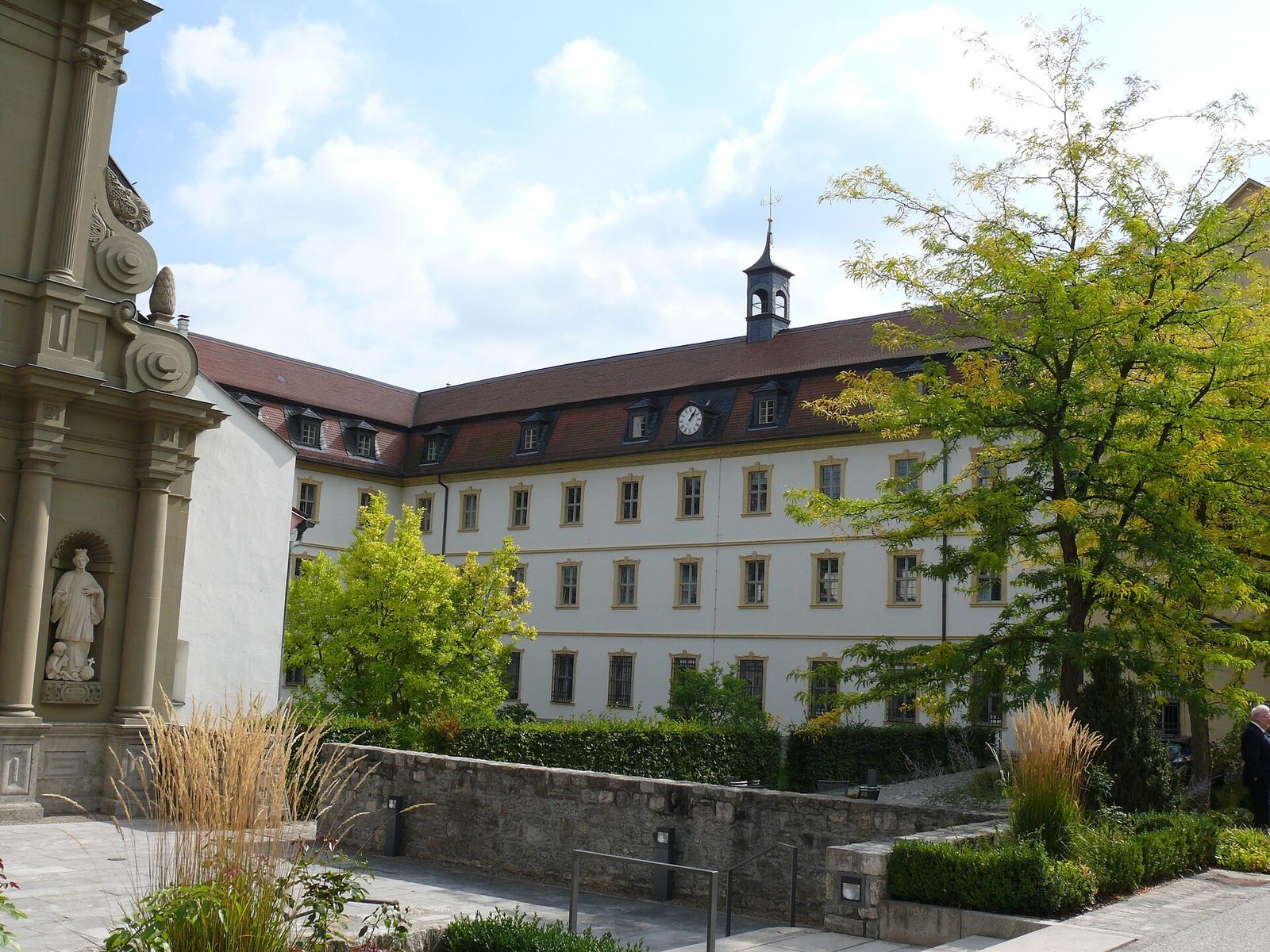
The abbey complex is predominantly Gothic in character, with its eighteenth-century building in Baroque style. It includes the monastery church, with its nave and altar, as well as a monastery wall and a manor house. The site lies in Zell am Main, and part of it falls within the territory of Würzburg.
Herb garden
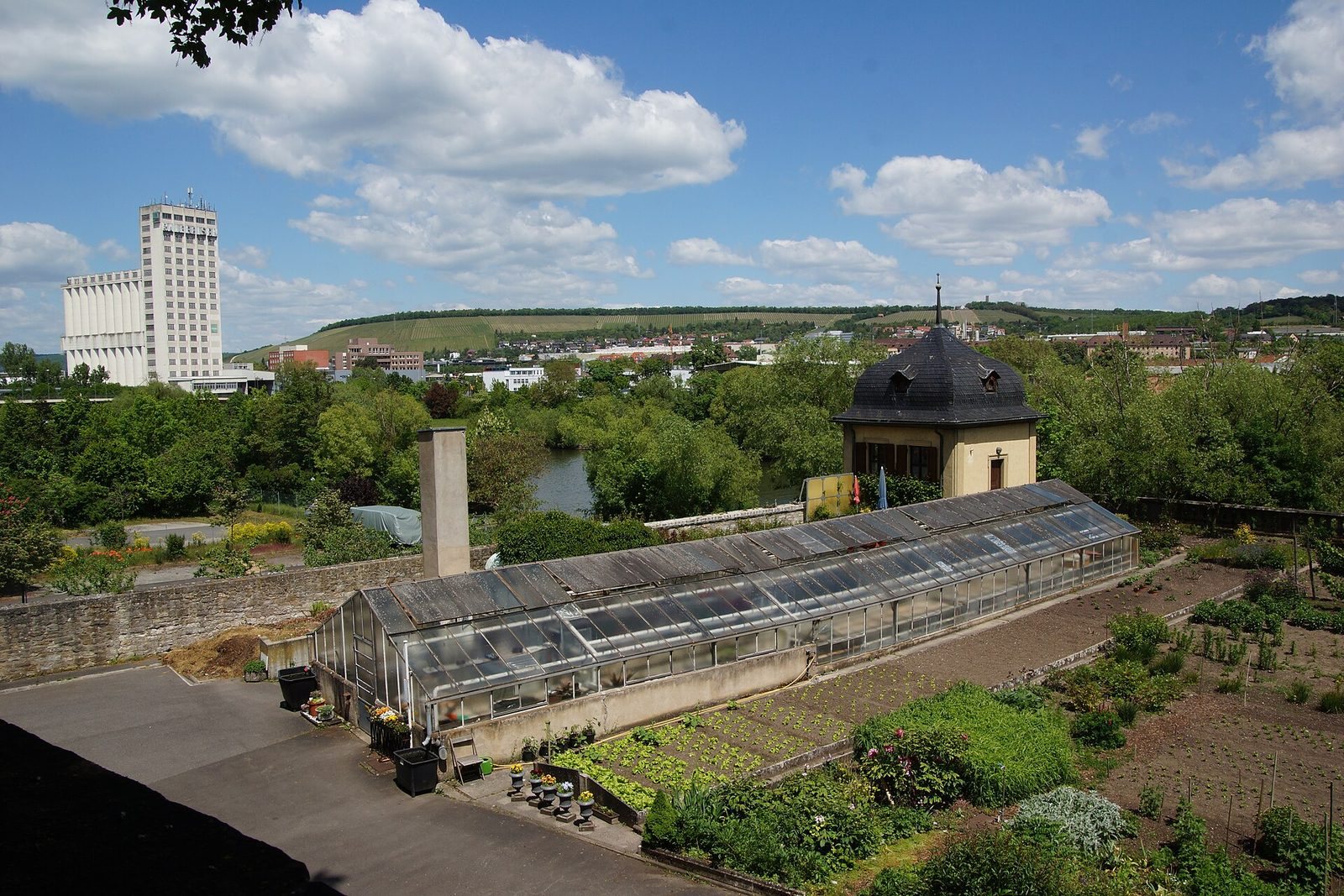
Sister Leandra Ulsamer established the herb garden in 1990. It contains about 100 kinds of plants and is among Germany’s largest monastery gardens. Since 1999, the garden has been associated with the Würzburg Research Group for Monastic Medicine.
Later architectural additions
Abbatial building
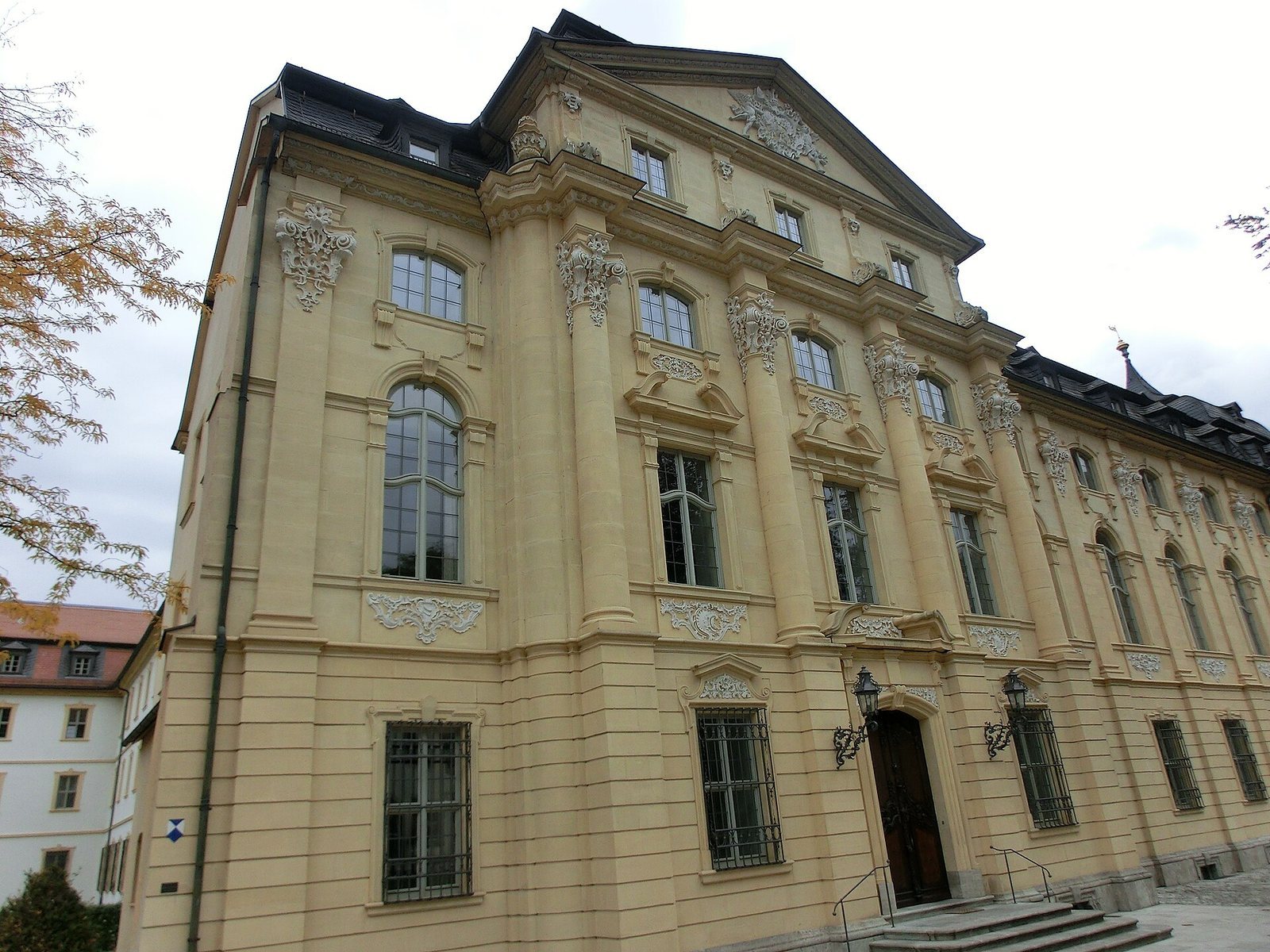
The Baroque abbatial building designed by Balthasar Neumann was continued by his sons after his death. Its staircase was completed in 1760, but the building remained without the wing that would have faced the church. In 1924, the building became the motherhouse of the Zeller Sisters.
Schlösschen
Above the Main, the Schlösschen stands on the monastery wall. Jewish banker Joel Jakob Hirsch commissioned architect Peter Speeth to build this small palace as a summer residence in 1812–13. Its Classical design belongs to the architectural tendency known as Revolutionary architecture, associated with strongly geometric, often simplified forms.