Church of San Zeno al Foro: A Brescian Baroque Church in Italy
Site at a Glance
- Rating
- 4.4
- Popularity
- Very Low
- Country
- Italy
- Primary era
- Early Modern
- Eras represented
- Medieval, Early Modern, Modern
- Civilizations
- Holy Roman Empire, Italian, Venetian
- Site type
- Religious
- Remains
- Church
On this page15 sections
History
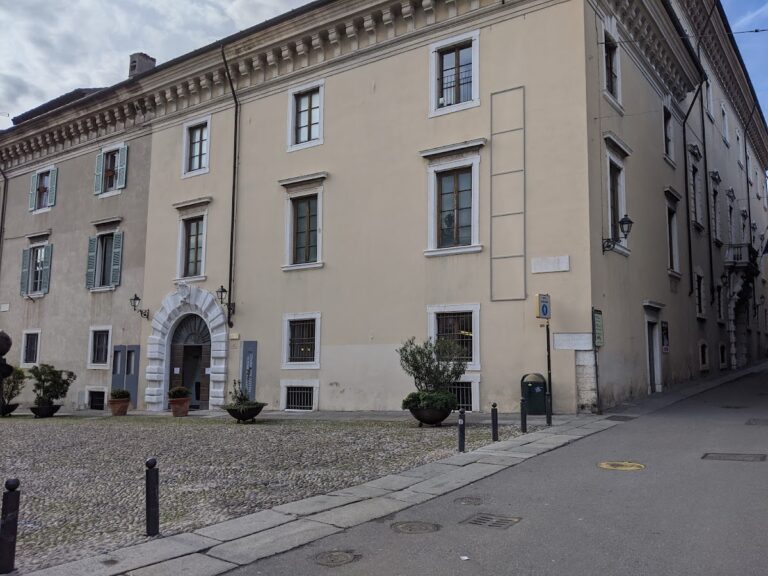
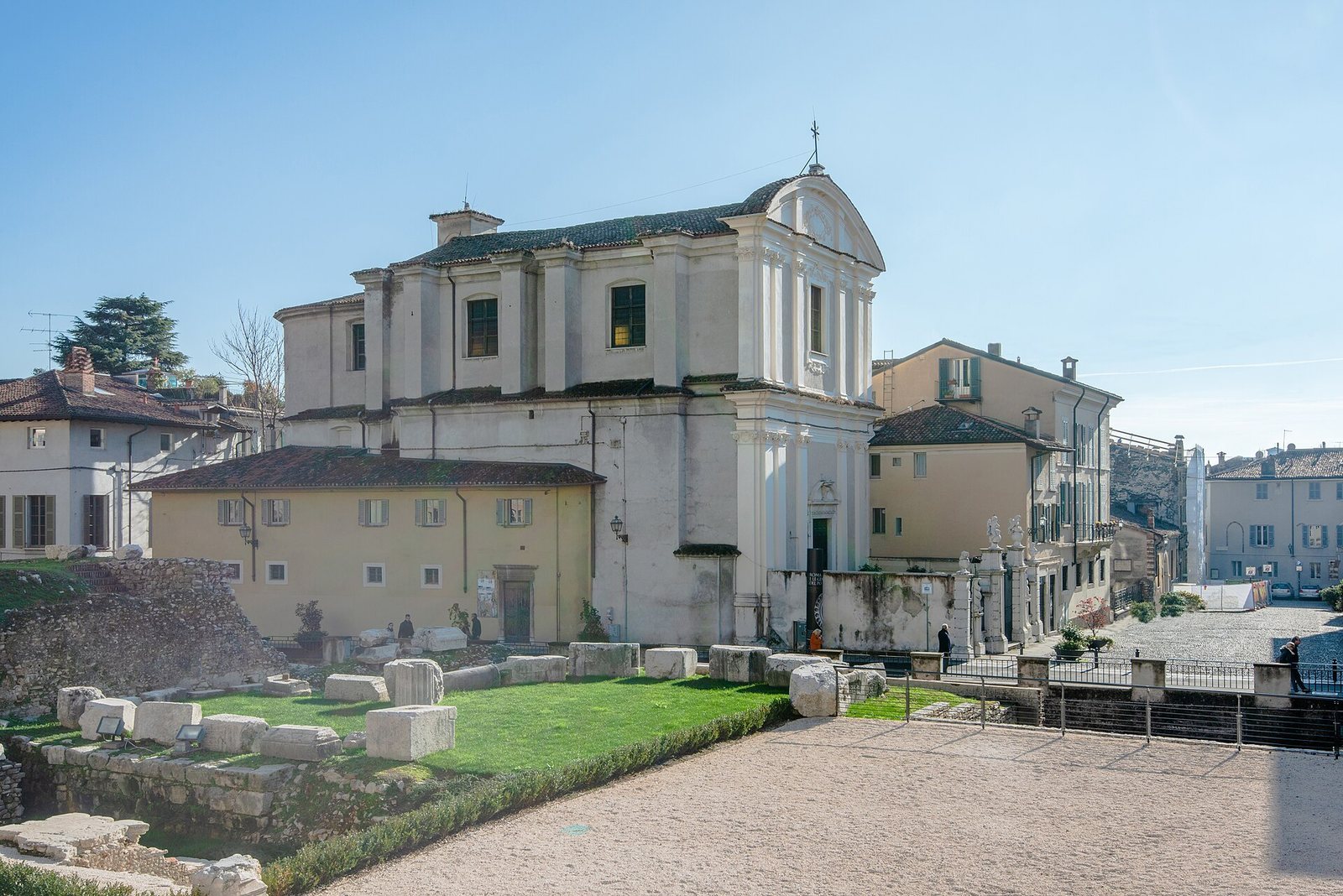
The Church of San Zeno al Foro is a Roman Catholic church in Brescia, Italy. Its present building is an example of Brescian Baroque, or barocchetto bresciano, rebuilt during the eighteenth century and completed in 1745. The church stands beside the remains of the Roman Capitolium, at the meeting point of the ancient forum and the road now followed by Via dei Musei. This position places the church within one of the most historically layered areas of Brescia.
Medieval origins
A church stood on this site from the medieval period, probably from around the twelfth century. That earlier building remained in use until the young parish priest Giovanni Pietro Dolfin commissioned a radical rebuilding. Dolfin was a Venetian patrician who later undertook another major reconstruction at the church of San Lorenzo. At San Zeno al Foro, his project transformed the medieval church into the Baroque building that survives today, while retaining part of the earlier structure in the apse.
Dedication and urban setting
The church is dedicated to Saint Zeno, a Christian bishop associated with Verona during the second half of the fourth century. Traditionally regarded as Verona’s patron saint, he was venerated for his evangelizing work and as a protector of freshwater fishermen. His connection with fishing was explained by the tradition that he caught fish for his meals in the Adige, the river that flows through Verona.
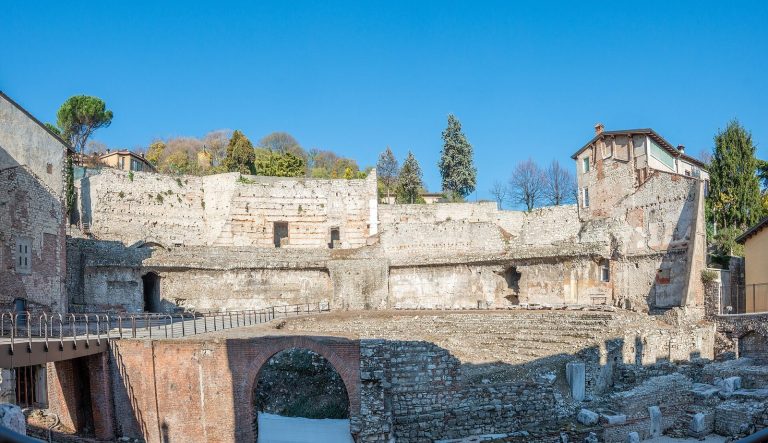
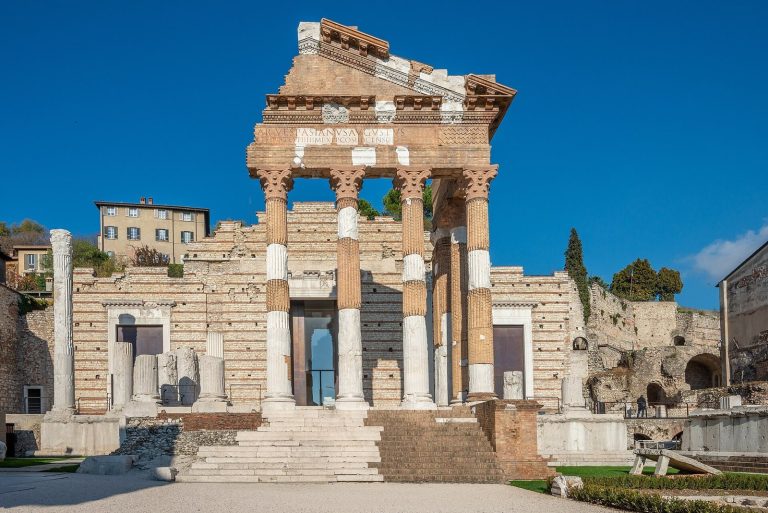
San Zeno al Foro occupies a place beside the Roman Capitolium, a temple dedicated to the Capitoline Triad of Jupiter, Juno, and Minerva. Via dei Musei follows the line of the ancient decumanus maximus, the principal east-west road of a Roman city, and the church stands at the site of the original Roman forum. The medieval and Baroque church therefore developed directly within the civic and religious landscape of Roman Brescia.
The eighteenth-century rebuilding and later additions
The rebuilding commissioned by Dolfin was completed in 1745 and established the church’s present appearance. Its interior received a substantial group of paintings, chiefly installed during this transformation. The artistic program brought together works by Antonio Paglia, Francesco Monti, Giuseppe Tortelli, Cesare Bortolotti, Luigi Campini, Giovanni Battista Sassi, and Francesco Paglia.
Later changes continued to shape the church. In 1877, a Tonoli pipe organ, Opus 14, replaced an older instrument and was subsequently modified by Diego Porro. The church also preserves the remains of Saint Rusticiano in a gilded wooden urn. This Baroque reliquary replaced an earlier funerary ark, whose surviving fragment is preserved in the Museum of Santa Giulia.
Remains
Exterior and medieval fabric
Forecourt and facade
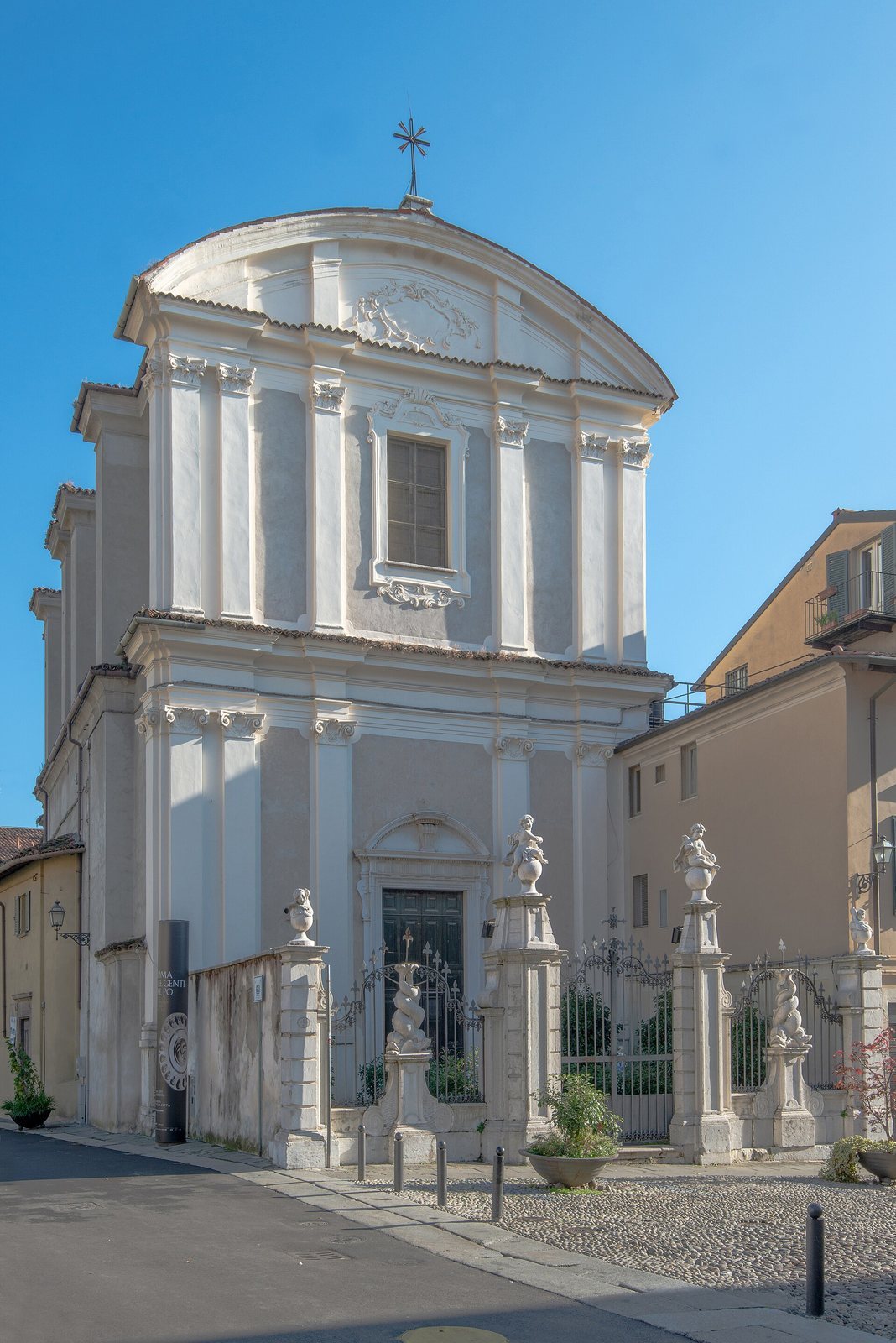
A short forecourt leads to the church and is enclosed by a fanciful Baroque iron railing. Marble pillars support putti and pairs of intertwined dolphins, giving the entrance enclosure a decorative character closely associated with the building’s eighteenth-century design. The facade consists of plastered masonry arranged in two architectural orders of composite pilasters. Above them, a curved pediment completes the front.
Romanesque apse
The medieval church survives in a polygonal Romanesque apse made of terracotta and decorated with small arches. Its material and ornamental treatment distinguish it from the plastered Baroque exterior and preserve a visible part of the building’s earlier history.
Interior plan and painted decoration
Nave and New Testament cycle
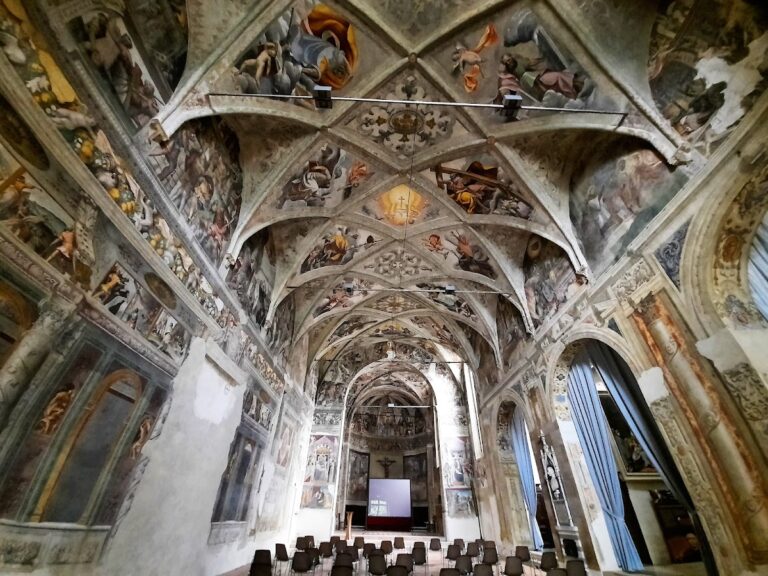
The interior follows a longitudinal plan with a single nave, no transept, and two chapels on each side. The composite order of the facade is repeated inside through full-height pilasters that organize the walls. Antonio Paglia painted the four-canvas cycle Stories of the New Testament in 1741. Prayer in the Garden and The Baptism of Christ hang on either side of the entrance, while The Annunciation and The Birth of Jesus flank the presbytery, the area reserved for the altar and clergy.
Side altars
The first altar on the left is dedicated to Saints Erasmus and Venantius. Its altarpiece was painted by Giuseppe Tortelli, with a depiction of Saint Venantius by Francesco Paglia positioned above it. On the second altar on the left, Francesco Monti’s Pietà of San Zeno forms the principal painted work.
The first altar on the right contains a valuable marble structure with artistic designs and a painting of the Sacred Heart of Jesus by Cesare Bortolotti. This work replaced an earlier altarpiece by Antonio Paglia in 1888. Above the northern side entrance hangs Monti’s Death of Saint Anne. The painting had previously served as the altarpiece of the second altar on the right, where Luigi Campini’s Dying Saint Anne replaced it in 1857.
Presbytery, choir, and organ
Main altar
The Baroque main altar includes a sculptural ensemble and a slender balustrade of small yellow-marble pilasters with wrought-iron elements that appear to embrace the altar. Its tabernacle, the receptacle for consecrated Eucharistic hosts, is decorated with lapis lazuli and other rare stones. Above it, a blue-marble tribune takes the form of a church facade in the Rococo style and rests on twisted columns. The main-altarpiece painting, dated 1739, depicts the Madonna, Child, and three saints and was made by Giovanni Battista Sassi of Milan.
Choir stalls and organ
The wooden choir stalls are an eighteenth-century product of a Brescian workshop. Their eleven backs are divided by pilasters, and each contains a shaped medallion showing an episode from the life and miracles of Saint Zeno.
The Tonoli organ has a 61-key manual and an 18-note lectern-style pedalboard. The existing facade pipes from the earlier organ belong to the Principal 8-foot stop, the fundamental register whose lowest pipe has a standard sounding length of eight feet. Opposite the presbytery, a choir loft contains an empty case with imitation pipes corresponding to those of the organ. The case was made for visual perspective rather than to house working pipes.
Relic of Saint Rusticiano
To the left of the entrance stands a precious gilded wooden urn containing the displayed remains of Saint Rusticiano. The reliquary belongs to the Baroque transformation of the church and replaced an older funerary ark. A surviving fragment of that earlier ark is preserved in the Museum of Santa Giulia.