Church of San Macuto: A Roman Church Dedicated to Saint Malo
Site at a Glance
- Rating
- 4.8
- Popularity
- Very Low
- Country
- Italy
- Primary era
- Early Modern
- Eras represented
- Early Modern, Modern
- Civilizations
- Papal States
- Site type
- Religious
- Remains
- Church
On this page8 sections
History
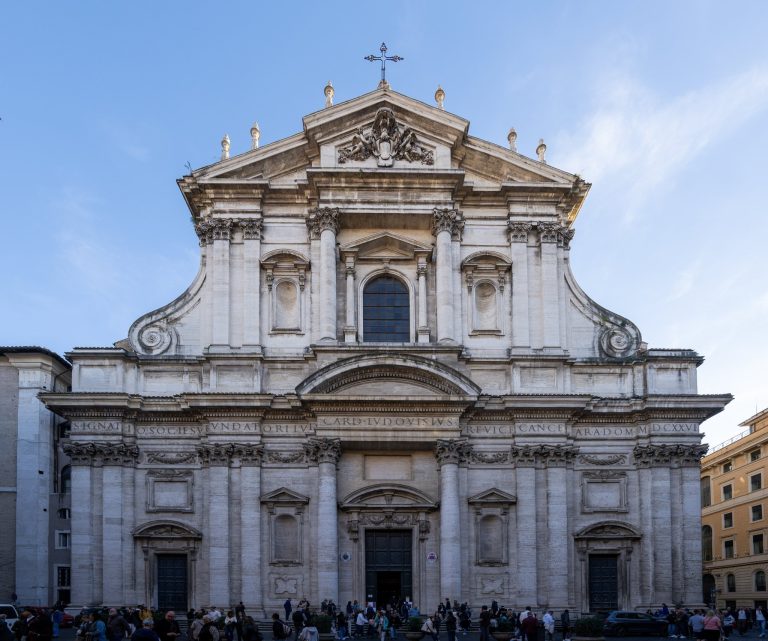
The Church of San Macuto stands on Piazza di San Macuto in Rome, Italy. Its earliest record, from 1192, identifies it as dedicated to Saint Macuto, better known as Saint Malo. A Welsh-born monk who became the first bishop of Aleth in Brittany, he is the dedicatee of the only church in Italy devoted to him.
Medieval church and changing authority
By the middle of the thirteenth century, the church was under the authority of the cardinal holding the title of San Marcello, a Roman church assigned to a cardinal as an ecclesiastical title. In 1254, Pope Innocent IV issued a decree envisaging that San Macuto would cease to exist. In 1279, Pope Nicholas III confirmed the Dominicans’ possession of land opposite the church, allowing them to build a convent there.
San Macuto was recorded as a parish in 1422. In 1472, Pedro Fernández de Solís, bishop of Tuy, received its benefice, the ecclesiastical office and associated income. The church returned to the cardinal title of San Marcello in 1480.
Parish and Bergamasco confraternity
In 1516, Pope Leo X united the parish with the Chapter of St Peter’s Basilica. As palaces rose nearby, the parish lost members. In 1538, the chapter decided to make San Macuto the seat of the Confraternity of the Bergamascs, and the transfer took place the following year. The confraternity changed the dedication to Saints Bartholomew and Alexander of Bergamo.
The church’s poor condition led to partial rebuilding between 1577 and 1585, following a design by Francesco da Volterra. A new façade had been planned around 1560 by Giovanni Alberto Galvani. In 1588, San Macuto ceased to be a parish, and its parishioners were assigned to San Stefano del Cacco, Santa Maria in Aquiro, and Santa Maria sopra Minerva.
Jesuit use
Following a decision by Pope Benedict XIII, the Bergamasco community transferred the church to the Jesuits of the neighbouring palace in 1725–1726 and moved to Santa Maria della Pietà in Piazza Colonna. That church adopted the dedication to Saints Bartholomew and Alexander of the Bergamascs, while the Jesuits restored San Macuto’s dedication to Saint Malo.
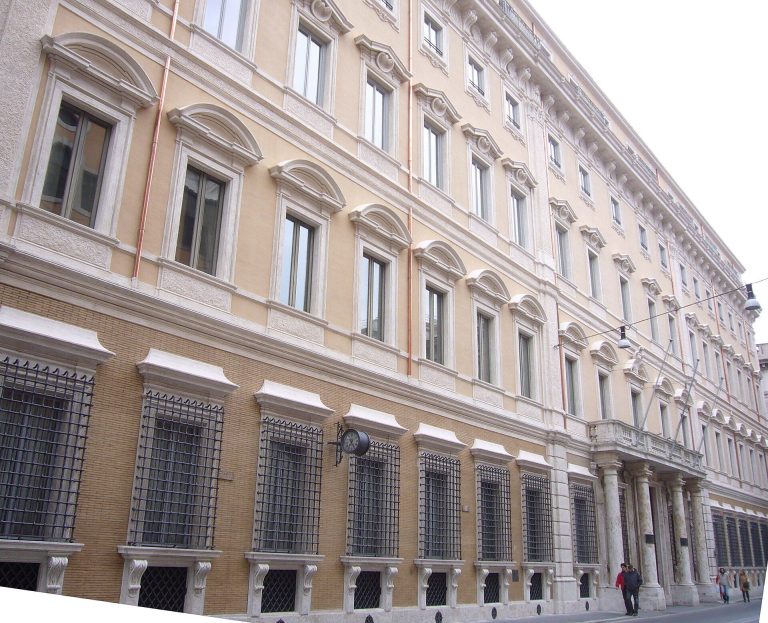
Under Jesuit care, the church served the Pontifical Roman Seminary, the College of Ecclesiastical Nobles, the German and Hungarian College, and, from 1873 to 1930, the Pontifical Gregorian University. In 1942 it became part of Bellarmino College, first associated with the Jesuits’ Roman Province and now an international Jesuit residence. The church’s history is also closely tied to the adjoining palace, now known as Palazzo Gabrielli-Borromeo.
Remains
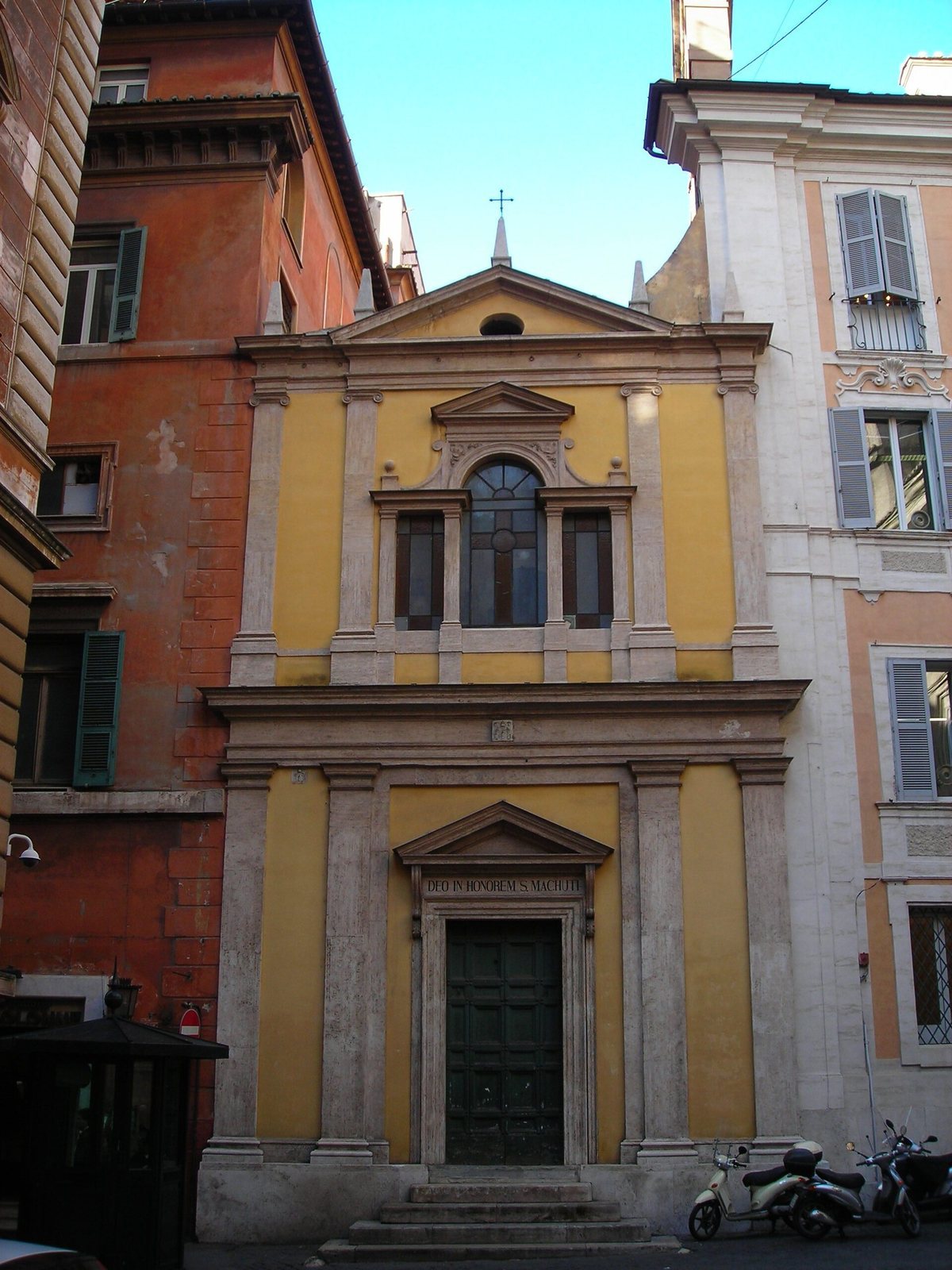
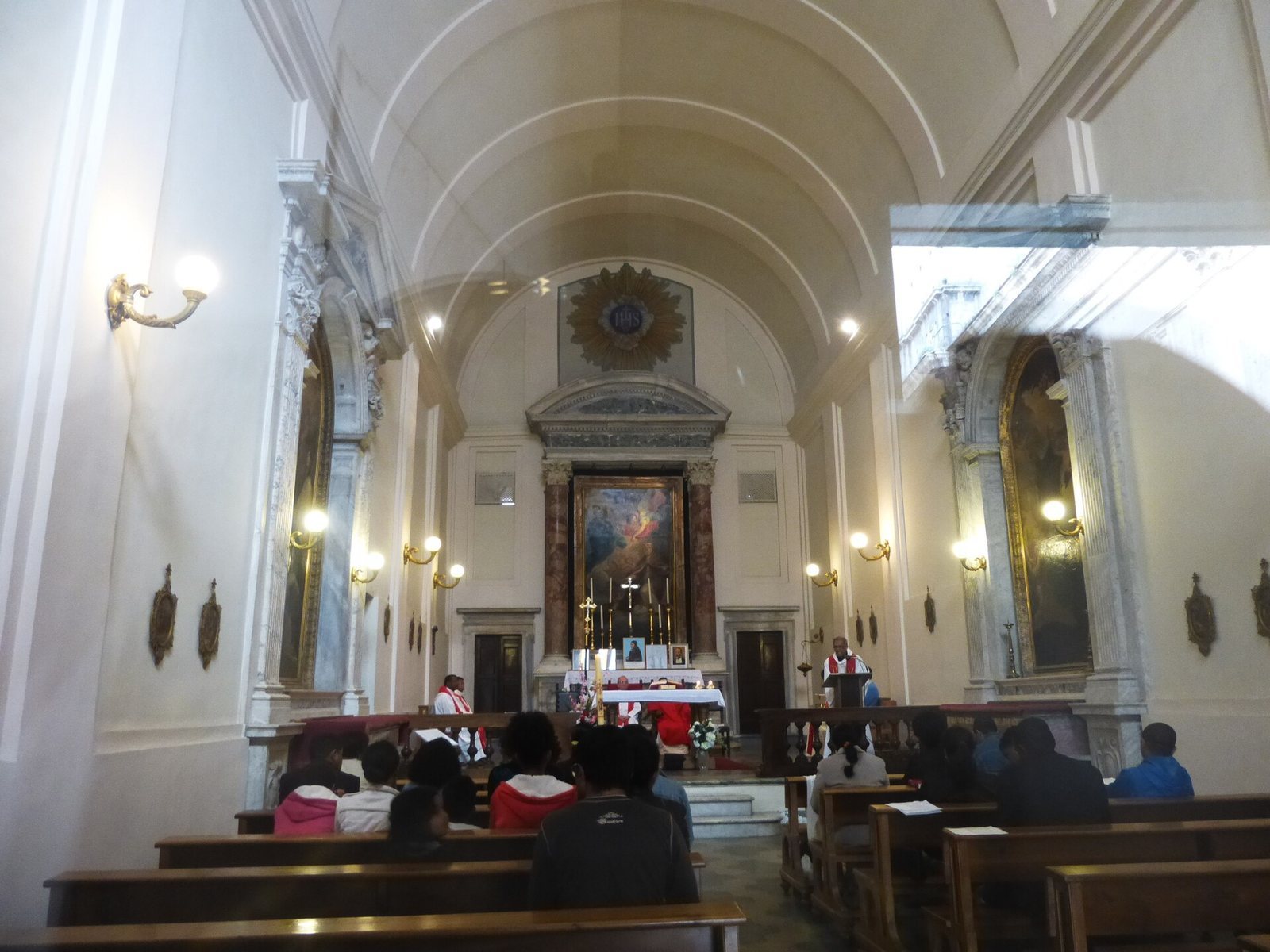
The church has a small façade facing the piazza and a single rectangular nave leading to a raised sanctuary area. Inside, a barrel-shaped vaulted ceiling covers the nave, while marble and plaster distinguish the altars.
Façade
The façade is divided into two storeys of equal height, with paired pilasters (flat supports resembling columns) at the sides. The upper level has a Serliana, an opening with a central arch and narrower openings on either side, along with a decorative band. Its original high, scroll-shaped upper section was later replaced by a modest projecting pediment (triangular top) with five small ornamental peaks.
Nave and altars
The nave’s barrel-shaped vaulted ceiling has crescent-shaped panels and replaced the earlier wooden roof in 1819. The raised presbytery, or sanctuary area, contains a richly decorated high altar with two columns of black African marble and a triangular top incorporating a crescent-shaped panel. The relic of Saint Macuto’s head was placed on this altar after the rebuilding. Near the presbytery, the left side altar has a small shrine-like frame, or aedicule, with two grooved supports and a triangular top of veined marble. The altar opposite follows a similar design, made entirely of plaster.
Altarpieces and paintings
Around 1730, Michelangelo Cerruti painted new works for the three altars used by the Jesuits. The high-altarpiece, The Virgin Appears to Saint Macuto, includes a view of Saint-Malo. For the left altar, Cerruti painted The Sacred Heart Adored by Saints John Nepomuk and Aloysius Gonzaga; ten stars surround John Nepomuk’s head, and the lower part depicts the façade of Palazzo Gabrielli-Borromeo and San Macuto. The right altar holds The Glory of Saint Joseph. These works replaced earlier paintings: Durante Alberti’s high-altarpiece showed the Madonna and Child above Saints Bartholomew and Alexander, Francis, and Barnabas; Girolamo Muziano painted the left altar’s Beheading of John the Baptist; and Giuseppe Peruzzini painted Saints Bartholomew and Alexander Forced to Adore Idols for the right altar.