Brogne Abbey: A Benedictine Monastery in Belgium
Site at a Glance
- Popularity
- Medium
- Country
- Belgium
- Primary era
- Early Modern
- Eras represented
- Medieval, Early Modern
- Civilizations
- Habsburg, Holy Roman Empire
- Site type
- Religious
- Remains
- Monastery
On this page15 sections
History
Foundation and monastic reform
Brogne Abbey is a Benedictine monastery founded in 919 in present-day Mettet, Belgium. Tradition says that Gérard, then a page at the court of Berengar, Count of Namur, received a vision of Saint Peter while praying in an old chapel on his family estate. The apostle instructed him to establish a monastery there. Gérard became a Benedictine monk at Saint-Denis near Paris, was ordained a priest, and returned to Brogne in 919 with relics of Saint Eugenius of Toledo, a seventh-century bishop and saint.
With the blessing of Stephen, bishop of Liège, Gérard founded the monastery on his own land. Building work began in 923, the year a charter granted the community land in Hesbaye. The monks followed the Rule of Saint Benedict, a set of precepts for monastic life, and dedicated their abbey to Saints Peter and Eugenius. Gérard became its first abbot, the head of the monastery. An official act from 986 identifies Brogne as a place where beer was brewed.
Gérard was often away, called to restore Benedictine observance at other monasteries. These included Saint-Ghislain; Saint Peter and Saint Bavo at Ghent; Saint-Bertin at Saint-Omer; Saint-Amand; Saint-Remy at Reims; Saint-Wandrille; and Saint-Ouen at Rouen. He died at Brogne in 959 and was buried in the choir of the abbey church. The monastery remained modest in scale until the fifteenth century.
In 992, Abbot Heribert, formerly tutor to Otto III, received the Holy Roman emperor and Notger, prince-bishop of Liège, a church leader who also held secular authority. That year Otto confirmed the abbey’s independence and privileges. Pope Lucius III confirmed its privileges again in 1183.
Building, relics, and pilgrimage
Abbot Gonthier enlarged the church in 1038, and the bishop of Liège consecrated it. Gérard’s remains were placed in a richly made container for relics after his canonization at Liège in 1131. The display drew increasing numbers of pilgrims to the abbey. Relics attributed to the Holy Innocents, the children said in Christian tradition to have been killed by King Herod, were reportedly discovered there in 1116.
The abbey’s collection also came to include a relic of the True Cross, an object believed to come from the cross on which Jesus was crucified. In 1176, Manasses of Hierges, a local nobleman who had taken part in a crusade to the Kingdom of Jerusalem, promised the relic to the monastery. After his death in 1177, his heirs disputed the gift with the monks, who secured the relic later that year. Its veneration attracted gifts and gave rise to stories of miracles.
Monks composed two accounts of the relic’s journey. The second, How the Holy Cross Came from Antioch to the Monastery of Brogne, was written by an unknown author in 1211. It combined historical narrative with accounts connected to saints and their relics. During the abbacy of Robert, who was also abbot of Lobbes from 1196 to 1221, the monastery underwent renewed construction and repair. Robert obtained another papal confirmation from Innocent III and attended the Fourth Lateran Council in 1215, a major council of the medieval Catholic Church.
Destruction, administration, and later use
In 1505, Abbot Guillaume de Beez commissioned a new silver container for the True Cross relic. War destroyed the abbey in 1525, and it was only partly rebuilt. The Diocese of Namur, a church jurisdiction administered by a bishop, was established in 1559. Pope Pius IV assigned the abbey’s revenues to it in 1566, and diocesan authorities took charge of the property. Pope Pius V abolished the abbey’s title and dignity. A prior, a monastic superior appointed by the bishop, then governed the community as its revenues fell and its numbers dwindled.
The monastery joined the Bursfelde Congregation, an association of Benedictine monasteries, in 1656. Disputes and petitions over revenues owed to the bishop continued until the abbey was suppressed during the French Revolution. Only two monks remained in 1795, when they were expelled. A brief building campaign in the mid-eighteenth century had sought to remodel and expand the complex in the Classical style, drawing on forms associated with ancient Greece and Rome, including surviving Romanesque sections, a medieval style characterized by rounded arches and substantial masonry. During the nineteenth century, the abbey was abandoned and pillaged, and its buildings fell into ruin.
The abbey’s brewing tradition returned in 1981, when outside breweries made Brogne beer; brewing resumed within the abbey in 2013. The municipality of Mettet acquired the surviving buildings in 1974. An association later used the abbey palace for exhibitions, seminars, and cultural activities, and a viticulture centre was established there in 2015. The abbey was listed as built heritage in 1995.
The abbey’s name appears as Braoniense Coenobium in the tenth century and Bronium in the twelfth. These forms have been linked to the Gaulish Brāuoniācon, interpreted as either “estate of Brāvonios” or “estate of the mill.” A different explanation, recorded in 1711, connected “Broigne” with a nearby spring called Brogniau. By the seventeenth century, Saint-Gérard had replaced Brogne as the abbey’s name. The village that grew beside the monastery also took the name Saint-Gérard and is now part of Mettet. The abbey belonged to the Diocese of Liège until 1559 and to Namur thereafter, within the ecclesiastical Province of Mechelen-Brussels.
Remains
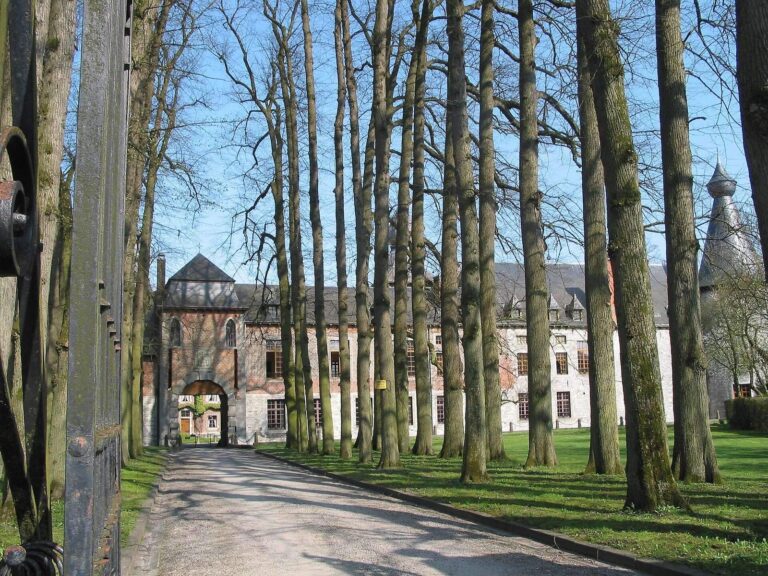
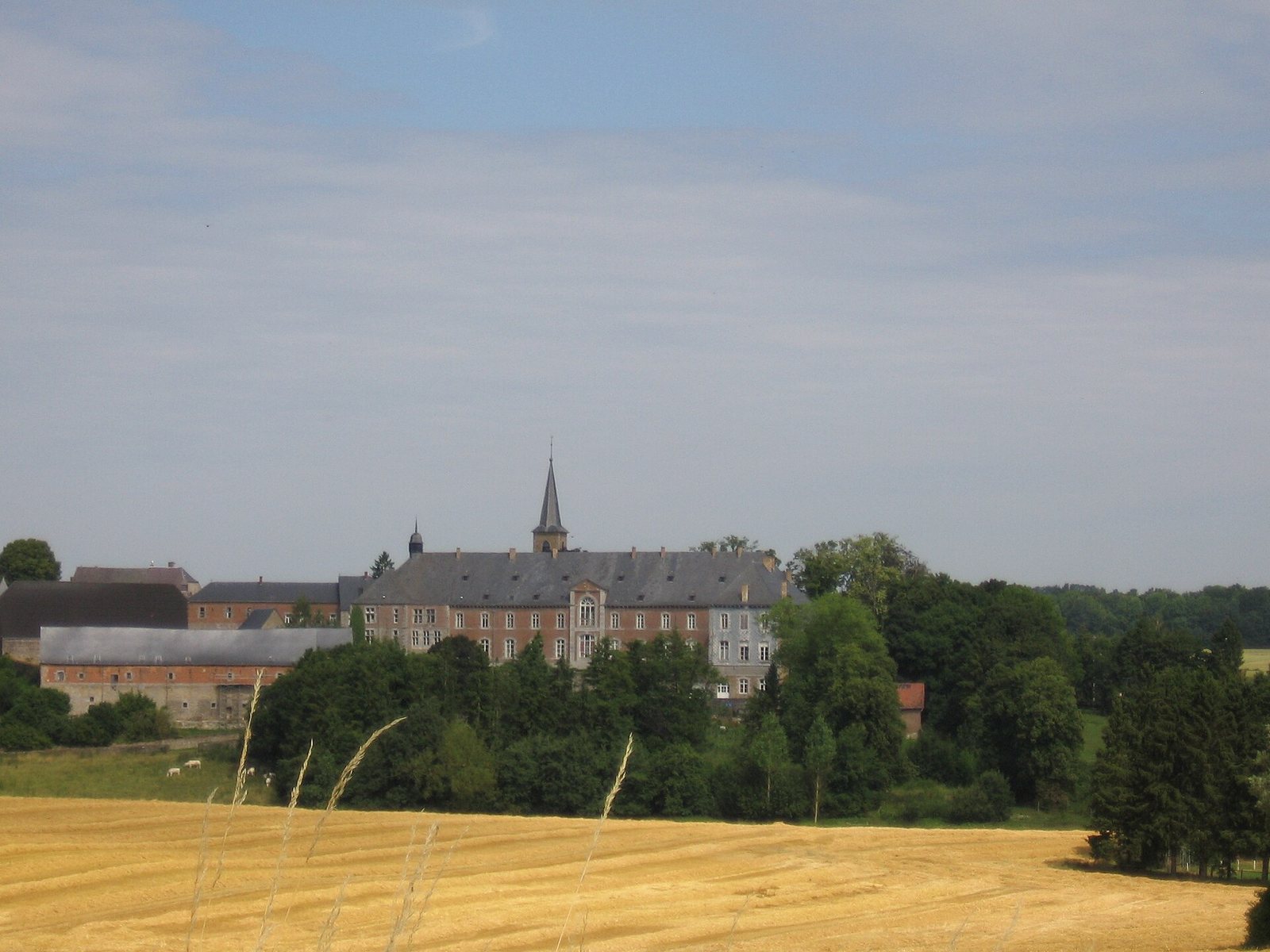
The surviving complex occupies a hillside at Saint-Gérard, about 19 kilometres southwest of Namur. The early monastery comprised a church, cloister, monks’ lodgings, and a farm. Today, its remains include medieval features and later buildings, among them surviving Romanesque sections, two large eighteenth-century farms, and a residential quarter.
Medieval remains
Abbey church and cloister
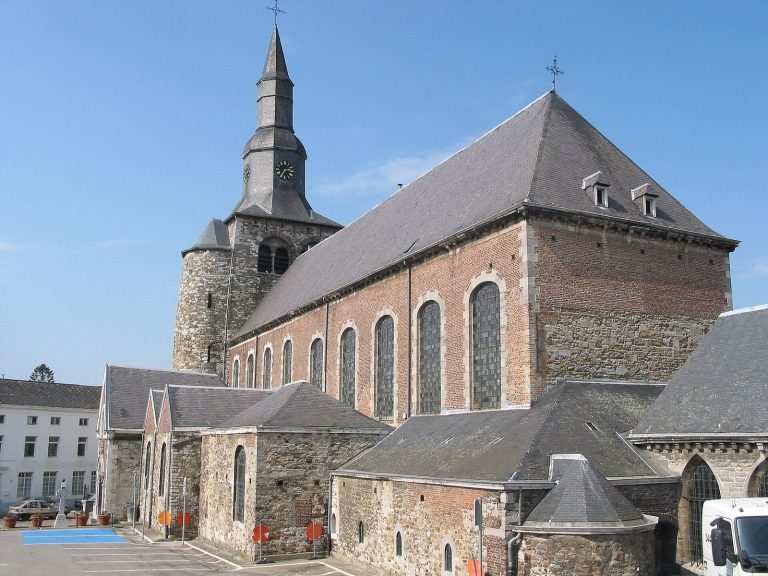
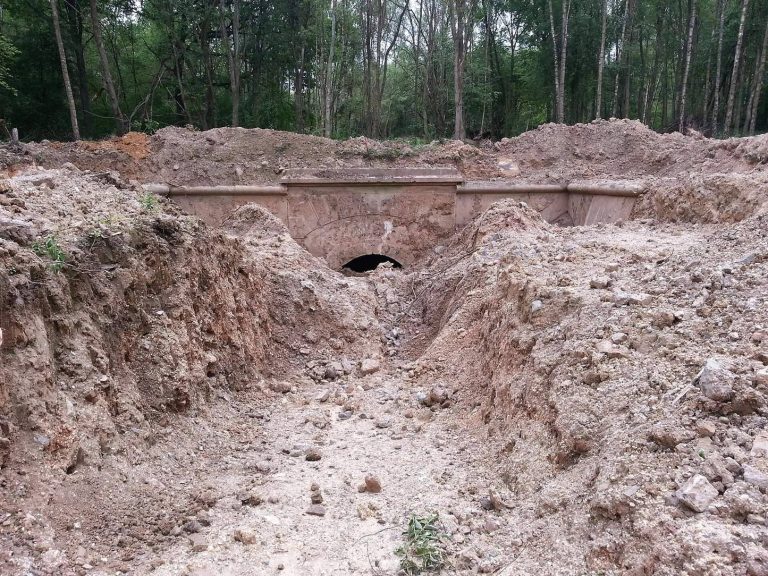
The abbey church and cloister were demolished to make way for a road. Later archaeological excavations exposed remains of the abbey church. The parish church associated with the site is a separate building from the abbey complex.
Cellar and crypt
The cellar and crypt date from the monastery’s thirteenth-century rebuilding and survive among its medieval remains.
Farms and residential buildings
Farms and ox stable
Two large farms dating from the eighteenth century form part of the surviving complex, along with an ox stable dated 1553. The monumental entrance of one farm opens onto Brogne square in the centre of the village. An arched recess near its portal holds a so-called justice table dating from the twelfth century.
Residential quarter
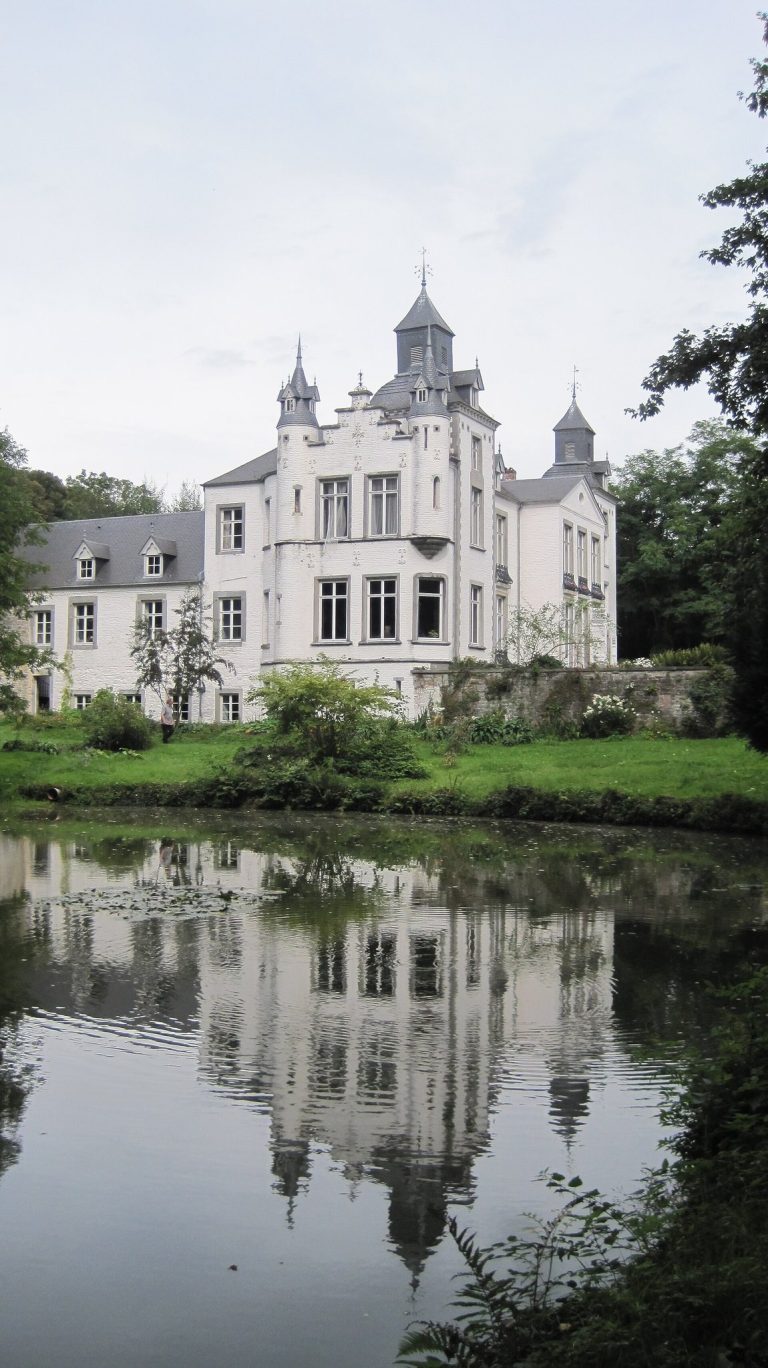
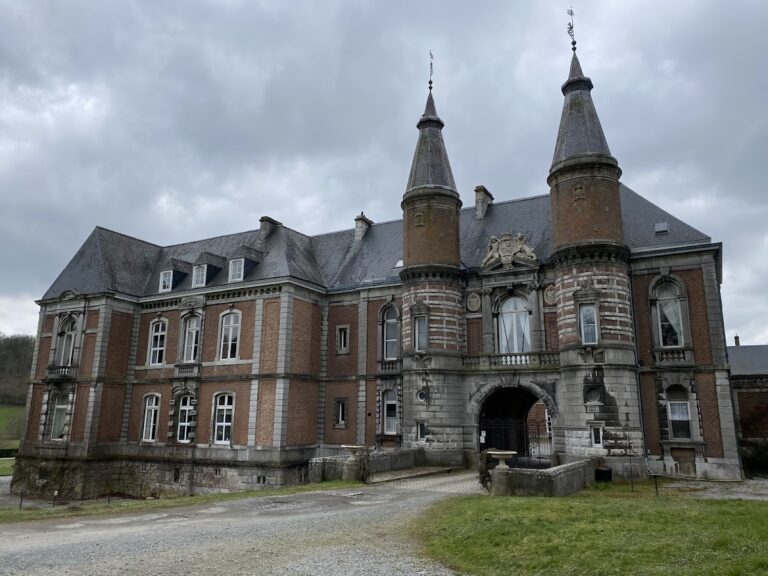
The abbey’s eighteenth-century residential quarter has decorated interiors. Its main block includes a vestibule with vaulted arches supported by stone columns and a solid-oak staircase in the Louis XV style, a French decorative style associated with the years 1715 to 1774. The staircase was restored in 1902, and one room in the quarter dates from 1553.
Pilgrims’ Hall
The abbey brewery occupies the Pilgrims’ Hall.
Commemorative and movable remains
Monument to Saint Gérard
A monument to Saint Gérard, sculpted by Alcide Mathieux of Ixelles, was inaugurated in 1959 opposite the abbey’s residential quarter, along the village square.
Reliquary of the True Cross
The silver reliquary commissioned in 1505 is now kept at the Diocesan Museum and Treasury of Namur Cathedral. The earlier reliquary can be seen by removing the rear panels of the larger one.