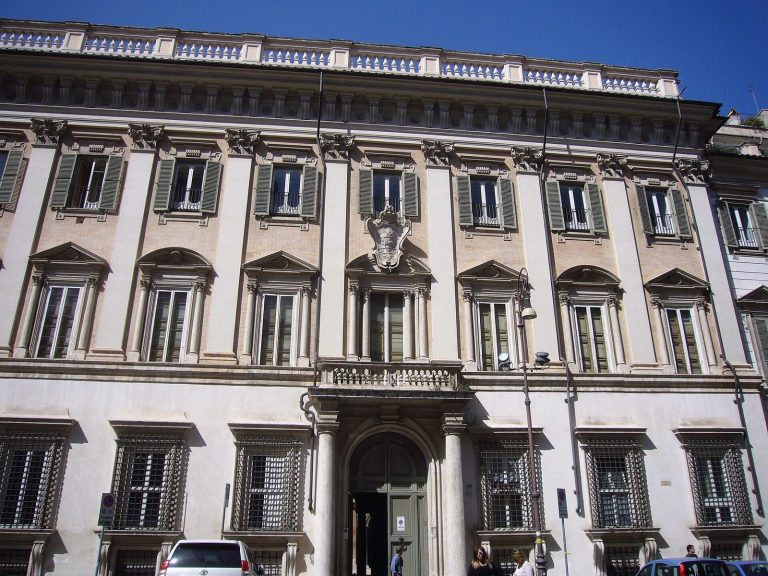
Palazzo Sciarra Colonna di Carbognano: A Colonna Palace in Rome


Site at a Glance
- Rating
- 4.7
- Popularity
- Low
- Country
- Italy
- Primary era
- Early Modern
- External website
- Open
- Eras represented
- Classical, Early Modern, Modern
- Civilizations
- Italian, Papal States, Roman
- Site type
- Domestic
- Remains
- Palace
On this page14 sections
History
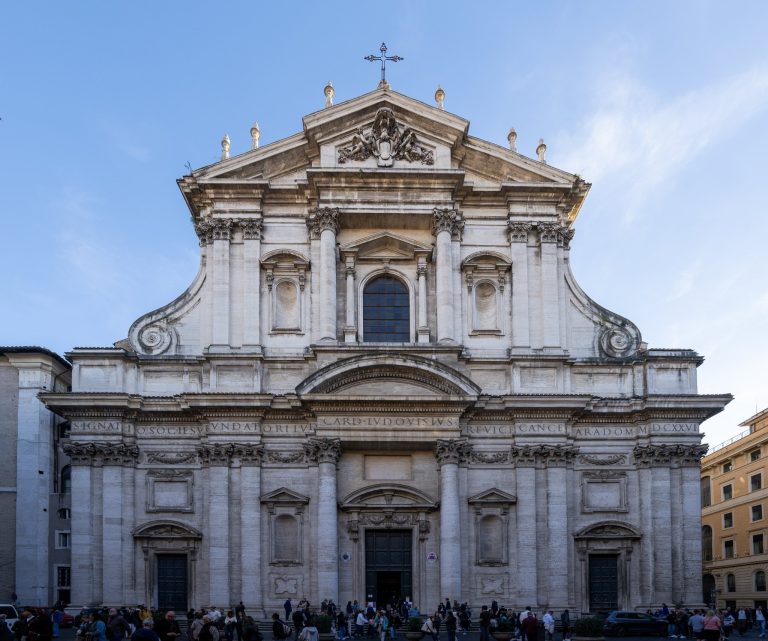
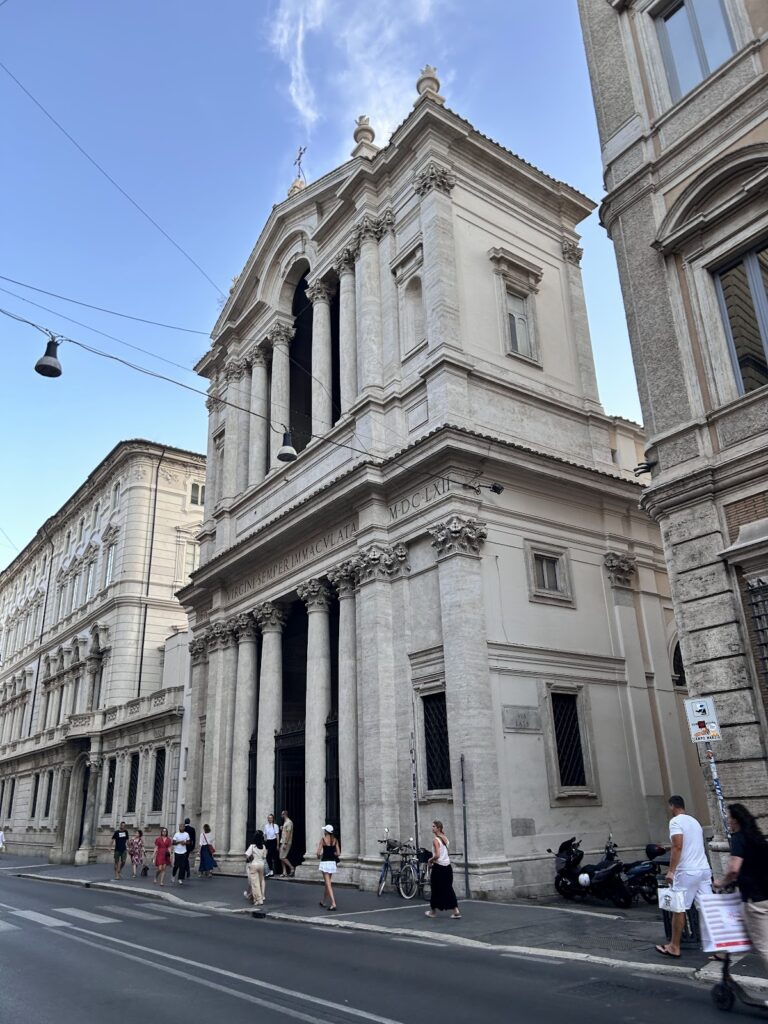
Palazzo Sciarra Colonna di Carbognano is a historic palace in Rome, Italy, developed by the Colonna family during the late sixteenth century. It stands beside San Marcello al Corso on land occupied by earlier houses of the Palestrina branch, and its later history reflects the changing fortunes of several Colonna family branches.
Colonna ownership and construction
In 1538, Vittoria Colonna, heir of the Zagarolo branch, transferred an earlier building on the site to Stefano and Alessandro Colonna of the Palestrina branch. The present palace was subsequently developed for the Colonna di Sciarra, princes of Carbognano. A principality was a territory governed by a prince.
The complex originally contained a main palace and a smaller old palace, each associated with a different branch of the Sciarra family. Construction of the present complex took place in the late sixteenth century, probably according to a design by Flaminio Ponzio. In 1610, Ponzio was commissioned to unite the two Sciarra buildings, and this work continued until 1641.
Alterations and urban change
The old palace was rebuilt after a fire in 1788. It was later demolished toward the end of the nineteenth century to create Via Marco Minghetti. Between 1871 and 1898, other changes altered the property, including the shortening of a wing to widen the street and the construction of the Teatro Quirino and Galleria Sciarra under Prince Maffeo Sciarra.
In 1875, the main palace underwent a broad transformation that affected the whole site and included the regularization of the courtyard. Francesco Settimi began the project, Giulio De Angelis continued it, and Giuseppe Cellini directed the interior and gallery decoration. The palace also received Rococo interiors, an eighteenth-century decorative style known for delicate, ornate, and often asymmetrical forms. Luigi Vanvitelli created or decorated the Library and Cabinet of Mirrors for Cardinal Prospero Colonna di Sciarra, while fresco decoration was completed in several rooms.
Collections, ownership, and later use
Prince Maffeo Sciarra’s financial collapse led to the largely illicit dispersal in 1891 and 1892 of the palace’s rich sixteenth-century collection of paintings and sculptures. The collection had previously been regarded as one of Rome’s most important. The palace was auctioned in 1898, when the Credito Fondiario of the Cassa di Risparmio delle Province Lombarde acquired it.
After further transfers between institutions, the property was acquired by the Cassa di Risparmio di Roma in 1969 and later passed to the Unicredit Group. The Colonna family archive of the Palestrina branch, once held in the palace, was transferred to the Vatican Apostolic Library in 1913. The palace, to which the Teatro Quirino and Galleria Sciarra were later attached, is now the headquarters of Fondazione Roma.
Pompeo Coltellacci the Younger directed a restoration carried out between 1980 and 1987. On 27 November 2024, Fondazione Roma opened a museum in the palace, the Museo del Corso, to present its collections.
Remains
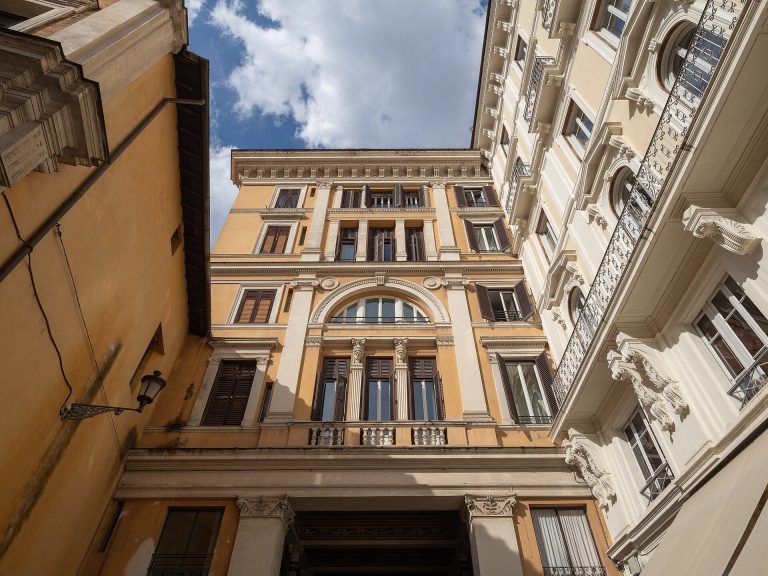
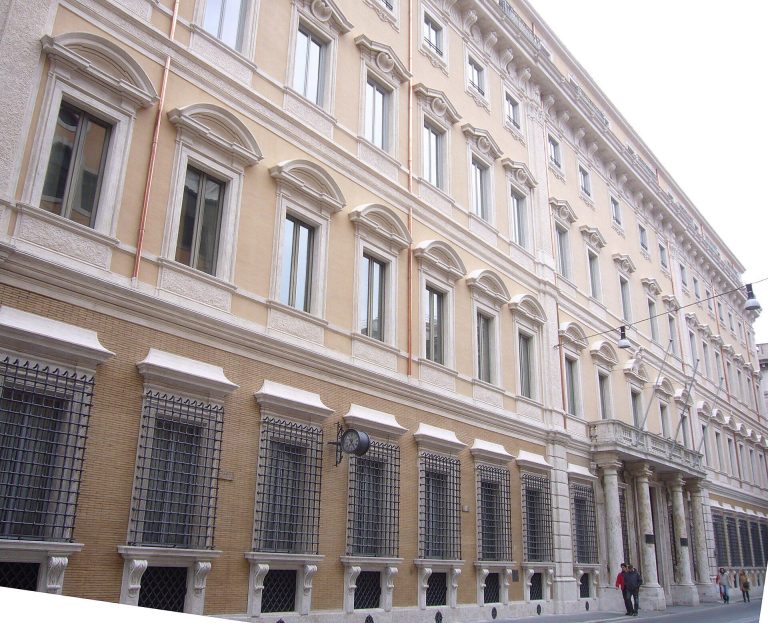
The palace occupies the area at 239 Via del Corso, along a section once known as Piazza di Sciarra. Its surviving fabric combines a sober street facade, decorated interiors, the glass-covered Galleria Sciarra, and archaeological remains connected with the ancient Roman water supply.
Facade and former entrances
Main facade and Carbogniani portal
The sober main facade faces Via del Corso and is attributed to Martino Longhi the Elder. Its high entrance portal, traditionally called the Carbogniani portal, was counted among the Four Wonders of Rome. Local residents believed that it had been carved from one monolithic block of marble. Its authorship remains uncertain. The portal was probably made to commemorate the elevation of Palestrina to a principality in 1571 for Giulio Cesare Colonna di Sciarra. Antonio Labacco and an architect from the circle of Antonio da Sangallo the Younger have been proposed as its designers. Flaminio Ponzio is considered unlikely, since he arrived in Rome only in 1585, when the portal was probably largely complete.
Arco di Carbognano
The former Arco di Carbognano was attached to the northern end of the palace and gave access to Via delle Muratte. It was probably built in the eighteenth century by Giulio Cesare Colonna di Sciarra and demolished during the nineteenth century.
Interiors and gallery
Rococo rooms
The Library and Cabinet of Mirrors belong to the palace’s Rococo interiors and were created or decorated by Luigi Vanvitelli for Cardinal Prospero Colonna di Sciarra. Several rooms also retain fresco decoration completed during this renovation.
Galleria Sciarra
The Galleria Sciarra is a glass-domed passage that crosses an interior courtyard. Frescoes cover the courtyard walls, while the upper levels carry Liberty-style decoration by Giuseppe Cellini. Liberty was the Italian form of Art Nouveau, an artistic movement associated with stylized ornament and flowing natural motifs. Cellini’s frescoes depict virtues associated with women, including Prudence, Temperance, Fortitude, Humility, Patience, Goodness, Faith, Amiability, Generosity, and Nobility.
Archaeological remains and museum collections
Arch of Claudius and Aqua Virgo
Excavations near the palace in 1641 uncovered remains of the Arch of Claudius. The arch formed part of the Aqua Virgo, an ancient Roman aqueduct that supplied water to Rome. Further remains were found in the palace’s underground spaces in 1897.
Museo del Corso
The Museo del Corso presents Fondazione Roma’s permanent collection, covering the period from the Renaissance to the contemporary era. Its displayed works include art by Pompeo Batoni, Nicolas Régnier, Gerrit van Honthorst, Pietro da Cortona, Giovanni Paolo Panini, Caspar van Wittel, Giacomo Balla, Gerardo Dottori, Tano Festa, Mario Schifano, Franco Angeli, and Lucio Fontana.
The museum also houses more than 2,500 coins and medals, including papal medals associated with pontificates from Martin V Colonna, a fifteenth-century pope from the Colonna family, through Pope Francis, who was elected in 2013.