Church of Saint Nicholas in Tolmachy: An Orthodox Parish and Tretyakov Gallery Museum
Site at a Glance
- Popularity
- High
- Country
- Russia
- Primary era
- Early Modern
- Eras represented
- Early Modern, Modern
- Civilizations
- Russian
- Site type
- Religious
- Remains
- Church
On this page13 sections
History
Parish origins and the stone church
The Church of Saint Nicholas in Tolmachy is a Russian Orthodox church in Russia. A parish book from 1625 describes its wooden predecessor. The place-name Tolmachi comes from a former settlement of Tatar translators who moved to the area to serve the Golden Horde, a Mongol successor khanate that ruled parts of Eastern Europe and western Asia. The period of Mongol-Tatar rule over Russian principalities is known as the Tatar Yoke. About a kilometre east stood another church, dedicated to the Great Martyr Nikita, a title for a saint who suffered martyrdom. Associated with Old Tolmachi, it also bore the Tolmachi name and was later demolished.
In March 1687, Patriarch Joachim, head of the Russian Orthodox Church, came to celebrate Mass. His visit points to a congregation that included nobles and other prominent people. In 1697, parishioner and church patron Longin Dobrynin funded a stone church to replace the wooden one. Its main altar was dedicated to the Descent of the Holy Spirit onto the Apostles. The church was called by this dedication until 1770, when the name of Saint Nicholas returned.
Eighteenth-century changes
In 1770, widow Ekaterina Lazarevna Demidova arranged for a chapel dedicated to the Feast of the Intercession, an Orthodox feast honoring the Virgin Mary’s protection. Altars were generally dedicated to a feast associated with Mary rather than directly to her, which shaped Demidova’s choice. The Russian plague of 1770 to 1772 also affected the parish.
War and nineteenth-century rebuilding
During the French invasion of Russia, fire destroyed many nearby buildings, but the church survived. French forces killed its priest, John Andreev, as he tried to protect the building.
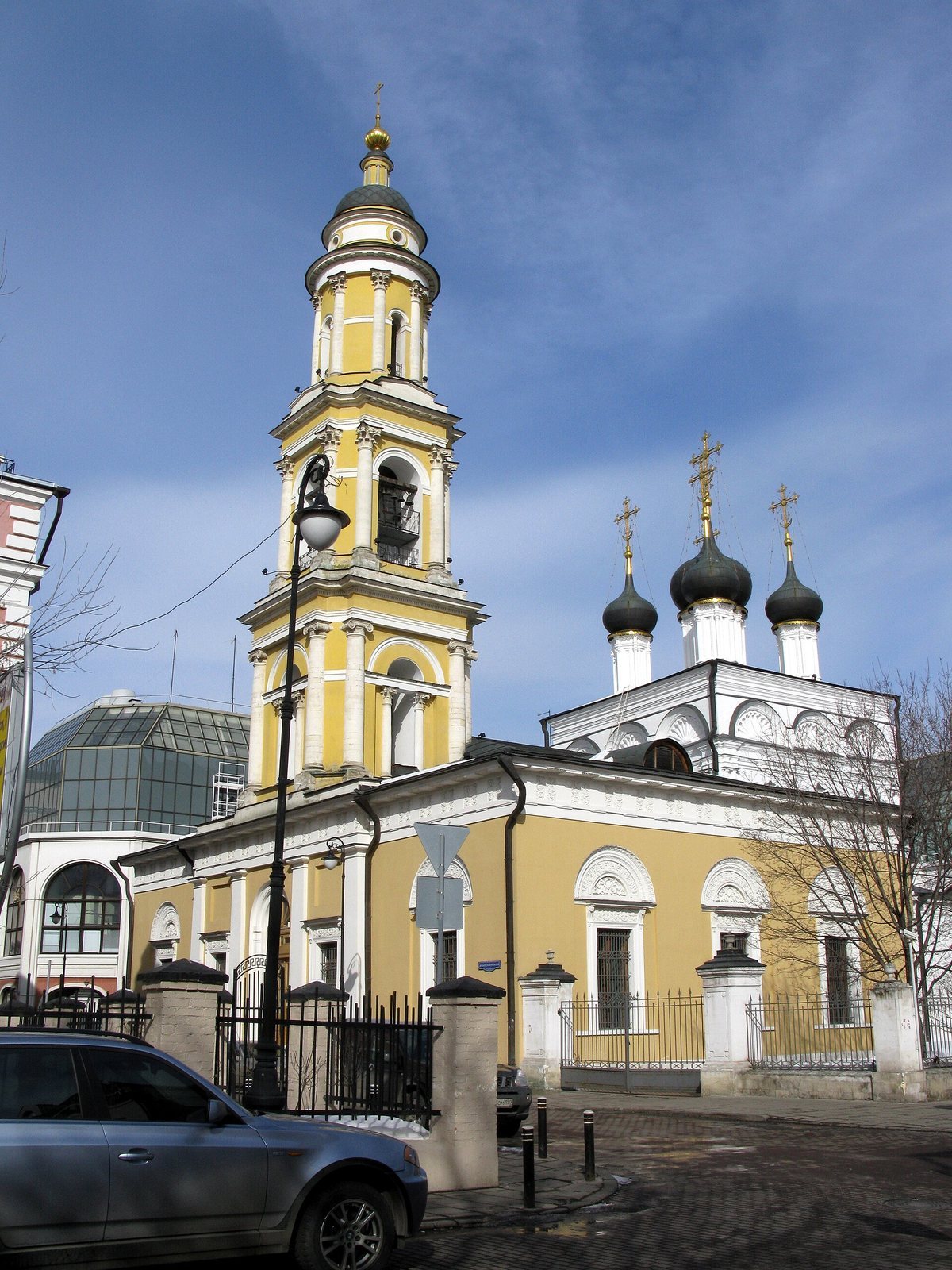
By 1833, the old bell tower had deteriorated after more than 150 years of use. Metropolitan Philaret of Moscow, a senior Orthodox church leader, approved a replacement tower and wider rebuilding on the condition that the main church keep its established arrangement. A new tower and rebuilt refectory, a hall adjoining the church and historically used for communal meals, were completed in 1834. Philaret preached at the church’s consecration. Work continued into October 1858. In 1856, the main church block was renovated and its principal altar rebuilt, with donations that included contributions from Alexandra Tretyakova and her sons.
Closure, restoration and present role
After 1894, parishioners elected Ilya Chetverukhin as rector. He became the church’s last rector before its closure and was later formally recognized as a saint by the Russian Orthodox Church. The church closed at Easter in 1929, following the death of its former rector, Elder Alexy Zosimovsky, a respected spiritual guide. The building passed to the Tretyakov Gallery for storage and remained neglected and empty for more than 50 years.
The Gallery began major restoration in 1983. The building was transferred to the Russian Orthodox Church under an agreement in 1993, and worship resumed. After Gallery services left, the building stood unattended for three years; during the 1990s, bricks, marble and flooring were removed. The main altar was consecrated by Patriarch Alexy II on 8 September 1996, and restoration was completed in 1997.
The church now serves as both an active parish and a museum within the State Tretyakov Gallery. As a house church, it serves the Gallery’s employees as well as worshippers. It is affiliated with the Moscow Patriarchate and belongs to the Moskvoretsky Deanery and the Moscow City Diocese. The Russian Federation designates it a cultural heritage site of federal significance.
Remains
Building and arrangement
Main church and chapels
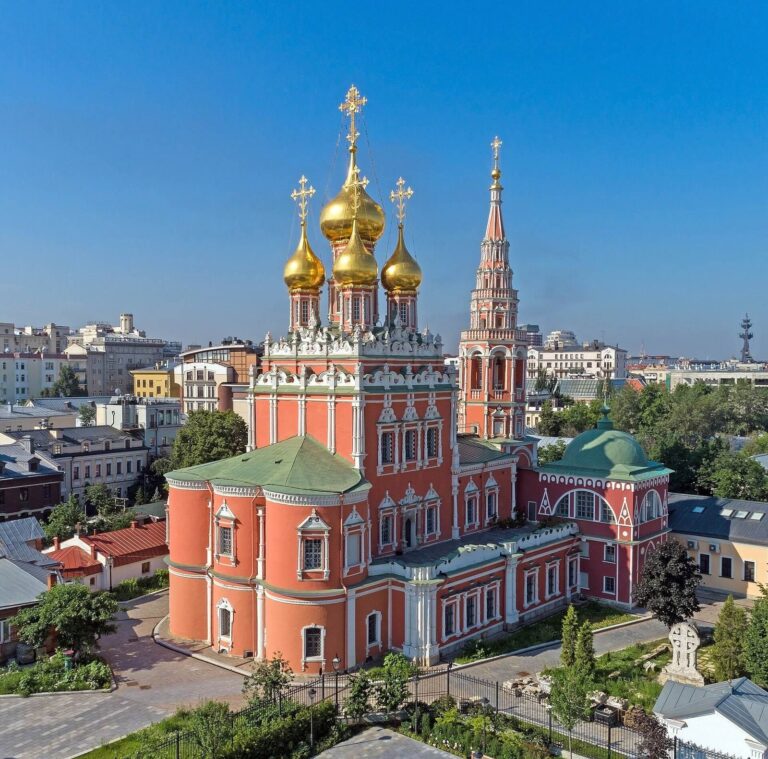
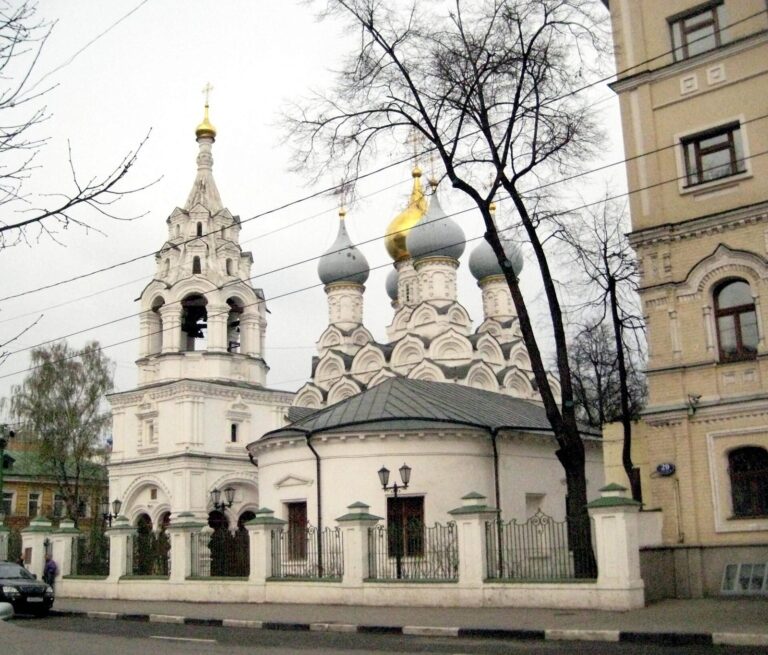
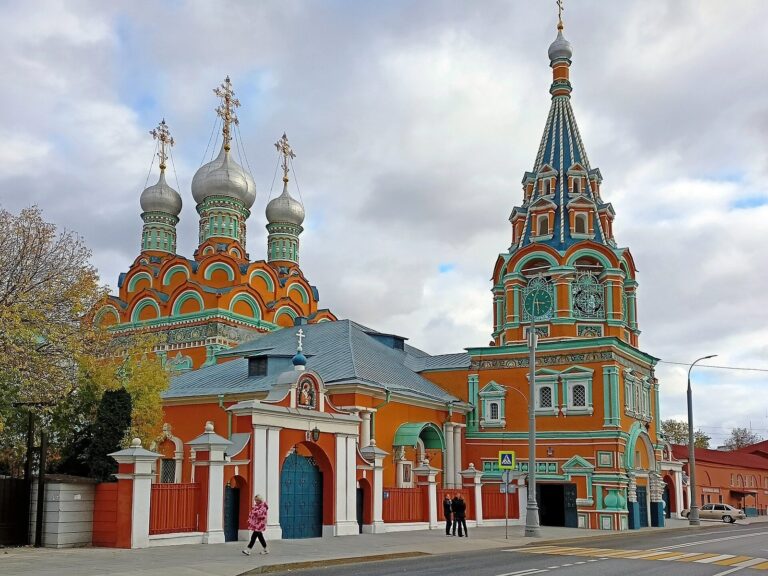
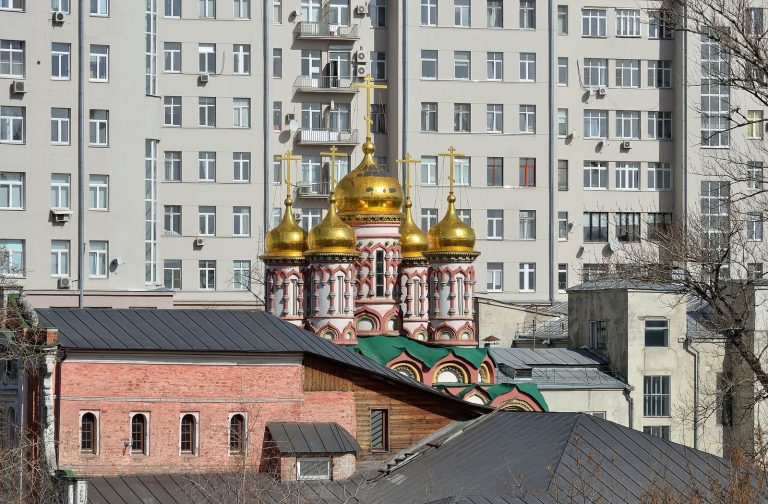
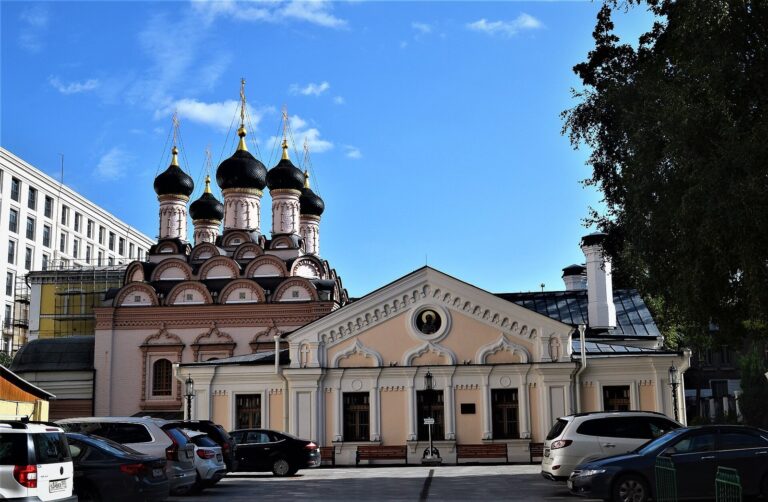
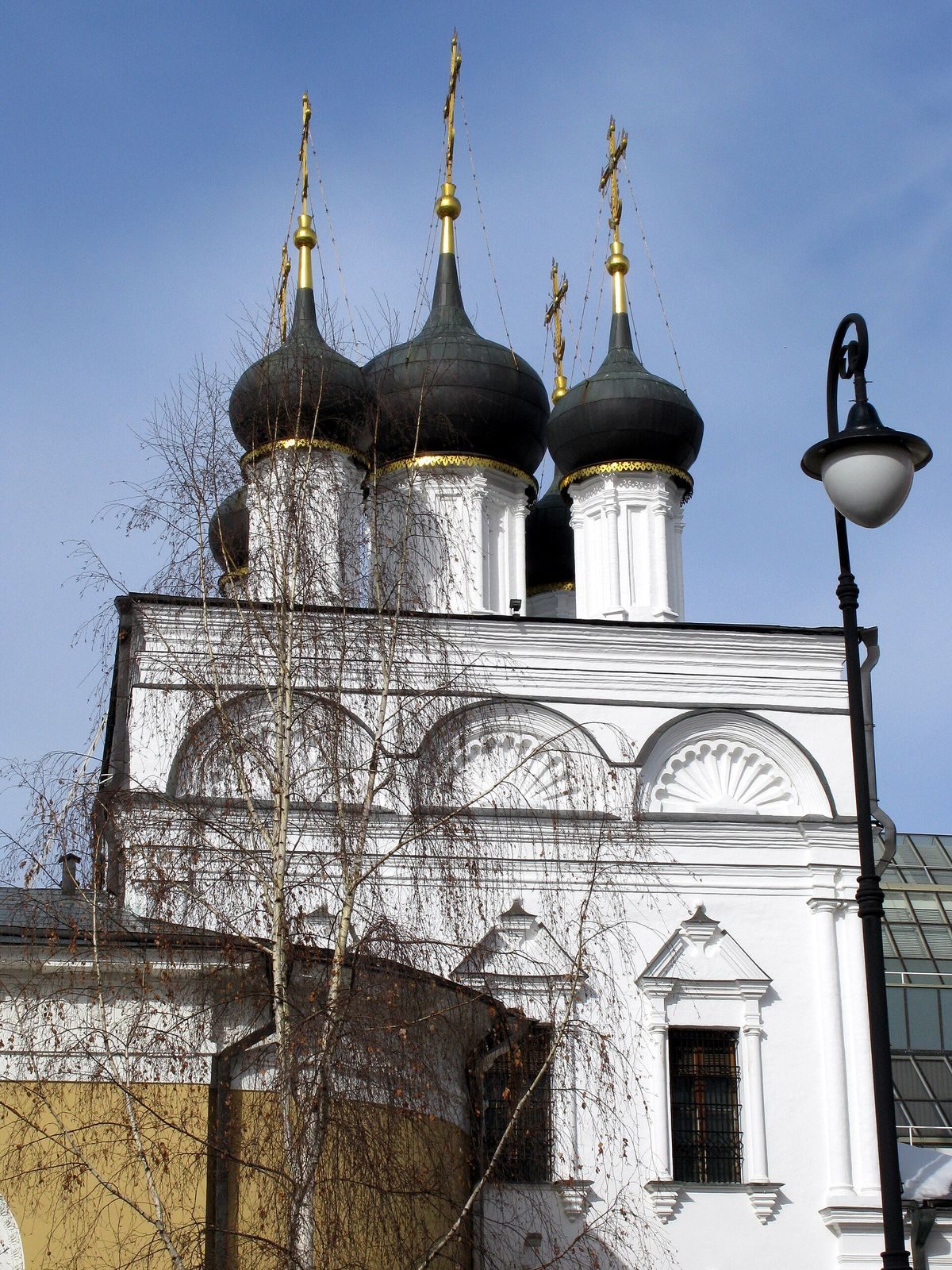
The brick building combines a five-domed main church with a refectory, bell tower and the Intercession and Saint Nicholas chapels. The main church’s five domes were restored during late twentieth-century work. The Saint Nicholas altar was moved into the refectory when the stone church replaced the wooden building. The Intercession Chapel occupies part of the refectory.
Refectory, bell tower and gallery link
The bell tower was rebuilt during the late twentieth-century restoration. An underground passage connects the church with the State Tretyakov Gallery, and religious artifacts are kept in specially climate-controlled spaces.
Interior and collections
Wall treatment and icon screens
Nineteenth-century work covered the church walls with artificial marble. Persistent staining led to the marble being covered by wall paintings, which have since been restored. The interior also has three icon screens separating the sanctuary from the main worship space, along with wall-mounted icon cases. Icons on the main and side screens depict Saint Nicholas and the Descent of the Holy Spirit onto the Apostles.
Icons and relics
The icon called Satisfy My Sorrows is installed in the Intercession Chapel, fulfilling Demidova’s original intention for it. The Gallery transferred the Iverskaya icon to the church in 2009. Before the Iverskaya Chapel was destroyed in 1929, it had housed the icon. The church also holds relics of more than 30 saints and the Trinity during the Feast of the Holy Trinity, which celebrates the Christian doctrine of the Trinity.
The church housed the icon of Our Lady of Vladimir from 1999 until 3 April 2026, when it was transferred to Moscow’s Cathedral of Christ the Saviour under a no-fee use agreement for 49 years. It is regarded as one of the most cherished symbols in Russian history.
Manuscripts and gallery objects
After 1894, the church received a library of ancient writings by Eastern ascetics. Bishop Theophan the Recluse assembled the collection; after his death, the Moscow merchant Losev bought it from his heirs. Objects from the Tretyakov Gallery collection displayed in the church include crosses behind the altar and an 1838 Eucharistic set made by Mikhail Osipov. The set comprises a chalice, a plate for the Eucharistic bread, a star-shaped cover used with the vessels and other plates.