Saint Sophia Church, Moscow: A Russian Orthodox Church and Bell-Tower Complex
Site at a Glance
- Popularity
- High
- Country
- Russia
- Primary era
- Early Modern
- Eras represented
- Early Modern, Modern
- Civilizations
- Russian
- Site type
- Religious
- Remains
- Church
On this page10 sections
History
Saint Sophia Church, Moscow, is a Russian Orthodox church on Balchug Island in Russia. A wooden church stood on the site by 1493, and its stone successor was built during the 17th century in the Russian architectural tradition. The dedication to Holy Wisdom, or Saint Sophia, is traditionally connected with Novgorod settlers nearby; merchants from Novgorod may have founded the first church.
Early church and stone rebuilding
The wooden church was destroyed in Moscow’s fire of 1493. Royal gardens were later established in the area, which became known as Sadovniki, meaning “Gardeners.” Workers associated with the gardens initiated a stone replacement during the 17th century. The church is first recorded in 1682, and a rebuilding, probably in the 1680s, changed it from a single-domed building to one with five domes.
Archpriest Avvakum Petrov, a leading figure in the Old Believer movement, preached at the church during the 17th century. Old Believers rejected reforms to Russian Orthodox worship. Avvakum’s preaching led many worshippers to stop attending and to refuse the reformed rites.
Changes and expansion in the 18th and 19th centuries
The church was altered several times during the 18th and 19th centuries. Moscow’s 1812 fire caused part of its roof to collapse. Thieves took an antimension, a consecrated cloth used in Orthodox liturgy, along with some liturgical vestments. In December of that year, a second altar dedicated to Saint Andrew was added.
At the initiative of parish rector Archpriest Alexander Nechayev, an expansion began in 1862. Its first stage was a separate bell tower, completed in 1868 to a design by Nikolay Kozlovsky. A more extensive proposal would have enlarged and rebuilt the church in a Byzantine-Russian style, combining Byzantine and Russian traditions, as a major city church recalling Constantinople’s Hagia Sophia. The plans were abandoned because there was not enough space.
In 1891–1893, a new refectory replaced the old one. A flood in 1908 destroyed the icon screens and vestments kept in the church’s storage rooms, prompting thorough repairs in the years that followed.
Soviet-era closure and reuse
Soviet authorities confiscated valuable church furnishings in 1922. During repairs in 1924–1925, the church received an iconostasis, a screen of icons separating the sanctuary from the main part of an Orthodox church, from another Moscow church that had closed. Worship at Saint Sophia ceased in the early 1930s. A copy of the Vladimir Icon of the Mother of God, dated 1697, was transferred to the Tretyakov Gallery, a Moscow art museum, while other furnishings were confiscated.
The former church first served as a factory club, which remained in use until 1940. The building was then adapted for housing and a thermomechanical laboratory, where heat and mechanical work were used to alter materials. A German bomb struck it in 1941. From the 1960s to the 1980s, a Soviet construction trust used the bell tower. The church was recognized as a monument in the 1960s, and restoration work followed in the 1970s and 1980s. The thermomechanical laboratory later occupied the church building.
Return to worship
The building was returned to the Russian Orthodox Church in 1992. Services resumed in the church inside the bell tower in 1994, and the first liturgy in the main church since its closure took place in 2004. Bell-tower restoration began in 2012, and new bells were installed in 2013. The active church belongs to the Moscow diocese, a bishop’s administrative territory, and the Moskvoretsky deanery, a grouping of parishes. It is recognized as a federal-level architectural monument.
Remains
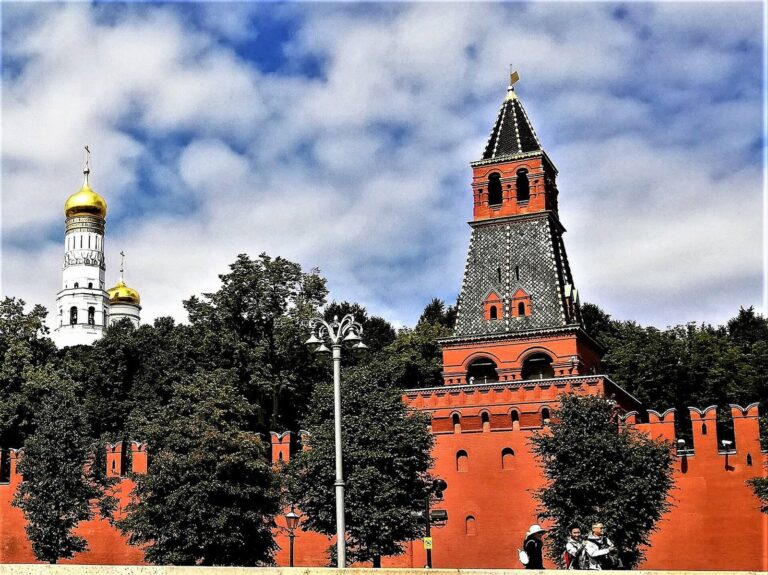
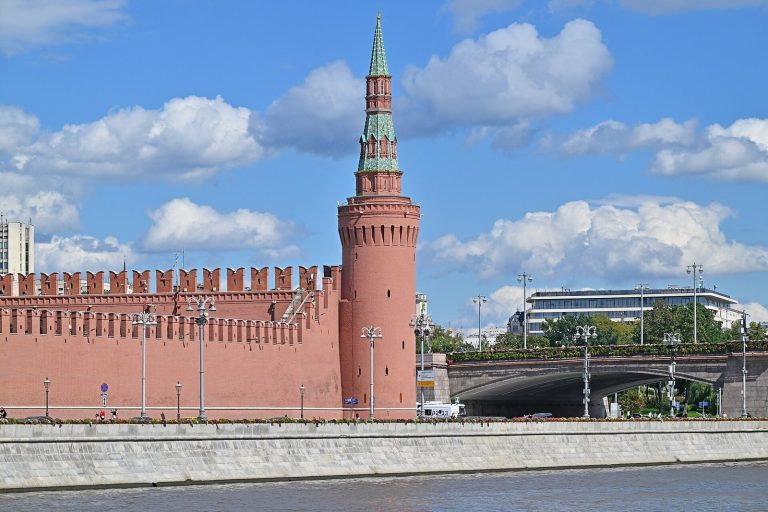
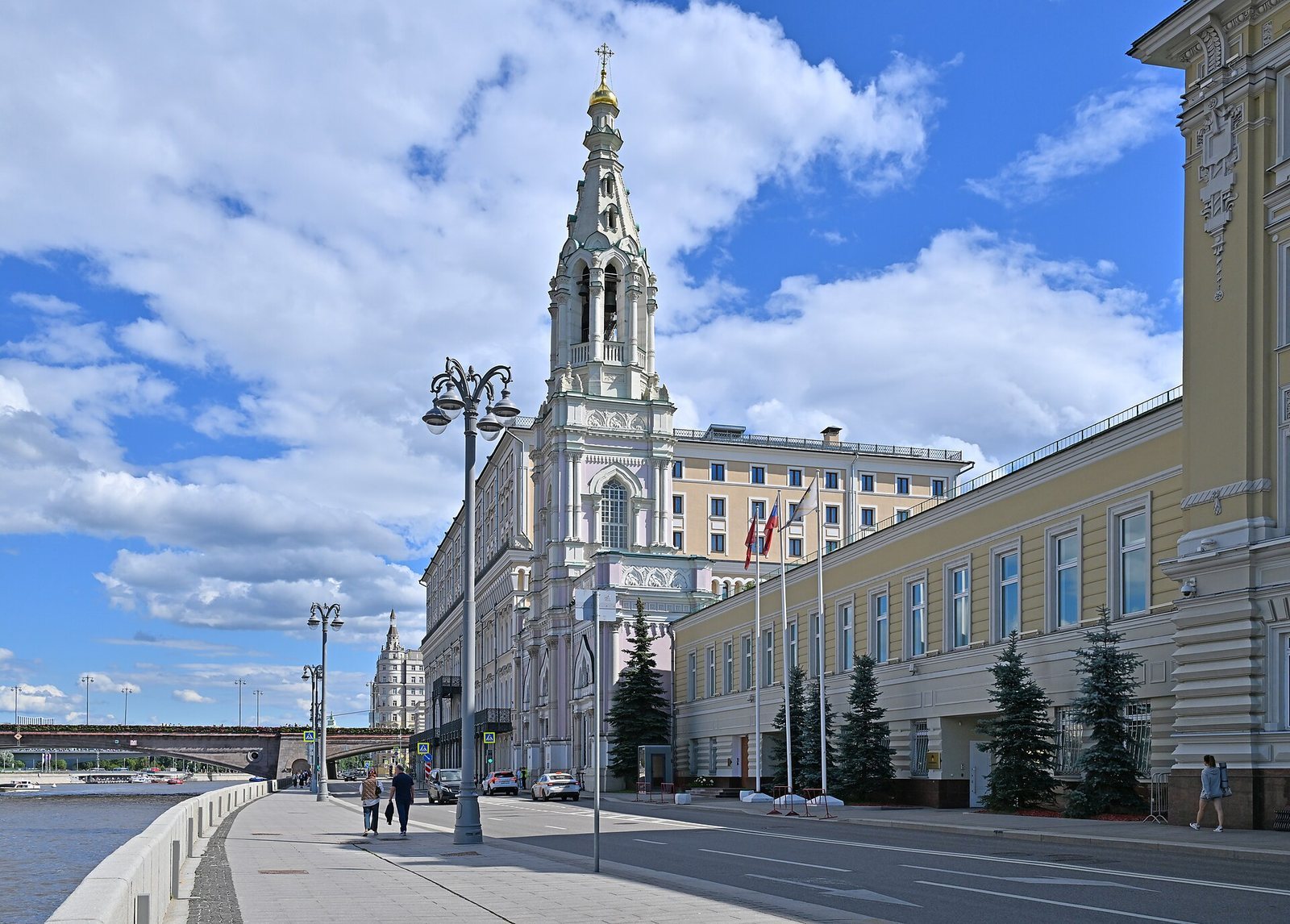
The complex stands beside the Moskva River embankment on Balchug Island, opposite the Moscow Kremlin. It comprises the church, a refectory, a separate bell tower, and a clergy house. The church also gave its name to Sofievskaya Embankment.
Church and refectory
Main church
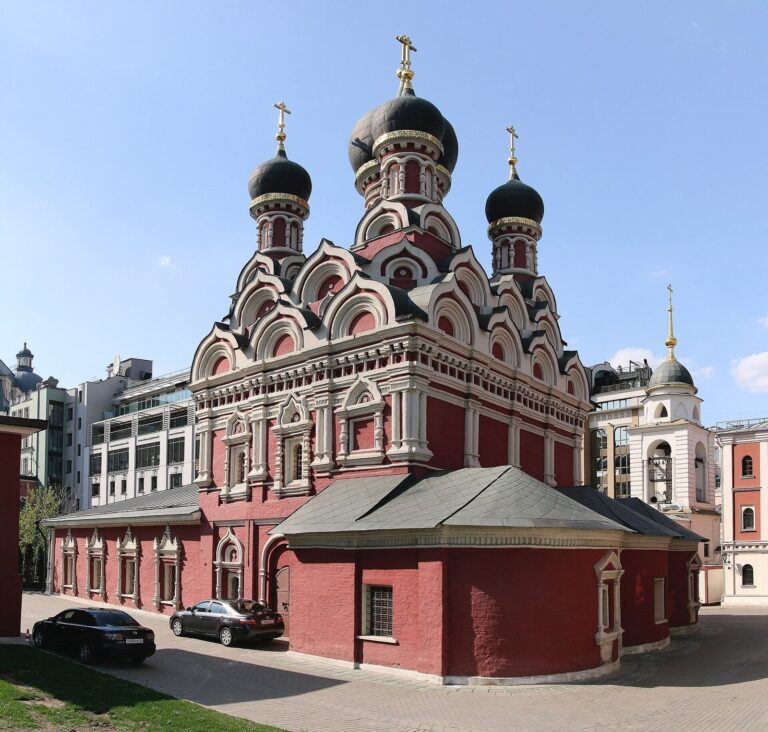
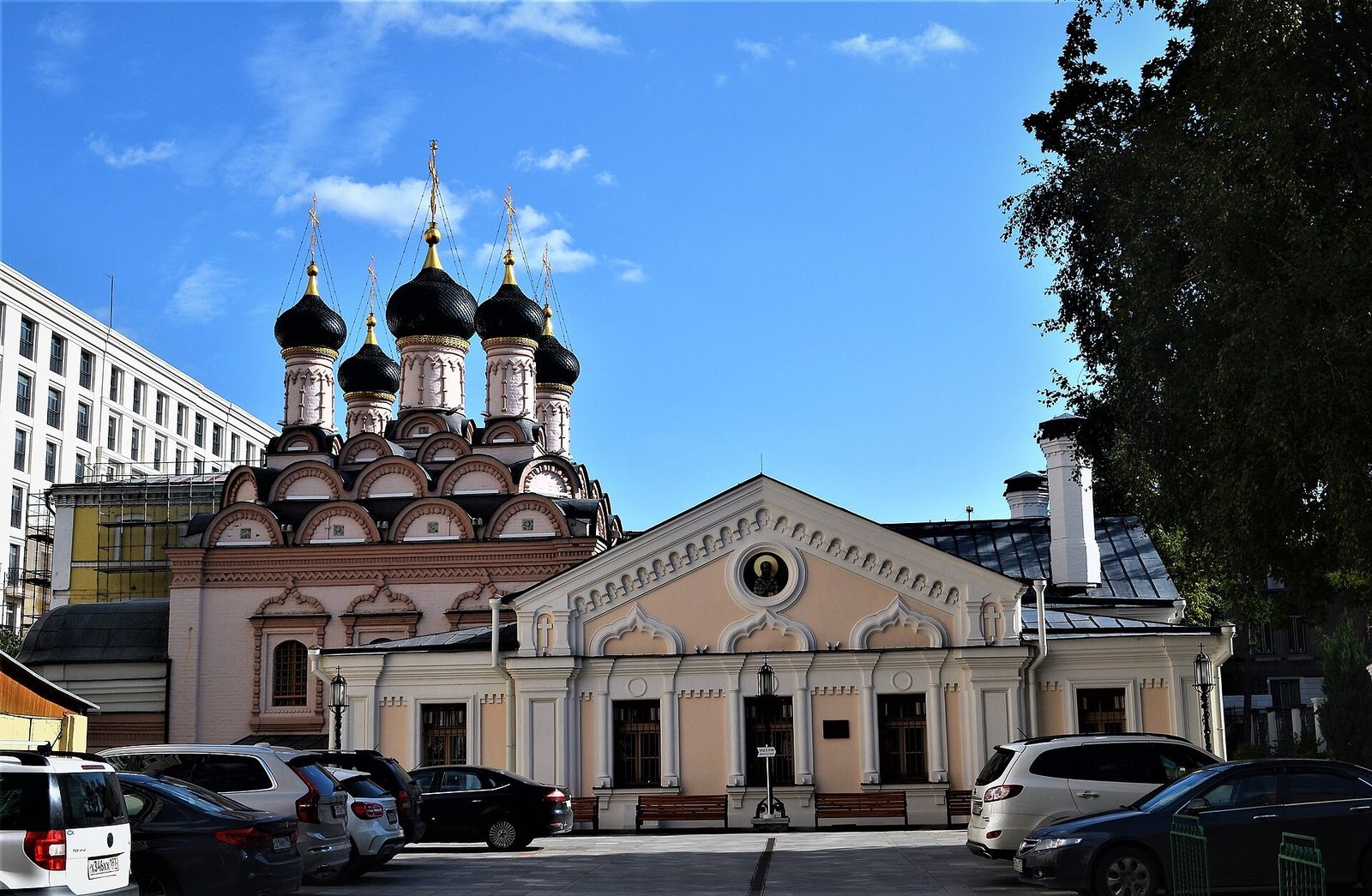
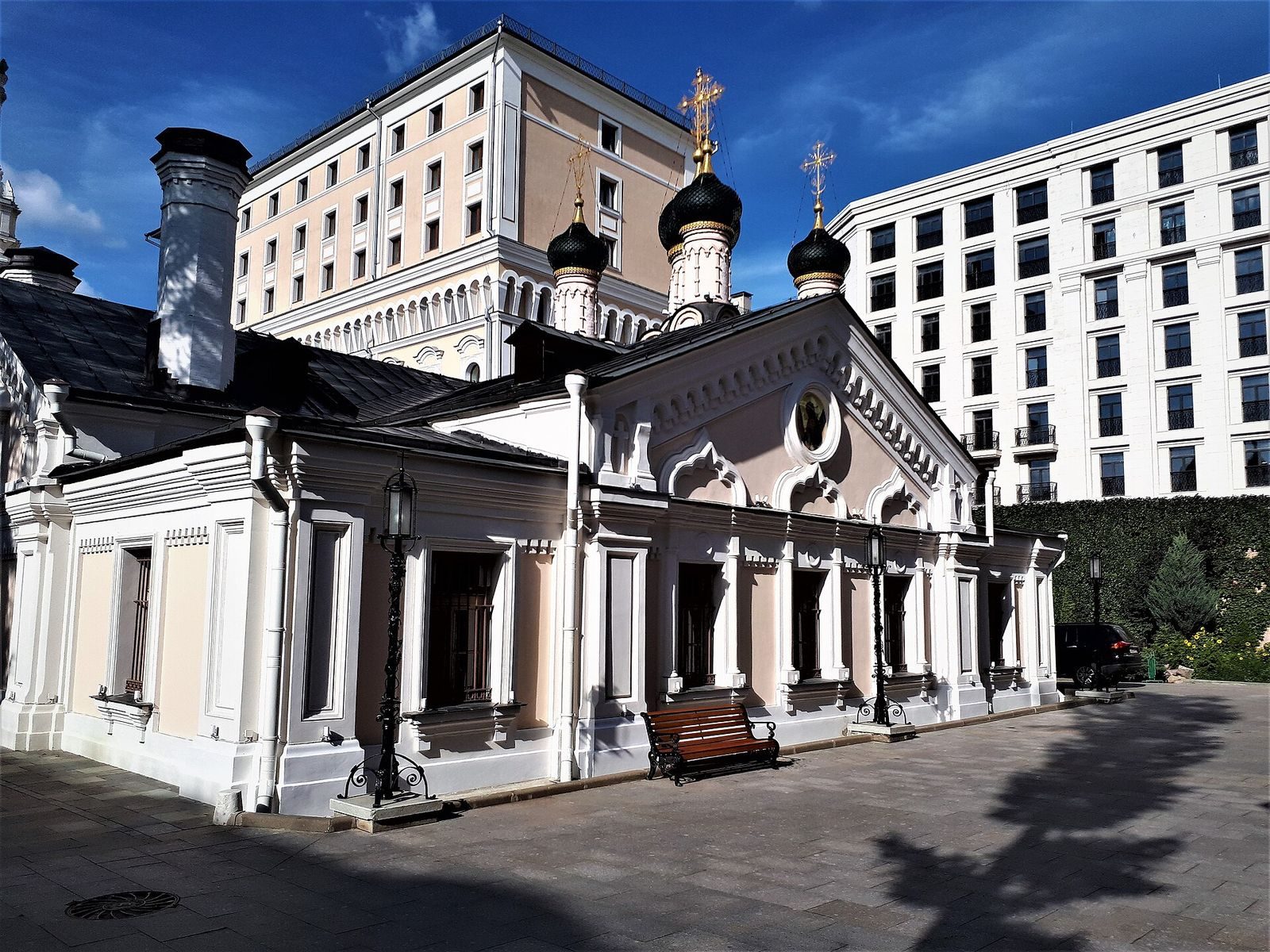
The church’s main altar is dedicated to Holy Wisdom, the Christian name for divine wisdom. Its exterior is in the Russian style, and five domes rise above drums decorated with kokoshniks, curved ornamental forms used in Russian building design. The church is described as having two iconostases. By 1965, plaster was peeling, the altar doorway was damaged, crosses had been replaced by television antennas, and apartments occupied the interior.
Refectory
The refectory, a hall associated with a church, has side chapels dedicated to Saint Andrew the First-Called and Saint Nicholas the Wonderworker. Its windows have keel-shaped surrounds, with pointed upper curves.
Bell tower
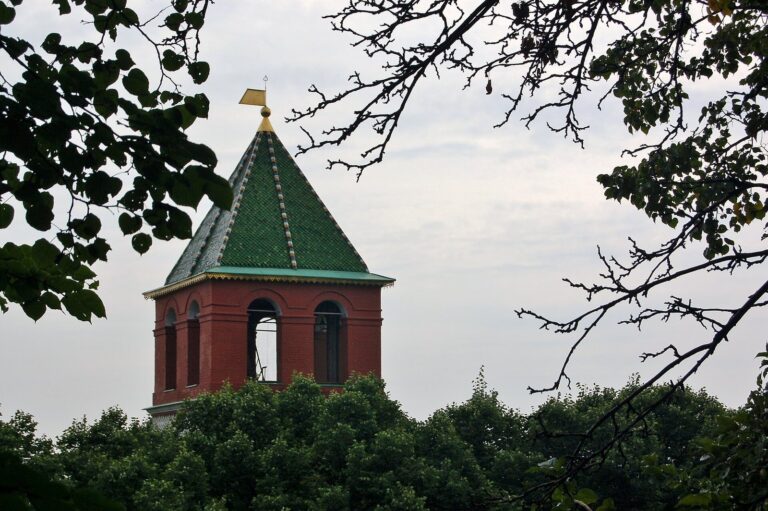
The separate bell tower has three tiers and stands toward the embankment, projecting in front of the church façade. Its tapering form and openwork belfry echo the Kremlin towers across the river. The design combines Russian and Byzantine elements. Within the tower is a second church dedicated to the Icon of the Mother of God “Seeking the Lost.” It was intended for worship during spring floods, when the main church could become inaccessible. The bells installed in 2013 form a harmonically coordinated set; the largest, used to call worshippers to services, weighs seven tons.