Church of the Iveron Icon of the Mother of God at Vspolye: A Russian Orthodox Church in Moscow
Site at a Glance
- Popularity
- Medium
- Country
- Russia
- Primary era
- Early Modern
- Eras represented
- Early Modern, Modern
- Civilizations
- Russian
- Site type
- Religious
- Remains
- Church
On this page8 sections
History
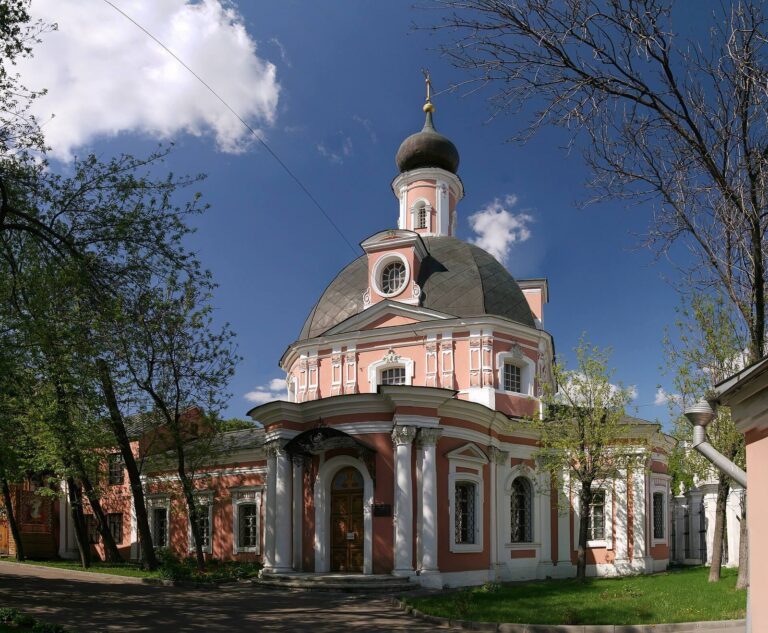
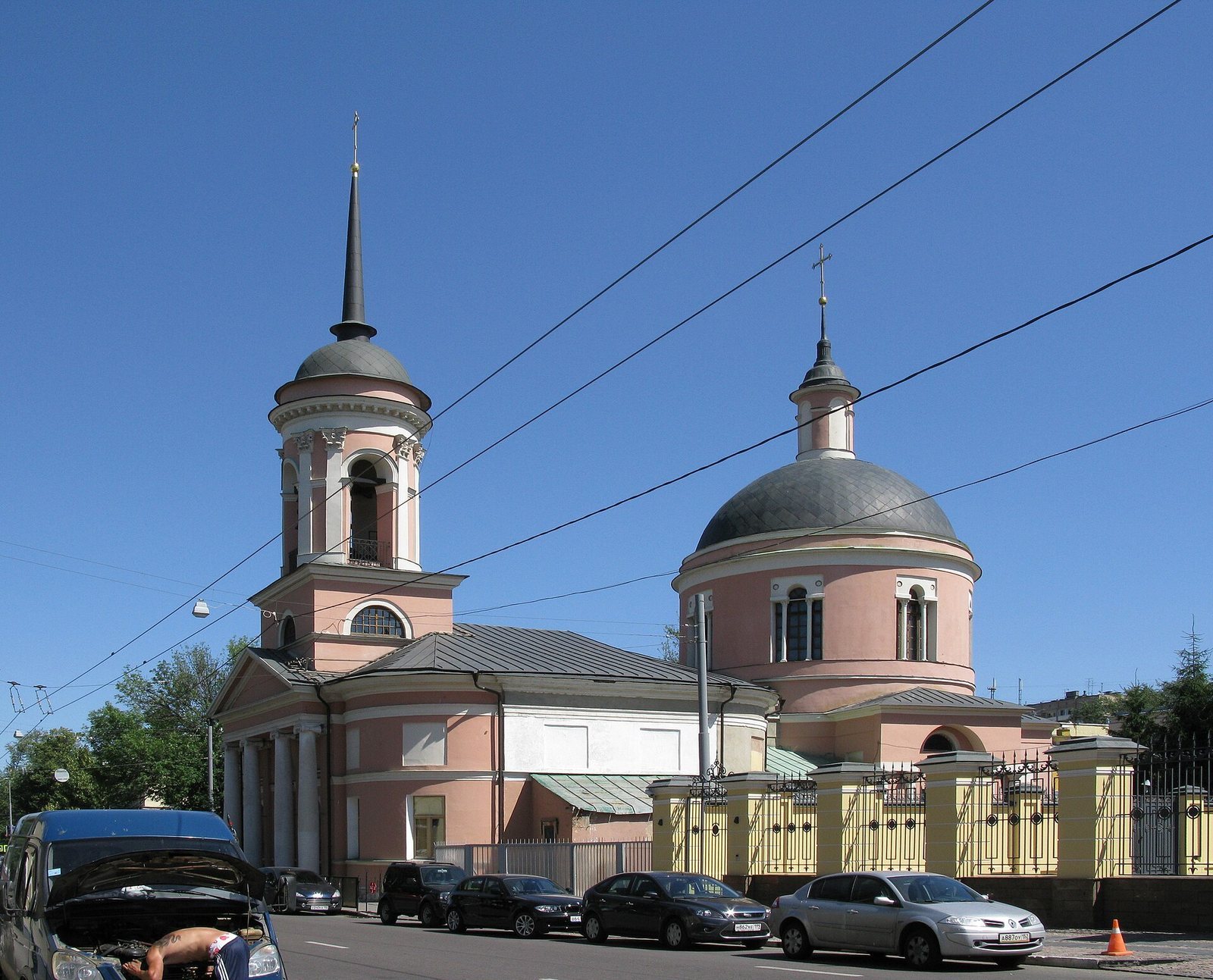
The Church of the Iveron Icon of the Mother of God at Vspolye is a Russian Orthodox church on Bolshaya Ordynka in Moscow, Russia, built between 1791 and 1802 in the Russian Classicist style, which uses classical forms and became prominent in Russia in the late eighteenth century. Its main altar is dedicated to the Iveron icon, an Eastern Orthodox image of the Virgin Mary traditionally associated with Iveron Monastery on Mount Athos. The side chapels honor Saint George the Victorious, traditionally portrayed as a warrior, and Saint John the Warrior.
Earlier church and construction
A stone church dedicated to Saint George stood on the site by 1673, built with financial support from the merchant I. S. Potapov. The present church was financed by the merchant I. I. Savin. Construction began with the refectory and oval side chapels; the earlier church was later demolished as work on the new building proceeded. Ivan Egotov, a Russian architect active around the turn of the nineteenth century, is considered the probable designer, although his authorship is unconfirmed. The building’s simplified classical forms support this attribution.
Nineteenth-century changes
The church underwent repeated refurbishment during the nineteenth century without substantial change to its architectural appearance. A bell tower was added in 1842.
Soviet closure and return to worship
Soviet authorities closed the church in 1930. The building became a club for a railcar-repair factory, later housed other organizations, and eventually accommodated a contemporary-art gallery. During the Soviet period, the bell tower was demolished, Christian symbols were removed, and the interior was altered. Services resumed in 1992. The church’s return to the Russian Orthodox Church began in 1993 and was formalized on 12 July 1994; the bell tower was rebuilt and the interior reconstructed after its return. The church is active and belongs to the Moscow Diocese and the Moskvoretsky Deanery, an administrative grouping of local parishes. It is protected in Russia as a federal-level cultural heritage site.
Remains
Plan and principal spaces
The church has a cylindrical main body capped by a single hemispherical dome, in the Russian Classicist style. Its broad refectory, a hall attached to the worship space, contains a square central area and two oval side rooms used as chapels. The bell tower stands directly above the entrance doorway and narrows the refectory’s central section.
Interior and entrance
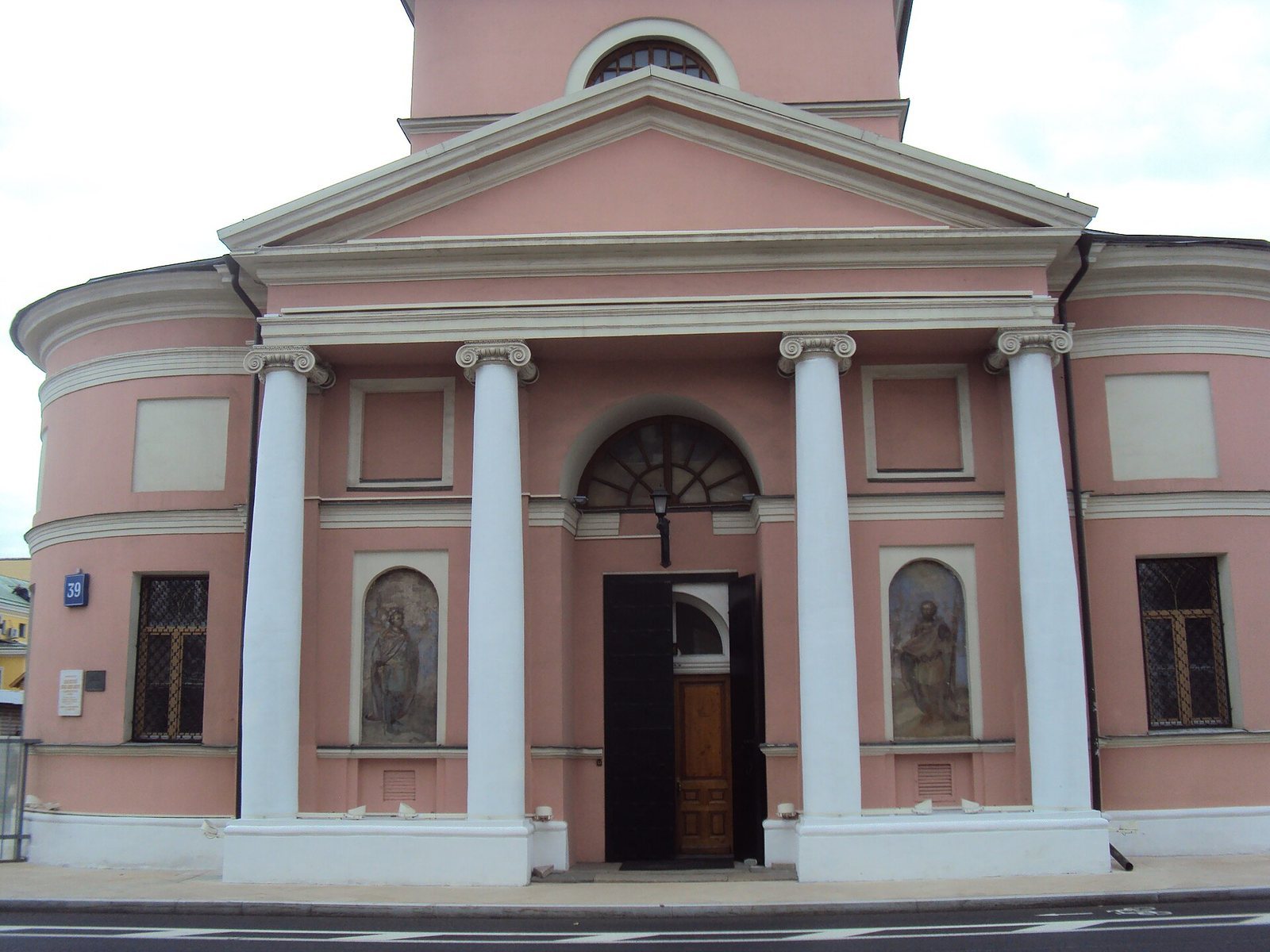
Partitions inserted below the dome during the Soviet period divided the interior into three storeys. The main entrance portico, a columned porch, has lost its Ionic capitals, the scroll-shaped tops of the columns, and its column bases.
Neighboring estate and sculpture
A neighboring estate built between 1817 and 1821 lies south of the church property. The courtyard between the estate and the church contains Rebirth, a sculpture by Ernst Neizvestny dated 2000.