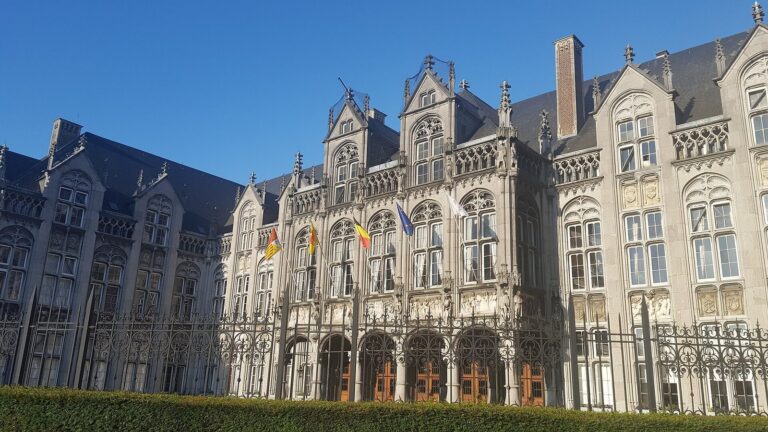
Church of Saint John the Evangelist: A Collegiate Church in Liège
Site at a Glance
- Popularity
- Medium
- Country
- Belgium
- Primary era
- Early Modern
- Eras represented
- Medieval, Early Modern
- Civilizations
- Holy Roman Empire
- Site type
- Religious
- Remains
- Church
On this page16 sections
History
The Church of Saint John the Evangelist is a Roman Catholic collegiate church in Liège, Belgium, founded under Bishop Notger between 980 and 987 and consecrated in 987. A collegiate church was served by a chapter, a corporate body of clergy who worshipped together. Notger was Liège’s first prince-bishop, an ecclesiastical ruler who also held political authority.
Foundation and medieval chapter
After Notger captured Chèvremont Castle, stone from churches demolished in its aftermath was used to build Saint John’s. Tradition connects the foundation with thanksgiving for his victory. The church was also intended as Notger’s burial place, and he was buried there in 1008. At its foundation, 30 canons served the church, and its chapter had 30 prebends, or incomes attached to canon offices. It was one of Liège’s seven collegiate churches, and its chapter ranked first among those in the city.
The original design echoed the Palatine Chapel, the chapel of Charlemagne’s palace at Aachen. That building drew on Jerusalem’s Church of the Holy Sepulchre, a major Christian shrine associated with Jesus’s burial. Art historian Elizabeth den Hartog interpreted Saint John, the nearby baptismal church of Saint Adalbert, and Liège’s cathedral as a group comparable to Jerusalem’s burial church, baptistery, and Marian shrine. The Saint Adalbert church later disappeared, and the cathedral was demolished. The Aachen-inspired design also represented imperial power in Liège’s center.
In the fourteenth and fifteenth centuries, composers of the Franco-Flemish school served as canons, including Johannes Ciconia, Johannes de Limburgia, and Johannes Brassart. The church maintained a library from 1388.
Rebuilding and the French period
A Meuse flood in 1740 weakened the building and damaged Notger’s grave monument. The church was largely demolished in 1754 and rebuilt on the same plan, with the work completed in 1757. The Romanesque western structure and late-Gothic cloister were retained. In 1757, Notger’s remains were placed in a chest suspended from the sacristy ceiling, a room for service preparation and sacred objects. Around 1794 they were taken to Baron de Stembier de Videux’s home, later returned to a church attic, and moved back to the sacristy around 1840 by the priest Duvivier.
The chapter was suppressed during the French Revolution in 1797. The following year, the church, cloister, and adjoining chapter buildings were sold to three former canons. Many objects from the chapter treasury were lost during the French period, and much of the church silver was sold or melted down to meet war contributions imposed by France. The church returned to Catholic worship as a parish church in the early nineteenth century.
Parish church and later history
On 23 March 1879, Pope Leo XIII formally authorized the crowning of a statue of Saint Joseph dated 1757. The ceremony marked the 200th anniversary of King Charles II of Spain’s request to Pope Innocent XI to consecrate Belgium to Saint Joseph. It also coincided with the 203rd anniversary of the Diocese of Liège, established in 1676 at Emperor Leopold I’s request and approved by Pope Clement X. Bishop Victor Joseph Doutreloux received the notarized papal decree.
The church received protected and exceptional heritage status in Wallonia in 1952, with the protection excluding its organ. In 2013, protection was extended to the cloister and adjoining parts of the complex, and a surrounding protection zone was established. Restoration of the Romanesque tower and its two smaller towers began in March 2023 and was completed in December 2024.
Remains
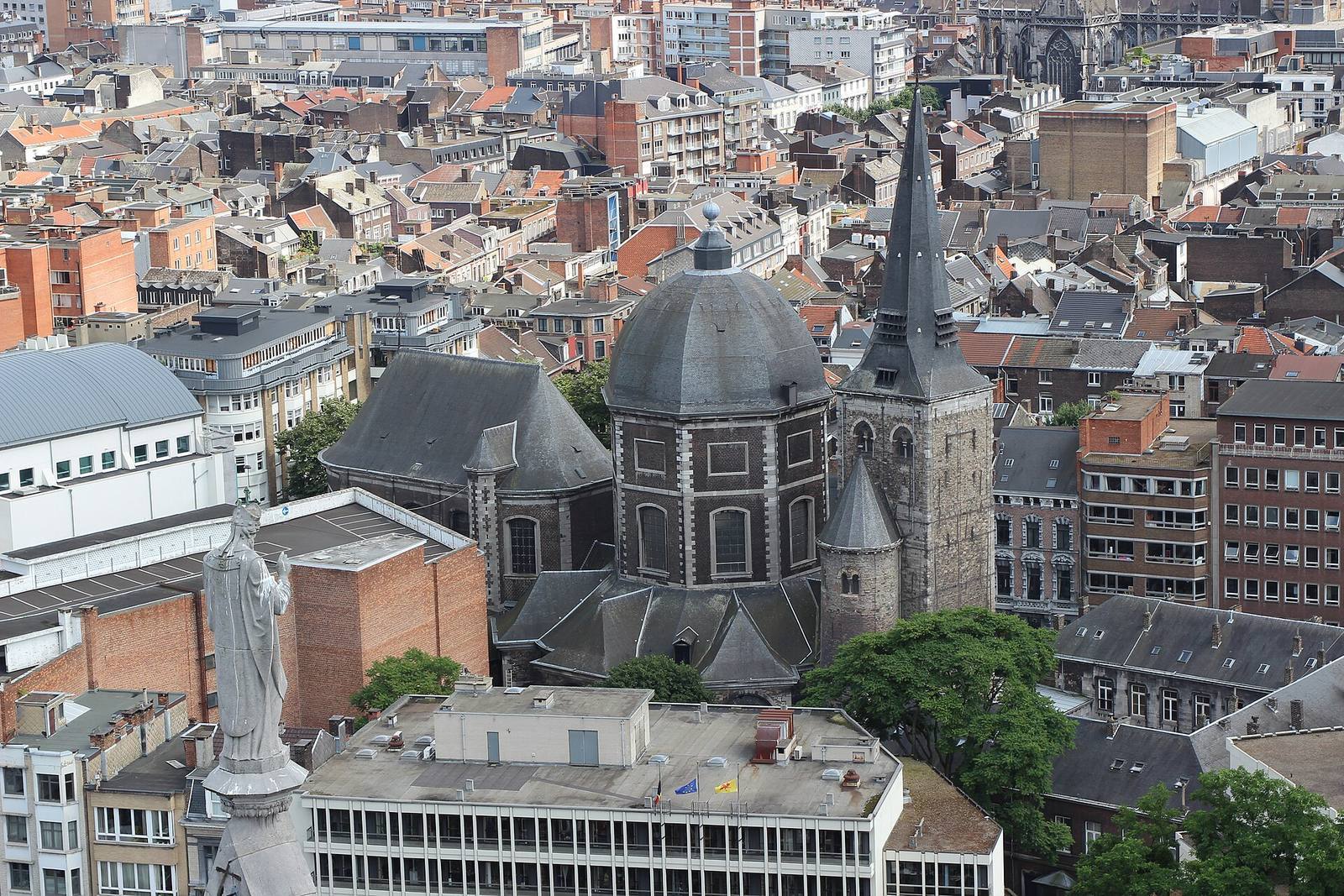
From west to east, the complex comprises a westwork, the church’s western entrance-and-tower block, an octagonal central building, and a choir, the part traditionally reserved for clergy and choir stalls. Its parts include Romanesque, a medieval European architectural style, and late Gothic, a later medieval architectural style, as well as an eighteenth-century rebuilding. The complex once stood on an island formed by a branch of the Meuse, whose former course is now followed by Boulevard de la Sauvenière. This island setting gave the church its earlier name, Saint-Jean-en-l’Isle.
The medieval western complex
Romanesque westwork
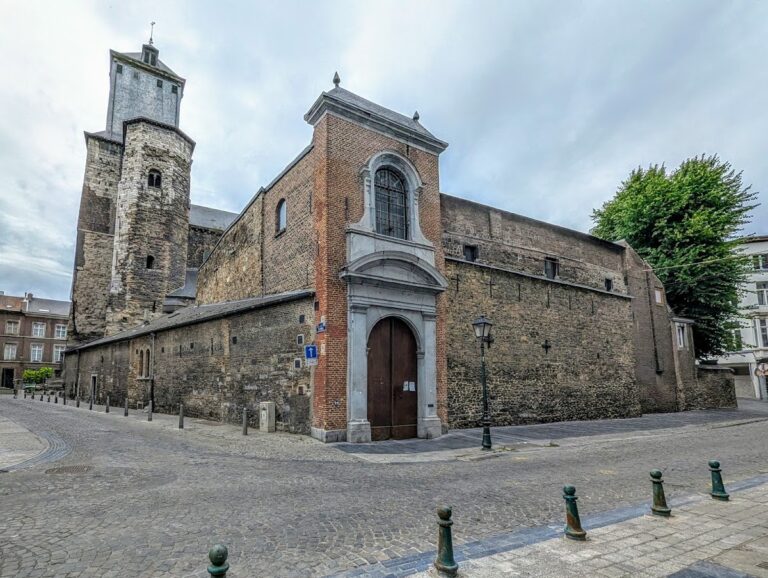
The westwork is built of coal sandstone and consists of a large square central tower flanked by two round towers. Its lower sections may date to the late tenth century, while the central section was raised in the twelfth century. The cloister encloses the westwork, leaving only the higher tower sections and spires visible from the street. Restoration completed in 2024 left the tower covered in white render. The westwork has little interior space and no longer serves a religious function.
Cloister
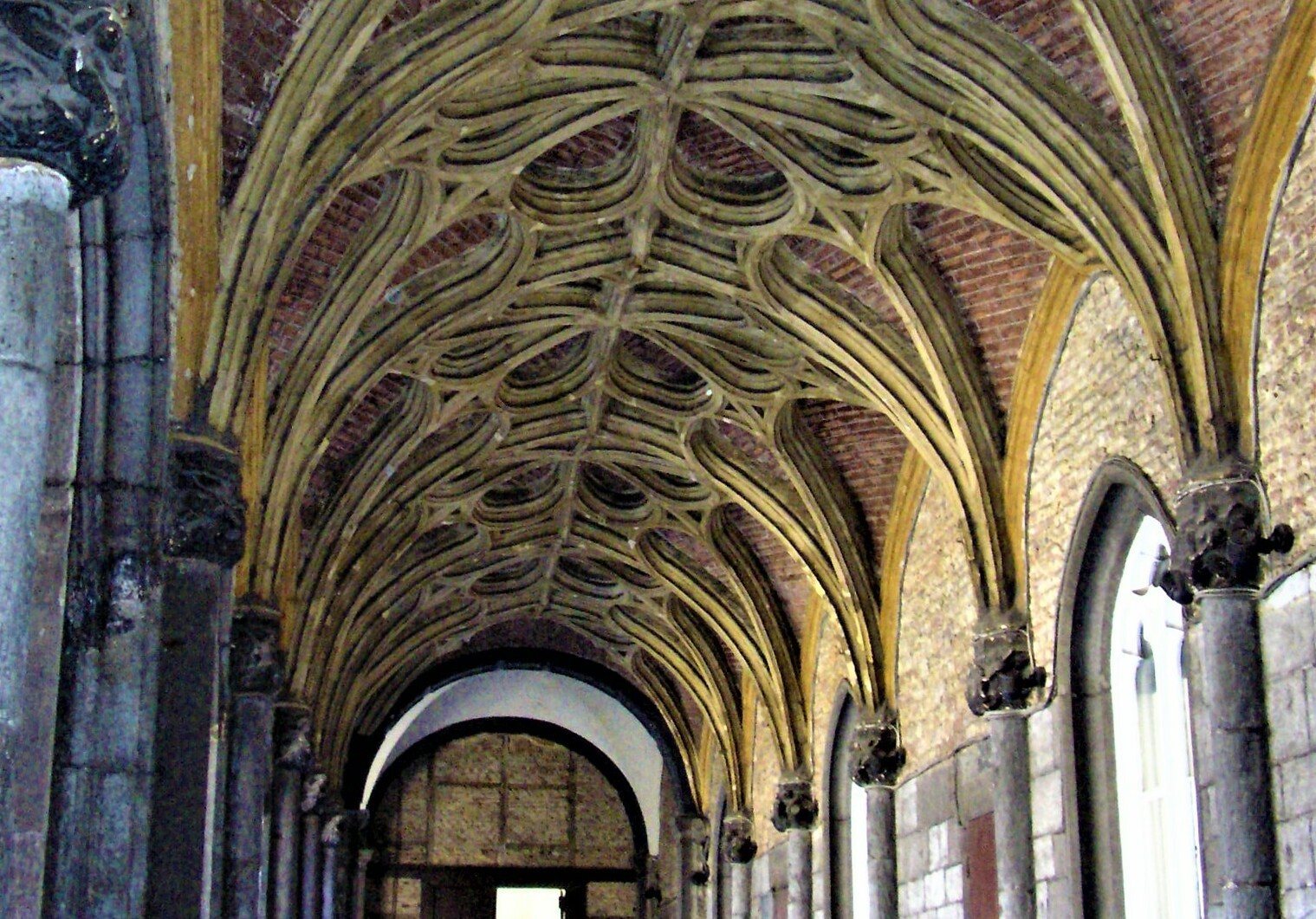
The cloister, a covered walkway around a courtyard, forms the westernmost part of the complex. Its late-Gothic sections date to the sixteenth century. In the south wing, ornamental ribs in a vaulted ceiling rest on sculpted column tops. The east wing, beside the westwork, is partly Romanesque and was renewed in the eighteenth century. Arches of the cloister vault rest on small projecting columns topped with sculptures and coats of arms. Gravestones dating from 1400 to 1800 stand against the cloister walls, and a statue of Notger made by Rixgens in 1891 occupies the courtyard’s center.
Central building, choir, and interior
Central building and choir
The central building and choir date from the eighteenth-century rebuilding and use dark-brown brick with stone elements. Six chapels surround the octagonal central building, which is topped by a high dome. The rebuilt church rises higher than its predecessor. A Baroque portal, in an ornate European architectural style, stands between the central building and cloister; a relief of Saint John the Evangelist appears above its entrance. The choir is elongated and ends in a curved section with a high wall that is partly windowless.
Interior and furnishings
The interior retains an eighteenth-century character, with a sky-blue painted dome. The marble main altar is decorated with figures of angels. The pulpit and confessionals have unpainted ornamental wood carving associated with the Liège-Aachen furniture style. The church also has a carillon, a set of bells played from a keyboard, comprising 35 bells.
Art and sacred objects
Paintings
The church’s paintings include a large Crucifixion made in 1649 by Liège painter Bertholet Flémal. Philippe-Auguste Hennequin’s painting of Saint John the Evangelist on Patmos serves as the image behind the main altar.
Medieval sculptures
A painted wooden sculpture of Mary holding the Christ Child as the “Seat of Wisdom” dates to about 1230. The image presents Mary as a throne for divine wisdom. Its origin is uncertain; it may have come from a church or monastery suppressed during the French period, and Helbig proposed the former church of Saint Adalbert as its source. Other medieval works include a thirteenth-century Calvary group depicting the Crucifixion and a sixteenth-century Ecce Homo, an image of Christ after his scourging.
Later sculptures and devotional works
Wooden medallions of Saints Peter and Paul are attributed to Jean Del Cour. A crucifix dating to about 1700 is attributed to Cornelis van der Veken, who also made a door frame, a carved panel above a doorway, and statues of John the Baptist and Genevieve of Paris dated 1701–1710. The church also has a wooden statue of Saint Roch by Jacques Vivroux and a work by Renier Panhay de Rendeux showing Saint Adalbert in an ecstatic pose, surrounded by decorative child figures. The Stations of the Cross were given by Arsène Fabry de Longrée and his wife Joséphine, whose coats of arms appear on the work. A statue of Saint Joseph dated 1757 is enshrined in a private side chapel.
Books and former treasury objects
A Gospel book copied in 1565 by canon Robert Quercentius is kept in the sacristy. It contains 24 miniatures, six by Thomas vanden Putte, also known as Puteanus. A tenth-century Gospel book associated with Notger, once held by the chapter, is now in Liège’s Grand Curtius museum. A gilded silver chalice dated 1519, formerly part of the church treasury, is now in the Rijksmuseum Amsterdam.