Holy Cross Church, Liège: A Historic Collegiate Church
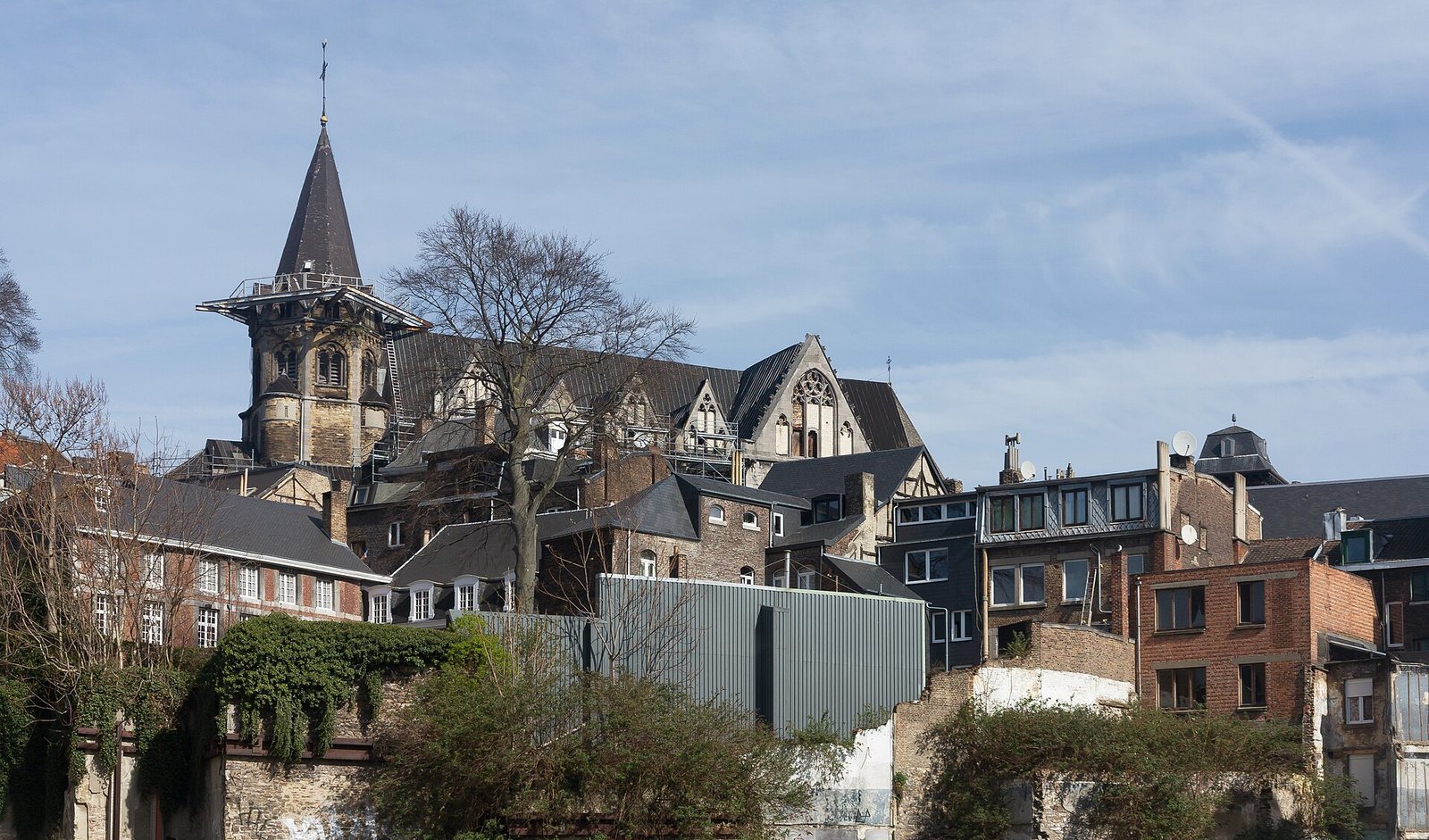
Site at a Glance
- Popularity
- Medium
- Country
- Belgium
- Primary era
- Medieval
- Eras represented
- Medieval, Early Modern, Modern
- Civilizations
- Belgian, Holy Roman Empire
- Site type
- Religious
- Remains
- Church
On this page16 sections
History
Holy Cross Church, Liège, is a Roman Catholic collegiate church in Belgium, founded and built by Bishop Notger between 976 and 986 and consecrated in 986. It belonged to the Diocese of Liège, the territory under a bishop’s authority, and became one of the city’s seven historic collegiate churches. Notger established a chapter, or community of clergy, with 15 secular canons who were not members of a monastic order. Bishop Wazon expanded the chapter to 30 in 1045. The church’s fabric includes Maasland Romanesque and Gothic work, with Gothic as the predominant style.
Foundation and endowments
The church was built on the site of Silvestre Castle, which belonged to the knight Radus des Prez. A local legend recounts that Notger and Radus were away in Germany for two years when Notger’s nephew Robert demolished the castle and began the church’s construction. In the tale, Notger compensated Radus with estates and meadows, and granted Sauvenière to Robert, who was provost of Saint-Lambert.
On 5 April 1005, Henry II, king of East Francia and later Holy Roman Emperor, confirmed Notger’s foundation and granted it property in the Ardennes, Hesbaye, and Ripuarian territories. A tradition holds that Henry gave the church relics of the True Cross in 1006. Between 1113 and 1118, a dispute over a grant from Countess Ermengarde, claimed by the bishop, was adjudicated in Liège. The church also held the tithe of Vreren.
The chapter’s records
A major compilation assembled by Mathias de Potthem de Lewis, also known as Matthias de Léau, in 1379, contains 407 vellum folios. Its oldest recorded document is Henry II’s diploma of 1005. The compilation includes a chronicle ending in 1576, records on the parish of Frères and the chapter’s property and income, and texts concerning ecclesiastical privileges, immunities, agreements, statutes, and customs. Among these are the Peace of the Clerics, the Peace of Wihogne, the modification of the Peace of Waroux, and the Peace of the Sixteen.
During the Liège Revolution, an uprising against the rule of the prince-bishops followed by French annexation, the original charters and cartularies were moved for safekeeping and later disappeared. Cartularies are registers of copied charters. Collections assembled by canons preserved much of their information and are now held at the State Archives in Liège. Canon André Heynssch began renewing and supplementing these compilations in 1962.
Rebuilding and institutional change
The church’s history records a reconstruction in 1391 and a restoration in 1758. In the 19th century, architect Jean-Charles Delsaux oversaw extensive restoration of the western choir.
After the Liège Revolution and French annexation, the chapter was suppressed in 1797, and the church was used for electoral assemblies. It became a parish church in 1801 and worship resumed the following year.
The church was protected as a monument in 1936 and recognized as exceptional Walloon heritage in 1997. In October 2013, it appeared on the World Monuments Fund’s list of 67 endangered monuments. By 2020, a major restoration campaign was addressing the roofs, masonry, stained glass, and interior decoration.
Remains
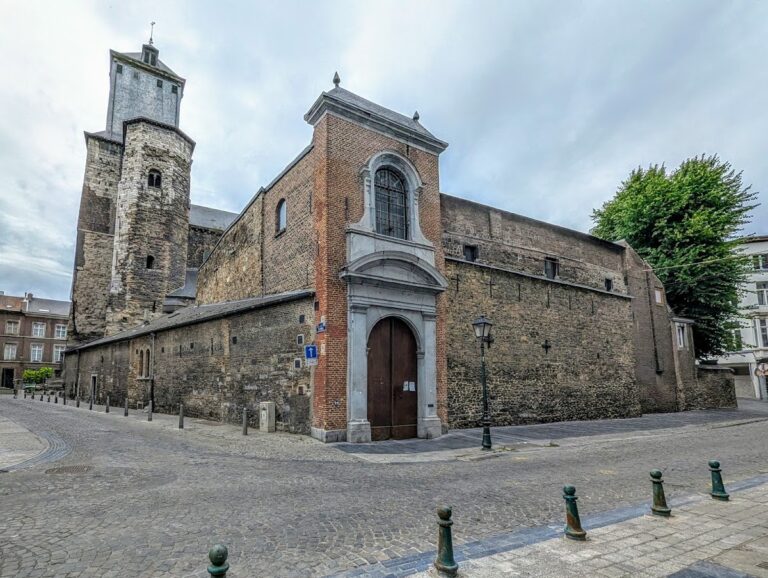
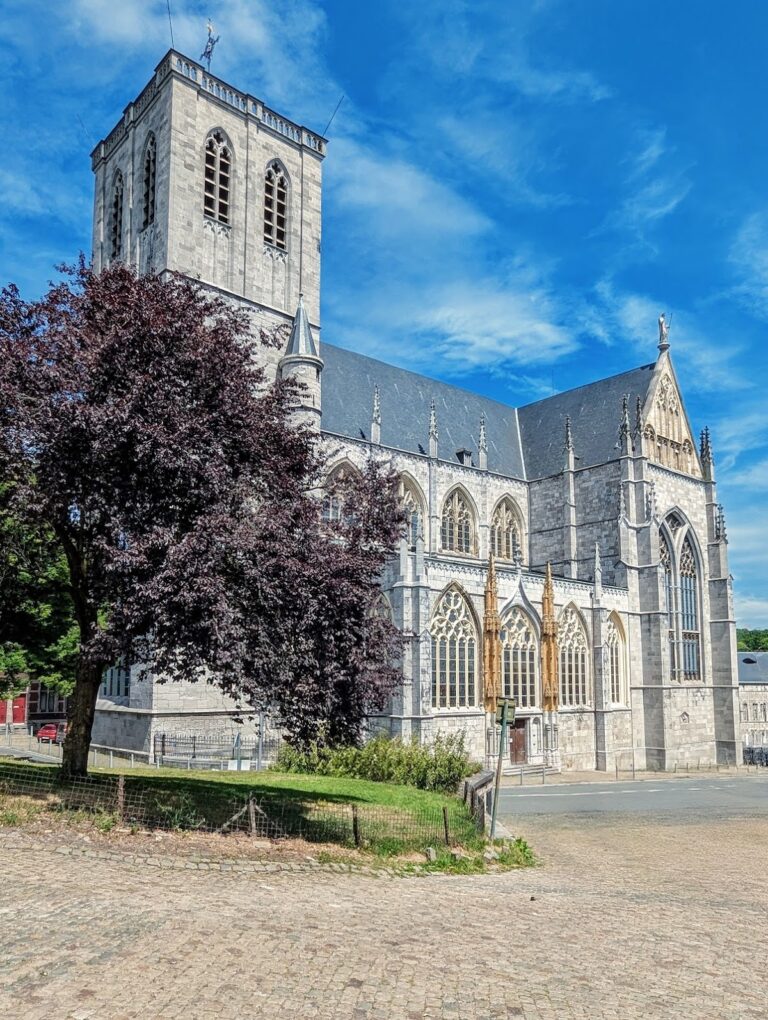
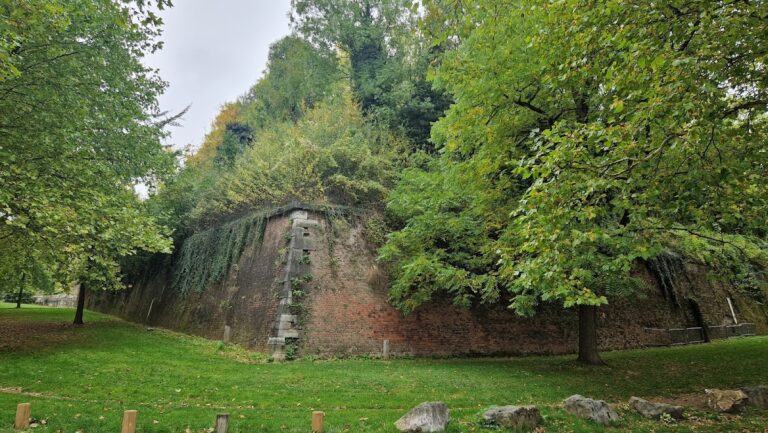
At the corner of Rue Sainte-Croix and Rue Haute-Sauvenière, near Place Verte, the church has a three-aisled plan shaped like a cross, with a small transept, the cross-arm of the plan, and choirs at both ends. Its fabric combines Maasland Romanesque and Gothic work, with Gothic predominant. The building is 57 metres long and 25 metres wide, and the vaulted ceiling over the main nave reaches 17 metres. A sandstone wall from the first church survives within the exterior façade beside the choir apse.
Choirs
Western choir
Built around 1200–1220 in a Romanesque–Gothic transitional style with Rhenish influence, the western choir is a substantial architectural complex. An entrance vestibule, or narthex, lies beneath an octagonal bell tower. Beyond it, a semicircular apse is encircled by a covered ambulatory, a passage around the choir and apse. Small round-arched openings in the passage rest on columns. The western choir now serves as a baptistery.
Eastern choir
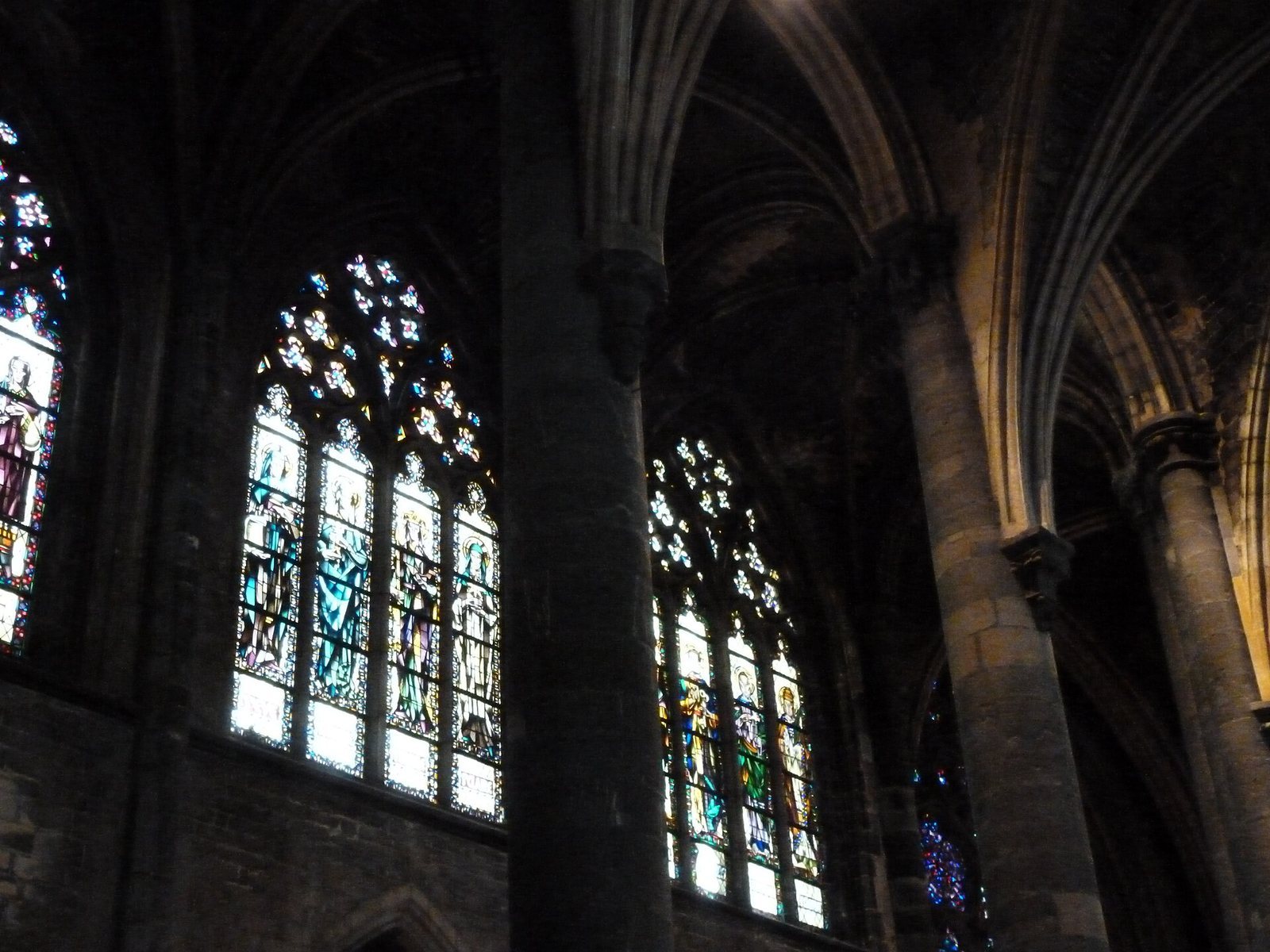
The eastern choir and its apse date to 1255. The choir is Gothic in form, with Neo-Gothic decoration. Its wall paintings are by Jules Helbig, and its stained glass includes work by Jean-Baptiste Capronnier and Eugène-Stanislas Oudinot.
Nave and transept
The transept and the first two eastern bays of the nave are dated to 1283–1287, while the final two nave bays date to 1332. The nave as a whole is dated to 1324–1361. Chapels were added between the buttresses of the side aisles in the 15th century.
Sculpture, paintings, and furnishings
Portal sculptures
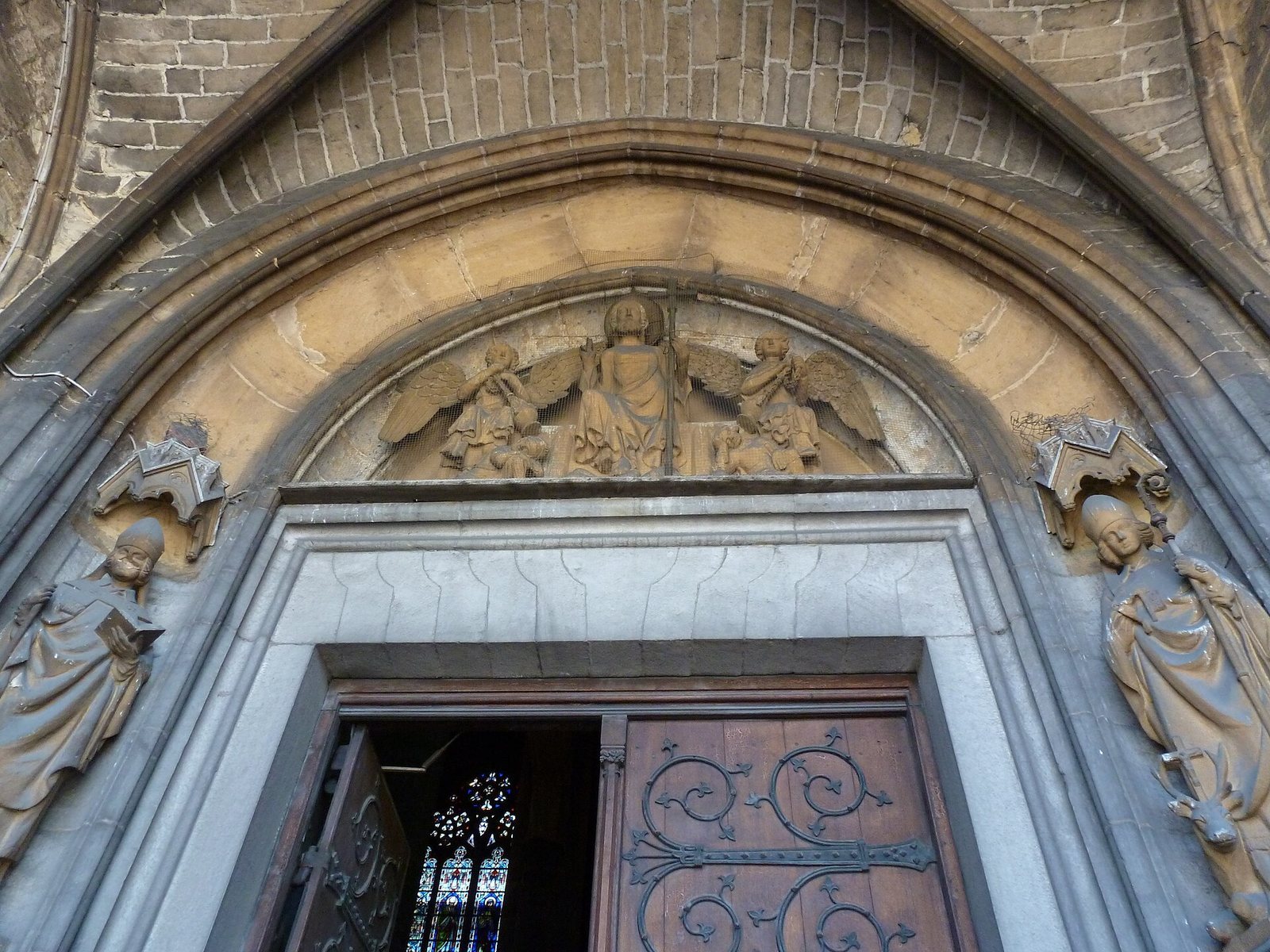
The Gothic portal’s tympanum, the enclosed space above the doorway, carries a group representing the Resurrection. The figures now in place are copies made in 1935 after the originals were badly damaged. The five original stone figures, dated to the mid-14th century and attributed to the Master of the Mosan Marble Madonnas, are displayed at the Grand Curtius Museum. Two of them, representing warriors, are dated to 1340.
Paintings and stained glass
The western choir contains Bertholet Flémal’s 17th-century painting of the Finding of the Holy Cross. Flémal also painted a 1674 version of the subject and a Presentation of Jesus in the Temple for the church. An early-18th-century Resurrection painting is by Edmond Plumier.
Funerary monument and statues
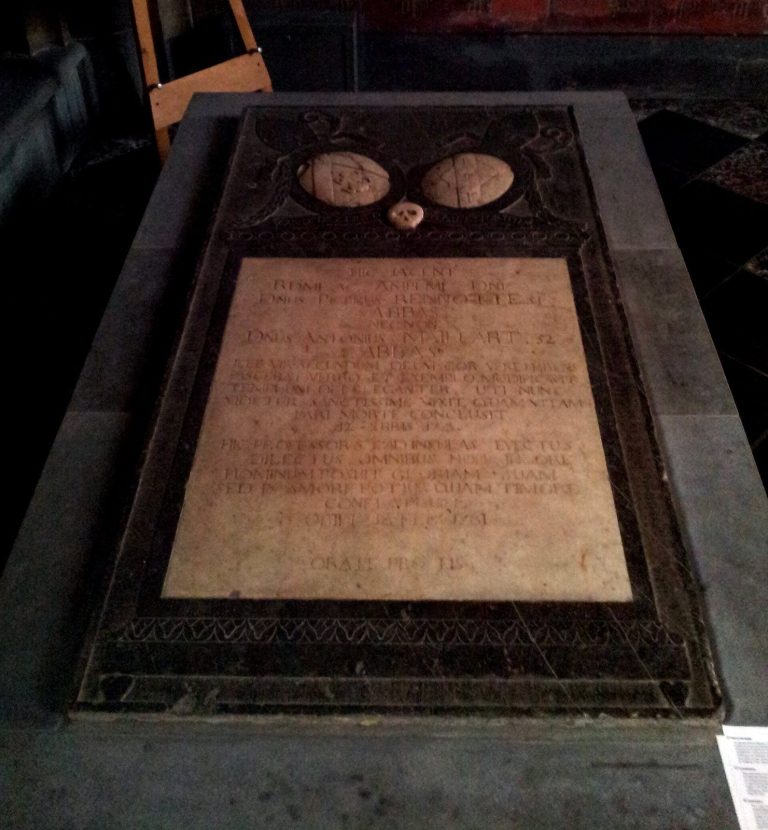
A funerary monument for Hubert Mielemans, treasurer to the prince-bishop, is made of black limestone described as Theux marble and dates to 1558. At the back of the church stand over-life-size white-marble statues of Saint Helena and her son Constantine the Great, dated to 1662. Guillaume Coquelet is identified as their sculptor; Jean Del Cour and Guillaume Evrard are also associated with the pair in the church’s artist listing.
Organ and Key of Saint Hubert
A very large organ was installed in 1861, using a case dated to 1609. The church also houses the Key of Saint Hubert, which was formerly kept in the treasury of Liège’s Collegiate Church of Saint Peter.
Holy Cross Triptych
The Holy Cross Triptych, a three-panel work of Mosan goldsmithing dated to 1160–1170 and attributed to Godefroy of Huy, is made of oak covered with gilded copper. Fragments of the True Cross, initially arranged in a small gold cross, were incorporated into the triptych around 1160. The work also contains a tooth of Saint Vincent. A rock-crystal cabochon, a polished rounded gemstone, at its base protects the tooth and a fragment of the head of John the Baptist; renewed inscriptions identify the relics. The triptych is now at the Grand Curtius Museum.
Sandstone heads from the choir screen
Seven small sandstone heads from the church are held by the Provincial Museum of Liège. They once decorated a choir screen between the transept and the final two columns of the main nave, which the screen separated. Some heads belonged to statuettes, fragments of which are also in the museum; others supported a small cornice. The heads were found when foundations for a new portal were being dug and were given to the museum by the church fabric.