Kleinkastell Raitenbuch: A Roman Frontier Fort in Bavaria
Site at a Glance
- Popularity
- Very Low
- Country
- Germany
- Primary era
- Classical
- Eras represented
- Classical
- Civilizations
- Roman
- Site type
- Military
- Remains
- Fort
On this page6 sections
History
Kleinkastell Raitenbuch was a Roman military fort on the Raetian Limes, the Roman frontier system in central Europe, west of the village of Raitenbuch in Bavaria, Germany. Its occupation is tentatively placed in the final third of the second century AD. Small forts and watchtowers served as military posts just behind the frontier, but the fort’s garrison and particular function are unknown.
Abandonment and frontier chronology
The fort may have been abandoned by about 205 AD, but a different chronology has also been proposed. C. Sebastian Sommer suggested that it could have gone out of use before or during construction of the stone Raetian Wall. Pits cut into the fort may indicate that its stone was later taken for building or repairing the wall.
Tree-ring dating places the construction of the wall’s foundation structure at Kastell Dambach in the winter of 206/207. Sommer considered that wall-building may therefore have begun in spring 207, raising the possibility of an earlier phase in the development of the Limes.
Investigation and heritage status
In 1924, the Reichs-Limeskommission, an organization established to study and document Germany’s Roman frontier, commissioned archaeologist Friedrich Winkelmann to investigate the fort. Following a site visit in 2009 and subsequent research, Sommer urged a reassessment of its chronology. Since 2005, the fort and associated installations have been part of the UNESCO World Heritage property of the Upper Germanic-Raetian Limes. The site is also registered as an archaeological monument under Bavarian heritage law.
Remains
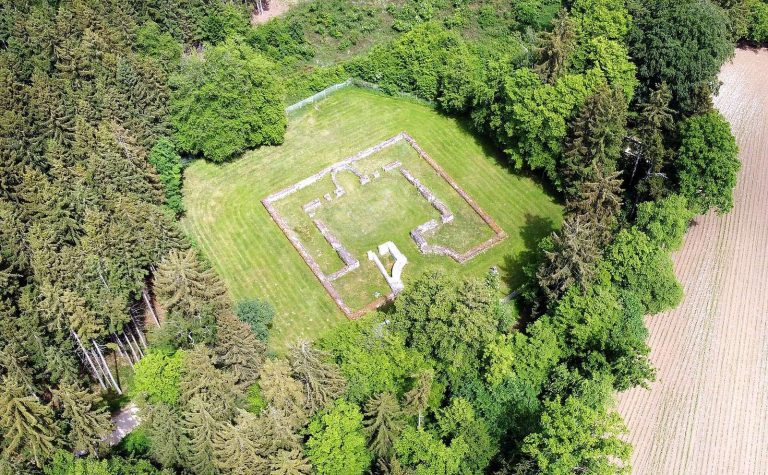
The fort occupies a forest edge about 20 metres behind the Limes wall, at an elevation of 573 metres. The nearby frontier line is almost straight, remains visible in places, and descends toward the southeast. Kleinkastell Gündersbach lies to the northwest along the Limes, and Kleinkastell Petersbuch to the southeast. Burgus Burgsalach, a small Roman fortified post, is west of Raitenbuch, while the Roman fort at Oberhochstatt is northwest. The fort itself was a compact stone enclosure with a roughly square plan.
Fort enclosure and entrance
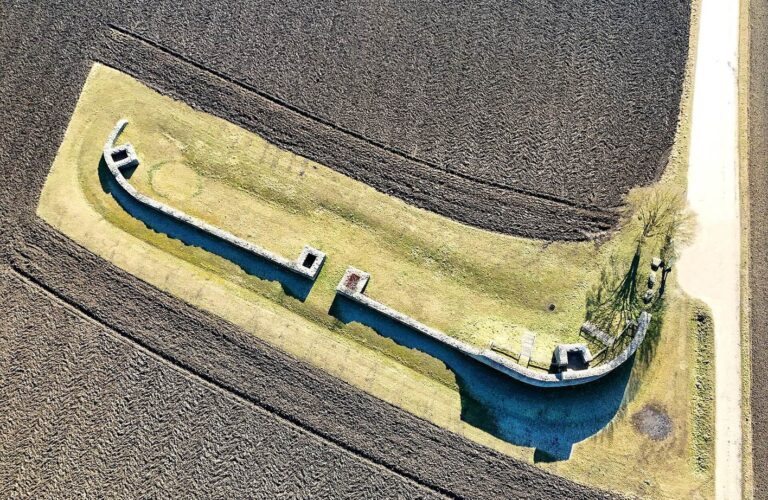
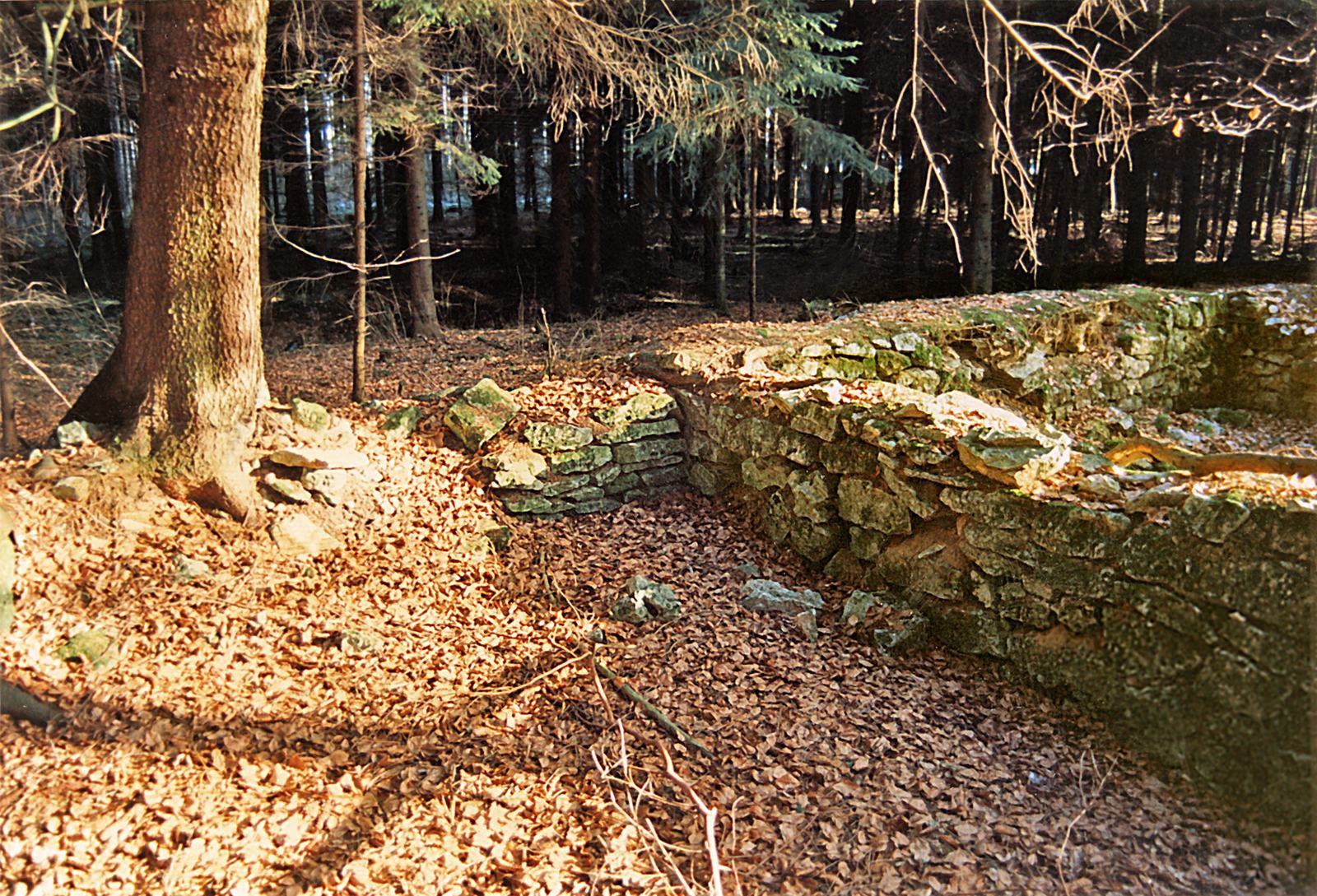
The enclosure measured about 18 by 18 metres, covering 324 square metres. Its rounded corners differ from those of most other small forts on this stretch of the frontier, though they also occur at larger forts of the Upper Germanic-Raetian Limes. The wall was originally about 0.60 metres thick, making it less substantial than the walls of other small forts in the area. Much of the enclosure’s flanks has been robbed out. Surviving corner areas were observed, while the eastern rounded corner appears not to have been excavated. Today, low, overgrown rubble banks mark the northwest and southwest defenses. A reconstructed single-lane entrance on the northeast side is bounded by two gate walls and appears to have faced the imperial frontier.
Interior and pits
The interior buildings were probably made of timber and arranged in a square around a courtyard. Timber stairs provided access to a walkway along the defensive wall. Several pits, each a few metres across and up to half a metre deep, run roughly parallel to the Limes through the rear part of the fort, away from the frontier. They cut through the northwest wall and disturb the unexcavated southeast wall.