Church of Saint John the Baptist Na Prádle: A Romanesque and Gothic Parish Church in Prague
Site at a Glance
- Rating
- 4.6
- Popularity
- Very Low
- Country
- Czechia
- Primary era
- Medieval
- Eras represented
- Medieval, Early Modern
- Civilizations
- Habsburg, Holy Roman Empire, Kingdom of Bohemia
- Site type
- Religious
- Remains
- Church
On this page12 sections
History
Medieval Origins
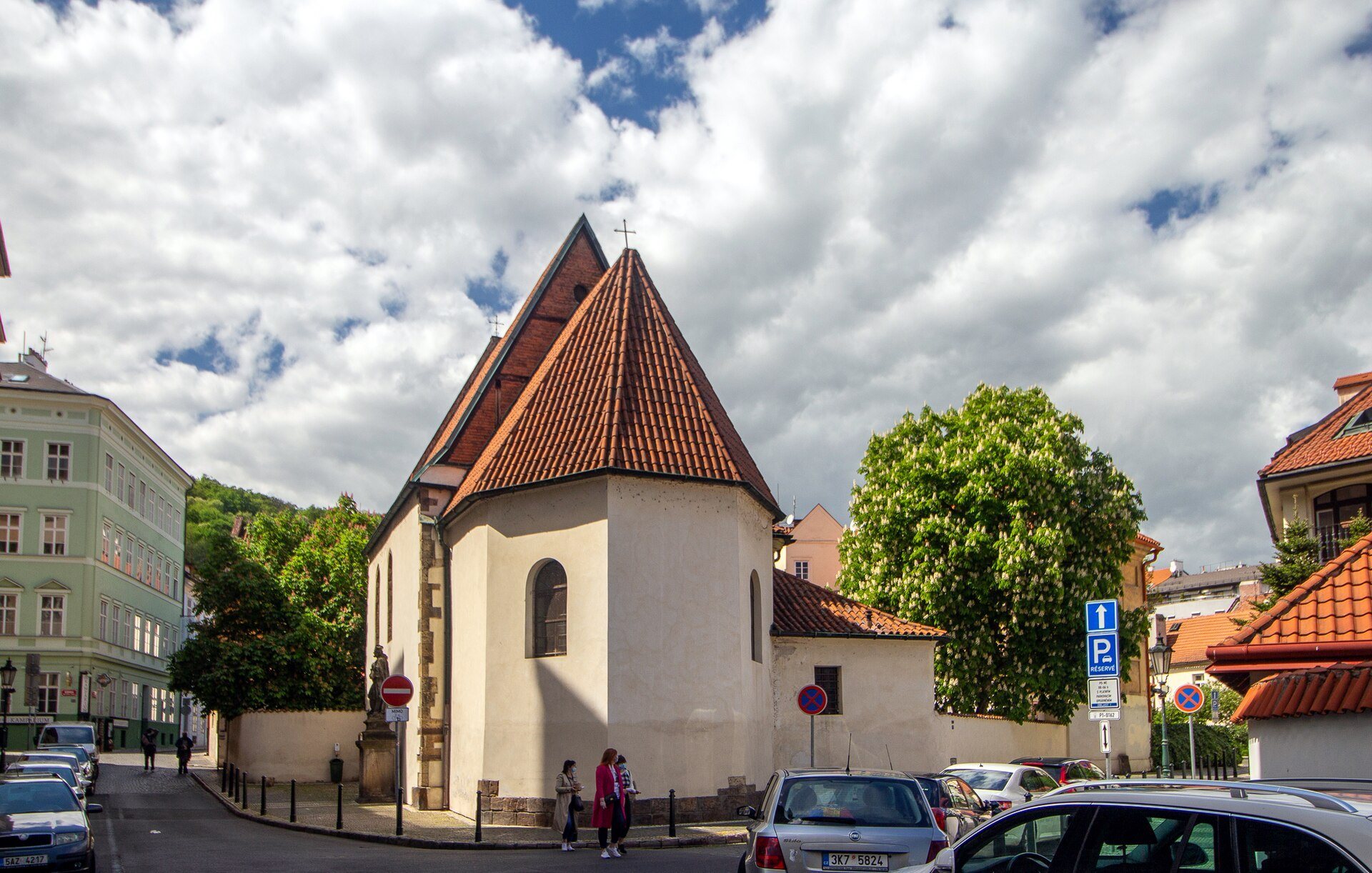
The Church of Saint John the Baptist Na Prádle is a historic church in Prague, Czechia, whose Romanesque nave originated around 1240. It stands in the Lesser Town, in the former settlement of Újezd beneath Petřín Hill, and was dedicated to Saint John the Baptist, the biblical prophet who baptized Jesus. The church became a parish church before 1300, when a Gothic presbytery was added. As Prague expanded, the church was incorporated into the Lesser Town in 1360.
The site was first mentioned around 1142 as the Church of Saint John the Baptist in Újezd. A tradition connects it with Benedictine nuns from Saint George’s Abbey, a medieval Benedictine convent in Prague. According to this tradition, the nuns took refuge at the church during Conrad II of Znojmo’s siege of Prague Castle after the Battle of Vysoká.
Renaissance and Baroque Changes
The interior was altered in Renaissance style between 1641 and 1644. The church was also associated with a municipal hospital nearby, probably founded in the sixteenth century and located there by 1662. The hospital complex included an older building known as Dachovský. Viktorin Kornel ze Všehrd, a late medieval Czech humanist, jurist, and writer, lived there briefly before his death in 1520 and is identified as buried in the church.
Josephine reforms, the church and administrative measures introduced under Habsburg ruler Joseph II, dissolved the church and hospital in 1784. Their buildings and grounds were sold to a private owner. The former church was then used as a laundry, a carpet-cleaning facility, and a warehouse. These later functions gave rise to the name Na Prádle, meaning “At the Laundry.”
Decline and Religious Renewal
By 1935 the building was described as derelict. Between 1935 and 1939 it was adapted for the Czechoslovak Hussite Church, a twentieth-century Christian denomination combining elements of the Hussite tradition with a modern national church structure. It has continued to serve that denomination as a parish church.
The floods of 2002 inundated Kampa and part of the Lesser Town, damaging the church and leading to subsequent repairs. The building is a protected cultural monument of the Czech Republic and forms part of the protected Lesser Town Hospital complex with the Church of Saint John the Baptist. Prague currently owns the church. The former churchyard cemetery disappeared, but small crosses set into the paving of the surrounding sidewalk commemorate its presence.
Remains
Romanesque Nave and Gothic Presbytery
Romanesque Nave
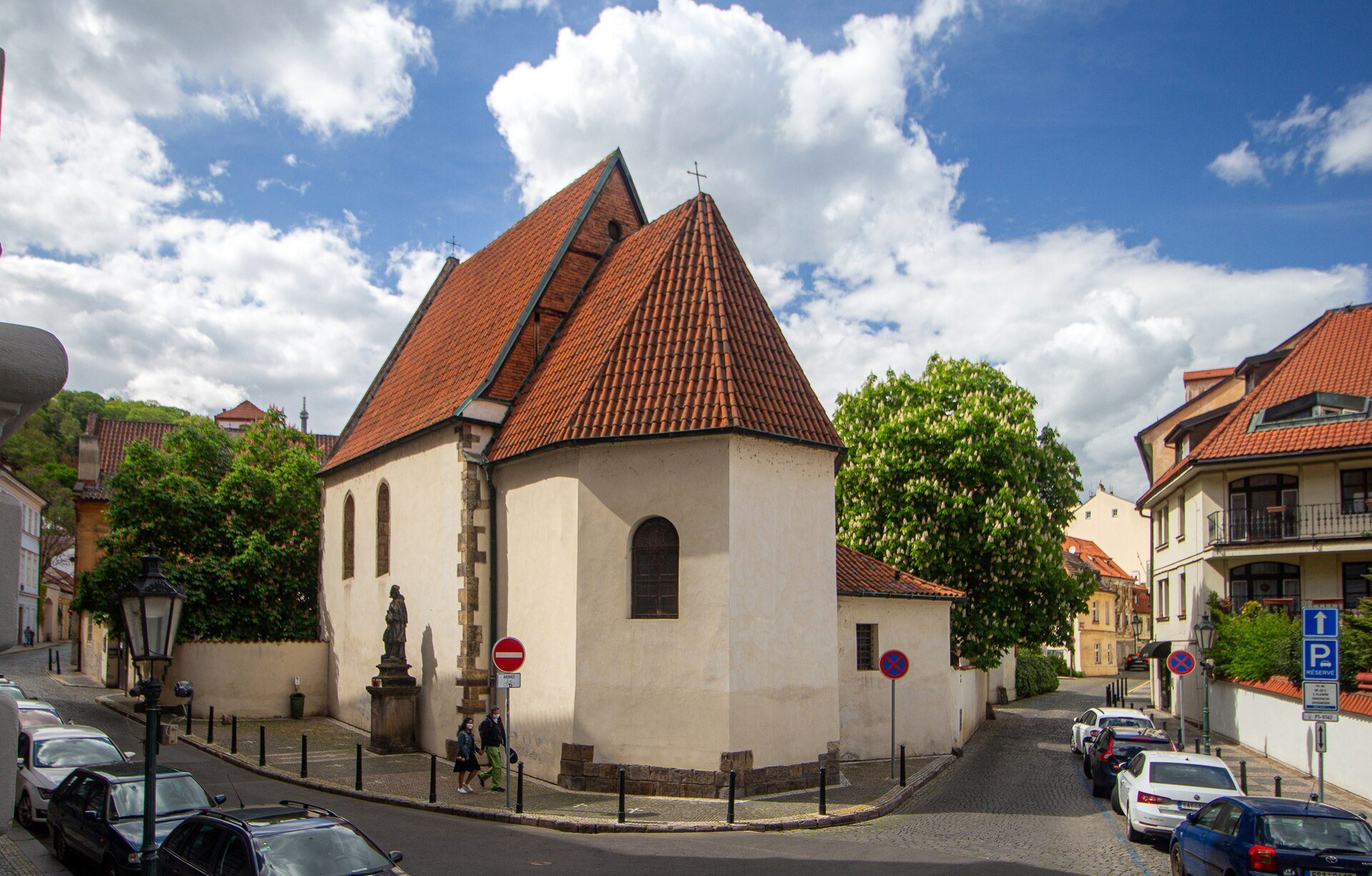
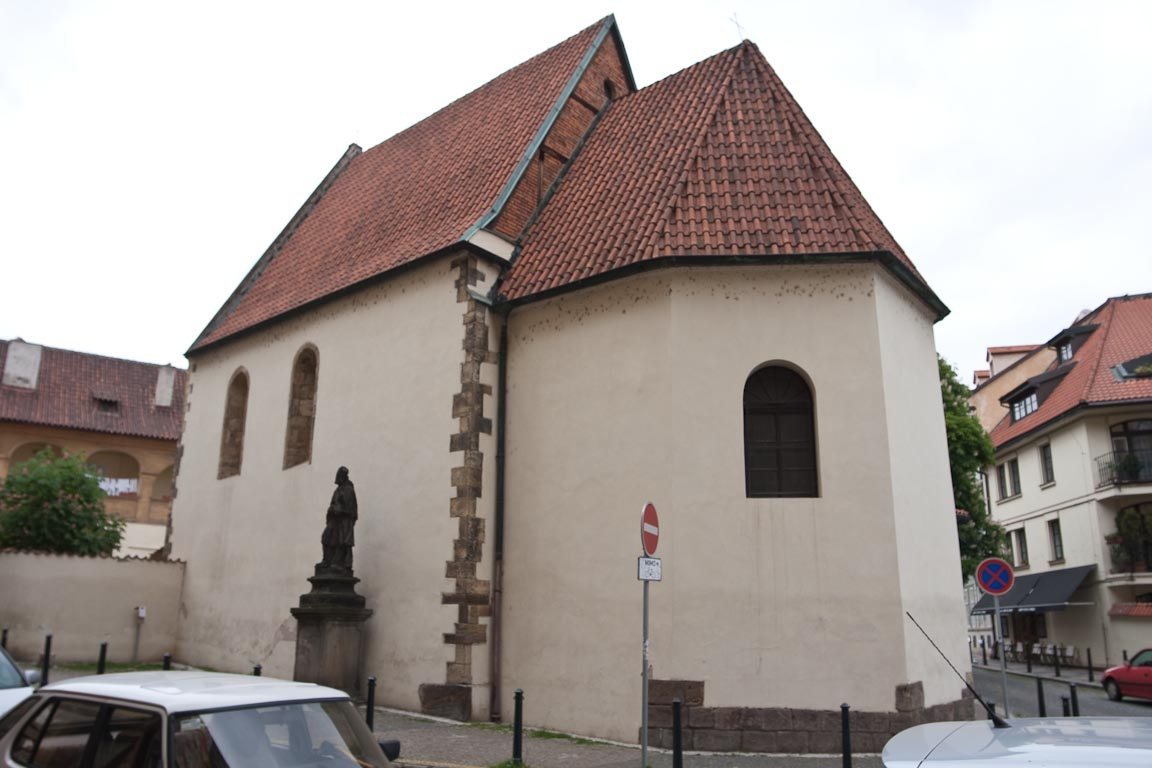
The church is an east-oriented, single-nave building without a tower. Its rectangular nave is Romanesque in origin and ends on the west with a tall, steep Gothic gable. Two Romanesque windows remain in the south wall, while the original Gothic roof framework also survives. Remains of wall paintings dating to around 1350 are preserved on the south wall of the nave.
Gothic Presbytery
A lower, five-sided Gothic presbytery continues the eastern end of the nave. An arch separates it from the nave, and a barrel vault covers its interior. The south wall contains a Gothic sedile, a recessed seat or seat-like niche near the sanctuary, decorated with figures of two nuns.
Baroque Additions
A Baroque oratory and staircase adjoin the north wall. The rebuilding carried out around 1700 is probably associated with Kilián Ignác Dientzenhofer, a leading eighteenth-century Bohemian Baroque architect. This work included the oratory and staircase, as well as windows inserted into the north wall.
Statue and Associated Buildings
Statue of Saint John of Nepomuk
A statue of Saint John of Nepomuk stands in front of the church. Saint John of Nepomuk was a fourteenth-century Bohemian priest and martyr who became one of Bohemia’s principal patrons. The statue was made in 1715 after the model of the figure on Charles Bridge. Its authorship is attributed either to Michal Josef Brokoff or to his better-known brother, Ferdinand Maxmilián Brokoff. It was moved to the church in 1938 from Karlovo Square, where it had stood in a monumental niche, or edicule, beside the former House of U Šálků at the corner of Resslova Street.
Hospital Complex
The former hospital complex belonged to the group of buildings associated with the church. Its older Dachovský building preserves the connection with the institutional setting that developed around the parish church, while the church itself remains the principal surviving religious structure of the complex.