Stone Bridge: A Historic Pedestrian Bridge in Prizren, Kosovo

Site at a Glance
- Popularity
- Medium
- Country
- Kosovo
- Primary era
- Early Modern
- Eras represented
- Medieval, Early Modern
- Civilizations
- Ottoman
- Site type
- Infrastructure
- Remains
- Bridge
On this page7 sections
History
Construction and protection
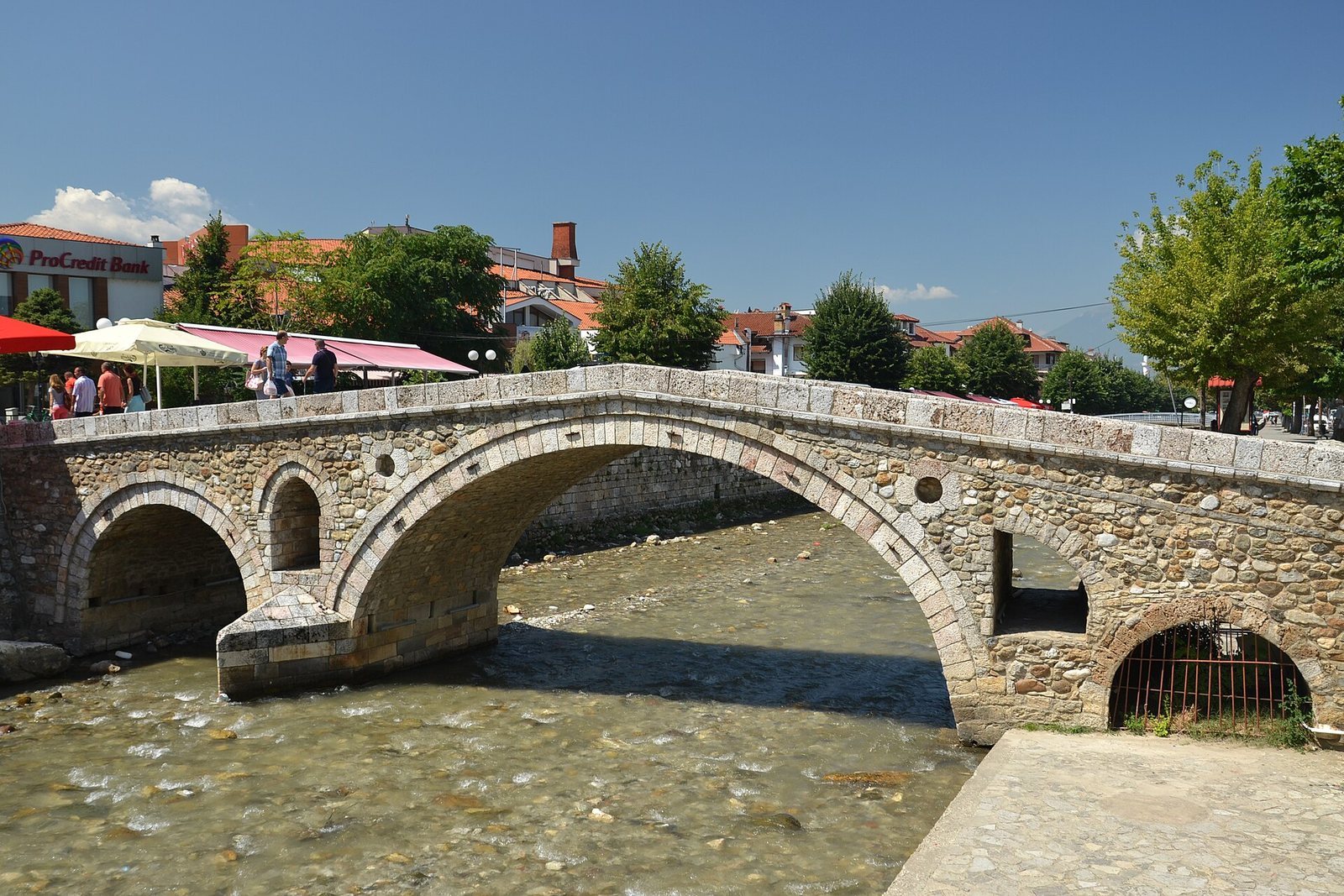
The Stone Bridge is a pedestrian crossing over the Prizren Bistrica, also known as the Lumbardhi, in Prizren, Kosovo. Built around the late 15th or early 16th century in an Ottoman-influenced style, it is a prominent cultural-heritage monument and a symbol of the city.
A state decision dated 31 December 1948 placed the bridge under protection. It is classified as an archaeological-category monument and is permanently protected.
Damage and reconstruction
Riverbed works in the 1960s caused serious structural damage, completely blocking the arch on the left bank. Road construction along the river’s right side damaged the right arch in 1963. Flooding on 17 and 18 November 1979 caused the entire bridge to collapse.
Local residents organized its reconstruction, which began on 5 June 1982 to a design by engineer M. Gojkovic. The Elan company carried out the work under the supervision of the Institute for the Protection of Cultural Monuments in Prizren. The rebuilt bridge was inaugurated on 17 November 1982.
Remains
Layout and construction
Position and structure
In Prizren’s old-town center, the bridge crosses the river between Shatërvan Square on the left bank and the Saraçhane area on the right. The Arasta Bridge lies to its east and the Nalet Bridge to its west. The river divides the city into two nearly equal parts. Dressed stone joined with lime mortar forms the present bridge, which follows the original style and materials. The former bridge was about 30 m long; the present structure is 17 m long.
Arches and roadway
The bridge has three main arches: a central arch, 10 m long and 5 m high, and two smaller outer arches, each 4 m long and 3 m high. A small auxiliary arch measures 103 cm long and 160 cm high. The cobbled roadway is 4.20 m wide, and a railing 40 cm high follows its level.