Jissō-ji Temple (Nishio): A Rinzai Zen Mortuary Temple of the Kira Clan


Site at a Glance
- Rating
- 4.1
- Popularity
- Very Low
- Country
- Japan
- Primary era
- Early Modern
- External website
- Open
- Eras represented
- Medieval, Early Modern, Modern
- Civilizations
- Ashikaga shogunate, Japanese, Tokugawa
- Site type
- Religious
- Remains
- Monastery
On this page10 sections
History
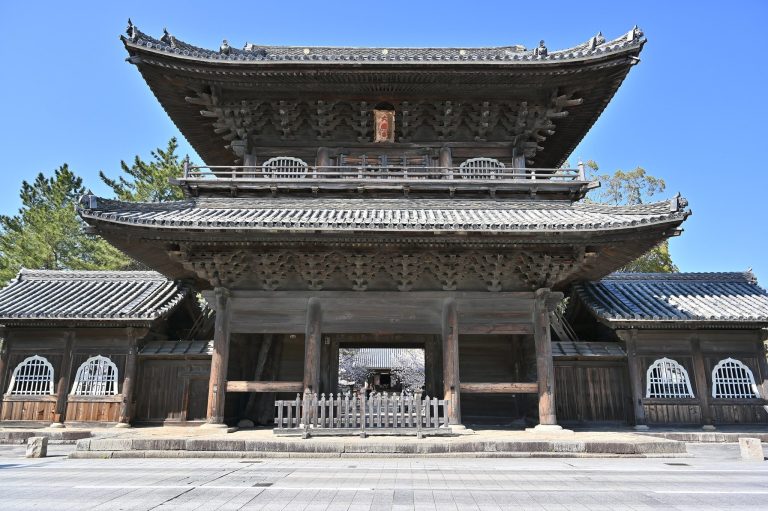
Jissō-ji Temple (Nishio) is a Rinzai Zen temple in Nishio, Japan, founded in 1271 by Kira Mitsuuji as the mortuary temple of the Kira clan, a samurai lineage active in medieval and early modern Japan. The Rinzai school is one of Japan’s major Zen Buddhist traditions. Enni, the prominent thirteenth-century Zen monk also known as Shōichi Kokushi, was invited from Tōfuku-ji to establish the temple. Its main image is a seated Cintamani-cakra Avalokiteshvara, a form of the Buddhist bodhisattva associated with a wish-fulfilling jewel and wheel.
Foundation and Institutional Change
The temple was originally known as Jissō Ankoku Zenji. According to the Record of Jissō Ankoku-ji, a temple complex was created after a pine grove near the coast was cleared. Its foundation gave the Kira family a religious institution for memorial rites and ancestral commemoration, while also establishing a center of Rinzai Zen practice.
In 1541, the temple changed its affiliation to the Myōshin-ji school, one of the principal institutional branches of Rinzai Zen. The complex was then caught up in the military conflicts of the sixteenth century. In 1560, troops serving Oda Nobunaga, a major military leader during Japan’s political unification, caused a fire that destroyed many of the temple buildings.
Rebuilding and Later Repairs
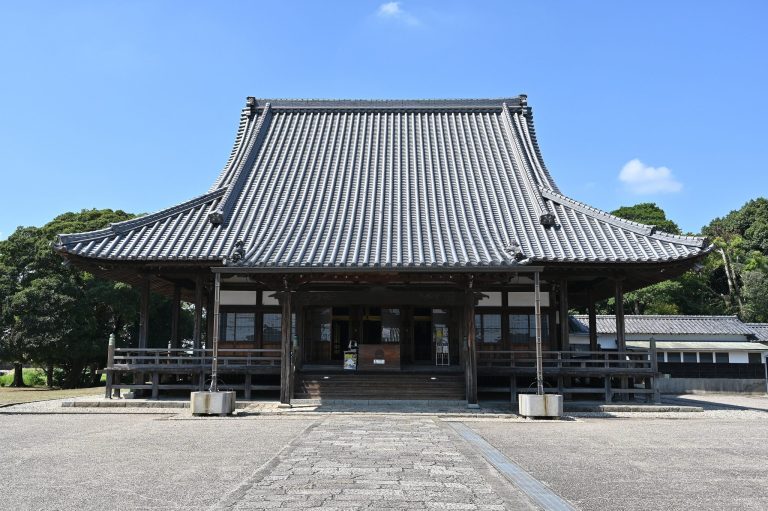
Torii Mototada, a military retainer of Tokugawa Ieyasu, helped rebuild Jissō-ji. Ieyasu founded the Tokugawa shogunate in 1603, the same year in which the temple’s hōjō, or main abbot’s hall, was reconstructed. The building retained the character of a large early-Edo-period Rinzai Zen main hall.
Major repairs during the Meiji period changed the physical appearance of the hōjō. Its hip-and-gable roof was altered to a gabled form, the east and west corridors were removed, and wooden shingles were replaced with tiles. The Isewan Typhoon of September 1959 later damaged the precincts, felling many trees and injuring some of the Four Heavenly Kings statues.
Repair work on the hōjō began in 2019. A Nishio City Board of Education survey carried out from February to March 2020 found that the building had also undergone major dismantling and repair during the late Edo period. Restoration was completed in October 2021. The hōjō and kuri were registered as nationally registered tangible cultural properties in 2003. That registration was removed in 2020 after both buildings had been designated as Nishio City cultural properties in 2017.
Remains
Jissō-ji preserves a group of Zen temple buildings, religious images, paintings, metalwork, and trees that represent successive periods from the late Kamakura era through the Edo period. The principal architectural remains include the restored hōjō, the service and kitchen building known as the kuri, and the Shakadō, or Buddha Hall. Together with the temple’s movable religious and artistic objects, they reflect the complex’s role as a Kira family mortuary temple and Rinzai institution.
Main Temple Buildings
Hōjō
The hōjō was rebuilt in 1603 and remains a large early-Edo-period Rinzai Zen main hall. Its 1874 alterations removed the side wings and replaced the original hip-and-gable roof with a gabled roof covered in interlocking tiles. The restoration completed in 2021 reinstated the hip-and-gable form, replaced the tiled covering with copper sheets, and restored the wide veranda that had been removed during the Meiji-period work.
Kuri
The kuri, a temple kitchen and service building, was rebuilt during the Genroku period, from 1688 to 1704. It is a large, single-story structure with a hip-and-gable roof and interlocking-tile covering. The building measures six bays across the front and seven bays in depth, and an entrance connects it to the east side of the hōjō. Its original form survives to a substantial degree.
Shakadō
The Shakadō dates from the late Muromachi period and has a square-pyramidal roof covered with wooden shingles. During the Tenshō era, from 1573 to 1592, it was moved from Ubumi Village in Hamana District of Tōtōmi Province, now part of the Yūtō area of Hamamatsu. Dismantling and repair took place in March 1976. Inside, a wooden Shaka triad represents Shaka, the historical Buddha, with two attendant bodhisattvas, while the Four Heavenly Kings represent Buddhist guardians of the four directions.
Buddhist Images and Paintings
The wooden Shaka triad was made in 1362 at the devotional request of Kira Mitsusada, another member of the Kira clan. Twenty-four documents were placed inside the statues, preserving material associated with their creation and religious use.
The Four Heavenly Kings are painted wooden statues dating from the Nanboku-chō period through the Edo period. Jikokuten and Tamonten each measure 180.0 centimeters in height, Kōmokuten measures 178.0 centimeters, and Zōchōten measures 185.0 centimeters. Some of these statues were damaged by the Isewan Typhoon in 1959.
The temple’s seated Cintamani-cakra Avalokiteshvara measures 54.5 centimeters in height and dates from the late Kamakura period to the Nanboku-chō period. The image is attributed either to Shōkei, a Buddhist sculptor of the Kei school, or to his workshop. The Kei school was a major lineage of Japanese Buddhist sculptors that was especially prominent from the late Heian period onward.
A silk painting of Senju Kannon, or Thousand-Armed Avalokiteshvara, dates from the Nanboku-chō period. It uses gold-ground polychrome decoration and measures 55.0 by 32.5 centimeters. A polychrome portrait of Enni, also called Shōichi Kokushi, is painted on paper and measures 66.3 by 28.7 centimeters. It is regarded as a self-portrait by Enni and dates to before 1253.
Bell, Water Vessel, and Pine Grove
The temple’s bronze bell has eight petals and a hōtaku shape. Dating from the Nanboku-chō period, it is 143.0 centimeters high, with a mouth diameter of 88.0 centimeters and a lip thickness of 9.0 centimeters. Its Sino-Japanese mixed style is unusual in Japan and is described as having no comparable example in Aichi Prefecture. Temple tradition holds that it was donated in 1346.
A copper water vessel from the late Kamakura period measures 27.0 centimeters in height. Its opening is 8.4 centimeters across, and its body has a diameter of 14.6 centimeters. The vessel is deposited with the Iwase Bunko Library.
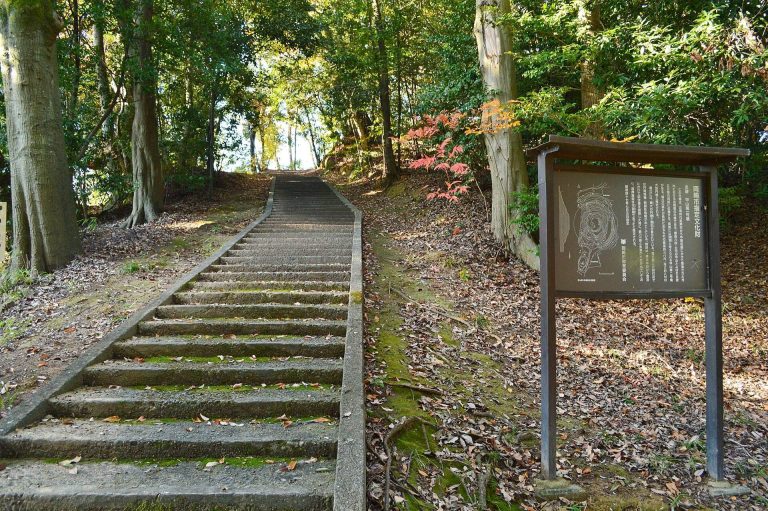
The precincts also contain a designated stand of Mikawa black pines. In January 2010, the grove was named a Nishio City natural monument. It then contained 48 trees, including 17 that had survived the 1959 typhoon; five were estimated to be between 200 and 250 years old.