Koujaku-ji Temple: A Sōtō Zen Memorial Temple in Toyota, Japan


Site at a Glance
- Rating
- 4.3
- Popularity
- Low
- Country
- Japan
- Primary era
- Early Modern
- External website
- Open
- Eras represented
- Medieval, Early Modern
- Civilizations
- Tokugawa
- Site type
- Religious
- Remains
- Monastery
On this page15 sections
History
Koujaku-ji Temple is a Sōtō Zen temple in Toyota, Japan, founded in 1427 on Mount Iimori to commemorate deceased members of the Asuke clan. Sōtō Zen is a major Japanese school of Zen Buddhism that emphasizes seated meditation and monastic practice. The temple was established on the former residence site of the Asuke clan, identified with Iimori Castle, and its foundation is associated with the regent Nijō Yoshimoto, Takino, the daughter of Asuke Shigenori, and her grandsons Naruse Sankichimaru Motohisa and Motonao, ancestors of the Naruse family. Shiramine Shōzui is regarded as the temple’s founding Zen master.
Foundation and Religious Identity
The temple’s formal name is Henseizan Koujaku-ji. Its name comes from the Fragrant Accumulation Buddha-land chapter of the Vimalakirti Sutra, a Mahayana Buddhist scripture centered on the lay bodhisattva Vimalakirti. That chapter describes a Buddha associated with an exceptionally pure and fragrant realm. The name Henseizan serves as the temple’s mountain name, while Sōtō Zen defines its principal religious affiliation.
From its foundation, an Inari shrine was venerated beside the main hall. Inari is a Japanese deity traditionally associated with rice, agriculture, food, and prosperity. The temple’s principal image is a Sacred Kannon, or Avalokiteśvara, a Buddhist figure associated with compassion.
Maple Tradition and Later Abbots
Around 1634, the eleventh abbot, San’ei Honshū, was traditionally said to have planted a maple or cedar beside the approach along the Tomoe River whenever he recited the Heart Sutra. This practice gave him the local title “founder of the maples.” Residents added further plantings during the Taishō and Shōwa periods, contributing to the area’s reputation for autumn foliage.
The twenty-fifth abbot, Fūgai Honkō, was accomplished in calligraphy and painting and left many works. The group associated with him is owned by Koujaku-ji and held by the Toyota Municipal Museum. It is designated by Toyota City, while the temple itself remains connected to the collection as its owner.
Heritage and Archaeological Setting
The Iimori Castle ruins date from the Kamakura through Sengoku periods. The Kamakura period followed the Heian period, which lasted from 794 to 1185, while the Sengoku period was an era of political fragmentation and warfare generally associated with the fifteenth and sixteenth centuries. The castle ruins are designated as an Aichi Prefecture historic site and are managed by Toyota City and Koujaku-ji. Together with the temple, they preserve the historical setting of the former Asuke clan residence.
Remains
Koujaku-ji occupies Mount Iimori, where the temple buildings stand among religious monuments, graves, and archaeological remains linked with the former Asuke residence or castle area. The surviving buildings represent several periods, from the early Edo period through the late Edo period, and use traditional timber construction with hipped or gabled roofs. A ken is a traditional Japanese unit commonly used for the spacing between structural posts, and the building dimensions are expressed in this unit.
Temple Buildings
Main Hall
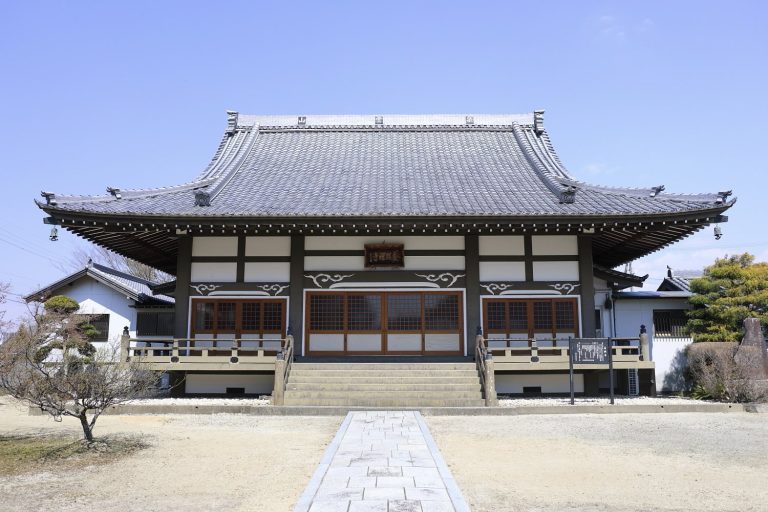
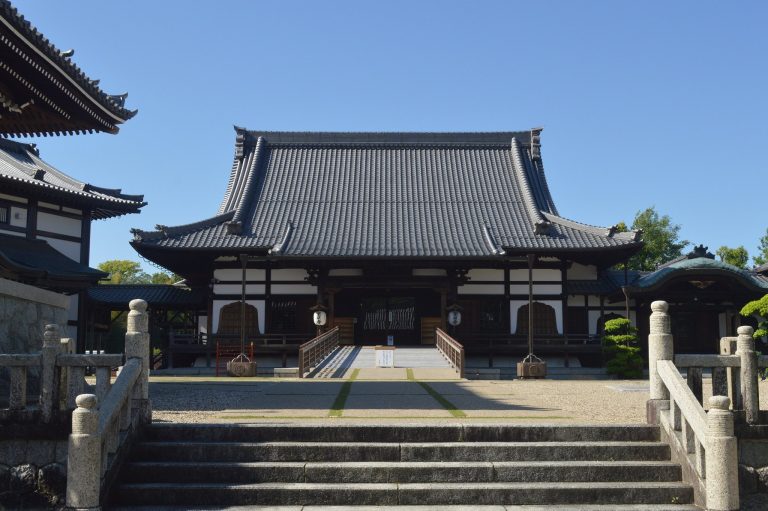
The main hall was built in 1722, a date preserved on its ridge tag. It measures 8.5 ken across the front and 7.5 ken in depth. The building has a hipped roof, now covered with iron sheets, although the roof was formerly thatched. The Sacred Kannon, the temple’s principal image, is associated with this central hall, and the Inari shrine stands beside it.
Kitchen and Residential Quarters
The temple kitchen and residential quarters date from the late Edo period, when the Edo period extended under the Tokugawa shogunate from 1603 to 1868. The combined building measures 15.5 ken by 5 ken. Its gabled roof is covered with Japanese pantiles, linking the domestic and working spaces to the broader temple complex.
Zen Hall and Monks’ Quarters
The Zen hall and monks’ quarters were built in 1820, according to their ridge tag. They measure 10 ken by 4.5 ken and have gabled roofs covered with Japanese pantiles. Their arrangement reflects the temple’s continuing Sōtō Zen emphasis on seated meditation and monastic practice.
Main Entrance Gate
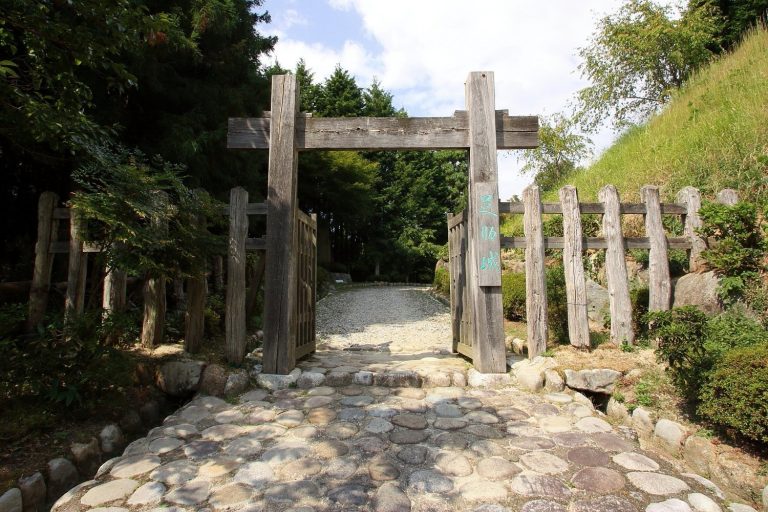
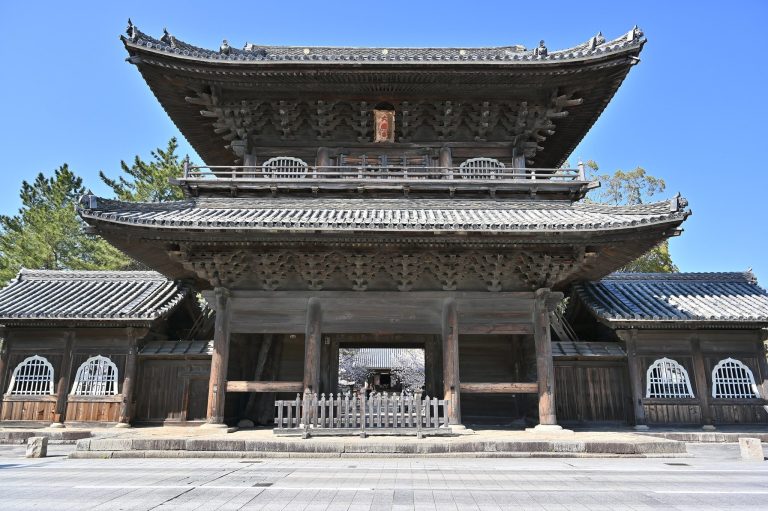
The main entrance gate dates from the early Edo period. It is a one-bay yakui-mon, a gate with a gabled roof, and its covering consists of Japanese pantiles. The gate forms the principal architectural entrance to the temple grounds.
Mountain Monuments and Archaeological Features
Abbots’ Graves and Religious Figures
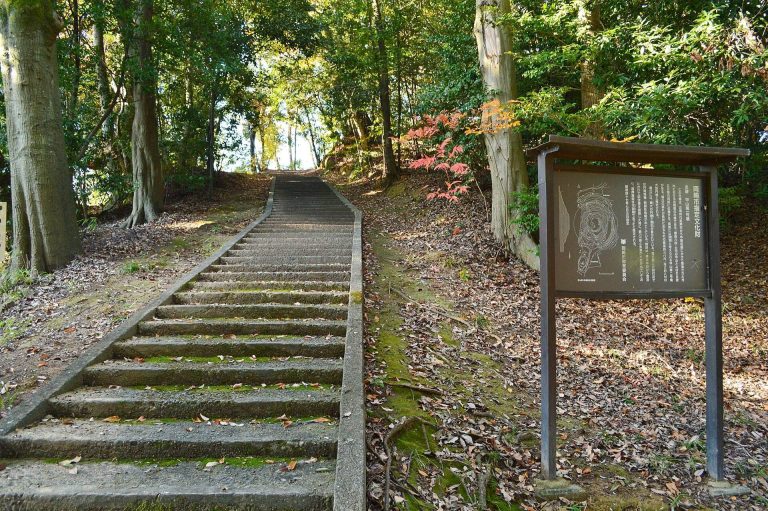
Mount Iimori contains the graves of successive abbots and stone figures of the Sixteen Arhats. Arhats are Buddhist disciples regarded as having attained advanced spiritual realization. The mountain also preserves the graves of five generations of the Suzuki family, who were lords of Asuke Castle.
Costume Mound
The mountain includes the “Costume Mound,” which tradition associates with Takino. She is said to have buried clothing left by Nijō Yoshimoto after learning of his death. The mound preserves this memorial tradition within the temple’s wider landscape of graves and religious monuments.
Sutra Mound
Near the summit is a sutra mound associated with late Heian-period beliefs. A sutra mound is a buried repository for Buddhist scriptures and related ritual objects, often created in response to expectations about the decline of Buddhist teaching and practice. The mound reflects this practice through the burial of Buddhist scriptures and ritual implements.
Iimori Castle Ruins
The Iimori Castle ruins form the archaeological remains associated with the temple’s location. Dating from the Kamakura through Sengoku periods, they include the former Asuke clan residence or castle area. Their presence connects Koujaku-ji’s religious foundation with the earlier political and residential history of Mount Iimori.